|
|
|
|
|
|
| |
| |
|
|
|
|
| |
| |
|
|
On 01/12/2011 03:01 PM, Stephen wrote:
> On 01/12/2011 2:43 PM, Invisible wrote:
>> In 30 years of being alive, I've never seen anybody do calligraphy and
>> get good results. So it can't be that common. :-P
>>
>
> Calligraphy is not that common but I watched a friend teach himself how
> to do it. You need to practice a lot and have proper pens.
>
> Most people could learn. In fact before the advent of ballpoint pens a
> lot of people could write copperplate. It is not that hard.

My sister got given a calligraphy set one time... She never got far with
it. (Then again, that might just be lack of application.)
Post a reply to this message
|
|
| |
| |
|
|
|
|
| |
| |
|
|
On 01/12/2011 03:23 PM, nemesis wrote:
> Invisible escreveu:
>> I've used the Gimp. Everybody claims it's this insanely powerful
>> product. Personally, I can't get it to do anything vaguely useful...
>> If there /are/ powerful features in there, they are very well hidden.
>
> 1. open gimp
> 2. search on google images for "pebbles"
> 3. choose some interesting result, such as this
> http://www.stonetohome.com/media/gbu0/prodlg/Pentland%20Pebbles.jpg
> 4. copy the image
> 5. ctrl+v in Gimp
> 6. Filters -> Map -> Make Seamless
> http://docs.gimp.org/en/plug-in-make-seamless.html
> 7. Filters -> Map -> Tile, choosing Unit % and a value such as 200 or
> 400 http://docs.gimp.org/en/plug-in-tile.html

Interesting. As I expected, it doesn't actually produce a very
convincing effect; it merely wraps the image, and then does some
cross-fading. The result is a very visible transition. (Still, at least
they made it circular, eh?)

I still don't see how it's possible to take an arbitrary image and make
it properly seamless.

As an aside, I'd never noticed the Filter menu before. There's quite a
lot of stuff in there...

> is this more challenging than writing a Haskell monad?

What's so hard about that?
Post a reply to this message
|
|
| |
| |
|
|
|
|
| |
| |
|
|
Invisible escreveu:
> On 01/12/2011 03:23 PM, nemesis wrote:
>> Invisible escreveu:
>>> I've used the Gimp. Everybody claims it's this insanely powerful
>>> product. Personally, I can't get it to do anything vaguely useful...
>>> If there /are/ powerful features in there, they are very well hidden.
>>
>> 1. open gimp
>> 2. search on google images for "pebbles"
>> 3. choose some interesting result, such as this
>> http://www.stonetohome.com/media/gbu0/prodlg/Pentland%20Pebbles.jpg
>> 4. copy the image
>> 5. ctrl+v in Gimp
>> 6. Filters -> Map -> Make Seamless
>> http://docs.gimp.org/en/plug-in-make-seamless.html
>> 7. Filters -> Map -> Tile, choosing Unit % and a value such as 200 or
>> 400 http://docs.gimp.org/en/plug-in-tile.html
>
> Interesting. As I expected, it doesn't actually produce a very
> convincing effect; it merely wraps the image, and then does some
> cross-fading. The result is a very visible transition. (Still, at least
> they made it circular, eh?)

it's a smooth transition that is barely noticeable in the large scheme
of things.  Once it's mapped on a 3D floor, you simply don't notice the
faded edges on the tiled floor.

> As an aside, I'd never noticed the Filter menu before. There's quite a
> lot of stuff in there...

o_0

It's just the bread and butter of bitmap editors...
Post a reply to this message
|
|
| |
| |
|
|
|
|
| |
| |
|
|
Am 01.12.2011 15:24, schrieb Invisible:

> $8,000 is more money than I have ever owned at any time in my entire
> life. (I just changed the exchange rate. On 8 Nov 2007, that would have
> been £3795.07 - and that's the lowest it's been in the last 10 years.)

I'm still waiting for an explanation where you got that $8,000 figure from.

> Would you seriously take out a 5-year loan just to afford some pictures
> to put together a website that *might* get you a few more orders?

I bought a license for this photograph to put on both my website and my
business card when I was a freelancing embedded software developer:

   http://de.fotolia.com/id/4337839

As you might guess from the price tag, I did /not/ have to take a 5-year
loan to afford it. (I went for the "L Standard" license, btw.)

I also bought a handful of "S Standard" licenses for other images there,
which I planned to use on my website as well.
Post a reply to this message
|
|
| |
| |
|
|
|
|
| |
| |
|
|
>> Interesting. As I expected, it doesn't actually produce a very
>> convincing effect; it merely wraps the image, and then does some
>> cross-fading. The result is a very visible transition. (Still, at
>> least they made it circular, eh?)
>
> it's a smooth transition that is barely noticeable in the large scheme
> of things. Once it's mapped on a 3D floor, you simply don't notice the
> faded edges on the tiled floor.

Maybe. But I'm talking about a 2D website background. It's pretty
noticeable when half a pebble cross-fades into a different pebble.

>> As an aside, I'd never noticed the Filter menu before. There's quite a
>> lot of stuff in there...
>
> o_0
>
> It's just the bread and butter of bitmap editors...

Well, it's the bread and butter of image processors. It won't help you
if you're trying to (for example) remove an object from an image...
Post a reply to this message
|
|
| |
| |
|
|
|
|
| |
| |
|
|
On 01/12/2011 04:26 PM, clipka wrote:
> Am 01.12.2011 15:24, schrieb Invisible:
>
>> $8,000 is more money than I have ever owned at any time in my entire
>> life. (I just changed the exchange rate. On 8 Nov 2007, that would have
>> been £3795.07 - and that's the lowest it's been in the last 10 years.)
>
> I'm still waiting for an explanation where you got that $8,000 figure from.

Photography is expensive. That's why only huge publishing corporations
can afford to do it.

> I bought a license for this photograph to put on both my website and my
> business card when I was a freelancing embedded software developer:
>
> http://de.fotolia.com/id/4337839

I'm quite impressed that you can buy a good quality image like that for
less than a thousand dollars. Presumably the range of available images
is highly limited, however...
Post a reply to this message
|
|
| |
| |
|
|
|
|
| |
| |
|
|
Am 01.12.2011 15:26, schrieb Invisible:
> On 01/12/2011 12:22 PM, clipka wrote:
>> Am 01.12.2011 11:02, schrieb Invisible:
>>
>>> I still don't see how you can "fix" the seems. It's not like you can
>>> move individual blades of grass around.
>>
>> For /really/ good seamless textures, that's exactly what you do.
>
> Except that, uh, it can't be done? :-P

Hush - don't tell my mom; she does stuff like that for a hobby. Copying
stuff from one photo and pasting it into others. She'd indeed isolate
and copy around individual leaves or grass blades if that gets her where
she wants to go. You need sufficiently high-res photographs to start
with of course.

>> You haven't spent much time with Photoshop or Gimp, have you?
>
> Photoshop is /far/ too expensive for me to ever afford. (Especially
> given that I'd probably hardly ever use it anyway.)

How about Photoshop Elements? That's what my mom's been using.

>>> POV-Ray makes nice stone textures (unless you're a geologist) and wood
>>> textures (unless you're a dendrologist). Last time I checked, there's no
>>> way of making a canvas texture or a wet paper texture or a spilled paint
>>> texture or...
>>
>> Make that "last time I checked, no-one had yet found a way of...",
>> because unless you've checked every possible combination of parameters,
>> layered textures, averaged textures, and what-have-you, there are still
>> ways undiscovered that might lead to the desired result.
>
> Most interesting textures do not have closed-form representations.
> POV-Ray only renders closed-form equations. QED.

I don't know the theory behind closed-form and non-closed-form
equations, but I guess both of your axioms are somewhat flawed, so no
QED yet.
Post a reply to this message
|
|
| |
| |
|
|
|
|
| |
| |
|
|
On 01/12/2011 4:33 PM, Invisible wrote:
> Photography is expensive. That's why only huge publishing corporations
> can afford to do it.

Andrew, where do you get these ideas from? You speak/write
unsubstantiated rubbish at times. Please try not to post before thinking
because you do yourself no favours.

--
Regards
     Stephen
Post a reply to this message
|
|
| |
| |
|
|
|
|
| |
| |
|
|
Am 01.12.2011 17:33, schrieb Invisible:
> On 01/12/2011 04:26 PM, clipka wrote:
>> Am 01.12.2011 15:24, schrieb Invisible:
>>
>>> $8,000 is more money than I have ever owned at any time in my entire
>>> life. (I just changed the exchange rate. On 8 Nov 2007, that would have
>>> been £3795.07 - and that's the lowest it's been in the last 10 years.)
>>
>> I'm still waiting for an explanation where you got that $8,000 figure
>> from.
>
> Photography is expensive. That's why only huge publishing corporations
> can afford to do it.

Photography created specifically according to your specifications /can/
be expensive, yes. Depends on your motif though: Studio photography is
pretty affordable actually. After all, the equipment is all there
already, and all you need to pay is the working time of the
photographer. With digital cameras, there's also virtually no material
expense involved.

For example, a professional photo shooting (including makeup and all)
for a photograph of yourself might come at around 50 €. Probably worth
it when applying for a new job.

It's when lighting equipment needs to be deployed to some site, the site
closed down for the shooting, or special props be available, that things
start getting costly.

>> I bought a license for this photograph to put on both my website and my
>> business card when I was a freelancing embedded software developer:
>>
>> http://de.fotolia.com/id/4337839
>
> I'm quite impressed that you can buy a good quality image like that for
> less than a thousand dollars. Presumably the range of available images
> is highly limited, however...

*facepalm*

You have the website there. Why /presume/, when you can take a look
around to /see/ for yourself?

You might of course want to try the English site at www.fotolia.com.

(Hint: They claim to have 15 million images available at present.)
Post a reply to this message
|
|
| |
| |
|
|
|
|
| |
| |
|
|
Invisible escreveu:
>>> Interesting. As I expected, it doesn't actually produce a very
>>> convincing effect; it merely wraps the image, and then does some
>>> cross-fading. The result is a very visible transition. (Still, at
>>> least they made it circular, eh?)
>>
>> it's a smooth transition that is barely noticeable in the large scheme
>> of things. Once it's mapped on a 3D floor, you simply don't notice the
>> faded edges on the tiled floor.
>
> Maybe. But I'm talking about a 2D website background. It's pretty
> noticeable when half a pebble cross-fades into a different pebble.

true enough.  In that case, automatic seamless filters won't cut.  In
that case, you should select through between borders, cut away
everything else (ctrl+i for inverse select + ctrl+x), and manually clone
the layer and position precisely (with ctrl hold down) the center (a
small cross) of the cloned layers in each of the cardinal positions
(including nw or se) around the image.  Since you manually selected
interesting borders through the pebbles, it'll look natural as they are
one on top of the other.


--
a game sig: http://tinyurl.com/d3rxz9
Post a reply to this message
|
|
| |
| |
|
|
|
|
| |
| |
|
|
On 12/1/2011 8:06 AM, Invisible wrote:
> Interesting. As I expected, it doesn't actually produce a very
> convincing effect; it merely wraps the image, and then does some
> cross-fading. The result is a very visible transition. (Still, at least
> they made it circular, eh?)

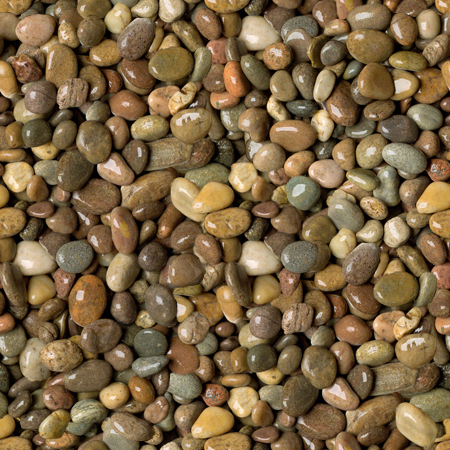
Then fix up the seams manually, it's not that difficult.  I've attached
an example that I whipped up GIMP to illustrate that it is totally
possible (and not very hard) to do this sort of thing.
Post a reply to this message
Attachments:
Download 'pentland-pebbles_tileable.png' (469 KB)
Preview of image 'pentland-pebbles_tileable.png'

|
|
| |
| |
|
|
|
|
| |
| |
|
|
On Thu, 01 Dec 2011 16:33:45 +0000, Invisible wrote:

> On 01/12/2011 04:26 PM, clipka wrote:
>> Am 01.12.2011 15:24, schrieb Invisible:
>>
>>> $8,000 is more money than I have ever owned at any time in my entire
>>> life. (I just changed the exchange rate. On 8 Nov 2007, that would
>>> have been £3795.07 - and that's the lowest it's been in the last 10
>>> years.)
>>
>> I'm still waiting for an explanation where you got that $8,000 figure
>> from.
>
> Photography is expensive. That's why only huge publishing corporations
> can afford to do it.
>
>> I bought a license for this photograph to put on both my website and my
>> business card when I was a freelancing embedded software developer:
>>
>> http://de.fotolia.com/id/4337839
>
> I'm quite impressed that you can buy a good quality image like that for
> less than a thousand dollars. Presumably the range of available images
> is highly limited, however...

Andy, if you make me hit my head on my desk so hard I shatter the glass,
you're going to owe me a new desk. ;)

Jim
Post a reply to this message
|
|
| |
| |
|
|
|
|
| |
| |
|
|
On Thu, 01 Dec 2011 16:06:12 +0000, Invisible wrote:

>> is this more challenging than writing a Haskell monad?
>
> What's so hard about that?

I sure as hell couldn't do it, wouldn't even know where to start.  Of
course, Haskell is one of the many things that I suck at.

Jim
Post a reply to this message
|
|
| |
| |
|
|
|
|
| |
| |
|
|
On Thu, 01 Dec 2011 16:32:03 +0000, Invisible wrote:

>> it's a smooth transition that is barely noticeable in the large scheme
>> of things. Once it's mapped on a 3D floor, you simply don't notice the
>> faded edges on the tiled floor.
>
> Maybe. But I'm talking about a 2D website background. It's pretty
> noticeable when half a pebble cross-fades into a different pebble.

And the example that posted was "here's a very simple way to do it".  Now
add someone with time, experience, and expertise.

Jim
Post a reply to this message
|
|
| |
| |
|
|
|
|
| |
| |
|
|
>> Photography is expensive. That's why only huge publishing corporations
>> can afford to do it.
>
> Photography created specifically according to your specifications /can/
> be expensive, yes. Depends on your motif though: Studio photography is
> pretty affordable actually. After all, the equipment is all there
> already, and all you need to pay is the working time of the
> photographer. With digital cameras, there's also virtually no material
> expense involved.
>
> For example, a professional photo shooting (including makeup and all)
> for a photograph of yourself might come at around 50 €. Probably worth
> it when applying for a new job.

Actually, I've been thinking about getting some photos of me done at
some point... The main reason I haven't is that I probably can't afford it.

> It's when lighting equipment needs to be deployed to some site, the site
> closed down for the shooting, or special props be available, that things
> start getting costly.

Yeah, I don't even want to think about what I would have to pay to get a
photograph of the steaming jungles of Borneo...

>> I'm quite impressed that you can buy a good quality image like that for
>> less than a thousand dollars. Presumably the range of available images
>> is highly limited, however...
>
> *facepalm*
>
> You have the website there. Why /presume/, when you can take a look
> around to /see/ for yourself?

As an exercise, I tried looking for photographs of a specific thing. I
found lots of very nice photos, but nothing approximating what I really
wanted. Basically, to be able to provide the right sort of images for
every need imaginable, you would need an absurdly vast catelogue...

--
http://blog.orphi.me.uk/
http://www.zazzle.com/MathematicalOrchid*
Post a reply to this message
|
|
| |
| |
|
|
|
|
| |
| |
|
|
On 01/12/2011 08:43 PM, Jim Henderson wrote:
> On Thu, 01 Dec 2011 16:32:03 +0000, Invisible wrote:
>
>>> it's a smooth transition that is barely noticeable in the large scheme
>>> of things. Once it's mapped on a 3D floor, you simply don't notice the
>>> faded edges on the tiled floor.
>>
>> Maybe. But I'm talking about a 2D website background. It's pretty
>> noticeable when half a pebble cross-fades into a different pebble.
>
> And the example that posted was "here's a very simple way to do it".  Now
> add someone with time, experience, and expertise.

Oh, hey, I'm sure somebody at ILM could do it. What I'm saying is that I
don't see how you can just push a button and have it magically tile any
image and also look good.

--
http://blog.orphi.me.uk/
http://www.zazzle.com/MathematicalOrchid*
Post a reply to this message
|
|
| |
| |
|
|
|
|
| |
| |
|
|
On 01/12/2011 08:43 PM, Jim Henderson wrote:
> On Thu, 01 Dec 2011 16:06:12 +0000, Invisible wrote:
>
>>> is this more challenging than writing a Haskell monad?
>>
>> What's so hard about that?
>
> I sure as hell couldn't do it, wouldn't even know where to start.  Of
> course, Haskell is one of the many things that I suck at.

And I wouldn't know how to bake fairy cakes. That doesn't mean it's
hard. (Hell, I've *done* it... I just don't remember how, that's all.)

--
http://blog.orphi.me.uk/
http://www.zazzle.com/MathematicalOrchid*
Post a reply to this message
|
|
| |
| |
|
|
|
|
| |
| |
|
|
Orchid XP v8 escreveu:
> On 01/12/2011 08:43 PM, Jim Henderson wrote:
>> On Thu, 01 Dec 2011 16:32:03 +0000, Invisible wrote:
>>
>>>> it's a smooth transition that is barely noticeable in the large scheme
>>>> of things. Once it's mapped on a 3D floor, you simply don't notice the
>>>> faded edges on the tiled floor.
>>>
>>> Maybe. But I'm talking about a 2D website background. It's pretty
>>> noticeable when half a pebble cross-fades into a different pebble.
>>
>> And the example that posted was "here's a very simple way to do it".  Now
>> add someone with time, experience, and expertise.
>
> Oh, hey, I'm sure somebody at ILM could do it.

Kevin Wampler who just provided an example below does not work at ILM,
nor do I.  It's not the case of being a notable expert, just following
the steps for a technique.  Careful selection of borders you want is
simple enough since the selection tool allows to do it point by point.

The point is:  instead of calling it impossible just to look like a
dumbass, try to use the software for a while to get the hang of it.

> What I'm saying is that I
> don't see how you can just push a button and have it magically tile any
> image and also look good.

the pebbles image was a bad idea, but if details of the texture are
sufficiently small, like sand or soil, even that button does the job
just fine.

--
a game sig: http://tinyurl.com/d3rxz9
Post a reply to this message
|
|
| |
| |
|
|
|
|
| |
| |
|
|
>> Oh, hey, I'm sure somebody at ILM could do it.
>
> Kevin Wampler who just provided an example below does not work at ILM,
> nor do I. It's not the case of being a notable expert, just following
> the steps for a technique. Careful selection of borders you want is
> simple enough since the selection tool allows to do it point by point.
>
> The point is: instead of calling it impossible just to look like a
> dumbass, try to use the software for a while to get the hang of it.

The point is: I said it's not possible for a piece of software to
magically tile any possible image seemlessly. If you're saying that a
piece of software with an expert to work it can sometimes do a good job,
that's a different statement. I can see how that might be quite
possible. (Though it still sounds pretty difficult...)

--
http://blog.orphi.me.uk/
http://www.zazzle.com/MathematicalOrchid*
Post a reply to this message
|
|
| |
| |
|
|
|
|
| |
| |
|
|
Am 01.12.2011 23:11, schrieb Orchid XP v8:

> The point is: I said it's not possible for a piece of software to
> magically tile any possible image seemlessly.

No. You only said that it wasn't possible for a normal mortal to tile
images seamlessly with the help of software. You didn't mention that you
expected software to do the job alone.
Post a reply to this message
|
|
| |
| |
|
|
|
|
| |
| |
|
|
On 12/1/2011 2:11 PM, Orchid XP v8 wrote:
>> The point is: instead of calling it impossible just to look like a
>> dumbass, try to use the software for a while to get the hang of it.
>
> The point is: I said it's not possible for a piece of software to
> magically tile any possible image seemlessly. If you're saying that a
> piece of software with an expert to work it can sometimes do a good job,
> that's a different statement. I can see how that might be quite
> possible. (Though it still sounds pretty difficult...)

I'm *far* from an expert in image editing, and I didn't do anything to
make that image that a pure beginner couldn't get the hand of in a few
hours, and I did it with only free softwars.

In addition, I'm not sure what point you're making.  Depending on what
you mean by "seamlessly tileable" it's probably wither trivial or
*obviously* impossible to convert an image into tileable form.  But
nobody here is claiming that you can tile *every* image automatically.
What people are claiming is:

1) It's not that hard to do it manually in most cases
2) For many images you can indeed tile them automatically

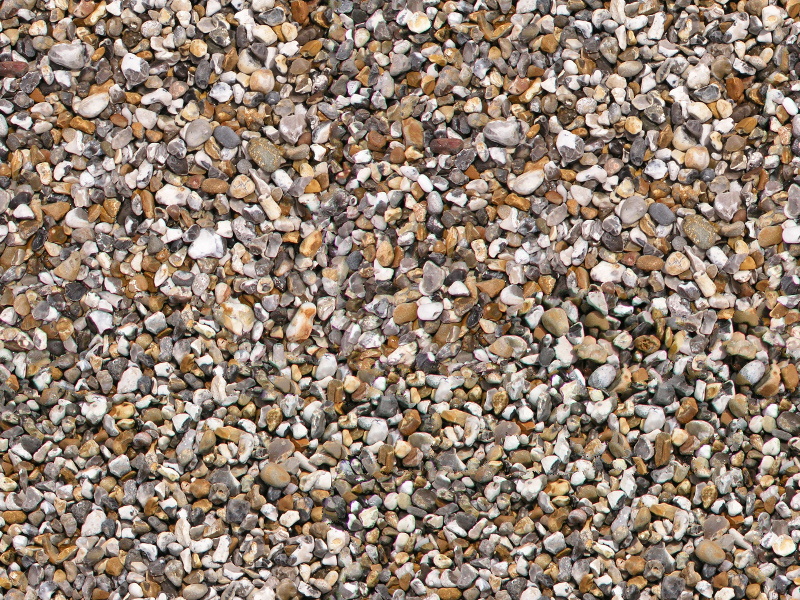
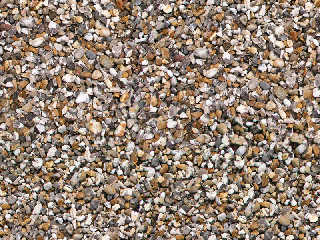
As an illustration of (2), I've attached a tileable image that I created
in GIMP with about two button clicks and no manual editing.  Can you
spot the seams?

As a meta-comment you have a tenancy to declare things "impossible" when
you merely cannot see a way to achieve them.  Given that your
assessments are not infrequently wrong in this regard, you might benefit
from being less defeatist and more curious when you don't see how
something can be done.  Just my opinion though, you're obviously free to
disregard it as bunk.
Post a reply to this message
Attachments:
Download 'small_beach_pebbles_tileable.jpg' (511 KB)
Preview of image 'small_beach_pebbles_tileable.jpg'
|
|
| |
| |
|
|
|
|
| |
| |
|
|
On 12/1/2011 6:24, Invisible wrote:
> Given that calligraphy is a rare skill,

And on what basis do you make that claim? That the people you never asked
never told you?

--
Darren New, San Diego CA, USA (PST)
   People tell me I am the counter-example.
Post a reply to this message
|
|
| |
| |
|
|
|
|
| |
| |
|
|
On Thu, 01 Dec 2011 20:51:54 +0000, Orchid XP v8 wrote:

> On 01/12/2011 08:43 PM, Jim Henderson wrote:
>> On Thu, 01 Dec 2011 16:32:03 +0000, Invisible wrote:
>>
>>>> it's a smooth transition that is barely noticeable in the large
>>>> scheme of things. Once it's mapped on a 3D floor, you simply don't
>>>> notice the faded edges on the tiled floor.
>>>
>>> Maybe. But I'm talking about a 2D website background. It's pretty
>>> noticeable when half a pebble cross-fades into a different pebble.
>>
>> And the example that posted was "here's a very simple way to do it".
>> Now add someone with time, experience, and expertise.
>
> Oh, hey, I'm sure somebody at ILM could do it. What I'm saying is that I
> don't see how you can just push a button and have it magically tile any
> image and also look good.

You should watch some demos of Adobe's conference, specifically demos
with some of the stuff that's in development for Photoshop.

Pretty amazing stuff.

Jim
Post a reply to this message
|
|
| |
| |
|
|
|
|
| |
| |
|
|
On Thu, 01 Dec 2011 20:53:07 +0000, Orchid XP v8 wrote:

> On 01/12/2011 08:43 PM, Jim Henderson wrote:
>> On Thu, 01 Dec 2011 16:06:12 +0000, Invisible wrote:
>>
>>>> is this more challenging than writing a Haskell monad?
>>>
>>> What's so hard about that?
>>
>> I sure as hell couldn't do it, wouldn't even know where to start.  Of
>> course, Haskell is one of the many things that I suck at.
>
> And I wouldn't know how to bake fairy cakes. That doesn't mean it's
> hard. (Hell, I've *done* it... I just don't remember how, that's all.)

It's not hard to people who know how to do it.  That's kinda the point.

You're kinda missing my point.

Jim
Post a reply to this message
|
|
| |
| |
|
|
|
|
| |
| |
|
|
On Thu, 01 Dec 2011 20:50:28 +0000, Orchid XP v8 wrote:

> Actually, I've been thinking about getting some photos of me done at
> some point... The main reason I haven't is that I probably can't afford
> it.

Oh FFS, Andy....

http://www.portraitplace.co.uk/promotions

Took me about 5 seconds to find that with Google Maps, and it's local to
*you*.  I'm halfway around the frikin' world and I found a place there
that will do portraits for a portrait sitting that costs < US$10 and
includes a 12x10 print.

Photos are *not* expensive.

Jim
Post a reply to this message
|
|
| |
| |
|
|
|
|
| |
| |
|
|
On 12/1/2011 12:50, Orchid XP v8 wrote:
> Yeah, I don't even want to think about what I would have to pay to get a
> photograph of the steaming jungles of Borneo...

It depends on the quality, too. Get someone who lives in Borneo to
photograph it for you.

The expensive photos are the ones you can only use once, like the photo you
take for a package cover (like, the contents of the frozen dinner),
especially if it takes a lot of set up (like arranging each grain of rice
before taking the photo).

You want a picture of an elephant in Africa? We have lots of those floating
around.

--
Darren New, San Diego CA, USA (PST)
   People tell me I am the counter-example.
Post a reply to this message
|
|
| |
| |
|
|
|
|
| |
| |
|
|
On 12/1/2011 2:02, Invisible wrote:
> And you're saying stuff like that actually exists in the real world, and
> some of it is actually good quality?

I've seen multiple news reports of people being PO'ed because their "free"
photography wound up advertising something on the side of a bus. Perfectly
legal, the way they had released it.

So, yeah.

>>> I can't figure out how it's even possible in theory.
>>
>> I had to google around for about 15 minutes before I found an actual
>> explanation, rather than someone just saying "use the photoshop filter".
>
> Because, of course, everybody can afford Photoshop(r)... Oh, wait...

Well, because everyone who professionally manipulates photos for video games
can afford photoshop or some similar package.

> I still don't see how you can "fix" the seems. It's not like you can move
> individual blades of grass around.

Sure. Clone brush.

> I mean most of the pictures I looked at have fairly obvious rough edges
> where the seems don't line up.

It needs to be something that's homogenous. You'll have trouble making a
repeating image of people or buildings or something. Grass? Bricks? Sure.

> Somebody somewhere must actually /teach/ graphic design skills...

Yeah. It's called "college". :-)

> Then again, I spent 6 months at drawing classes, and I still can't draw. So
> maybe it's just that only a tiny fraction of the population will ever be
> good at graphic design?

Or maybe the people trying to teach you to draw were better artists than
teachers?

--
Darren New, San Diego CA, USA (PST)
   People tell me I am the counter-example.
Post a reply to this message
|
|
| |
| |
|
|
|
|
| |
| |
|
|
On 12/1/2011 8:32, Invisible wrote:
> Maybe. But I'm talking about a 2D website background. It's pretty noticeable
> when half a pebble cross-fades into a different pebble.

Look at some of the stone walls I posted. Yes, I really did duplicate bits
of some stones over on other stones. It took a couple hours.

--
Darren New, San Diego CA, USA (PST)
   People tell me I am the counter-example.
Post a reply to this message
|
|
| |
| |
|
|
|
|
| |
| |
|
|
On 02/12/2011 01:11 AM, Jim Henderson wrote:
> On Thu, 01 Dec 2011 20:50:28 +0000, Orchid XP v8 wrote:
>
>> Actually, I've been thinking about getting some photos of me done at
>> some point... The main reason I haven't is that I probably can't afford
>> it.
>
> Oh FFS, Andy....
>
> http://www.portraitplace.co.uk/promotions
>
> Took me about 5 seconds to find that with Google Maps, and it's local to
> *you*.  I'm halfway around the frikin' world and I found a place there
> that will do portraits for a portrait sitting that costs<  US$10 and
> includes a 12x10 print.
>
> Photos are *not* expensive.

Interesting. Last time my parents had me and my sister photographed and
framed, it ended up costing several hundred pounds. Obviously, I do not
have that kind of money just laying around.

(I did try using Google to find the place where we had it done, but it
doesn't seem to exist any more... Some shop called Olan Mills. Wikipedia
says something about the UK group being liquidated...)
Post a reply to this message
|
|
| |
| |
|
|
|
|
| |
| |
|
|
On 02/12/2011 01:04 AM, Darren New wrote:
> On 12/1/2011 6:24, Invisible wrote:
>> Given that calligraphy is a rare skill,
>
> And on what basis do you make that claim? That the people you never
> asked never told you?

That I've seen people try to do it, but I've never seen anyone succeed.
Post a reply to this message
|
|
| |
| |
|
|
|
|
| |
| |
|
|
On 02/12/2011 01:15 AM, Darren New wrote:
> On 12/1/2011 2:02, Invisible wrote:
>> And you're saying stuff like that actually exists in the real world, and
>> some of it is actually good quality?
>
> I've seen multiple news reports of people being PO'ed because their
> "free" photography wound up advertising something on the side of a bus.
> Perfectly legal, the way they had released it.
>
> So, yeah.
>
>>>> I can't figure out how it's even possible in theory.
>>>
>>> I had to google around for about 15 minutes before I found an actual
>>> explanation, rather than someone just saying "use the photoshop filter".
>>
>> Because, of course, everybody can afford Photoshop(r)... Oh, wait...
>
> Well, because everyone who professionally manipulates photos for video
> games can afford photoshop or some similar package.

I'm completely sure what a *professional* web designer would have access
to all sorts of things - image libraries, commercial typefaces, image
editing software, etc. My original point, way back when this thread
started, was that a guy sitting in their bedroom cannot possibly hope to
compete with or even approach this level of perfection in a finished design.

>> I still don't see how you can "fix" the seems. It's not like you can move
>> individual blades of grass around.
>
> Sure. Clone brush.

That doesn't work.

No, wait, I rephrase: I have never yet seen it work. Is that better?

>> Somebody somewhere must actually /teach/ graphic design skills...
>
> Yeah. It's called "college". :-)

...and again we're back to "I don't have that kind of money". :-/

Then again, I guess if you want a website, the thing to do is pay for a
professional to design it for you. Only trouble is, most of these guys
seem to do a fairly poor job. God only knows how you hire the good guys...

>> Then again, I spent 6 months at drawing classes, and I still can't
>> draw. So
>> maybe it's just that only a tiny fraction of the population will ever be
>> good at graphic design?
>
> Or maybe the people trying to teach you to draw were better artists than
> teachers?

Yeah, probably. Few people apparently realise that being good at
something is not the same as being good at teaching it...
Post a reply to this message
|
|
| |
| |
|
|
|
|
| |
| |
|
|
On 01/12/2011 11:10 PM, Kevin Wampler wrote:

> In addition, I'm not sure what point you're making.

Everybody is like "making tilable images is trivial; you just click this
button". What I'm saying is that I cannot imagine any algorithm that the
software could be executing which would actually work.

> As an illustration of (2), I've attached a tileable image that I created
> in GIMP with about two button clicks and no manual editing. Can you spot
> the seams?

No. Which still doesn't explain how this is possible.

> As a meta-comment you have a tenancy to declare things "impossible" when
> you merely cannot see a way to achieve them. Given that your assessments
> are not infrequently wrong in this regard, you might benefit from being
> less defeatist and more curious when you don't see how something can be
> done. Just my opinion though, you're obviously free to disregard it as
> bunk.

1. Everybody has a mental model of how the world works, and based on
that model, everybody has a mostly clear idea of what is and is not
possible. If you stopped to seriously consider every single outlandish
claim hurled at you, you'd spend a long time considering utter nonsense.
Thus if somebody tells me they've solved the halting problem, that they
can remove objects from a photograph, or that they can see through
walls, I'm going to have to say that that's impossible. It's not that I
can't think of a way to do it, it's that there are strong theoretical
reasons for why it should /not/ be possible, ever.

2. If you read my original post, I mostly said that certain things "defy
comprehension". I didn't say it was "impossible". Clearly these web
designs exist - I just cannot understand *how* they can exist. I don't
see how it's possible. I was hoping that maybe somebody would be able to
explain it. Instead, everybody just said "it's all trivial, you're just
too stupid to understand that".
Post a reply to this message
|
|
| |
| |
|
|
|
|
| |
| |
|
|
On 12/2/2011 1:41 AM, Invisible wrote:
>
> It's not that I
> can't think of a way to do it, it's that there are strong theoretical
> reasons for why it should /not/ be possible, ever.

Impossible in theory doesn't mean it's not often doable in practice.  In
addition, I suspect you'll find that if you think carefully about your
theoretical reasons for impossibility it's not so cut and dry as you
might think, as the main problems are with the psychology of the viewer
rather than mathematical.

> 2. If you read my original post, I mostly said that certain things "defy
> comprehension". I didn't say it was "impossible".

True enough, although that changed a bit over the course of the thread.
  For example just now you said "there are strong theoretical reasons
for why it should not be possible, ever".  That's pretty dang close to
saying it's impossible.

> I was hoping that maybe somebody would be able to
> explain it. Instead, everybody just said "it's all trivial, you're just
> too stupid to understand that".

You misunderstand, it's not that people think you're too stupid to
figure out how to do it, it's that they think you're more than capable
of doing it but have convinced yourself that you can't and refuse to
hear otherwise -- hence the frustration.  For instance, both Darren and
nemesis provided sketches of descriptions of how to do it manually,
which you promptly disregarded as well beyond your skill level.  If you
sat down, watched some tutorial videos on Youtube for creating seamless
textures, and practiced with GIMP for a few days, you'd probably soon
find that you could create reasonable textures much of the time (given a
few hours of work per texture of course).

As for automated algorithms, how trivial it is depends on how
sophisticated the textures you need are.  GIMP's crossfade algorithms is
totally trivial and will work well in simple cases.  For more
sophisticated situations something like Adobe's content aware fill with
cyclic boundary constraints would probably do quite well (not that that
provide the source code though, so it's of little use to you).
Post a reply to this message
|
|
| |
| |
|
|
|
|
| |
| |
|
|
Am 02.12.2011 10:41, schrieb Invisible:

> 1. Everybody has a mental model of how the world works, and based on
> that model, everybody has a mostly clear idea of what is and is not
> possible. If you stopped to seriously consider every single outlandish
> claim hurled at you, you'd spend a long time considering utter nonsense.
> Thus if somebody tells me they've solved the halting problem, that they
> can remove objects from a photograph, or that they can see through
> walls, I'm going to have to say that that's impossible. It's not that I
> can't think of a way to do it, it's that there are strong theoretical
> reasons for why it should /not/ be possible, ever.

As for the removal of objects from a photograph, see the sovjet russian
tradition. They were pretty good at that actually.

Not trusting anything people tell you is an important thing. But you
also need the ability to not trust your mental model of the world
either, which is a skill you don't really show in your postings.

> 2. If you read my original post, I mostly said that certain things "defy
> comprehension". I didn't say it was "impossible". Clearly these web
> designs exist - I just cannot understand *how* they can exist. I don't
> see how it's possible. I was hoping that maybe somebody would be able to
> explain it. Instead, everybody just said "it's all trivial, you're just
> too stupid to understand that".

If you want explanations, ask for them. Don't expect male people to read
that request between the lines of your posts.
Post a reply to this message
|
|
| |
| |
|
|
|
|
| |
| |
|
|
Le 2011-12-01 11:32, Invisible a écrit :
>>> Interesting. As I expected, it doesn't actually produce a very
>>> convincing effect; it merely wraps the image, and then does some
>>> cross-fading. The result is a very visible transition. (Still, at
>>> least they made it circular, eh?)
>>
>> it's a smooth transition that is barely noticeable in the large scheme
>> of things. Once it's mapped on a 3D floor, you simply don't notice the
>> faded edges on the tiled floor.
>
> Maybe. But I'm talking about a 2D website background. It's pretty
> noticeable when half a pebble cross-fades into a different pebble.
>
>>> As an aside, I'd never noticed the Filter menu before. There's quite a
>>> lot of stuff in there...
>>
>> o_0
>>
>> It's just the bread and butter of bitmap editors...
>
> Well, it's the bread and butter of image processors. It won't help you
> if you're trying to (for example) remove an object from an image...

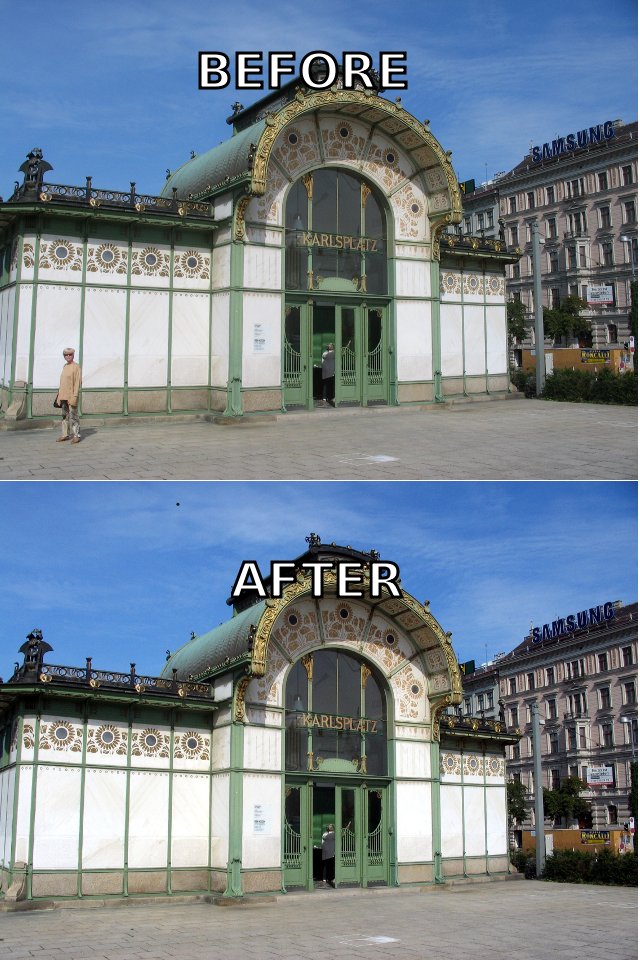
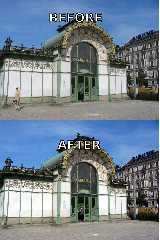
No, automatic filters can't decide what to remove on their own*.  One
has to use the clone stamp tool for that (see attached).

It may come as a shock to you, but GIMP does come with tutorials and
documentation!

*Despite what they say about Photoshop CS5's or Gimp's smart removal
filter.
--
/*Francois Labreque*/#local a=x+y;#local b=x+a;#local c=a+b;#macro P(F//
/*    flabreque    */L)polygon{5,F,F+z,L+z,L,F pigment{rgb 9}}#end union
/*        @        */{P(0,a)P(a,b)P(b,c)P(2*a,2*b)P(2*b,b+c)P(b+c,<2,3>)
/*   gmail.com     */}camera{orthographic location<6,1.25,-6>look_at a }
Post a reply to this message
Attachments:
Download 'clonestamp.jpg' (149 KB)
Preview of image 'clonestamp.jpg'
|
|
| |
| |
|
|
|
|
| |
| |
|
|
> It may come as a shock to you, but GIMP does come with tutorials and
> documentation!

I spent about a week reading Grokking the GIMP. I still can't get much
more than the most basic tasks done with it. The GUI seems to have been
designed with the explicit goal of making everything maximally difficult
to understand...
Post a reply to this message
|
|
| |
| |
|
|
|
|
| |
| |
|
|
Le 2011-12-01 20:11, Darren New a écrit :
> On 12/1/2011 12:50, Orchid XP v8 wrote:
>> Yeah, I don't even want to think about what I would have to pay to get a
>> photograph of the steaming jungles of Borneo...
>
> It depends on the quality, too. Get someone who lives in Borneo to
> photograph it for you.
>
> The expensive photos are the ones you can only use once, like the photo
> you take for a package cover (like, the contents of the frozen dinner),
> especially if it takes a lot of set up (like arranging each grain of
> rice before taking the photo).
>
> You want a picture of an elephant in Africa? We have lots of those
> floating around.
>

Floating elephants?  May I suggest laying off the bottle a bit?

;)

--
/*Francois Labreque*/#local a=x+y;#local b=x+a;#local c=a+b;#macro P(F//
/*    flabreque    */L)polygon{5,F,F+z,L+z,L,F pigment{rgb 9}}#end union
/*        @        */{P(0,a)P(a,b)P(b,c)P(2*a,2*b)P(2*b,b+c)P(b+c,<2,3>)
/*   gmail.com     */}camera{orthographic location<6,1.25,-6>look_at a }
Post a reply to this message
|
|
| |
| |
|
|
|
|
| |
| |
|
|
On 12/2/2011 8:16 AM, Francois Labreque wrote:
> No, automatic filters can't decide what to remove on their own*. One has
> to use the clone stamp tool for that (see attached).
>
> *Despite what they say about Photoshop CS5's or Gimp's smart removal
> filter.

While you are certainly correct in general, I bet Adobe's content aware
fill would have handled your example image about as well as you did
manually (which is quite well).  I didn't try it though, so there's a
chance I'm wrong.
Post a reply to this message
|
|
| |
| |
|
|
|
|
| |
| |
|
|
Le 2011-12-02 11:19, Invisible a écrit :
>> It may come as a shock to you, but GIMP does come with tutorials and
>> documentation!
>
> I spent about a week reading Grokking the GIMP. I still can't get much
> more than the most basic tasks done with it. The GUI seems to have been
> designed with the explicit goal of making everything maximally difficult
> to understand...

Yet, you have no problem reading mathematical proofs...

--
/*Francois Labreque*/#local a=x+y;#local b=x+a;#local c=a+b;#macro P(F//
/*    flabreque    */L)polygon{5,F,F+z,L+z,L,F pigment{rgb 9}}#end union
/*        @        */{P(0,a)P(a,b)P(b,c)P(2*a,2*b)P(2*b,b+c)P(b+c,<2,3>)
/*   gmail.com     */}camera{orthographic location<6,1.25,-6>look_at a }
Post a reply to this message
|
|
| |
| |
|
|
|
|
| |
| |
|
|
On 02/12/2011 04:42 PM, Francois Labreque wrote:
> Le 2011-12-02 11:19, Invisible a écrit :
>>> It may come as a shock to you, but GIMP does come with tutorials and
>>> documentation!
>>
>> I spent about a week reading Grokking the GIMP. I still can't get much
>> more than the most basic tasks done with it. The GUI seems to have been
>> designed with the explicit goal of making everything maximally difficult
>> to understand...
>
> Yet, you have no problem reading mathematical proofs...

Depends. A lot of *proofs* seem to be written in the most complicated
manner too. :-P But discussions involving mathematics? Yeah, I can
usually deal with that.
Post a reply to this message
|
|
| |
| |
|
|
|
|
| |
| |
|
|
Le 2011-12-01 09:36, Invisible a écrit :
>>> POV-Ray makes nice stone textures (unless you're a geologist) and wood
>>> textures (unless you're a dendrologist). Last time I checked, there's no
>>> way of making a canvas texture or a wet paper texture or a spilled paint
>>> texture or...
>>
>> By playing with gradient and checker textures, I'm sure you could come
>> up with a decent canvas texture in less than half an hour.
>
> Off you go then. :-)
>

Challenge accepted.  I have a few hours ahead of me saturday as I baby
sit an Oracle upgrade.


--
/*Francois Labreque*/#local a=x+y;#local b=x+a;#local c=a+b;#macro P(F//
/*    flabreque    */L)polygon{5,F,F+z,L+z,L,F pigment{rgb 9}}#end union
/*        @        */{P(0,a)P(a,b)P(b,c)P(2*a,2*b)P(2*b,b+c)P(b+c,<2,3>)
/*   gmail.com     */}camera{orthographic location<6,1.25,-6>look_at a }
Post a reply to this message
|
|
| |
| |
|
|
|
|
| |
| |
|
|
On 12/2/2011 8:19, Invisible wrote:
> I spent about a week reading Grokking the GIMP. I still can't get much more
> than the most basic tasks done with it.

I found the GIMP UI to be about on par with the Blender UI. Both suck.

Paint programs for some reason seem to have awful UIs. I haven't tried
photoshop, but even something like Paint Shop Pro has a UI that's pretty
opaque at time. Hey, I want to draw a circle with a blue border full of
red... OK, time to go figure out why it won't do it in the obvious way.

--
Darren New, San Diego CA, USA (PST)
   People tell me I am the counter-example.
Post a reply to this message
|
|
| |
| |
|
|
|
|
| |
| |
|
|
On 12/2/2011 1:22, Invisible wrote:
> that a guy sitting in their bedroom cannot possibly hope to compete with or
> even approach this level of perfection in a finished design.

Meh. It just takes a lot longer. Buying better paint programs just makes it
faster. A $100 paint program gets you 80% of the way there if you don't need
fancy filters like to do content-aware fill or unblur a photo.

>> Sure. Clone brush.
> That doesn't work.
> No, wait, I rephrase: I have never yet seen it work. Is that better?

You have. Did you look at the links to the album on amazon I posted. That's
how I did it - all manually.

> God only knows how you hire the good guys...
Find a web site you like. Read the credits. :-)

> Yeah, probably. Few people apparently realise that being good at something
> is not the same as being good at teaching it...

Indeed.

--
Darren New, San Diego CA, USA (PST)
   People tell me I am the counter-example.
Post a reply to this message
|
|
| |
| |
|
|
|
|
| |
| |
|
|
On 02/12/2011 07:39 PM, Darren New wrote:

> Paint programs for some reason seem to have awful UIs.

I miss DPaint...

--
http://blog.orphi.me.uk/
http://www.zazzle.com/MathematicalOrchid*
Post a reply to this message
|
|
| |
| |
|
|
|
|
| |
| |
|
|
On 12/2/2011 13:53, Orchid XP v8 wrote:
> On 02/12/2011 07:39 PM, Darren New wrote:
>
>> Paint programs for some reason seem to have awful UIs.
>
> I miss DPaint...

Funny enough, I was thinking of adding a comment to that effect before I
sent the message.

--
Darren New, San Diego CA, USA (PST)
   People tell me I am the counter-example.
Post a reply to this message
|
|
| |
| |
|
|
|
|
| |
| |
|
|
On Fri, 02 Dec 2011 09:01:10 +0000, Invisible wrote:

>> Photos are *not* expensive.
>
> Interesting. Last time my parents had me and my sister photographed and
> framed, it ended up costing several hundred pounds. Obviously, I do not
> have that kind of money just laying around.

That's the joy of Google Maps at work - finding something that fits the
budget. :)

> (I did try using Google to find the place where we had it done, but it
> doesn't seem to exist any more... Some shop called Olan Mills. Wikipedia
> says something about the UK group being liquidated...)

Now *that's* funny, because my parents used to take my brother and I to
an Olan Mills (or perhaps it was Olin Mills?) studio in the Minneapolis
area.

Jim
Post a reply to this message
|
|
| |
| |
|
|
|
|
| |
| |
|
|
On Fri, 02 Dec 2011 09:02:04 +0000, Invisible wrote:

> On 02/12/2011 01:04 AM, Darren New wrote:
>> On 12/1/2011 6:24, Invisible wrote:
>>> Given that calligraphy is a rare skill,
>>
>> And on what basis do you make that claim? That the people you never
>> asked never told you?
>
> That I've seen people try to do it, but I've never seen anyone succeed.

Try asking someone from Japan - Japanese calligraphy is extremely
intricate and one can spend years studying it, but those who do can be
very successful at it, and it's not a minority of the population (my
sister-in-law there studies and practices it).

Jim
Post a reply to this message
|
|
| |
| |
|
|
|
|
| |
| |
|
|
Le 2011-12-02 11:56, Francois Labreque a écrit :
> Le 2011-12-01 09:36, Invisible a écrit :
>>>> POV-Ray makes nice stone textures (unless you're a geologist) and wood
>>>> textures (unless you're a dendrologist). Last time I checked,
>>>> there's no
>>>> way of making a canvas texture or a wet paper texture or a spilled
>>>> paint
>>>> texture or...
>>>
>>> By playing with gradient and checker textures, I'm sure you could come
>>> up with a decent canvas texture in less than half an hour.
>>
>> Off you go then. :-)
>>
>
> Challenge accepted. I have a few hours ahead of me saturday as I baby
> sit an Oracle upgrade.
>
>

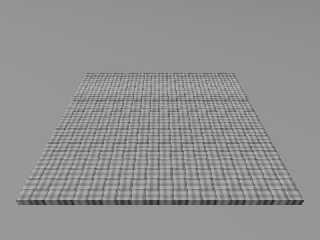
Sorry for being on topic...

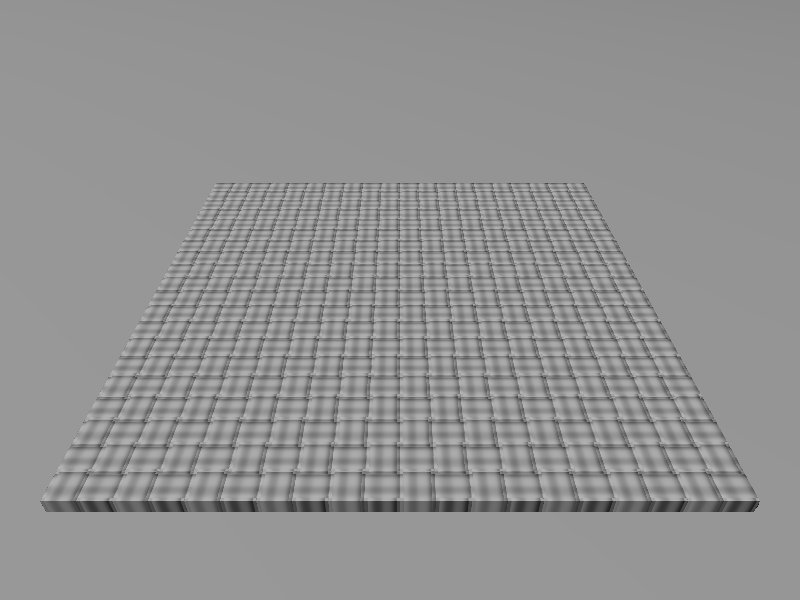
Took a little over an hour in total, since I was distracted by my work
on the other PC, but I didn't spend more than 30 minutes writing the
code, even though I haven't touched POV-Ray in almost 5 years.


--
/*Francois Labreque*/#local a=x+y;#local b=x+a;#local c=a+b;#macro P(F//
/*    flabreque    */L)polygon{5,F,F+z,L+z,L,F pigment{rgb 9}}#end union
/*        @        */{P(0,a)P(a,b)P(b,c)P(2*a,2*b)P(2*b,b+c)P(b+c,<2,3>)
/*   gmail.com     */}camera{orthographic location<6,1.25,-6>look_at a }
Post a reply to this message
Attachments:
Download 'canvas.pov.txt' (3 KB)
Download 'canvas.jpg' (46 KB)
Preview of image 'canvas.jpg'
|
|
| |
| |
|
|
|
|
| |
| |
|
|
On 03/12/2011 01:51 AM, Jim Henderson wrote:
> On Fri, 02 Dec 2011 09:01:10 +0000, Invisible wrote:
>
>>> Photos are *not* expensive.
>>
>> Interesting. Last time my parents had me and my sister photographed and
>> framed, it ended up costing several hundred pounds. Obviously, I do not
>> have that kind of money just laying around.
>
> That's the joy of Google Maps at work - finding something that fits the
> budget. :)

In my enterience, Google Maps is very bad at figuring out exactly where
stuff is (postcodes aren't very accurate spatially, after all), and an
extremely small number of business show up on the maps. Much better to
do a normal Google web search and go from there...

>> (I did try using Google to find the place where we had it done, but it
>> doesn't seem to exist any more... Some shop called Olan Mills. Wikipedia
>> says something about the UK group being liquidated...)
>
> Now *that's* funny, because my parents used to take my brother and I to
> an Olan Mills (or perhaps it was Olin Mills?) studio in the Minneapolis
> area.

Yeah, apparently it's an American company. (I always thought it was just
the one small shop in the village highstreet, but no, apparently it's
this huge company...) Apparently only the UK side shut down.

--
http://blog.orphi.me.uk/
http://www.zazzle.com/MathematicalOrchid*
Post a reply to this message
|
|
| |
| |
|
|
|
|
| |
| |
|
|
On Sun, 04 Dec 2011 10:20:14 +0000, Orchid XP v8 wrote:

> On 03/12/2011 01:51 AM, Jim Henderson wrote:
>> On Fri, 02 Dec 2011 09:01:10 +0000, Invisible wrote:
>>
>>>> Photos are *not* expensive.
>>>
>>> Interesting. Last time my parents had me and my sister photographed
>>> and framed, it ended up costing several hundred pounds. Obviously, I
>>> do not have that kind of money just laying around.
>>
>> That's the joy of Google Maps at work - finding something that fits the
>> budget. :)
>
> In my enterience, Google Maps is very bad at figuring out exactly where
> stuff is (postcodes aren't very accurate spatially, after all), and an
> extremely small number of business show up on the maps. Much better to
> do a normal Google web search and go from there...

All I did was go to Milton Keynes in maps and then searched on
"photography studio".  Worked just fine.

>>> (I did try using Google to find the place where we had it done, but it
>>> doesn't seem to exist any more... Some shop called Olan Mills.
>>> Wikipedia says something about the UK group being liquidated...)
>>
>> Now *that's* funny, because my parents used to take my brother and I to
>> an Olan Mills (or perhaps it was Olin Mills?) studio in the Minneapolis
>> area.
>
> Yeah, apparently it's an American company. (I always thought it was just
> the one small shop in the village highstreet, but no, apparently it's
> this huge company...) Apparently only the UK side shut down.

Interesting....

Jim
Post a reply to this message
|
|
| |
| |
|
|
|
|
| |
|
|