|
|
|
|
|
|
| |
| |
|
|
|
|
| |
| |
|
|
OK, so once again I've been looking at this:

http://www.mezzoblue.com/zengarden/alldesigns/

I still don't get how this is actually possible - for two reasons.

First of all, I'm astonished that you can actually perform radical
layout transformations like this just using CSS. It boggles my mind that
this is even theoretically possible. I have literally no idea how it's
possible to do complex graphical work like that and have all the bits
actually line up. I shudder to think how hard it would be to code all
this up.

Second, how in the name of goodness can a human being look at a blank
screen and come up with something as cool as some of these designs? How
is it possible?! How do you just /create/ ideas out of nothingness like
that? I don't understand how it's possible.

It would be nice if I could walk away saying I've found inspiration for
how I can design things to look better in future. But almost all of the
really good designs feature impossible elements.

- Many designs have photographs of cinematic locations, exotic flora and
fauna, historic artefacts or beautiful female models. Normal people
cannot obtain such things.

- Lots of designs have astonishingly elaborate calligraphy. Again, not
something that normal humans can do.

- Some designs feature hand-drawn artwork. Almost nobody can draw as
nicely as this.

- Many of the designs feature texturing and effects which I cannot
imagine any way of ever constructing. How on Earth can you take a
photograph of some grass and then loop it seamlessly? How can you make
tea stains or splintered edges using just computer software? How do you
fake the texture of wet paper? It all seems so impossible...

I suppose we can sum all this up as "I really suck at graphic design". :-(
Post a reply to this message
|
|
| |
| |
|
|
|
|
| |
| |
|
|
Invisible escreveu:
> OK, so once again I've been looking at this:
>
> http://www.mezzoblue.com/zengarden/alldesigns/
>
> I still don't get how this is actually possible - for two reasons.

There's only one reason: you enjoy being surprised at how people
overcome limitations and work out a way to make the impossible possible
instead of crying that it is not possible. :)

> First of all, I'm astonished that you can actually perform radical
> layout transformations like this just using CSS. It boggles my mind that
> this is even theoretically possible.

RTFineM, specially the parts on flow layout.

> Second, how in the name of goodness can a human being look at a blank
> screen and come up with something as cool as some of these designs?

there's nothing better than a blank screen to let imagination flow.

> How
> is it possible?! How do you just /create/ ideas out of nothingness like
> that? I don't understand how it's possible.

Fiat Lux. :)

> - Many designs have photographs of cinematic locations, exotic flora and
> fauna, historic artefacts or beautiful female models. Normal people
> cannot obtain such things.

Then they either buy from stock picture sets or have more luck than you
on vacations.

> - Lots of designs have astonishingly elaborate calligraphy. Again, not
> something that normal humans can do.

They are called calligraphers.

> - Some designs feature hand-drawn artwork. Almost nobody can draw as
> nicely as this.

They are called painters and pencilers.  Check out vast amounts of such
gorgeous works from the best in the industry here:

http://forums.cgsociety.org/forumdisplay.php?f=137

It should be noted that technology certainly helped here in that old
painters had only simple brushes at their disposal, while today you have
textured brushes, clone brushes, and many layers of painting separate
scene elements.

> - How on Earth can you take a
> photograph of some grass and then loop it seamlessly?

You use some seamless filter in your picture editor of choice.

> How can you make
> tea stains or splintered edges using just computer software?

It's again a filter building up on some selection, randomly disturbing
it's edges and then filling it.

> How do you
> fake the texture of wet paper? It all seems so impossible...

You look at a huge bulk of metal flying and say it is impossible.
Surely some optics illusion.

> I suppose we can sum all this up as "I really suck at graphic design". :-(

Like most of us programmers.  That's why web design should be in the
hands of designers, not programmers.  They come up with some cool
design, you code the needed CSS. ;)
Post a reply to this message
|
|
| |
| |
|
|
|
|
| |
| |
|
|
Am 29.11.2011 16:46, schrieb Invisible:

> It would be nice if I could walk away saying I've found inspiration for
> how I can design things to look better in future. But almost all of the
> really good designs feature impossible elements.
>
> - Many designs have photographs of cinematic locations, exotic flora and
> fauna, historic artefacts or beautiful female models. Normal people
> cannot obtain such things.

Oh really?

You've obviously never visited services like http://www.fotolia.com then.

Similar services exist for hand-drawn art, and also - I would guess -
for calligraphy.

> ...
>
> I suppose we can sum all this up as "I really suck at graphic design". :-(

Yes, apparently :-P
Post a reply to this message
|
|
| |
| |
|
|
|
|
| |
| |
|
|
On 11/29/2011 7:46, Invisible wrote:
> - Many designs have photographs of cinematic locations, exotic flora and
> fauna, historic artefacts or beautiful female models. Normal people cannot
> obtain such things.

Google for creative commons images, or stock photography. Pay someone to
take a specific photo if you want. Some people do this for a living.

> - Lots of designs have astonishingly elaborate calligraphy. Again, not
> something that normal humans can do.

It takes a lot of practice.

> - Some designs feature hand-drawn artwork. Almost nobody can draw as nicely
> as this.

"Drawing on the Right Side of the Brain" is said to be a very good book. I
never managed to find the time to follow the instructions to learn this, but
it's something that you can learn the mechanics of if properly taught.
Basically, you need someone who knows what you're actually doing wrong to
teach you, rather than someone who only knows how to do it right.

> - Many of the designs feature texturing and effects which I cannot imagine
> any way of ever constructing. How on Earth can you take a photograph of some
> grass and then loop it seamlessly?

It's not hard. I have a bunch of things like that. Look up "seamless texture
tutorial."  I have a script that does the mechanical parts, if you like.

http://darren.s3.amazonaws.com/Seamless/album/index.html

It just takes a bit of practice, watching out for good opportunities for
pictures, figuring out which pictures would make good textures, and then
smoothing it out. These are all textures from the video game I'm
sorta-kinda-still working on.

> How can you make tea stains or splintered
> edges using just computer software?

Oh come now.

> How do you fake the texture of wet
> paper? It all seems so impossible...

Oh *really* come now. :-)   This is povray.off-topic, you know. ;-)

> I suppose we can sum all this up as "I really suck at graphic design". :-(

That's possible too. It takes practice, is all. Not that I'm any good at it,
but I'm a lot better than I used to be.

--
Darren New, San Diego CA, USA (PST)
   People tell me I am the counter-example.
Post a reply to this message
|
|
| |
| |
|
|
|
|
| |
| |
|
|
>> - Many designs have photographs of cinematic locations, exotic flora and
>> fauna, historic artefacts or beautiful female models. Normal people
>> cannot obtain such things.
>
> Oh really?
>
> You've obviously never visited services like http://www.fotolia.com then.

Well no - I can't afford such things. I mean, sure, if some big
corporation is paying, then you can afford to buy artwork. But if it's
just you, it's not really feasible.

> Similar services exist for hand-drawn art, and also - I would guess -
> for calligraphy.

See above.

>> I suppose we can sum all this up as "I really suck at graphic design".
>> :-(
>
> Yes, apparently :-P

...and the list of things I suck at gets slightly longer... :'{

--
http://blog.orphi.me.uk/
http://www.zazzle.com/MathematicalOrchid*
Post a reply to this message
|
|
| |
| |
|
|
|
|
| |
| |
|
|
On 29/11/2011 05:05 PM, Darren New wrote:
> On 11/29/2011 7:46, Invisible wrote:
>> - Many designs have photographs of cinematic locations, exotic flora and
>> fauna, historic artefacts or beautiful female models. Normal people
>> cannot
>> obtain such things.
>
> Google for creative commons images, or stock photography. Pay someone to
> take a specific photo if you want. Some people do this for a living.

Sure. But it's damned expensive. Would you really do that just to enter
a little competition for fun?

>> - Lots of designs have astonishingly elaborate calligraphy. Again, not
>> something that normal humans can do.
>
> It takes a lot of practice.

Indeed. It's a skill few people have.

>> - Some designs feature hand-drawn artwork. Almost nobody can draw as
>> nicely as this.
>
> "Drawing on the Right Side of the Brain" is said to be a very good book.

I own it. It didn't really help.

>> How on Earth can you take a photograph of some
>> grass and then loop it seamlessly?
>
> It's not hard. I have a bunch of things like that. Look up "seamless
> texture tutorial." I have a script that does the mechanical parts, if
> you like.

I can't figure out how it's even possible in theory.

> http://darren.s3.amazonaws.com/Seamless/album/index.html

Seemless?

>> How can you make tea stains or splintered
>> edges using just computer software?
>
> Oh come now.

I gather this is called a "handwaving argument".

>> How do you fake the texture of wet paper? It all seems so impossible...
>
> Oh *really* come now. :-) This is povray.off-topic, you know. ;-)

And presumably most people here have spent enough time failing to fake
it to realise that it's Really Hard.

>> I suppose we can sum all this up as "I really suck at graphic design".
>> :-(
>
> That's possible too. It takes practice, is all. Not that I'm any good at
> it, but I'm a lot better than I used to be.

There must be some kind of trick to it. It's like trying to write a
compiler in BBC BASIC. It seems so impossible, you wonder how anybody
can write a compiler. And they can, and that's because they don't use
BBC BASIC. :-P

--
http://blog.orphi.me.uk/
http://www.zazzle.com/MathematicalOrchid*
Post a reply to this message
|
|
| |
| |
|
|
|
|
| |
| |
|
|
Am 29.11.2011 21:34, schrieb Orchid XP v8:
>>> - Many designs have photographs of cinematic locations, exotic flora and
>>> fauna, historic artefacts or beautiful female models. Normal people
>>> cannot obtain such things.
>>
>> Oh really?
>>
>> You've obviously never visited services like http://www.fotolia.com then.
>
> Well no - I can't afford such things. I mean, sure, if some big
> corporation is paying, then you can afford to buy artwork. But if it's
> just you, it's not really feasible.

Um... what? Did you even have a look at the prices? Of course, if you
change your mind about your home page design every other week, things
might become a bit costly after all ;-)

Note that they make their images available (at low quality) without
payment as a "tryout", so that you can toy around and experiment with
the design before you settle for anything to pay for.

If you really want your homepage to look good, I guess some $30 isn't
such a huge investment (heck, it's just half a hyped computer game),
which at this particular site can buy you e.g. one image at a resolution
of 1600x1200 for the background, plus some 6-20 additional pieces of
decorative artwork at resolutions of 400x300 to 800x600. (Note that for
your website to look good, you want a consistent layout, so you don't
need a gazillion of different backgrounds.)

>>> I suppose we can sum all this up as "I really suck at graphic design".
>>> :-(
>>
>> Yes, apparently :-P
>
> ...and the list of things I suck at gets slightly longer... :'{

Hm, let's see what I suck at...

- Basketball, soccer, hockey, handball, boxing, and plenty other contact
sports too numerous to mention; as well as running, jumping, throwing
(ball, discus, spear, whatever), or any other kind of athletics; skiing,
skating, swimming, golfing; bowling, tennis, squash; boxing, karate,
judo, or any martial arts you could name; I actually even suck at the
few types of sports I do like, compared with people who make a living of
it or even just do it as their primary hobby.

- Playing a church organ, saxophone, violin, flute, and enough other
instruments to fill an orchestra or two...

- Dancing rock & roll, foxtrot, tango, and actually any dance you name
except maybe the simplest of waltz...

- Sales & purchase, or anything else that requires trying to make a good
deal without admitting it.

- Quantum mechanics, string theory, cosmology, statistics and plenty of
other maths & physics stuff, even though I'm pretty interested in it.

- Painting with oil, acrylic, aquarell or water colors; sculpting;
depicting humans or animals; cubism, expressionism, impressionism,
pointillism, surrealism, and probably any other style except naive.

- Linux system administration; function-oriented software development;
web design & programming.

- Dog, cat or bird breeding; horse riding; collecting stamps, coins,
fossils, minerals or butterflies; gardening; ham radio operation;
sailing; gliding; car tuning; hiking; free climbing; archery; wild game
hunting; experimental archaeology; ...

- Heart surgery; metallurgy; meteorology; architecture; bricklaying,
welding; ...


Thinking about it, I guess I suck at more than 99% of all recreational,
professional or other activities in existence. And I guess that actually
everyone on earth does.
Post a reply to this message
|
|
| |
| |
|
|
|
|
| |
| |
|
|
Am 29.11.2011 21:39, schrieb Orchid XP v8:
> On 29/11/2011 05:05 PM, Darren New wrote:
>> On 11/29/2011 7:46, Invisible wrote:

>>> I suppose we can sum all this up as "I really suck at graphic design".
>>> :-(
>>
>> That's possible too. It takes practice, is all. Not that I'm any good at
>> it, but I'm a lot better than I used to be.
>
> There must be some kind of trick to it. It's like trying to write a
> compiler in BBC BASIC. It seems so impossible, you wonder how anybody
> can write a compiler. And they can, and that's because they don't use
> BBC BASIC. :-P

Indeed. For instance, they use more than just old CSS1.
Post a reply to this message
|
|
| |
| |
|
|
|
|
| |
| |
|
|
On Tue, 29 Nov 2011 23:04:49 +0100, clipka wrote:

> Thinking about it, I guess I suck at more than 99% of all recreational,
> professional or other activities in existence. And I guess that actually
> everyone on earth does.

I think it's fair to say that most people suck at most things - and
focusing on what one sucks at isn't a very constructive way to live life.

(Which I think is your point here <g>)

Jim
Post a reply to this message
|
|
| |
| |
|
|
|
|
| |
| |
|
|
Le 2011-11-29 15:39, Orchid XP v8 a écrit :
> On 29/11/2011 05:05 PM, Darren New wrote:
>> On 11/29/2011 7:46, Invisible wrote:
>>> - Many designs have photographs of cinematic locations, exotic flora and
>>> fauna, historic artefacts or beautiful female models. Normal people
>>> cannot
>>> obtain such things.
>>
>> Google for creative commons images, or stock photography. Pay someone to
>> take a specific photo if you want. Some people do this for a living.
>
> Sure. But it's damned expensive. Would you really do that just to enter
> a little competition for fun?
>

It's not like you trained week after week after week to enter a dance
competition, right?  I mean, who would do that for fun?  ;)

Alternately, you can browser image hosting sites and look for images
which have licencing terms that meet your needs.  Or browse through your
"My Pictures" folder.  Most people will have something interesting in there.

>>> - Lots of designs have astonishingly elaborate calligraphy. Again, not
>>> something that normal humans can do.
>>
>> It takes a lot of practice.
>
> Indeed. It's a skill few people have.
>

Yet, strangley enough, most people who make a living out of it are
rather good at it.  It's almost as if there was some sort of
relationship between the two!


--
/*Francois Labreque*/#local a=x+y;#local b=x+a;#local c=a+b;#macro P(F//
/*    flabreque    */L)polygon{5,F,F+z,L+z,L,F pigment{rgb 9}}#end union
/*        @        */{P(0,a)P(a,b)P(b,c)P(2*a,2*b)P(2*b,b+c)P(b+c,<2,3>)
/*   gmail.com     */}camera{orthographic location<6,1.25,-6>look_at a }
Post a reply to this message
|
|
| |
| |
|
|
|
|
| |
| |
|
|
>>> Google for creative commons images, or stock photography. Pay someone to
>>> take a specific photo if you want. Some people do this for a living.
>>
>> Sure. But it's damned expensive. Would you really do that just to enter
>> a little competition for fun?
>
> It's not like you trained week after week after week to enter a dance
> competition, right? I mean, who would do that for fun? ;)

I spent a whole year learning diabolo. Hint: doing that doesn't cost any
money. I would think there can't be too many people who can just afford
to blow $8,000 on buying some images just to enter a competition.

> Alternately, you can browser image hosting sites and look for images
> which have licencing terms that meet your needs.

What makes you think there will be anything with acceptable licensing terms?

> Or browse through your
> "My Pictures" folder. Most people will have something interesting in there.

It's empty?

>>>> - Lots of designs have astonishingly elaborate calligraphy. Again, not
>>>> something that normal humans can do.
>>>
>>> It takes a lot of practice.
>>
>> Indeed. It's a skill few people have.
>
> Yet, strangley enough, most people who make a living out of it are
> rather good at it. It's almost as if there was some sort of relationship
> between the two!

Well /obviously/ people can make money out of it, given that very few
people are good at it. That's not really relevant to my point - a
typical person wanting to put a website [or other publication] together
can't access beautiful calligraphy. :-P
Post a reply to this message
|
|
| |
| |
|
|
|
|
| |
| |
|
|
Am 30.11.2011 15:50, schrieb Invisible:
>>>> Google for creative commons images, or stock photography. Pay
>>>> someone to
>>>> take a specific photo if you want. Some people do this for a living.
>>>
>>> Sure. But it's damned expensive. Would you really do that just to enter
>>> a little competition for fun?
>>
>> It's not like you trained week after week after week to enter a dance
>> competition, right? I mean, who would do that for fun? ;)
>
> I spent a whole year learning diabolo. Hint: doing that doesn't cost any
> money. I would think there can't be too many people who can just afford
> to blow $8,000 on buying some images just to enter a competition.

Where the bloop do you get those figures from?

Sure, if you buy the *exclusive* rights to some professional photography
I guess you may end up with such numbers. Hint: Don't do that;
Non-exclusive licenses to use an image with limited resolution will do,
and will leave you with a price tag close to what I guess your diabolo
might have costed.

>> Yet, strangley enough, most people who make a living out of it are
>> rather good at it. It's almost as if there was some sort of relationship
>> between the two!
>
> Well /obviously/ people can make money out of it, given that very few
> people are good at it. That's not really relevant to my point - a
> typical person wanting to put a website [or other publication] together
> can't access beautiful calligraphy. :-P

Want to make a bet?
Post a reply to this message
|
|
| |
| |
|
|
|
|
| |
| |
|
|
On 11/29/2011 12:39, Orchid XP v8 wrote:
> Sure. But it's damned expensive. Would you really do that just to enter a
> little competition for fun?

You're missing the point. "Creative Commons" is the GPL of artwork. There's
a bunch of stuff you can use free, or you can use if you credit the author,
or etc.

> I can't figure out how it's even possible in theory.

I had to google around for about 15 minutes before I found an actual
explanation, rather than someone just saying "use the photoshop filter".

Basically, you rotate the image 50% left and 50% up. (And by "rotate" I mean
it in the shift-pixels-left-wrap-around-at-edge sense, not the
how-many-degrees sense.)

Now your edges match up, right?  Yep!

Now fix the seams in the middle.

>> http://darren.s3.amazonaws.com/Seamless/album/index.html
>
> Seemless?

I don't know what that means.

> I gather this is called a "handwaving argument".

No, it's called being amused by you complaining about making textures in a
newsgroup run by people who make the best texture-creator in the world. :-)

>> That's possible too. It takes practice, is all. Not that I'm any good at
>> it, but I'm a lot better than I used to be.
>
> There must be some kind of trick to it.

Just education and practice. Like there's a "trick" to debugging a program.

--
Darren New, San Diego CA, USA (PST)
   People tell me I am the counter-example.
Post a reply to this message
|
|
| |
| |
|
|
|
|
| |
| |
|
|
On 01/12/2011 03:36 AM, Darren New wrote:
> On 11/29/2011 12:39, Orchid XP v8 wrote:
>> Sure. But it's damned expensive. Would you really do that just to enter a
>> little competition for fun?
>
> You're missing the point. "Creative Commons" is the GPL of artwork.
> There's a bunch of stuff you can use free, or you can use if you credit
> the author, or etc.

And you're saying stuff like that actually exists in the real world, and
some of it is actually good quality?

>> I can't figure out how it's even possible in theory.
>
> I had to google around for about 15 minutes before I found an actual
> explanation, rather than someone just saying "use the photoshop filter".

Because, of course, everybody can afford Photoshop(r)... Oh, wait...

> Basically, you rotate the image 50% left and 50% up. (And by "rotate" I
> mean it in the shift-pixels-left-wrap-around-at-edge sense, not the
> how-many-degrees sense.)
>
> Now your edges match up, right? Yep!
>
> Now fix the seams in the middle.

I still don't see how you can "fix" the seems. It's not like you can
move individual blades of grass around.

>>> http://darren.s3.amazonaws.com/Seamless/album/index.html
>>
>> Seemless?
>
> I don't know what that means.

I mean most of the pictures I looked at have fairly obvious rough edges
where the seems don't line up.

>> I gather this is called a "handwaving argument".
>
> No, it's called being amused by you complaining about making textures in
> a newsgroup run by people who make the best texture-creator in the
> world. :-)

POV-Ray makes nice stone textures (unless you're a geologist) and wood
textures (unless you're a dendrologist). Last time I checked, there's no
way of making a canvas texture or a wet paper texture or a spilled paint
texture or...

>>> That's possible too. It takes practice, is all. Not that I'm any good at
>>> it, but I'm a lot better than I used to be.
>>
>> There must be some kind of trick to it.
>
> Just education and practice. Like there's a "trick" to debugging a program.

Somebody somewhere must actually /teach/ graphic design skills...

Then again, I spent 6 months at drawing classes, and I still can't draw.
So maybe it's just that only a tiny fraction of the population will ever
be good at graphic design?
Post a reply to this message
|
|
| |
| |
|
|
|
|
| |
| |
|
|
Invisible <voi### [at] dev null> wrote:
> On 01/12/2011 03:36 AM, Darren New wrote:
?
> >
> > You're missing the point. "Creative Commons" is the GPL of artwork.
> > There's a bunch of stuff you can use free, or you can use if you credit
> > the author, or etc.
>
> And you're saying stuff like that actually exists in the real world, and
> some of it is actually good quality?
"There's no free lunch" doesn't apply to digital economics of an open-source
nature where there's an advantage to sharing with others (to showcase skills or
simply share maintanance troubles).
It also doesn't apply to public domain goodies. You can read all of Shakespeare
or use classic painting copies for free.
> >> I can't figure out how it's even possible in theory.
> >
> > I had to google around for about 15 minutes before I found an actual
> > explanation, rather than someone just saying "use the photoshop filter".
>
> Because, of course, everybody can afford Photoshop(r)... Oh, wait...
Gimp has a straightforward Seamless feature. Filters > Map > Make Seamless (or
Tileable, I don't remember). Then you can test by choosing Filters > Map >
Tiles and choosing % as unit and 200 as value.
> POV-Ray makes nice stone textures (unless you're a geologist) and wood
> textures (unless you're a dendrologist). Last time I checked, there's no
> way of making a canvas texture or a wet paper texture or a spilled paint
> texture or...
Ah, the desire to reproduce all of nature fractal random designs through pure
math. No doubt some will be up to your challenge, but in this day and age it's
so cheap to just point your camera to nature itself, grab a few samples and make
it seamless with some 2D feature...
> Then again, I spent 6 months at drawing classes, and I still can't draw.
> So maybe it's just that only a tiny fraction of the population will ever
> be good at graphic design?
It's possible. You can feel better though by knowing they secretely wish to
know how to program so they could come up with their own tools... ;) null> wrote:
> On 01/12/2011 03:36 AM, Darren New wrote:
?
> >
> > You're missing the point. "Creative Commons" is the GPL of artwork.
> > There's a bunch of stuff you can use free, or you can use if you credit
> > the author, or etc.
>
> And you're saying stuff like that actually exists in the real world, and
> some of it is actually good quality?
"There's no free lunch" doesn't apply to digital economics of an open-source
nature where there's an advantage to sharing with others (to showcase skills or
simply share maintanance troubles).
It also doesn't apply to public domain goodies. You can read all of Shakespeare
or use classic painting copies for free.
> >> I can't figure out how it's even possible in theory.
> >
> > I had to google around for about 15 minutes before I found an actual
> > explanation, rather than someone just saying "use the photoshop filter".
>
> Because, of course, everybody can afford Photoshop(r)... Oh, wait...
Gimp has a straightforward Seamless feature. Filters > Map > Make Seamless (or
Tileable, I don't remember). Then you can test by choosing Filters > Map >
Tiles and choosing % as unit and 200 as value.
> POV-Ray makes nice stone textures (unless you're a geologist) and wood
> textures (unless you're a dendrologist). Last time I checked, there's no
> way of making a canvas texture or a wet paper texture or a spilled paint
> texture or...
Ah, the desire to reproduce all of nature fractal random designs through pure
math. No doubt some will be up to your challenge, but in this day and age it's
so cheap to just point your camera to nature itself, grab a few samples and make
it seamless with some 2D feature...
> Then again, I spent 6 months at drawing classes, and I still can't draw.
> So maybe it's just that only a tiny fraction of the population will ever
> be good at graphic design?
It's possible. You can feel better though by knowing they secretely wish to
know how to program so they could come up with their own tools... ;)
Post a reply to this message
|
|
| |
| |
|
|
|
|
| |
| |
|
|
Am 01.12.2011 11:02, schrieb Invisible:

> I still don't see how you can "fix" the seems. It's not like you can
> move individual blades of grass around.

For /really/ good seamless textures, that's exactly what you do.

You haven't spent much time with Photoshop or Gimp, have you?

> POV-Ray makes nice stone textures (unless you're a geologist) and wood
> textures (unless you're a dendrologist). Last time I checked, there's no
> way of making a canvas texture or a wet paper texture or a spilled paint
> texture or...

Make that "last time I checked, no-one had yet found a way of...",
because unless you've checked every possible combination of parameters,
layered textures, averaged textures, and what-have-you, there are still
ways undiscovered that might lead to the desired result.
Post a reply to this message
|
|
| |
| |
|
|
|
|
| |
| |
|
|
Le 2011-11-30 09:50, Invisible a écrit :
>>>> Google for creative commons images, or stock photography. Pay
>>>> someone to
>>>> take a specific photo if you want. Some people do this for a living.
>>>
>>> Sure. But it's damned expensive. Would you really do that just to enter
>>> a little competition for fun?
>>
>> It's not like you trained week after week after week to enter a dance
>> competition, right? I mean, who would do that for fun? ;)
>
> I spent a whole year learning diabolo. Hint: doing that doesn't cost any
> money. I would think there can't be too many people who can just afford
> to blow $8,000 on buying some images just to enter a competition.
>

Someone who sees it as an investment to pad his or her portfolio and
resume, in order to get more web design clients?

>> Alternately, you can browser image hosting sites and look for images
>> which have licencing terms that meet your needs.
>
> What makes you think there will be anything with acceptable licensing
> terms?
>

Because I've used some.  There's lots of stuff on Flickr with Creative
Commons licences, you just have to look for it.

>> Or browse through your
>> "My Pictures" folder. Most people will have something interesting in
>> there.
>
> It's empty?
>

You don't own a digital camera?  Sometimes, just a regular picture of
Grandma at her birthday can tunr out to be very interesting...

http://farm2.staticflickr.com/1001/1352236849_b85aee03f5_z.jpg?zz=1

[Ed: My Flickr stream is still set to "all rights reserved", mainly
because I haven't asked my family if they wanted to have their face
plastered all over the Internet, also because I'm lazy)

>>>>> - Lots of designs have astonishingly elaborate calligraphy. Again, not
>>>>> something that normal humans can do.
>>>>
>>>> It takes a lot of practice.
>>>
>>> Indeed. It's a skill few people have.
>>
>> Yet, strangley enough, most people who make a living out of it are
>> rather good at it. It's almost as if there was some sort of relationship
>> between the two!
>
> Well /obviously/ people can make money out of it, given that very few
> people are good at it. That's not really relevant to my point - a
> typical person wanting to put a website [or other publication] together
> can't access beautiful calligraphy. :-P

Sure they can.  If they are unable to write it themselves, there's bound
to be someone in their immediate surroundings who is.  You'd be
surprised to find that - even in a lab full of boring scientists, or
telecom engineers - many people have artistic hobbies.  Especially since
the advent of scrapbooking.

Case in point: the very people in this newsgroup are mostly nerds, and
some of us DO produce amazing art pieces.
--
/*Francois Labreque*/#local a=x+y;#local b=x+a;#local c=a+b;#macro P(F//
/*    flabreque    */L)polygon{5,F,F+z,L+z,L,F pigment{rgb 9}}#end union
/*        @        */{P(0,a)P(a,b)P(b,c)P(2*a,2*b)P(2*b,b+c)P(b+c,<2,3>)
/*   gmail.com     */}camera{orthographic location<6,1.25,-6>look_at a }
Post a reply to this message
|
|
| |
| |
|
|
|
|
| |
| |
|
|
Le 2011-12-01 07:22, clipka a écrit :
> Am 01.12.2011 11:02, schrieb Invisible:
>
>> I still don't see how you can "fix" the seems. It's not like you can
>> move individual blades of grass around.
>
> For /really/ good seamless textures, that's exactly what you do.
>
> You haven't spent much time with Photoshop or Gimp, have you?
>

No, because he's already made up his mind that it was impossible.

(Insert Yoda quote here)
--
/*Francois Labreque*/#local a=x+y;#local b=x+a;#local c=a+b;#macro P(F//
/*    flabreque    */L)polygon{5,F,F+z,L+z,L,F pigment{rgb 9}}#end union
/*        @        */{P(0,a)P(a,b)P(b,c)P(2*a,2*b)P(2*b,b+c)P(b+c,<2,3>)
/*   gmail.com     */}camera{orthographic location<6,1.25,-6>look_at a }
Post a reply to this message
|
|
| |
| |
|
|
|
|
| |
| |
|
|
>>> It's not like you trained week after week after week to enter a dance
>>> competition, right? I mean, who would do that for fun? ;)
>>
>> I spent a whole year learning diabolo. Hint: doing that doesn't cost any
>> money. I would think there can't be too many people who can just afford
>> to blow $8,000 on buying some images just to enter a competition.
>
> Someone who sees it as an investment to pad his or her portfolio and
> resume, in order to get more web design clients?

$8,000 is more money than I have ever owned at any time in my entire
life. (I just changed the exchange rate. On 8 Nov 2007, that would have
been £3795.07 - and that's the lowest it's been in the last 10 years.)

Would you seriously take out a 5-year loan just to afford some pictures
to put together a website that *might* get you a few more orders?

>>> Alternately, you can browser image hosting sites and look for images
>>> which have licencing terms that meet your needs.
>>
>> What makes you think there will be anything with acceptable licensing
>> terms?
>
> Because I've used some. There's lots of stuff on Flickr with Creative
> Commons licences, you just have to look for it.

In my limited experience, the stuff on Flickr is no better than the
rubbish I could shoot myself.

>>> Or browse through your
>>> "My Pictures" folder. Most people will have something interesting in
>>> there.
>>
>> It's empty?
>
> You don't own a digital camera?

No, I just don't put the pictures in the My Little Pony folder. But
regardless, no photo I have ever taken is even remotely good enough to
be used in an art project.

>> Well /obviously/ people can make money out of it, given that very few
>> people are good at it. That's not really relevant to my point - a
>> typical person wanting to put a website [or other publication] together
>> can't access beautiful calligraphy. :-P
>
> Sure they can. If they are unable to write it themselves, there's bound
> to be someone in their immediate surroundings who is.

Given that calligraphy is a rare skill, the idea that there's "bound to
be" someone "in their immediate surroundings" seems rather questionable...
Post a reply to this message
|
|
| |
| |
|
|
|
|
| |
| |
|
|
Le 2011-12-01 05:02, Invisible a écrit :
> On 01/12/2011 03:36 AM, Darren New wrote:
>> No, it's called being amused by you complaining about making textures in
>> a newsgroup run by people who make the best texture-creator in the
>> world. :-)
>
> POV-Ray makes nice stone textures (unless you're a geologist) and wood
> textures (unless you're a dendrologist). Last time I checked, there's no
> way of making a canvas texture or a wet paper texture or a spilled paint
> texture or...
>

By playing with gradient and checker textures, I'm sure you could come
up with a decent canvas texture in less than half an hour.

>>>> That's possible too. It takes practice, is all. Not that I'm any
>>>> good at
>>>> it, but I'm a lot better than I used to be.
>>>
>>> There must be some kind of trick to it.
>>
>> Just education and practice. Like there's a "trick" to debugging a
>> program.
>
> Somebody somewhere must actually /teach/ graphic design skills...
>

If you are talking about the technical ability to perform a task? yes.
Many schools, do teach those.

However, if you are talking about the artistic ability to come up with a
concept, then this is a little more difficult to teach.  But in order to
be able to do it, you must first rid your mind of all those negative
preconcptions.  Let the creative energy flow through you.  If it ends up
looking like crap, then throw it away, but don't hold yourself from
trying because "It's going to look like crap!".

Geez, I really sound like Yoda!

--
/*Francois Labreque*/#local a=x+y;#local b=x+a;#local c=a+b;#macro P(F//
/*    flabreque    */L)polygon{5,F,F+z,L+z,L,F pigment{rgb 9}}#end union
/*        @        */{P(0,a)P(a,b)P(b,c)P(2*a,2*b)P(2*b,b+c)P(b+c,<2,3>)
/*   gmail.com     */}camera{orthographic location<6,1.25,-6>look_at a }
Post a reply to this message
|
|
| |
| |
|
|
|
|
| |
| |
|
|
On 01/12/2011 12:22 PM, clipka wrote:
> Am 01.12.2011 11:02, schrieb Invisible:
>
>> I still don't see how you can "fix" the seems. It's not like you can
>> move individual blades of grass around.
>
> For /really/ good seamless textures, that's exactly what you do.

Except that, uh, it can't be done? :-P

> You haven't spent much time with Photoshop or Gimp, have you?

Photoshop is /far/ too expensive for me to ever afford. (Especially
given that I'd probably hardly ever use it anyway.)

I've used the Gimp. Everybody claims it's this insanely powerful
product. Personally, I can't get it to do anything vaguely useful... If
there /are/ powerful features in there, they are very well hidden.

>> POV-Ray makes nice stone textures (unless you're a geologist) and wood
>> textures (unless you're a dendrologist). Last time I checked, there's no
>> way of making a canvas texture or a wet paper texture or a spilled paint
>> texture or...
>
> Make that "last time I checked, no-one had yet found a way of...",
> because unless you've checked every possible combination of parameters,
> layered textures, averaged textures, and what-have-you, there are still
> ways undiscovered that might lead to the desired result.

Most interesting textures do not have closed-form representations.
POV-Ray only renders closed-form equations. QED.
Post a reply to this message
|
|
| |
| |
|
|
|
|
| |
| |
|
|
Le 2011-12-01 09:24, Invisible a écrit :
>>>> It's not like you trained week after week after week to enter a dance
>>>> competition, right? I mean, who would do that for fun? ;)
>>>
>>> I spent a whole year learning diabolo. Hint: doing that doesn't cost any
>>> money. I would think there can't be too many people who can just afford
>>> to blow $8,000 on buying some images just to enter a competition.
>>
>> Someone who sees it as an investment to pad his or her portfolio and
>> resume, in order to get more web design clients?
>
> $8,000 is more money than I have ever owned at any time in my entire
> life. (I just changed the exchange rate. On 8 Nov 2007, that would have
> been £3795.07 - and that's the lowest it's been in the last 10 years.)
>
> Would you seriously take out a 5-year loan just to afford some pictures
> to put together a website that *might* get you a few more orders?
>

If that's what it took to get my business off the ground and earn a
living, probably.

>>>> Alternately, you can browser image hosting sites and look for images
>>>> which have licencing terms that meet your needs.
>>>
>>> What makes you think there will be anything with acceptable licensing
>>> terms?
>>
>> Because I've used some. There's lots of stuff on Flickr with Creative
>> Commons licences, you just have to look for it.
>
> In my limited experience, the stuff on Flickr is no better than the
> rubbish I could shoot myself.
>

Ah. So based on a limited experience, you have dismissed an entire pool
of possible pictures.  Gotcha.

>>>> Or browse through your
>>>> "My Pictures" folder. Most people will have something interesting in
>>>> there.
>>>
>>> It's empty?
>>
>> You don't own a digital camera?
>
> No, I just don't put the pictures in the My Little Pony folder. But
> regardless, no photo I have ever taken is even remotely good enough to
> be used in an art project.
>

Says who?  Some people have gotten very famous painting soup cans...

>>> Well /obviously/ people can make money out of it, given that very few
>>> people are good at it. That's not really relevant to my point - a
>>> typical person wanting to put a website [or other publication] together
>>> can't access beautiful calligraphy. :-P
>>
>> Sure they can. If they are unable to write it themselves, there's bound
>> to be someone in their immediate surroundings who is.
>
> Given that calligraphy is a rare skill, the idea that there's "bound to
> be" someone "in their immediate surroundings" seems rather questionable...

Cousins?  Neighors?  Coworkers?  Friends?  People in your dance classes?

Do you know for a fact that all of these people can only produce chicken
scratches, or have you already decided that only Tibetan monks with a
life to spare can achieve decent results, based on your limited experience?

--
/*Francois Labreque*/#local a=x+y;#local b=x+a;#local c=a+b;#macro P(F//
/*    flabreque    */L)polygon{5,F,F+z,L+z,L,F pigment{rgb 9}}#end union
/*        @        */{P(0,a)P(a,b)P(b,c)P(2*a,2*b)P(2*b,b+c)P(b+c,<2,3>)
/*   gmail.com     */}camera{orthographic location<6,1.25,-6>look_at a }
Post a reply to this message
|
|
| |
| |
|
|
|
|
| |
| |
|
|
>> POV-Ray makes nice stone textures (unless you're a geologist) and wood
>> textures (unless you're a dendrologist). Last time I checked, there's no
>> way of making a canvas texture or a wet paper texture or a spilled paint
>> texture or...
>
> By playing with gradient and checker textures, I'm sure you could come
> up with a decent canvas texture in less than half an hour.

Off you go then. :-)

>> Somebody somewhere must actually /teach/ graphic design skills...
>
> If you are talking about the technical ability to perform a task? yes.
> Many schools, do teach those.
>
> However, if you are talking about the artistic ability to come up with a
> concept, then this is a little more difficult to teach.

I expect that most things of this type are part-science and part-art.
Most people would probably think that computer programming is purely a
technical skill, but surely there is an art to being a good programmer
as well. But yes, art is definitely harder to teach!

> But in order to
> be able to do it, you must first rid your mind of all those negative
> preconceptions. Let the creative energy flow through you. If it ends up
> looking like crap, then throw it away, but don't hold yourself from
> trying because "It's going to look like crap!".

Trouble is, I just end up doing the whole "staring at a blank page"
thing. I don't create anything. There's no algorithm for inventing new
things, which is probably why I suck at it...

> Geez, I really sound like Yoda!

Now *that* is a saleable skill! :-D
Post a reply to this message
|
|
| |
| |
|
|
|
|
| |
| |
|
|
>> $8,000 is more money than I have ever owned at any time in my entire
>> life. (I just changed the exchange rate. On 8 Nov 2007, that would have
>> been £3795.07 - and that's the lowest it's been in the last 10 years.)
>>
>> Would you seriously take out a 5-year loan just to afford some pictures
>> to put together a website that *might* get you a few more orders?
>
> If that's what it took to get my business off the ground and earn a
> living, probably.

Damn. I'd probably spend that money on something /guaranteed/ to get
results. But then again, I wouldn't be running my own business in the
first place...

>>> Because I've used some. There's lots of stuff on Flickr with Creative
>>> Commons licences, you just have to look for it.
>>
>> In my limited experience, the stuff on Flickr is no better than the
>> rubbish I could shoot myself.
>
> Ah. So based on a limited experience, you have dismissed an entire pool
> of possible pictures. Gotcha.

The majority of Flickr users are amateurs like me. Is it surprising that
they produce pictures of similar quality?

I'm sure if you search hard enough, someone somewhere has done
professional-quality work. But you won't find much of it in there.

>>> You don't own a digital camera?
>>
>> No, I just don't put the pictures in the My Little Pony folder. But
>> regardless, no photo I have ever taken is even remotely good enough to
>> be used in an art project.
>
> Says who? Some people have gotten very famous painting soup cans...

The site gallery I linked to shows pictures of dramatic landscapes,
exotic animals, beautiful sculptures, and so forth. I don't have any
photos of anything remotely like that.

>> Given that calligraphy is a rare skill, the idea that there's "bound to
>> be" someone "in their immediate surroundings" seems rather
>> questionable...
>
> Cousins? Neighors? Coworkers? Friends? People in your dance classes?
>
> Do you know for a fact that all of these people can only produce chicken
> scratches, or have you already decided that only Tibetan monks with a
> life to spare can achieve decent results, based on your limited experience?

In 30 years of being alive, I've never seen anybody do calligraphy and
get good results. So it can't be that common. :-P

As a matter of fact, several people in the office where I work make
greetings cards as a hobby. They're much better than anything I could
make, but I still wouldn't say they're especially good.
Post a reply to this message
|
|
| |
| |
|
|
|
|
| |
| |
|
|
On 01/12/2011 2:43 PM, Invisible wrote:
> In 30 years of being alive, I've never seen anybody do calligraphy and
> get good results. So it can't be that common. :-P
>

Calligraphy is not that common but I watched a friend teach himself how
to do it. You need to practice a lot and have proper pens.

Most people could learn. In fact before the advent of ballpoint pens a
lot of people could write copperplate. It is not that hard.

--
Regards
     Stephen
Post a reply to this message
|
|
| |
| |
|
|
|
|
| |
| |
|
|
Le 01/12/2011 13:22, clipka a écrit :
>> Last time I checked, there's no
>> way of making a canvas texture or a wet paper texture or a spilled paint
>> texture or...
>

Have you look at the tablecloth of the demo picture (the own with some
biscuits and some coffee cup) ? That's quite a canvas texture for me.

> Make that "last time I checked, no-one had yet found a way of...",

Right. so many possibilities!


If you were to look in the doc, there is no brushed metal pattern... and
yet some images have it... There is more in texture that just pigment:
normal and finish might play a lot too. And you can layer the
pigments... and then you have the warp which might also make interesting
variations (in addition to the pattern specific setting: wood is boring
and regular until you start playing with pattern modifiers (turbulence
and such).

It is not just about posing lights.

If the wet paper texture is applied on a flat surface, the look might be
fine for some angles of view, and not so good (for realism) on some
other (such as the borders are too straight).
Post a reply to this message
|
|
| |
| |
|
|
|
|
| |
| |
|
|
Invisible escreveu:
> I've used the Gimp. Everybody claims it's this insanely powerful
> product. Personally, I can't get it to do anything vaguely useful... If
> there /are/ powerful features in there, they are very well hidden.

1. open gimp
2. search on google images for "pebbles"
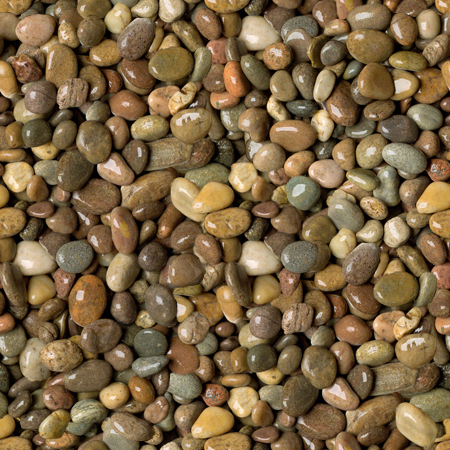
3. choose some interesting result, such as this
http://www.stonetohome.com/media/gbu0/prodlg/Pentland%20Pebbles.jpg
4. copy the image
5. ctrl+v in Gimp
6. Filters -> Map -> Make Seamless
http://docs.gimp.org/en/plug-in-make-seamless.html
7. Filters -> Map -> Tile, choosing Unit % and a value such as 200 or
400 http://docs.gimp.org/en/plug-in-tile.html

is this more challenging than writing a Haskell monad?
Post a reply to this message
|
|
| |
| |
|
|
|
|
| |
| |
|
|
On 01/12/2011 03:01 PM, Stephen wrote:
> On 01/12/2011 2:43 PM, Invisible wrote:
>> In 30 years of being alive, I've never seen anybody do calligraphy and
>> get good results. So it can't be that common. :-P
>>
>
> Calligraphy is not that common but I watched a friend teach himself how
> to do it. You need to practice a lot and have proper pens.
>
> Most people could learn. In fact before the advent of ballpoint pens a
> lot of people could write copperplate. It is not that hard.

My sister got given a calligraphy set one time... She never got far with
it. (Then again, that might just be lack of application.)
Post a reply to this message
|
|
| |
| |
|
|
|
|
| |
| |
|
|
On 01/12/2011 03:23 PM, nemesis wrote:
> Invisible escreveu:
>> I've used the Gimp. Everybody claims it's this insanely powerful
>> product. Personally, I can't get it to do anything vaguely useful...
>> If there /are/ powerful features in there, they are very well hidden.
>
> 1. open gimp
> 2. search on google images for "pebbles"
> 3. choose some interesting result, such as this
> http://www.stonetohome.com/media/gbu0/prodlg/Pentland%20Pebbles.jpg
> 4. copy the image
> 5. ctrl+v in Gimp
> 6. Filters -> Map -> Make Seamless
> http://docs.gimp.org/en/plug-in-make-seamless.html
> 7. Filters -> Map -> Tile, choosing Unit % and a value such as 200 or
> 400 http://docs.gimp.org/en/plug-in-tile.html

Interesting. As I expected, it doesn't actually produce a very
convincing effect; it merely wraps the image, and then does some
cross-fading. The result is a very visible transition. (Still, at least
they made it circular, eh?)

I still don't see how it's possible to take an arbitrary image and make
it properly seamless.

As an aside, I'd never noticed the Filter menu before. There's quite a
lot of stuff in there...

> is this more challenging than writing a Haskell monad?

What's so hard about that?
Post a reply to this message
|
|
| |
| |
|
|
|
|
| |
| |
|
|
Invisible escreveu:
> On 01/12/2011 03:23 PM, nemesis wrote:
>> Invisible escreveu:
>>> I've used the Gimp. Everybody claims it's this insanely powerful
>>> product. Personally, I can't get it to do anything vaguely useful...
>>> If there /are/ powerful features in there, they are very well hidden.
>>
>> 1. open gimp
>> 2. search on google images for "pebbles"
>> 3. choose some interesting result, such as this
>> http://www.stonetohome.com/media/gbu0/prodlg/Pentland%20Pebbles.jpg
>> 4. copy the image
>> 5. ctrl+v in Gimp
>> 6. Filters -> Map -> Make Seamless
>> http://docs.gimp.org/en/plug-in-make-seamless.html
>> 7. Filters -> Map -> Tile, choosing Unit % and a value such as 200 or
>> 400 http://docs.gimp.org/en/plug-in-tile.html
>
> Interesting. As I expected, it doesn't actually produce a very
> convincing effect; it merely wraps the image, and then does some
> cross-fading. The result is a very visible transition. (Still, at least
> they made it circular, eh?)

it's a smooth transition that is barely noticeable in the large scheme
of things.  Once it's mapped on a 3D floor, you simply don't notice the
faded edges on the tiled floor.

> As an aside, I'd never noticed the Filter menu before. There's quite a
> lot of stuff in there...

o_0

It's just the bread and butter of bitmap editors...
Post a reply to this message
|
|
| |
| |
|
|
|
|
| |
| |
|
|
Am 01.12.2011 15:24, schrieb Invisible:

> $8,000 is more money than I have ever owned at any time in my entire
> life. (I just changed the exchange rate. On 8 Nov 2007, that would have
> been £3795.07 - and that's the lowest it's been in the last 10 years.)

I'm still waiting for an explanation where you got that $8,000 figure from.

> Would you seriously take out a 5-year loan just to afford some pictures
> to put together a website that *might* get you a few more orders?

I bought a license for this photograph to put on both my website and my
business card when I was a freelancing embedded software developer:

   http://de.fotolia.com/id/4337839

As you might guess from the price tag, I did /not/ have to take a 5-year
loan to afford it. (I went for the "L Standard" license, btw.)

I also bought a handful of "S Standard" licenses for other images there,
which I planned to use on my website as well.
Post a reply to this message
|
|
| |
| |
|
|
|
|
| |
| |
|
|
>> Interesting. As I expected, it doesn't actually produce a very
>> convincing effect; it merely wraps the image, and then does some
>> cross-fading. The result is a very visible transition. (Still, at
>> least they made it circular, eh?)
>
> it's a smooth transition that is barely noticeable in the large scheme
> of things. Once it's mapped on a 3D floor, you simply don't notice the
> faded edges on the tiled floor.

Maybe. But I'm talking about a 2D website background. It's pretty
noticeable when half a pebble cross-fades into a different pebble.

>> As an aside, I'd never noticed the Filter menu before. There's quite a
>> lot of stuff in there...
>
> o_0
>
> It's just the bread and butter of bitmap editors...

Well, it's the bread and butter of image processors. It won't help you
if you're trying to (for example) remove an object from an image...
Post a reply to this message
|
|
| |
| |
|
|
|
|
| |
| |
|
|
On 01/12/2011 04:26 PM, clipka wrote:
> Am 01.12.2011 15:24, schrieb Invisible:
>
>> $8,000 is more money than I have ever owned at any time in my entire
>> life. (I just changed the exchange rate. On 8 Nov 2007, that would have
>> been £3795.07 - and that's the lowest it's been in the last 10 years.)
>
> I'm still waiting for an explanation where you got that $8,000 figure from.

Photography is expensive. That's why only huge publishing corporations
can afford to do it.

> I bought a license for this photograph to put on both my website and my
> business card when I was a freelancing embedded software developer:
>
> http://de.fotolia.com/id/4337839

I'm quite impressed that you can buy a good quality image like that for
less than a thousand dollars. Presumably the range of available images
is highly limited, however...
Post a reply to this message
|
|
| |
| |
|
|
|
|
| |
| |
|
|
Am 01.12.2011 15:26, schrieb Invisible:
> On 01/12/2011 12:22 PM, clipka wrote:
>> Am 01.12.2011 11:02, schrieb Invisible:
>>
>>> I still don't see how you can "fix" the seems. It's not like you can
>>> move individual blades of grass around.
>>
>> For /really/ good seamless textures, that's exactly what you do.
>
> Except that, uh, it can't be done? :-P

Hush - don't tell my mom; she does stuff like that for a hobby. Copying
stuff from one photo and pasting it into others. She'd indeed isolate
and copy around individual leaves or grass blades if that gets her where
she wants to go. You need sufficiently high-res photographs to start
with of course.

>> You haven't spent much time with Photoshop or Gimp, have you?
>
> Photoshop is /far/ too expensive for me to ever afford. (Especially
> given that I'd probably hardly ever use it anyway.)

How about Photoshop Elements? That's what my mom's been using.

>>> POV-Ray makes nice stone textures (unless you're a geologist) and wood
>>> textures (unless you're a dendrologist). Last time I checked, there's no
>>> way of making a canvas texture or a wet paper texture or a spilled paint
>>> texture or...
>>
>> Make that "last time I checked, no-one had yet found a way of...",
>> because unless you've checked every possible combination of parameters,
>> layered textures, averaged textures, and what-have-you, there are still
>> ways undiscovered that might lead to the desired result.
>
> Most interesting textures do not have closed-form representations.
> POV-Ray only renders closed-form equations. QED.

I don't know the theory behind closed-form and non-closed-form
equations, but I guess both of your axioms are somewhat flawed, so no
QED yet.
Post a reply to this message
|
|
| |
| |
|
|
|
|
| |
| |
|
|
On 01/12/2011 4:33 PM, Invisible wrote:
> Photography is expensive. That's why only huge publishing corporations
> can afford to do it.

Andrew, where do you get these ideas from? You speak/write
unsubstantiated rubbish at times. Please try not to post before thinking
because you do yourself no favours.

--
Regards
     Stephen
Post a reply to this message
|
|
| |
| |
|
|
|
|
| |
| |
|
|
Am 01.12.2011 17:33, schrieb Invisible:
> On 01/12/2011 04:26 PM, clipka wrote:
>> Am 01.12.2011 15:24, schrieb Invisible:
>>
>>> $8,000 is more money than I have ever owned at any time in my entire
>>> life. (I just changed the exchange rate. On 8 Nov 2007, that would have
>>> been £3795.07 - and that's the lowest it's been in the last 10 years.)
>>
>> I'm still waiting for an explanation where you got that $8,000 figure
>> from.
>
> Photography is expensive. That's why only huge publishing corporations
> can afford to do it.

Photography created specifically according to your specifications /can/
be expensive, yes. Depends on your motif though: Studio photography is
pretty affordable actually. After all, the equipment is all there
already, and all you need to pay is the working time of the
photographer. With digital cameras, there's also virtually no material
expense involved.

For example, a professional photo shooting (including makeup and all)
for a photograph of yourself might come at around 50 €. Probably worth
it when applying for a new job.

It's when lighting equipment needs to be deployed to some site, the site
closed down for the shooting, or special props be available, that things
start getting costly.

>> I bought a license for this photograph to put on both my website and my
>> business card when I was a freelancing embedded software developer:
>>
>> http://de.fotolia.com/id/4337839
>
> I'm quite impressed that you can buy a good quality image like that for
> less than a thousand dollars. Presumably the range of available images
> is highly limited, however...

*facepalm*

You have the website there. Why /presume/, when you can take a look
around to /see/ for yourself?

You might of course want to try the English site at www.fotolia.com.

(Hint: They claim to have 15 million images available at present.)
Post a reply to this message
|
|
| |
| |
|
|
|
|
| |
| |
|
|
Invisible escreveu:
>>> Interesting. As I expected, it doesn't actually produce a very
>>> convincing effect; it merely wraps the image, and then does some
>>> cross-fading. The result is a very visible transition. (Still, at
>>> least they made it circular, eh?)
>>
>> it's a smooth transition that is barely noticeable in the large scheme
>> of things. Once it's mapped on a 3D floor, you simply don't notice the
>> faded edges on the tiled floor.
>
> Maybe. But I'm talking about a 2D website background. It's pretty
> noticeable when half a pebble cross-fades into a different pebble.

true enough.  In that case, automatic seamless filters won't cut.  In
that case, you should select through between borders, cut away
everything else (ctrl+i for inverse select + ctrl+x), and manually clone
the layer and position precisely (with ctrl hold down) the center (a
small cross) of the cloned layers in each of the cardinal positions
(including nw or se) around the image.  Since you manually selected
interesting borders through the pebbles, it'll look natural as they are
one on top of the other.


--
a game sig: http://tinyurl.com/d3rxz9
Post a reply to this message
|
|
| |
| |
|
|
|
|
| |
| |
|
|
On 12/1/2011 8:06 AM, Invisible wrote:
> Interesting. As I expected, it doesn't actually produce a very
> convincing effect; it merely wraps the image, and then does some
> cross-fading. The result is a very visible transition. (Still, at least
> they made it circular, eh?)

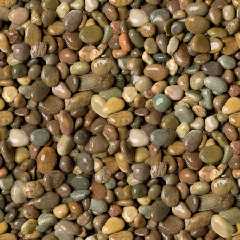
Then fix up the seams manually, it's not that difficult.  I've attached
an example that I whipped up GIMP to illustrate that it is totally
possible (and not very hard) to do this sort of thing.
Post a reply to this message
Attachments:
Download 'pentland-pebbles_tileable.png' (469 KB)
Preview of image 'pentland-pebbles_tileable.png'
|
|
| |
| |
|
|
|
|
| |
| |
|
|
On Thu, 01 Dec 2011 16:33:45 +0000, Invisible wrote:

> On 01/12/2011 04:26 PM, clipka wrote:
>> Am 01.12.2011 15:24, schrieb Invisible:
>>
>>> $8,000 is more money than I have ever owned at any time in my entire
>>> life. (I just changed the exchange rate. On 8 Nov 2007, that would
>>> have been £3795.07 - and that's the lowest it's been in the last 10
>>> years.)
>>
>> I'm still waiting for an explanation where you got that $8,000 figure
>> from.
>
> Photography is expensive. That's why only huge publishing corporations
> can afford to do it.
>
>> I bought a license for this photograph to put on both my website and my
>> business card when I was a freelancing embedded software developer:
>>
>> http://de.fotolia.com/id/4337839
>
> I'm quite impressed that you can buy a good quality image like that for
> less than a thousand dollars. Presumably the range of available images
> is highly limited, however...

Andy, if you make me hit my head on my desk so hard I shatter the glass,
you're going to owe me a new desk. ;)

Jim
Post a reply to this message
|
|
| |
| |
|
|
|
|
| |
| |
|
|
On Thu, 01 Dec 2011 16:06:12 +0000, Invisible wrote:

>> is this more challenging than writing a Haskell monad?
>
> What's so hard about that?

I sure as hell couldn't do it, wouldn't even know where to start.  Of
course, Haskell is one of the many things that I suck at.

Jim
Post a reply to this message
|
|
| |
| |
|
|
|
|
| |
| |
|
|
On Thu, 01 Dec 2011 16:32:03 +0000, Invisible wrote:

>> it's a smooth transition that is barely noticeable in the large scheme
>> of things. Once it's mapped on a 3D floor, you simply don't notice the
>> faded edges on the tiled floor.
>
> Maybe. But I'm talking about a 2D website background. It's pretty
> noticeable when half a pebble cross-fades into a different pebble.

And the example that posted was "here's a very simple way to do it".  Now
add someone with time, experience, and expertise.

Jim
Post a reply to this message
|
|
| |
| |
|
|
|
|
| |
| |
|
|
>> Photography is expensive. That's why only huge publishing corporations
>> can afford to do it.
>
> Photography created specifically according to your specifications /can/
> be expensive, yes. Depends on your motif though: Studio photography is
> pretty affordable actually. After all, the equipment is all there
> already, and all you need to pay is the working time of the
> photographer. With digital cameras, there's also virtually no material
> expense involved.
>
> For example, a professional photo shooting (including makeup and all)
> for a photograph of yourself might come at around 50 €. Probably worth
> it when applying for a new job.

Actually, I've been thinking about getting some photos of me done at
some point... The main reason I haven't is that I probably can't afford it.

> It's when lighting equipment needs to be deployed to some site, the site
> closed down for the shooting, or special props be available, that things
> start getting costly.

Yeah, I don't even want to think about what I would have to pay to get a
photograph of the steaming jungles of Borneo...

>> I'm quite impressed that you can buy a good quality image like that for
>> less than a thousand dollars. Presumably the range of available images
>> is highly limited, however...
>
> *facepalm*
>
> You have the website there. Why /presume/, when you can take a look
> around to /see/ for yourself?

As an exercise, I tried looking for photographs of a specific thing. I
found lots of very nice photos, but nothing approximating what I really
wanted. Basically, to be able to provide the right sort of images for
every need imaginable, you would need an absurdly vast catelogue...

--
http://blog.orphi.me.uk/
http://www.zazzle.com/MathematicalOrchid*
Post a reply to this message
|
|
| |
| |
|
|
|
|
| |
| |
|
|
On 01/12/2011 08:43 PM, Jim Henderson wrote:
> On Thu, 01 Dec 2011 16:32:03 +0000, Invisible wrote:
>
>>> it's a smooth transition that is barely noticeable in the large scheme
>>> of things. Once it's mapped on a 3D floor, you simply don't notice the
>>> faded edges on the tiled floor.
>>
>> Maybe. But I'm talking about a 2D website background. It's pretty
>> noticeable when half a pebble cross-fades into a different pebble.
>
> And the example that posted was "here's a very simple way to do it".  Now
> add someone with time, experience, and expertise.

Oh, hey, I'm sure somebody at ILM could do it. What I'm saying is that I
don't see how you can just push a button and have it magically tile any
image and also look good.

--
http://blog.orphi.me.uk/
http://www.zazzle.com/MathematicalOrchid*
Post a reply to this message
|
|
| |
| |
|
|
|
|
| |
| |
|
|
On 01/12/2011 08:43 PM, Jim Henderson wrote:
> On Thu, 01 Dec 2011 16:06:12 +0000, Invisible wrote:
>
>>> is this more challenging than writing a Haskell monad?
>>
>> What's so hard about that?
>
> I sure as hell couldn't do it, wouldn't even know where to start.  Of
> course, Haskell is one of the many things that I suck at.

And I wouldn't know how to bake fairy cakes. That doesn't mean it's
hard. (Hell, I've *done* it... I just don't remember how, that's all.)

--
http://blog.orphi.me.uk/
http://www.zazzle.com/MathematicalOrchid*
Post a reply to this message
|
|
| |
| |
|
|
|
|
| |
| |
|
|
Orchid XP v8 escreveu:
> On 01/12/2011 08:43 PM, Jim Henderson wrote:
>> On Thu, 01 Dec 2011 16:32:03 +0000, Invisible wrote:
>>
>>>> it's a smooth transition that is barely noticeable in the large scheme
>>>> of things. Once it's mapped on a 3D floor, you simply don't notice the
>>>> faded edges on the tiled floor.
>>>
>>> Maybe. But I'm talking about a 2D website background. It's pretty
>>> noticeable when half a pebble cross-fades into a different pebble.
>>
>> And the example that posted was "here's a very simple way to do it".  Now
>> add someone with time, experience, and expertise.
>
> Oh, hey, I'm sure somebody at ILM could do it.

Kevin Wampler who just provided an example below does not work at ILM,
nor do I.  It's not the case of being a notable expert, just following
the steps for a technique.  Careful selection of borders you want is
simple enough since the selection tool allows to do it point by point.

The point is:  instead of calling it impossible just to look like a
dumbass, try to use the software for a while to get the hang of it.

> What I'm saying is that I
> don't see how you can just push a button and have it magically tile any
> image and also look good.

the pebbles image was a bad idea, but if details of the texture are
sufficiently small, like sand or soil, even that button does the job
just fine.

--
a game sig: http://tinyurl.com/d3rxz9
Post a reply to this message
|
|
| |
| |
|
|
|
|
| |
| |
|
|
>> Oh, hey, I'm sure somebody at ILM could do it.
>
> Kevin Wampler who just provided an example below does not work at ILM,
> nor do I. It's not the case of being a notable expert, just following
> the steps for a technique. Careful selection of borders you want is
> simple enough since the selection tool allows to do it point by point.
>
> The point is: instead of calling it impossible just to look like a
> dumbass, try to use the software for a while to get the hang of it.

The point is: I said it's not possible for a piece of software to
magically tile any possible image seemlessly. If you're saying that a
piece of software with an expert to work it can sometimes do a good job,
that's a different statement. I can see how that might be quite
possible. (Though it still sounds pretty difficult...)

--
http://blog.orphi.me.uk/
http://www.zazzle.com/MathematicalOrchid*
Post a reply to this message
|
|
| |
| |
|
|
|
|
| |
| |
|
|
Am 01.12.2011 23:11, schrieb Orchid XP v8:

> The point is: I said it's not possible for a piece of software to
> magically tile any possible image seemlessly.

No. You only said that it wasn't possible for a normal mortal to tile
images seamlessly with the help of software. You didn't mention that you
expected software to do the job alone.
Post a reply to this message
|
|
| |
| |
|
|
|
|
| |
| |
|
|
On 12/1/2011 2:11 PM, Orchid XP v8 wrote:
>> The point is: instead of calling it impossible just to look like a
>> dumbass, try to use the software for a while to get the hang of it.
>
> The point is: I said it's not possible for a piece of software to
> magically tile any possible image seemlessly. If you're saying that a
> piece of software with an expert to work it can sometimes do a good job,
> that's a different statement. I can see how that might be quite
> possible. (Though it still sounds pretty difficult...)

I'm *far* from an expert in image editing, and I didn't do anything to
make that image that a pure beginner couldn't get the hand of in a few
hours, and I did it with only free softwars.

In addition, I'm not sure what point you're making.  Depending on what
you mean by "seamlessly tileable" it's probably wither trivial or
*obviously* impossible to convert an image into tileable form.  But
nobody here is claiming that you can tile *every* image automatically.
What people are claiming is:

1) It's not that hard to do it manually in most cases
2) For many images you can indeed tile them automatically

As an illustration of (2), I've attached a tileable image that I created
in GIMP with about two button clicks and no manual editing.  Can you
spot the seams?

As a meta-comment you have a tenancy to declare things "impossible" when
you merely cannot see a way to achieve them.  Given that your
assessments are not infrequently wrong in this regard, you might benefit
from being less defeatist and more curious when you don't see how
something can be done.  Just my opinion though, you're obviously free to
disregard it as bunk.
Post a reply to this message
Attachments:
Download 'small_beach_pebbles_tileable.jpg' (511 KB)
Preview of image 'small_beach_pebbles_tileable.jpg'
|
|
| |
| |
|
|
|
|
| |
| |
|
|
On 12/1/2011 6:24, Invisible wrote:
> Given that calligraphy is a rare skill,

And on what basis do you make that claim? That the people you never asked
never told you?

--
Darren New, San Diego CA, USA (PST)
   People tell me I am the counter-example.
Post a reply to this message
|
|
| |
| |
|
|
|
|
| |
| |
|
|
On Thu, 01 Dec 2011 20:51:54 +0000, Orchid XP v8 wrote:

> On 01/12/2011 08:43 PM, Jim Henderson wrote:
>> On Thu, 01 Dec 2011 16:32:03 +0000, Invisible wrote:
>>
>>>> it's a smooth transition that is barely noticeable in the large
>>>> scheme of things. Once it's mapped on a 3D floor, you simply don't
>>>> notice the faded edges on the tiled floor.
>>>
>>> Maybe. But I'm talking about a 2D website background. It's pretty
>>> noticeable when half a pebble cross-fades into a different pebble.
>>
>> And the example that posted was "here's a very simple way to do it".
>> Now add someone with time, experience, and expertise.
>
> Oh, hey, I'm sure somebody at ILM could do it. What I'm saying is that I
> don't see how you can just push a button and have it magically tile any
> image and also look good.

You should watch some demos of Adobe's conference, specifically demos
with some of the stuff that's in development for Photoshop.

Pretty amazing stuff.

Jim
Post a reply to this message
|
|
| |
| |
|
|
|
|
| |
|
|