|
|
|
|
|
|
| |
| |
|
|
|
|
| |
| |
|
|
Hi,

I have a small request. I can work well with POV-Ray and its numeric
coordinate system, but I find it difficult to work with WYSIWYG editors
and thus with other render software.

I am in need of a plastic part for my meat grinder (a part that allows
me to create my own sausages). I can easily create this part in POV-Ray,
but not in any other software. But I need it as a 3DS or even better as
a STL file format, in order to have someone 3D printing it for me.

My idea is that I would create that part in POV-Ray (it is a very simple
shape), and in the correct dimensions, and someone here hopefully would
be able to re-create that part in an other renderer.

Is that okay? Is here anyone who could do me this favor?

The shape is a combination of a ring (hollow), an hollow cone, and an
hollow cylinder. In my next posting here I am adding the source code. It
would be nice, if anyone could assist me. Thanks.
Post a reply to this message
|
|
| |
| |
|
|
|
|
| |
| |
|
|
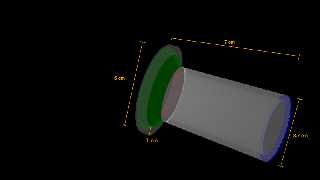
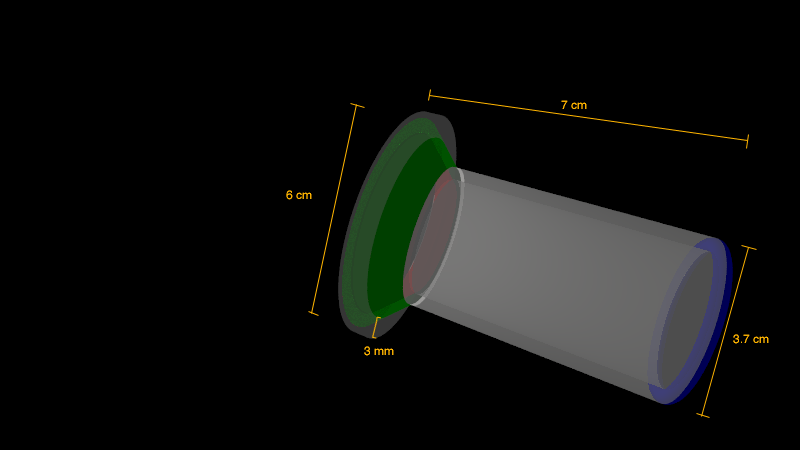
Here are the exact measures of the item. If you can 3D print it (white
ABS plastic, otherwise silver), too, please let me know. I would use
PayPal to compensate you for your expenses (material and shipping to
Jamaica, inside a regular envelope with protective bubble foil or foam).

Item dimensions:
total length: 7 cm
total diameter: 6 cm (bottom ring)
angle of torus: 90°
upper ring surface exceeding torus: 0.3 cm (3 mm)
important - upper cylinder edge is rounded (torus)
torus total height: 1 cm
torus total height above ring: 0.6 cm (6 mm)
ring height: 0.4 cm (4 mm)


-----------------------------------------------

#version 3.7;

// All measures in centimeters, not meters!
// If you do the 3D printing, please print in white ABS plastic
(otherwise silver). Thanks.


difference // the ring - widest and bottom part of the item
{
 cylinder { < 0.0, 0.0,  0.00 > < 0.0, 0.0, 0.40 > 3.00 }  // outer
diameter: 6 cm, thickness (height): 4 mm (0.4 cm)
 cylinder { < 0.0, 0.0, -0.01 > < 0.0, 0.0, 0.41 > 2.45 }  // inner hole
diameter: 4.9 cm
 pigment { rgbf < 1.0, 1.0, 1.0, 0.8 > }
}

difference // the cone - middle part of the item
{
 cone { < 0.0, 0.0,  0.00 > 2.85, < 0.0, 0.0, 1.00 > 1.85 pigment { rgbf
< 0.0, 1.0, 0.0, 0.5 > } } // angle of the cone: 45°, wall thickness:
3.5 mm, lower outer diameter on ring bottom: 5.7 cm, upper outer
diameter: 3.7 cm
 cone { < 0.0, 0.0, -0.01 > 2.49, < 0.0, 0.0, 1.01 > 1.51 pigment { rgbf
< 1.0, 0.0, 0.0, 0.5 > } } // angle of the cone: 45°, wall thickness:
3.5 mm, lower inner diameter on ring bottom: 5.0 cm, upper inner
diameter: 3.0 cm

}

difference // the cylinder - longest and uppest part of the item
{
 cylinder { < 0.0, 0.0, 1.00 > < 0.0, 0.0, 6.85 > 1.85 }  // outer
diameter: 3.7 cm, wall thickness: 3 mm (0.3 cm)
 cylinder { < 0.0, 0.0, 1.09 > < 0.0, 0.0, 6.86 > 1.55 }  // inner hole
diameter: 3.1 cm
 pigment { rgbf < 1.0, 1.0, 1.0, 0.5 > }
}

torus
{
 1.7, 0.15
 rotate < 90.0, 0.0, 0.0 >
 translate < 0.0, 0.0, 6.85 >
 pigment { rgbf < 0.0, 0.0, 1.0, 0.5 > }
}

// --------------------------------------------------------------

camera
{
 location < 10.0, 10.0, -05.0 >
 look_at  < 0.0, 0.0, 0.0 >
 right 1.77*x
}

light_source
{
 < 1.0, 1.0, 1.0 >
 rgb < 1.98039, 1.94902, 1.89804 >
}
Post a reply to this message
Attachments:
Download 'sl - parts - meat grinder - sausage casing part.png' (34 KB)
Preview of image 'sl - parts - meat grinder - sausage casing part.png'
|
|
| |
| |
|
|
|
|
| |
| |
|
|
I took your scene and made a section view, as I couldn't figure out from
the image or scene text exactly what the shape was. Is this correct, do
you really need that centre membrane 0.9mm thick? Or was that a typo in
the code?
Post a reply to this message
Attachments:
Download 'croppercapture[49].png' (54 KB)
Preview of image 'croppercapture[49].png'
![croppercapture[49].png](/povray.general/attachment/%3C5697556f%40news.povray.org%3E/croppercapture%5B49%5D.png?ttop=448296&toff=1000&preview=1)
|
|
| |
| |
|
|
|
|
| |
| |
|
|
> I took your scene and made a section view, as I couldn't figure out from
> the image or scene text exactly what the shape was. Is this correct, do
> you really need that centre membrane 0.9mm thick? Or was that a typo in
> the code?

And if I assume you don't want that membrane, there are a couple of
steps/sharp points in the profile, see attached. Is that what you want?
Depending on what 3D printer you use they might not even be resolved in
the print.

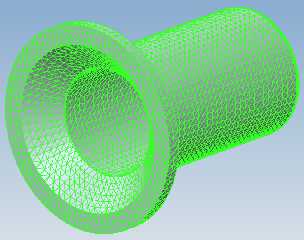
Also see attached the STL 3D data and what the STL mesh looks like.
Post a reply to this message
Attachments:
Download 'croppercapture[50].png' (23 KB)
Download 'croppercapture[51].png' (325 KB)
Download 'obj1.zip' (218 KB)
Preview of image 'croppercapture[50].png'
![croppercapture[50].png](/povray.general/attachment/%3C56975ba8%40news.povray.org%3E/croppercapture%5B50%5D.png?ttop=448296&toff=1000&preview=1)
Preview of image 'croppercapture[51].png'
![croppercapture[51].png](/povray.general/attachment/%3C56975ba8%40news.povray.org%3E/croppercapture%5B51%5D.png?ttop=448296&toff=1000&preview=1)
|
|
| |
| |
|
|
|
|
| |
| |
|
|
Hi Scott,

and first of all - thanks a lot for answering and dedicating time to my
problem!   :-)

I don't need that sharp edge inside, that one must go.

And the sharp edge or step inside the ring bottom can go, but is not too
important.

I just did the scene with one camera angle only and thus didn't see
these sharp edges. I did it a few moments before ending my day and was
tired. Thanks for pointing out.
Post a reply to this message
|
|
| |
| |
|
|
|
|
| |
| |
|
|
And right - no "membrane" inside.
Post a reply to this message
|
|
| |
| |
|
|
|
|
| |
| |
|
|
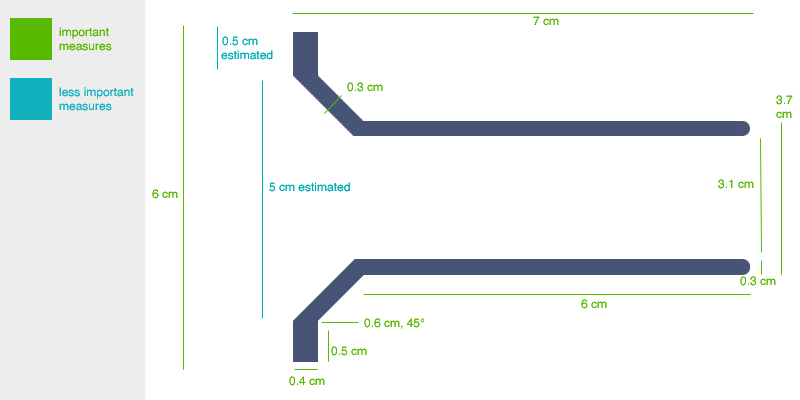
Important is, that cylinder and cone walls have the same thickness, 3 mm
and not less (as they have to withstand a lot of pressure from the
grinded meat being forced there inside. And the cylinder walls must have
that angle of 45° and the ring must have that overhang of 33 on its top,
otherwise that part would not fit into the machine's frontal closing part.
Post a reply to this message
|
|
| |
| |
|
|
|
|
| |
| |
|
|
Am 14.01.2016 um 03:53 schrieb Sven Littkowski:

> I have a small request.

Then why the uppercase REQUEST in the subject line? ;)
Post a reply to this message
|
|
| |
| |
|
|
|
|
| |
| |
|
|
> Important is, that cylinder and cone walls have the same thickness, 3 mm
> and not less (as they have to withstand a lot of pressure from the
> grinded meat being forced there inside. And the cylinder walls must have
> that angle of 45° and the ring must have that overhang of 33 on its top,
> otherwise that part would not fit into the machine's frontal closing part.

For these sort of parts it's usually best to specify them by drawing a
section view (like the first one I posted) and labelling the important
dimensions. Far easier than you trying to describe what is important and
me trying to interpret it.

Your model at the moment does not have a uniform 3 mm wall thickness, so
if I start changing it to satisfy this requirement, I don't know what
other dimensions are critical for you. If you want to post a cross
section sketch (can even be hand drawn) with the dimensions marked then
I'll make another model for you. Make sure to mark the actual dimensions
that are important for the functionality (eg the wall thickness should
be 3mm, angle of 45 degrees etc) rather than thinking in terms of
coordinates that POV would require.
Post a reply to this message
|
|
| |
| |
|
|
|
|
| |
| |
|
|
Hi.

Simply to highlight, that this thread is not a common discussion thread,
but a request (and actually quite urgent).

All my other (regular) topics/threads have headlines in regular case
spelling. This here is really an important exception.
Post a reply to this message
|
|
| |
| |
|
|
|
|
| |
| |
|
|
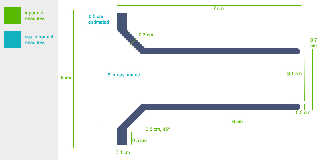
Point taken, Scott. Is this sketch good enough?
Post a reply to this message
Attachments:
Download '2.jpg' (67 KB)
Preview of image '2.jpg'
|
|
| |
| |
|
|
|
|
| |
| |
|
|
Hi Scott, did you see my sketch?
Post a reply to this message
|
|
| |
| |
|
|
|
|
| |
| |
|
|
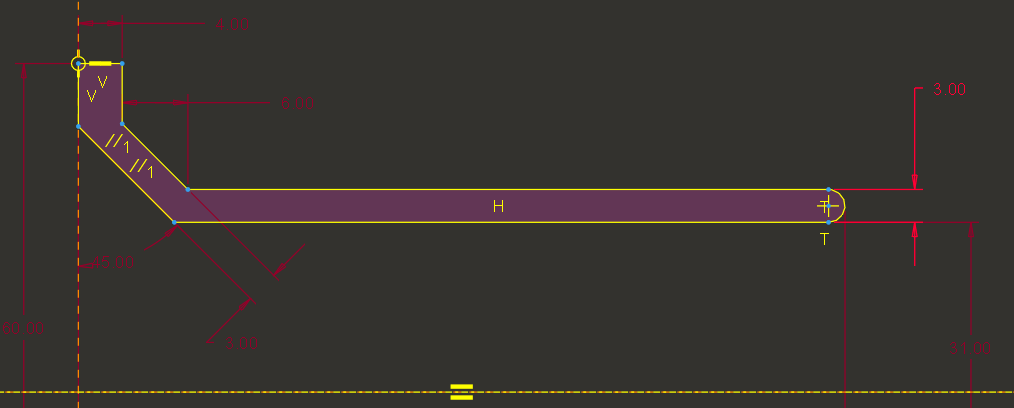
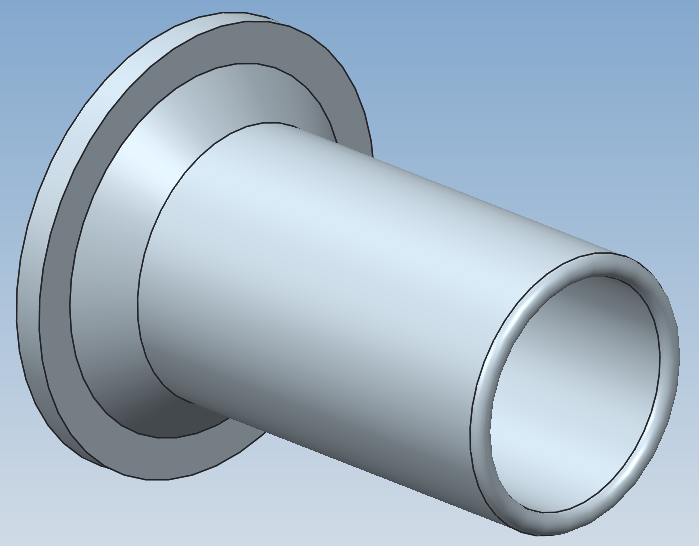
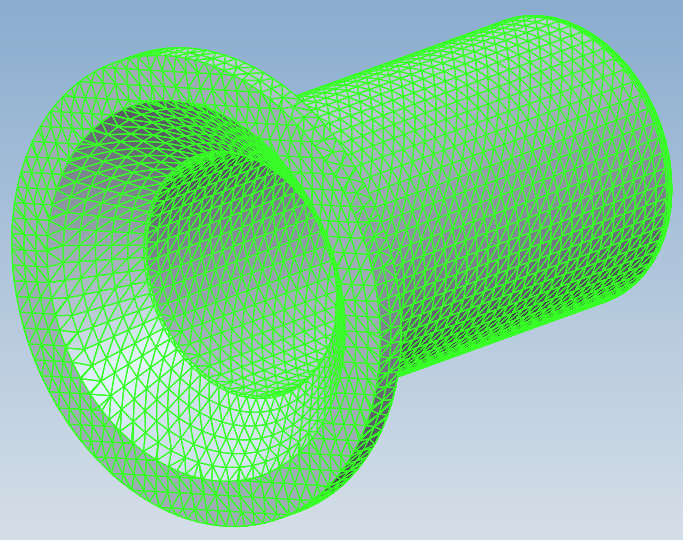
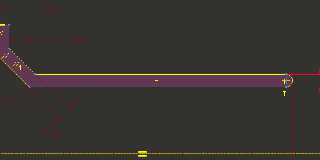
> Point taken, Scott. Is this sketch good enough?

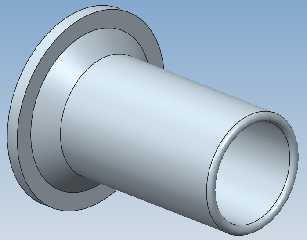
Yes that's much better. The section view attached shows the minimum
number of dimensions needed to fully constrain this shape (the CAD
software will give an error if you try to overconstrain the layout).

A word of warning about getting it 3D printed, you will want to make
sure that the surface finish is smooth enough, otherwise I imagine
you're going to get bits of sausage meat stuck in the plastic which will
probably be very difficult to clean out. Also I don't know what sort of
pressures you're talking about, but some of the cheaper 3D printers
don't give parts that are very strong at all. And, check the material
used, as some absorb water very readily, expand and will change shape or
warp over time.

Personally I would get this part turned on a lathe from a bit of
stainless steel bar. It will last forever, be much stronger and far more
hygenic. I doubt the price would be any more than a decent quality 3D
print. The CAD software tells me it would weigh about 200g if made from
steel.
Post a reply to this message
Attachments:
Download 'prt0001_stl.zip' (104 KB)
Download 'section.png' (13 KB)
Download 'solid.png' (116 KB)
Download 'stl_mesh.png' (225 KB)
Preview of image 'section.png'
Preview of image 'solid.png'
Preview of image 'stl_mesh.png'
|
|
| |
| |
|
|
|
|
| |
| |
|
|
Hi, thanks a lot! Yes, that is the part I need.

I live in Jamaica, and here is no place that can shape or make steel in
that shape. Sad for me.

I think, the best way for me to go, is to talk to Shapeways if they can
3Dprint it with some material that is smooth and pressure-strong. I
agree, there will be some pressure. But not as much as inside the
grinder. That part is mounted outside, where the grinded meat leaves the
machine.
Post a reply to this message
|
|
| |
| |
|
|
|
|
| |
| |
|
|
And I want to thank you a lot for your time and work, Scott.
Post a reply to this message
|
|
| |
| |
|
|
|
|
| |
| |
|
|
On 1/18/2016 4:59 PM, Sven Littkowski wrote:
> Hi, thanks a lot! Yes, that is the part I need.
>
> I live in Jamaica, and here is no place that can shape or make steel in
> that shape. Sad for me.
>

Come on! You can't expect anyone to believe that. I worked at D&G, years
ago and I could have got you one turned there, then. Ask your Helper or
security and I bet that they will know where the machine shops are.


--

Regards
     Stephen
Post a reply to this message
|
|
| |
| |
|
|
|
|
| |
| |
|
|
Yes, here are machine shops, but Jamaica is a very poor country (thanks
to its incapable and corrupt, partially even criminal government). The
machine shops here are very limited in what they can do (type of
machines they can afford), and also very limited by metal types.

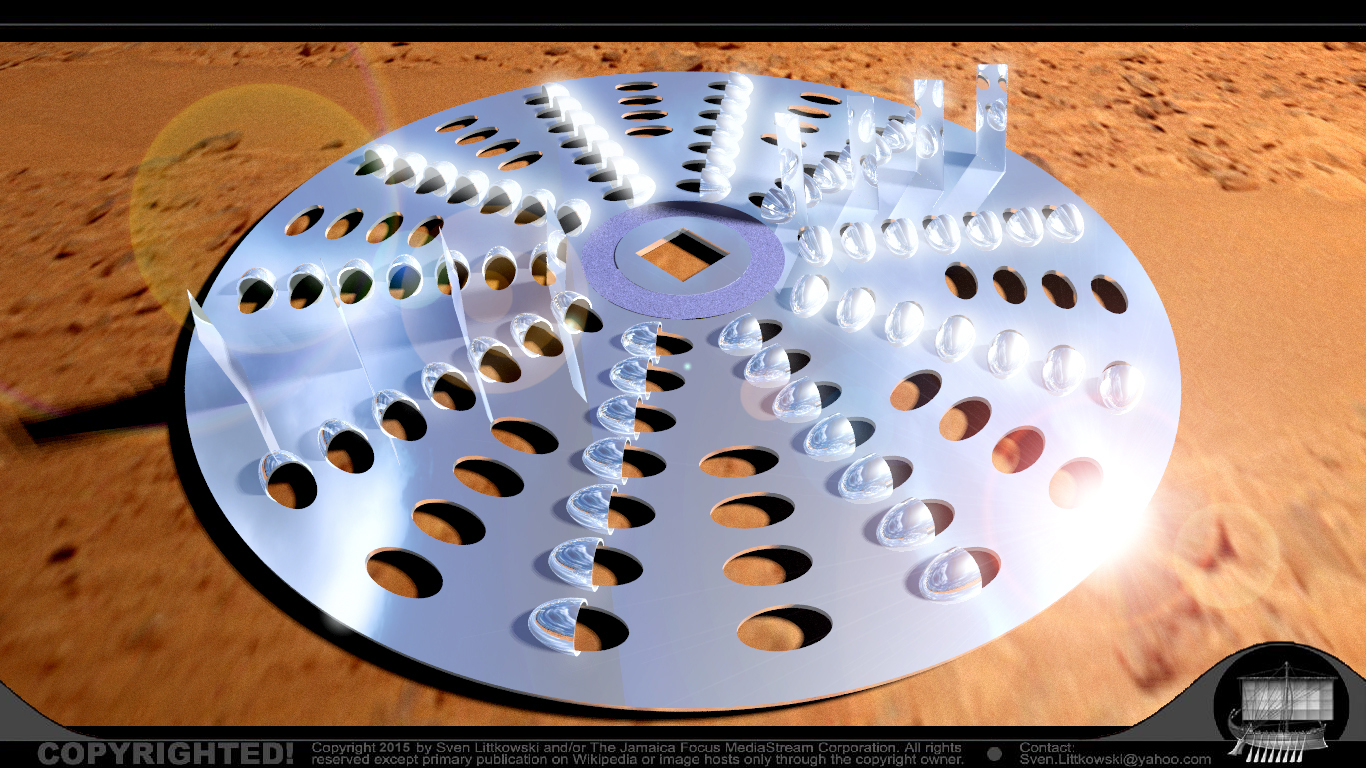
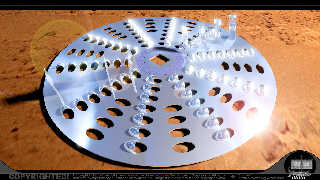
Some weeks ago, I tried to find a machine shop that can create a
fast-rotating disc for a machine I wanted to build to make powder out of
empty plastic bottles (see attached render image), and they couldn't do
it. I went to over 20 machine shops until I gave up. I learned, what
they can do, and what not.
Post a reply to this message
Attachments:
Download 'sl - roto rasp a.jpg' (858 KB)
Preview of image 'sl - roto rasp a.jpg'
|
|
| |
| |
|
|
|
|
| |
| |
|
|
On 1/18/2016 10:03 PM, Sven Littkowski wrote:
> Yes, here are machine shops, but Jamaica is a very poor country (thanks
> to its incapable and corrupt, partially even criminal government). The
> machine shops here are very limited in what they can do (type of
> machines they can afford), and also very limited by metal types.
>

You won't get any arguments from me on that assesment. :-(

> Some weeks ago, I tried to find a machine shop that can create a
> fast-rotating disc for a machine I wanted to build to make powder out of
> empty plastic bottles (see attached render image), and they couldn't do
> it. I went to over 20 machine shops until I gave up. I learned, what
> they can do, and what not.
>


That is a different kettle of saltfish. ;-)
Your grinder blade is quite complicated. You would need a template to
stamp out the body then you would have to weld the uprights. A prototype
would be hard and expensive to make. On the other hand, the part you
need for the meat grinder is simple. I don't think that the pressure
justifies surgical stainless steel. Just a metal that would not corrode.
I agree with Scott that a piece made from printed plastic might be
unsuitable for your needs. You would never know what beasties were
hiding in the crevices or when its structural strength would fail.
I would take the drawing you did for Scott and ask about that.
I have a similar problem with a pressure cooker. The plastic well that
the relief valve sits in. Sheared off and I have a large pot with a
whistling lid, now. Even at the low-ish pressure of 15 psi I would not
contemplate using a printed part unless it was properly engineered.
It is a great idea but  a bit iffy in practice.


--

Regards
     Stephen
Post a reply to this message
|
|
| |
| |
|
|
|
|
| |
| |
|
|
I heard, a common practice in 3D printing is, to use acetone to smoothen
surfaces afterwards where applicable. I joint some 3D Printing groups on
Facebook.

Besides, I am really not so sure, how high the pressure on that plastic
part is. The grinder came with a number of other plastic parts that can
be mounted at the same location outside, where I want to mount this
plastic part. And they have the same wall thickness (strength) as the
part Scott and I developed. I think, I still want to give a try.

But in regards of the micro fauna and the fact, that 3D printing today
(when done with a layer printer) is having a rough outside, I give you
the point easily. I hope, with some acetone I can smoothen the inside.
And otherwise, good cleansing afterwards and also before, each time.

---------------

I am still trying to find a solution in regards to my round grinding
blade. If you know any good machine shops, please let me have their
contact information. I am aware it will take some money, but need to
find out, how much. Thanks.   :-)
Post a reply to this message
|
|
| |
| |
|
|
|
|
| |
| |
|
|
> Yes, here are machine shops, but Jamaica is a very poor country (thanks
> to its incapable and corrupt, partially even criminal government). The
> machine shops here are very limited in what they can do (type of
> machines they can afford), and also very limited by metal types.
>
> Some weeks ago, I tried to find a machine shop that can create a
> fast-rotating disc for a machine I wanted to build to make powder out of
> empty plastic bottles (see attached render image), and they couldn't do
> it. I went to over 20 machine shops until I gave up. I learned, what
> they can do, and what not.

I would be very interested to hear what they can do, if they can't turn
this simple part for you. Even doing it freehand on a very basic
metalworking lathe I can't imagine it taking more than an hour.

Your cutter disk thing is completely understandable, I can only imagine
the reaction from our guys in the machine shop here at work if I took
that design over to them :-O
Post a reply to this message
|
|
| |
| |
|
|
|
|
| |
| |
|
|
> And I want to thank you a lot for your time and work, Scott.

No problem - it took less than 5 minutes of my time to model it. If only
all my projects were this simple!
Post a reply to this message
|
|
| |
| |
|
|
|
|
| |
| |
|
|
On 1/19/2016 12:12 AM, Sven Littkowski wrote:
> I heard, a common practice in 3D printing is, to use acetone to smoothen
> surfaces afterwards where applicable. I joint some 3D Printing groups on
> Facebook.
>
> Besides, I am really not so sure, how high the pressure on that plastic
> part is. The grinder came with a number of other plastic parts that can
> be mounted at the same location outside, where I want to mount this
> plastic part. And they have the same wall thickness (strength) as the
> part Scott and I developed. I think, I still want to give a try.
>

I suppose a lot depends on the 3D printer how good it is. I've not tried
3D printing myself. I have seen videos and some models are very good
while some home printers have lots of excess material that needs to be
cut off and smoothed.
I understand your desire to try 3D printing. It is modern and an
attractive idea.


> But in regards of the micro fauna and the fact, that 3D printing today
> (when done with a layer printer) is having a rough outside, I give you
> the point easily. I hope, with some acetone I can smoothen the inside.
> And otherwise, good cleansing afterwards and also before, each time.
>

I would be more worried about the inside of the funnel, where the meat
passes through.
Any small fissures would be filled by the meat moving under pressure. It
is your choice, of course. But as Scott points out. A metal one could be
turned in an hour on almost any lathe.


> ---------------
>
> I am still trying to find a solution in regards to my round grinding
> blade. If you know any good machine shops, please let me have their
> contact information. I am aware it will take some money, but need to
> find out, how much. Thanks.   :-)
>

It would take more than money. You are really talking about prototyping.
Someone would need to make a punch and die set for the job. Then you
would need to try it and make any changes to the design (to stop
clogging or to cut the plastic smaller etc.).
Sorry about being so negative I hope someone can prove me wrong.


--

Regards
     Stephen
Post a reply to this message
|
|
| |
| |
|
|
|
|
| |
| |
|
|
On 19-1-2016 10:51, Stephen wrote:
> On 1/19/2016 12:12 AM, Sven Littkowski wrote:
>> I heard, a common practice in 3D printing is, to use acetone to smoothen
>> surfaces afterwards where applicable. I joint some 3D Printing groups on
>> Facebook.
>>
>> Besides, I am really not so sure, how high the pressure on that plastic
>> part is. The grinder came with a number of other plastic parts that can
>> be mounted at the same location outside, where I want to mount this
>> plastic part. And they have the same wall thickness (strength) as the
>> part Scott and I developed. I think, I still want to give a try.
>>
>
> I suppose a lot depends on the 3D printer how good it is. I've not tried
> 3D printing myself. I have seen videos and some models are very good
> while some home printers have lots of excess material that needs to be
> cut off and smoothed.
> I understand your desire to try 3D printing. It is modern and an
> attractive idea.
>
>
>> But in regards of the micro fauna and the fact, that 3D printing today
>> (when done with a layer printer) is having a rough outside, I give you
>> the point easily. I hope, with some acetone I can smoothen the inside.
>> And otherwise, good cleansing afterwards and also before, each time.
>>
>
> I would be more worried about the inside of the funnel, where the meat
> passes through.
> Any small fissures would be filled by the meat moving under pressure. It
> is your choice, of course. But as Scott points out. A metal one could be
> turned in an hour on almost any lathe.
>

Adding to that, I would warn that truly cleaning those possibly small
fissures would be near impossible, with bacteria remaining behind. It
does not seem a good idea to me.

--
Thomas
Post a reply to this message
|
|
| |
| |
|
|
|
|
| |
| |
|
|
On 1/19/2016 12:30 PM, Thomas de Groot wrote:
> On 19-1-2016 10:51, Stephen wrote:

>>
>> I would be more worried about the inside of the funnel, where the meat
>> passes through.
>> Any small fissures would be filled by the meat moving under pressure. It
>> is your choice, of course. But as Scott points out. A metal one could be
>> turned in an hour on almost any lathe.
>>
>
> Adding to that, I would warn that truly cleaning those possibly small
> fissures would be near impossible, with bacteria remaining behind. It
> does not seem a good idea to me.
>

That is what worries me too. Although I just thought that if the inside
diameter was made slightly smaller. Then you could file then sand any
blemishes out before smoothing it with acetone.

--

Regards
     Stephen
Post a reply to this message
|
|
| |
| |
|
|
|
|
| |
| |
|
|
On 19-1-2016 13:45, Stephen wrote:
> On 1/19/2016 12:30 PM, Thomas de Groot wrote:
>> On 19-1-2016 10:51, Stephen wrote:
>
>>>
>>> I would be more worried about the inside of the funnel, where the meat
>>> passes through.
>>> Any small fissures would be filled by the meat moving under pressure. It
>>> is your choice, of course. But as Scott points out. A metal one could be
>>> turned in an hour on almost any lathe.
>>>
>>
>> Adding to that, I would warn that truly cleaning those possibly small
>> fissures would be near impossible, with bacteria remaining behind. It
>> does not seem a good idea to me.
>>
>
> That is what worries me too. Although I just thought that if the inside
> diameter was made slightly smaller. Then you could file then sand any
> blemishes out before smoothing it with acetone.
>

I suppose so. Still, kitchenware used on raw meat should not be made of
plastic as a rule but of steel. Have a look in any self-respecting
restaurant kitchen.

[Remembering the days I used my Soviet-made, cast-iron, meat grinder...]

--
Thomas
Post a reply to this message
|
|
| |
| |
|
|
|
|
| |
| |
|
|
No, in opposition, I am sure, you are not wrong, but right. I see it the
same way, it will be a longer procedure.

Still considering the metal version...
I guess, I will make both versions...
Post a reply to this message
|
|
| |
| |
|
|
|
|
| |
| |
|
|
Point taken. :-)
Post a reply to this message
|
|
| |
| |
|
|
|
|
| |
| |
|
|
There are actually two types of 3D printers: those that print with
plastic filament layer by layer, and those other ones, that have liquid
plastic in a bowl and a laser light shapes the item while a mechanism
moves it slowly out of that light-sensitive liquid. That second type of
3D printer produces very smooth surfaces, and is even much faster than
the first version, and even much cheaper (100 US$). If desired, I can
give a URL for that printer. Please let me know.
Post a reply to this message
|
|
| |
| |
|
|
|
|
| |
| |
|
|
YES! Please take my design over to them! I need to hear their opinion.
Can you do this? Thanks.

i want to develop a machine, that makes out of empty plastic bottle
trash new PET filament for 3D printers, that is what I need this
fast-rotating disc for.
Post a reply to this message
|
|
| |
| |
|
|
|
|
| |
| |
|
|
> YES! Please take my design over to them! I need to hear their opinion.
> Can you do this? Thanks.

The first thing they'll want to know is the tolerances required on all
those c

> i want to develop a machine, that makes out of empty plastic bottle
> trash new PET filament for 3D printers, that is what I need this
> fast-rotating disc for.

This is called a regrinder. They are used in plastic part making places
to take scrap parts and convert them back into the pellets they can use
again to make more parts. The quality of the plastic is reduced though,
so usually there is a limit on the amount of regrind that is allowed in
the mix.

I can think of many methods to make a prototype of this (varying costs,
time accuracy and quality of course):

1. Find some commercial graters that look similar, cut them up and weld
them together as necessary.

2. Use a CNC to mill it from solid. Would require quite a high spec CNC
machine.

3. Mill out the holes from a sheet (a lower spec machine shop should be
able to do this), find something you can use as the "domes" (or machine
them from solid) and weld them all into the plate.

4. Make a simple die pair to cut and form one of the cutters, then
manually apply it using a hand-press at various points across the disc.

5. Make a die set to cut and form the whole thing in one shot from a
sheet of steel.

6. Talk to some metal 3D printing companies to see if they are able to
make something this size with the strength/accuracy needed on the
cutters (sorry I have no experience with this to know if it's feasible
or not).
Post a reply to this message
|
|
| |
| |
|
|
|
|
| |
| |
|
|
Good idea. :-)
Post a reply to this message
|
|
| |
| |
|
|
|
|
| |
|
|






![croppercapture[49].png](/povray.general/attachment/%3C5697556f%40news.povray.org%3E/croppercapture%5B49%5D.png?ttop=448296&toff=1000)
![croppercapture[50].png](/povray.general/attachment/%3C56975ba8%40news.povray.org%3E/croppercapture%5B50%5D.png?ttop=448296&toff=1000)
![croppercapture[51].png](/povray.general/attachment/%3C56975ba8%40news.povray.org%3E/croppercapture%5B51%5D.png?ttop=448296&toff=1000)