|
|
|
|
|
|
| |
| |
|
|
|
|
| |
| |
|
|
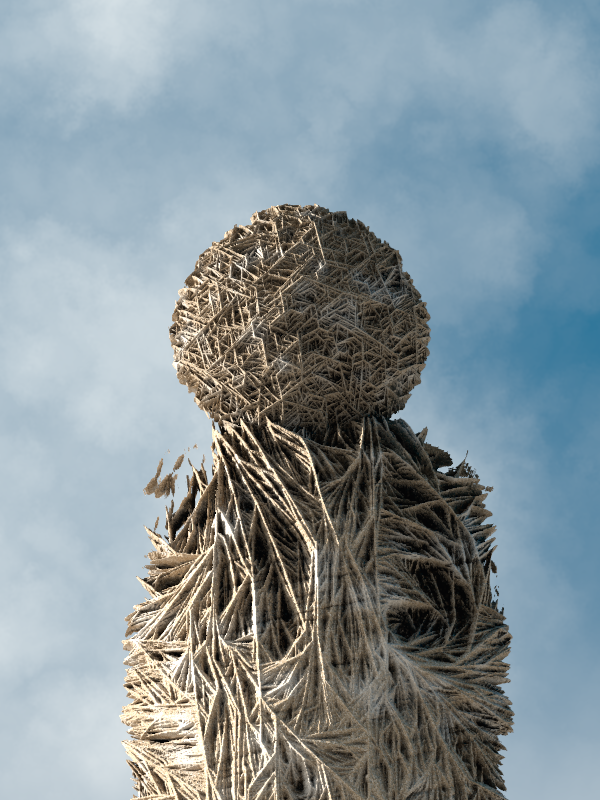
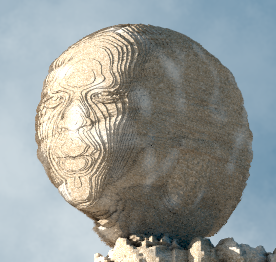
To keep myself from the streets, I am leisurely strolling through
different codes and utilities I have collected over the years, many of
them never really used in a scene.

I thought it would be interesting to combine two techniques from Sam
Benge: his strands utility and his rockhead code.

This is a very first result, needing some fine tuning of course, but you
get the idea.

--
Thomas
Post a reply to this message
Attachments:
Download 'sb_rockhead1.png' (618 KB)
Preview of image 'sb_rockhead1.png'
|
|
| |
| |
|
|
|
|
| |
| |
|
|
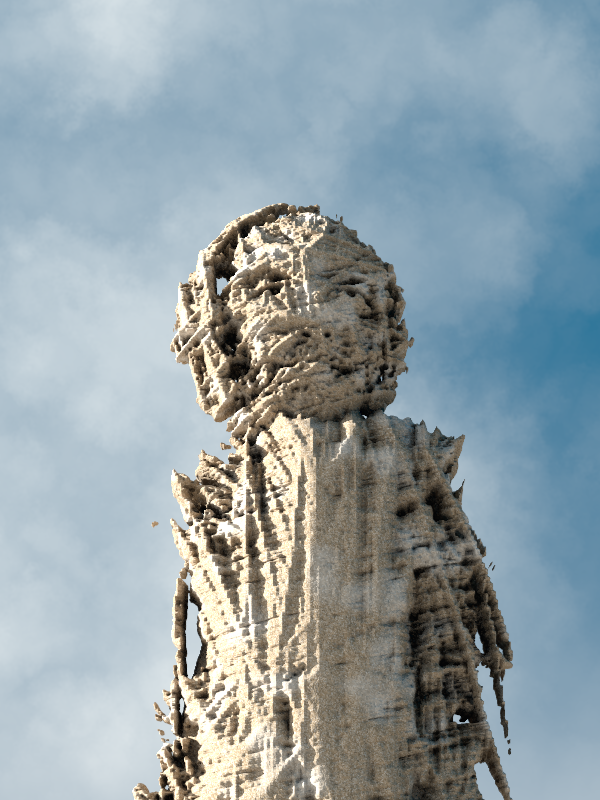
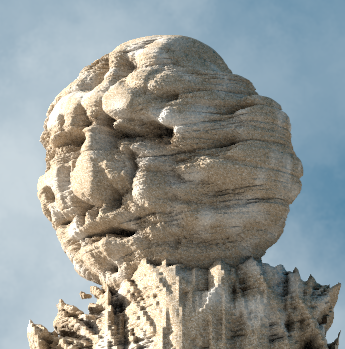
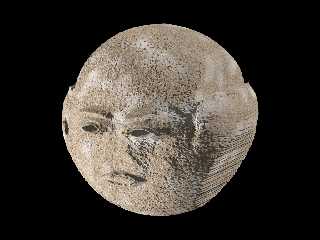
...which brings me to A Portrait of the Artist as an Eroded Gentleman.

--
Thomas
Post a reply to this message
Attachments:
Download 'sb_rockhead1.png' (560 KB)
Preview of image 'sb_rockhead1.png'
|
|
| |
| |
|
|
|
|
| |
| |
|
|
Thomas de Groot <tho### [at] degroot org> wrote:
> ...which brings me to A Portrait of the Artist as an Eroded Gentleman.
>
> --
> Thomas
Wow, is that a chance likeness? org> wrote:
> ...which brings me to A Portrait of the Artist as an Eroded Gentleman.
>
> --
> Thomas
Wow, is that a chance likeness?
Post a reply to this message
|
|
| |
| |
|
|
|
|
| |
| |
|
|
On 08/05/16 12:35, Cousin Ricky wrote:
> Thomas de Groot <tho### [at] degrootorg> wrote:
>> ...which brings me to A Portrait of the Artist as an Eroded Gentleman.
>>
>> --
>> Thomas
>
> Wow, is that a chance likeness?
>

Thomas has been taking selfies again :-D

John
--
Protect the Earth
It was not given to you by your parents
You hold it in trust for your children
Post a reply to this message
|
|
| |
| |
|
|
|
|
| |
| |
|
|
On 8-5-2016 13:35, Cousin Ricky wrote:
> Thomas de Groot <tho### [at] degrootorg> wrote:
>> ...which brings me to A Portrait of the Artist as an Eroded Gentleman.
>>
>> --
>> Thomas
>
> Wow, is that a chance likeness?
>
>

No. It is an identity photo of myself taken many years ago by my boss
for internal use at the Survey. I look younger than I am now ;-)

Obviously, it was heavily processed in The Gimp before throwing it in
Sam's blender.

--
Thomas
Post a reply to this message
|
|
| |
| |
|
|
|
|
| |
| |
|
|
On 8-5-2016 13:56, Doctor John wrote:
> On 08/05/16 12:35, Cousin Ricky wrote:
>> Thomas de Groot <tho### [at] degrootorg> wrote:
>>> ...which brings me to A Portrait of the Artist as an Eroded Gentleman.
>>>
>>> --
>>> Thomas
>>
>> Wow, is that a chance likeness?
>>
>
> Thomas has been taking selfies again :-D
>

We become vain with old age and crave after our younger selfs. :-)


--
Thomas
Post a reply to this message
|
|
| |
| |
|
|
|
|
| |
| |
|
|
On 9-5-2016 8:55, Thomas de Groot wrote:
> ... selfs. :-)
>

Nah, that should be selves (like in elves)...


--
Thomas
Post a reply to this message
|
|
| |
| |
|
|
|
|
| |
| |
|
|
Thomas de Groot wrote on 08/05/2016 13.14:
> ...which brings me to A Portrait of the Artist as an Eroded Gentleman.
>
This gentleman is really eroded... A very nice shot!
;-)
Paolo
Post a reply to this message
|
|
| |
| |
|
|
|
|
| |
| |
|
|
On 9-5-2016 12:56, Paolo Gibellini wrote:
> Thomas de Groot wrote on 08/05/2016 13.14:
>> ...which brings me to A Portrait of the Artist as an Eroded Gentleman.
>>
> This gentleman is really eroded... A very nice shot!
> ;-)
> Paolo

Thank you Paolo. It reminds me of some type of karst erosion.

--
Thomas
Post a reply to this message
|
|
| |
| |
|
|
|
|
| |
| |
|
|
It reminds me of the movie "The Wicker Man." very cool.
>
> I thought it would be interesting to combine two techniques from Sam
> Benge: his strands utility and his rockhead code.
>

I'm ashamed to say that I don't have those utilities or even know about them.
Could you give a link to where I can find them? The strands utility definitely
looks interesting. Thanks.
Post a reply to this message
|
|
| |
| |
|
|
|
|
| |
| |
|
|
"Kenneth" <kdw### [at] gmailcom> wrote:
> The strands utility definitely looks interesting.

Oops, I found it in the newsgroups, in binaries.utilities (September 2010)
Post a reply to this message
|
|
| |
| |
|
|
|
|
| |
| |
|
|
On 10-5-2016 1:20, Kenneth wrote:
> "Kenneth" <kdw### [at] gmailcom> wrote:
>> The strands utility definitely looks interesting.
>
> Oops, I found it in the newsgroups, in binaries.utilities (September 2010)
>
>
>
I could not have been more precise. I picked them up at the moment when
Sam made them available and did not really note down a location, except
for the date.

According to my info, rockhead1.pov dates back to 2007. I think there
was an image, so p.b.i. should be a first guess.

There are still a lot of utilities from Sam that I have not really tried
out. I pick things up when they come by and then put them on the shelf.

--
Thomas
Post a reply to this message
|
|
| |
| |
|
|
|
|
| |
| |
|
|
On 05/10/2016 02:54 AM, Thomas de Groot wrote:
> On 10-5-2016 1:20, Kenneth wrote:
>> "Kenneth" <kdw### [at] gmailcom> wrote:
>>> The strands utility definitely looks interesting.
>>
>> Oops, I found it in the newsgroups, in binaries.utilities (September
>> 2010)
>>
>>
>>
> I could not have been more precise. I picked them up at the moment when
> Sam made them available and did not really note down a location, except
> for the date.
>
> According to my info, rockhead1.pov dates back to 2007. I think there
> was an image, so p.b.i. should be a first guess.
>
> There are still a lot of utilities from Sam that I have not really tried
> out. I pick things up when they come by and then put them on the shelf.
>

If anyone - Sam? - has a pointer to the original theory or perhaps
source code for the strands technique I would appreciate it. I've done
some searches with the word strands, but come up empty and I don't quite
see what is being done.

I picked up the exe too, but it would not run under wine for me & it is
an effect I would like to try.

On the image, Thomas, are the floating shapes at the edges from an
underlying isosurface then? The general look I like.

Bill P.
Post a reply to this message
|
|
| |
| |
|
|
|
|
| |
| |
|
|
On 10-5-2016 13:37, William F Pokorny wrote:
> On 05/10/2016 02:54 AM, Thomas de Groot wrote:
>> On 10-5-2016 1:20, Kenneth wrote:
>>> "Kenneth" <kdw### [at] gmailcom> wrote:
>>>> The strands utility definitely looks interesting.
>>>
>>> Oops, I found it in the newsgroups, in binaries.utilities (September
>>> 2010)
>>>
>>>
>>>
>> I could not have been more precise. I picked them up at the moment when
>> Sam made them available and did not really note down a location, except
>> for the date.
>>
>> According to my info, rockhead1.pov dates back to 2007. I think there
>> was an image, so p.b.i. should be a first guess.
>>
>> There are still a lot of utilities from Sam that I have not really tried
>> out. I pick things up when they come by and then put them on the shelf.
>>
>
> If anyone - Sam? - has a pointer to the original theory or perhaps
> source code for the strands technique I would appreciate it. I've done
> some searches with the word strands, but come up empty and I don't quite
> see what is being done.
>
> I picked up the exe too, but it would not run under wine for me & it is
> an effect I would like to try.
>
> On the image, Thomas, are the floating shapes at the edges from an
> underlying isosurface then? The general look I like.
>
> Bill P.

Yes the general shapes are isosurfaces. This is the (Sam-based) code for
the head:

#declare rock=
function{
   pigment {
     //spherical //or:
     boxed
     pigment_map {
       [0.0 rgb 0]
       [0.5 pigment_pattern {
              image_map {
                //png"rockman.png" gamma 1.0 interpolate 2
                //png"TdG_rock_01.png" gamma 1.0 interpolate 2
                png"t_degroot01.png" gamma 1.0 interpolate 2
                //png"Sam Benge Strands/strands_003.png" gamma 1.0
interpolate 2
              }
              translate-(x+y)/2
              scale 2
            }
            pigment_map {
              [0.0 rgb 0]
              [0.5 granite
                   scale <5, 0.5, 5>
                   poly_wave 0.5
                   rotate z*12
                   color_map {
                     [0 rgb 0.25]
                     [1 rgb 0.75]
                   }
              ]
              [1.0 rgb 1]
            }
       ]
       [1.0 rgb 1]
     }
   }
}

and the isosurface used:

isosurface {
   function {
     0-rock(x,y,z).grey+0.05
   }
   accuracy 0.001
   max_gradient 2
   all_intersections
   contained_by {box {<-1,-1,-1>,<1,1,1>}}
   texture {granite_rock}
}

The strands output image is used in Gimp in combination with the
portrait and additional layers, to get a final image.

--
Thomas
Post a reply to this message
|
|
| |
| |
|
|
|
|
| |
| |
|
|
Thomas de Groot <tho### [at] degrootorg> wrote:
> On 10-5-2016 13:37, William F Pokorny wrote:
> > On 05/10/2016 02:54 AM, Thomas de Groot wrote:
> >> On 10-5-2016 1:20, Kenneth wrote:
> >>> "Kenneth" <kdw### [at] gmailcom> wrote:
> >>>> The strands utility definitely looks interesting.
> >>>
> >>> Oops, I found it in the newsgroups, in binaries.utilities (September
> >>> 2010)
> >>>
> >>>
> >>>
> >> I could not have been more precise. I picked them up at the moment when
> >> Sam made them available and did not really note down a location, except
> >> for the date.
> >>
> >> According to my info, rockhead1.pov dates back to 2007. I think there
> >> was an image, so p.b.i. should be a first guess.
> >>
> >> There are still a lot of utilities from Sam that I have not really tried
> >> out. I pick things up when they come by and then put them on the shelf.
> >>
> >
> > If anyone - Sam? - has a pointer to the original theory or perhaps
> > source code for the strands technique I would appreciate it. I've done
> > some searches with the word strands, but come up empty and I don't quite
> > see what is being done.
> >
> > I picked up the exe too, but it would not run under wine for me & it is
> > an effect I would like to try.
> >
> > On the image, Thomas, are the floating shapes at the edges from an
> > underlying isosurface then? The general look I like.
> >
> > Bill P.
>
> Yes the general shapes are isosurfaces. This is the (Sam-based) code for
> the head:
>
> #declare rock=
> function{
>    pigment {
>      //spherical //or:
>      boxed
>      pigment_map {
>        [0.0 rgb 0]
>        [0.5 pigment_pattern {
>               image_map {
>                 //png"rockman.png" gamma 1.0 interpolate 2
>                 //png"TdG_rock_01.png" gamma 1.0 interpolate 2
>                 png"t_degroot01.png" gamma 1.0 interpolate 2
>                 //png"Sam Benge Strands/strands_003.png" gamma 1.0
> interpolate 2
>               }
>               translate-(x+y)/2
>               scale 2
>             }
>             pigment_map {
>               [0.0 rgb 0]
>               [0.5 granite
>                    scale <5, 0.5, 5>
>                    poly_wave 0.5
>                    rotate z*12
>                    color_map {
>                      [0 rgb 0.25]
>                      [1 rgb 0.75]
>                    }
>               ]
>               [1.0 rgb 1]
>             }
>        ]
>        [1.0 rgb 1]
>      }
>    }
> }
>
> and the isosurface used:
>
> isosurface {
>    function {
>      0-rock(x,y,z).grey+0.05
>    }
>    accuracy 0.001
>    max_gradient 2
>    all_intersections
>    contained_by {box {<-1,-1,-1>,<1,1,1>}}
>    texture {granite_rock}
> }
>
> The strands output image is used in Gimp in combination with the
> portrait and additional layers, to get a final image.
>
> --
> Thomas

Thank you Thomas! More lovely toys to play with. And I love the images. Lots of
food for thought.

I really must dive through the binaries. Clearly there is a lot I have missed.
Post a reply to this message
|
|
| |
| |
|
|
|
|
| |
| |
|
|
On 13-5-2016 11:43, Simon J. Cambridge wrote:
> Thomas de Groot <tho### [at] degrootorg> wrote:
>> On 10-5-2016 13:37, William F Pokorny wrote:
>>> On 05/10/2016 02:54 AM, Thomas de Groot wrote:
>>>> On 10-5-2016 1:20, Kenneth wrote:
>>>>> "Kenneth" <kdw### [at] gmailcom> wrote:
>>>>>> The strands utility definitely looks interesting.
>>>>>
>>>>> Oops, I found it in the newsgroups, in binaries.utilities (September
>>>>> 2010)
>>>>>
>>>>>
>>>>>
>>>> I could not have been more precise. I picked them up at the moment when
>>>> Sam made them available and did not really note down a location, except
>>>> for the date.
>>>>
>>>> According to my info, rockhead1.pov dates back to 2007. I think there
>>>> was an image, so p.b.i. should be a first guess.
>>>>
>>>> There are still a lot of utilities from Sam that I have not really tried
>>>> out. I pick things up when they come by and then put them on the shelf.
>>>>
>>>
>>> If anyone - Sam? - has a pointer to the original theory or perhaps
>>> source code for the strands technique I would appreciate it. I've done
>>> some searches with the word strands, but come up empty and I don't quite
>>> see what is being done.
>>>
>>> I picked up the exe too, but it would not run under wine for me & it is
>>> an effect I would like to try.
>>>
>>> On the image, Thomas, are the floating shapes at the edges from an
>>> underlying isosurface then? The general look I like.
>>>
>>> Bill P.
>>
>> Yes the general shapes are isosurfaces. This is the (Sam-based) code for
>> the head:
>>
>> #declare rock=
>> function{
>>     pigment {
>>       //spherical //or:
>>       boxed
>>       pigment_map {
>>         [0.0 rgb 0]
>>         [0.5 pigment_pattern {
>>                image_map {
>>                  //png"rockman.png" gamma 1.0 interpolate 2
>>                  //png"TdG_rock_01.png" gamma 1.0 interpolate 2
>>                  png"t_degroot01.png" gamma 1.0 interpolate 2
>>                  //png"Sam Benge Strands/strands_003.png" gamma 1.0
>> interpolate 2
>>                }
>>                translate-(x+y)/2
>>                scale 2
>>              }
>>              pigment_map {
>>                [0.0 rgb 0]
>>                [0.5 granite
>>                     scale <5, 0.5, 5>
>>                     poly_wave 0.5
>>                     rotate z*12
>>                     color_map {
>>                       [0 rgb 0.25]
>>                       [1 rgb 0.75]
>>                     }
>>                ]
>>                [1.0 rgb 1]
>>              }
>>         ]
>>         [1.0 rgb 1]
>>       }
>>     }
>> }
>>
>> and the isosurface used:
>>
>> isosurface {
>>     function {
>>       0-rock(x,y,z).grey+0.05
>>     }
>>     accuracy 0.001
>>     max_gradient 2
>>     all_intersections
>>     contained_by {box {<-1,-1,-1>,<1,1,1>}}
>>     texture {granite_rock}
>> }
>>
>> The strands output image is used in Gimp in combination with the
>> portrait and additional layers, to get a final image.
>>
>> --
>> Thomas
>
> Thank you Thomas! More lovely toys to play with. And I love the images. Lots of
> food for thought.
>
> I really must dive through the binaries. Clearly there is a lot I have missed.

No thanks. All praise goes to Sam Benge for these tools. And yes, like
we all, there is a lot we miss one way or another.

--
Thomas
Post a reply to this message
|
|
| |
| |
|
|
|
|
| |
| |
|
|
Thomas de Groot <tho### [at] degrootorg> wrote:
> ...which brings me to A Portrait of the Artist as an Eroded Gentleman.
>
> --
> Thomas

you look rock solid :)
Post a reply to this message
|
|
| |
| |
|
|
|
|
| |
| |
|
|
On 13-5-2016 18:35, nemesis wrote:
> Thomas de Groot <tho### [at] degrootorg> wrote:
>> ...which brings me to A Portrait of the Artist as an Eroded Gentleman.
>>
>> --
>> Thomas
>
> you look rock solid :)
>

Don't let appearances mislead you ;-)

--
Thomas
Post a reply to this message
|
|
| |
| |
|
|
|
|
| |
| |
|
|
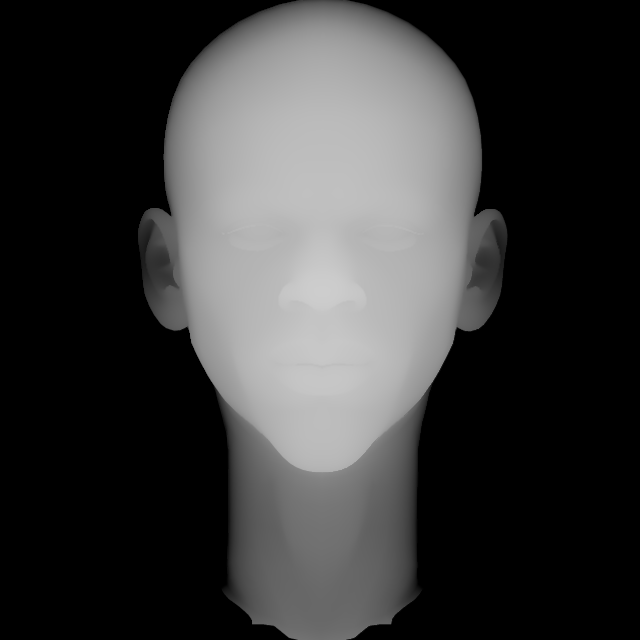
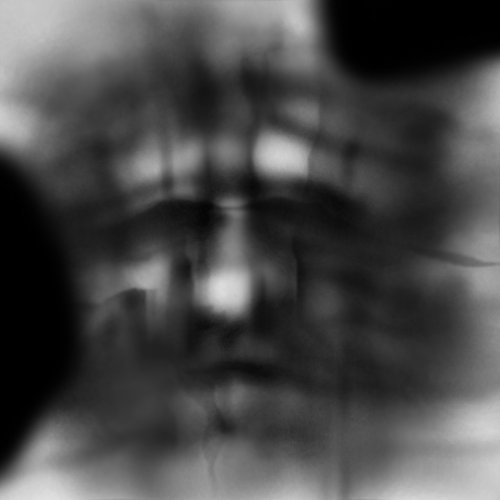
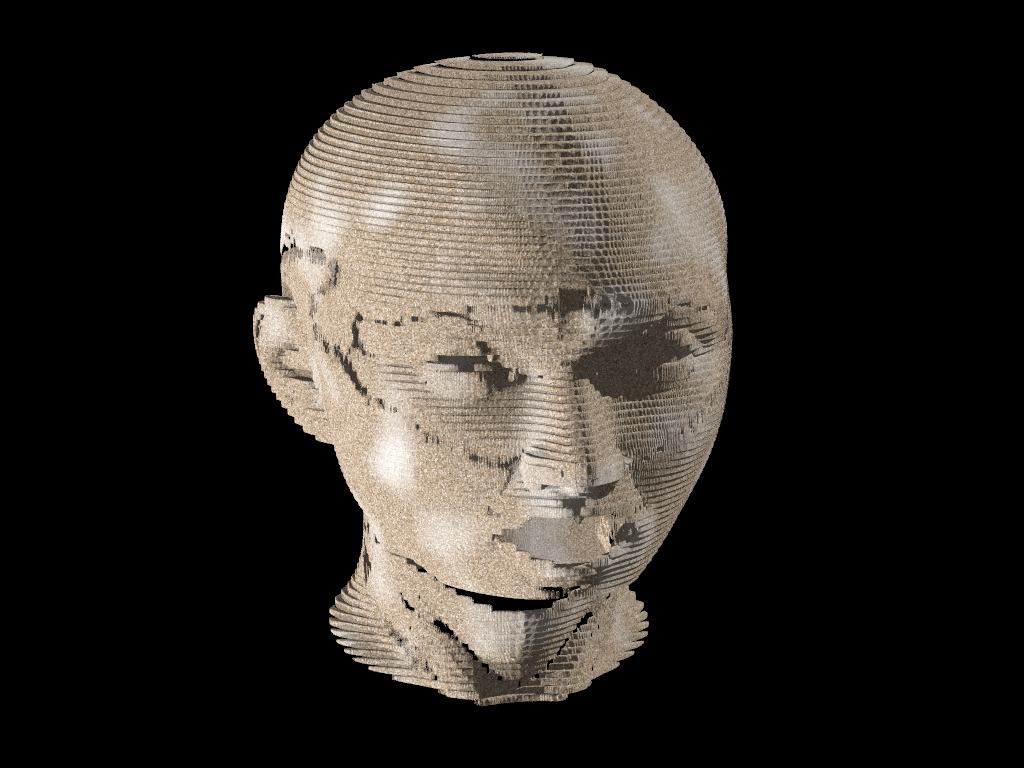
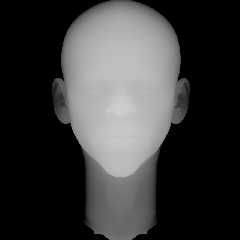
I need a bit of help. I made a depth_map of a Poser head (see attached)
and thought that using it in the Rockhead code would be straightforward.
It is, except that the face remains flat with hardly a hint of features.
I believe there is nothing wrong with the depth_map itself, so how can I
improve on this? Here is the basic code used:

//==start code==============================
#declare granite_rock=
texture{
  pigment{
   pigment_pattern{
    bumps scale .15
   }
   pigment_map{
    [-.2 rgb 1]
    [.5
     crackle solid scale .0125/4
     color_map{
      [0 rgb 1]
      [.5 rgb <1,.875,.75>-.5]
      [1 rgb 0]
     }
    ]
   }
  }
  normal{crackle 1 solid  scale .0125/4}
  finish{brilliance .5 diffuse .785}
}

#declare rock=
function{
   pigment {
     spherical //or:
     //boxed
     pigment_map {
       [0.0 rgb 0]
       [0.5 pigment_pattern {
              image_map {
                png"Mapping_test.png" gamma 1.0 interpolate 2
              }
              translate-(x+y)/2
              scale 2
            }
            pigment_map {
              [0.0 rgb 0]
              [0.5 granite
                   scale <5, 0.5, 5>
                   poly_wave 0.5
                   rotate z*12
                   color_map {
                     [0 rgb 0.25]
                     [1 rgb 0.75]
                   }
              ]
              [1.0 rgb 1]
            }
       ]
       [1.0 rgb 1]
     }
   }
}

isosurface {
   function {
     0-rock(x,y,z).grey+0.05
   }
   accuracy 0.001
   max_gradient 2
   all_intersections
   contained_by {box {<-1,-1,-1>,<1,1,1>}}
   texture {granite_rock}
}
//==end code================================

Thanks!

--
Thomas
Post a reply to this message
Attachments:
Download 'mapping_test.png' (48 KB)
Preview of image 'mapping_test.png'
|
|
| |
| |
|
|
|
|
| |
| |
|
|
Le 16/05/2016 09:32, Thomas de Groot a écrit :
> I need a bit of help. I made a depth_map of a Poser head (see attached) and thought
that using it in the Rockhead code would be straightforward. It is, except that the
face remains flat with hardly a hint of features. I believe there is nothing wrong
with the depth_map
> itself, so how can I improve on this? Here is the basic code used:
> ================================
>
> Thanks!
>
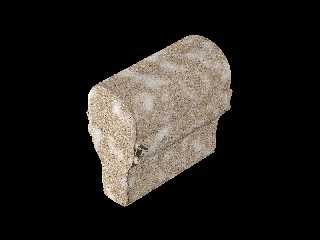
If it can help... look at attached scene

then compare with your scene. (and please next time, give me camera & light sources
too)
Post a reply to this message
Attachments:
Download 'dep.png' (273 KB)
Download 'dep.pov.txt' (2 KB)
Preview of image 'dep.png'
|
|
| |
| |
|
|
|
|
| |
| |
|
|
Thomas de Groot <tho### [at] degrootorg> wrote:
> I need a bit of help. I made a depth_map of a Poser head (see attached)
> and thought that using it in the Rockhead code would be straightforward.
> It is, except that the face remains flat with hardly a hint of features.

Hi, Thomas.

I've been testing out your code (which is very cool, by the way), and the only
problem seems to be with the depth-map image itself ("mapping_test".) The facial
features apparently do not have enough contrast, from dark to light. I took your
image and toyed with it in Photoshop-- adding some simple, darker 'test
features' to the face-- and they successfully showed up on your isosurface.  If
it helps, I'll try to upload my test image here, so you can plug it into
your code, to see the difference. (It's a jpeg image, with a gamma of 2.2.)

By the way (and a bit off-topic): I'm currently running one of Clipka's
'development builds' (not the latest one, unfortunately), and I noticed that, in
your code, I could substitute "MAPPING_TEST" for "mapping test" (i.e., all
capital letters), even though your image's name wasn't written that way-- but
your .png image still loaded successfully, without a fatal error(!) That came as
a big surprise to me; up until now, I was sure that things like image_map names
(in an SDL scene) had to be spelled *exactly* like the image itself, or the
scene wouldn't run. I don't know if this is a new 'feature', or if it's just a
temporary glitch in my particular development build.

(I discovered this quirk by chance; your code had a small typo in the image_map
entry, that didn't quite match your .png image's actual name. But it rendered
successfully anyway!)
Post a reply to this message
Attachments:
Download 'mapping_test_2_for_thomas.jpg' (68 KB)
Preview of image 'mapping_test_2_for_thomas.jpg'

|
|
| |
| |
|
|
|
|
| |
| |
|
|
Something I forgot to mention (not critical, just an observation):

When I rotate your isosurface (about +45-degrees around y, using the typical
'left-hand rule'), I notice what looks like a small smooth spherical shape
protruding from the center. I was wondering what that is, or what's producing
it.
Post a reply to this message
|
|
| |
| |
|
|
|
|
| |
| |
|
|
On 16-5-2016 10:16, Le_Forgeron wrote:
> Le 16/05/2016 09:32, Thomas de Groot a écrit :
>> I need a bit of help. I made a depth_map of a Poser head (see attached) and thought
that using it in the Rockhead code would be straightforward. It is, except that the
face remains flat with hardly a hint of features. I believe there is nothing wrong
with the depth_map
>> itself, so how can I improve on this? Here is the basic code used:
>> ================================
>>
>> Thanks!
>>
> If it can help... look at attached scene
>
> then compare with your scene. (and please next time, give me camera & light sources
too)
>

Like Kenneth said, the contrast of the depth_map is too small. I had
been thinking about that but am not sure about what the best way to go
would be to achieve that.

Otherwise yes, Sam's code shows the map on both opposite sides of the
isosurface.

Shall give camera and light next time. Personally, I always prefer to
put the code to test into my own generalised scene.

--
Thomas
Post a reply to this message
|
|
| |
| |
|
|
|
|
| |
| |
|
|
On 16-5-2016 12:26, Kenneth wrote:
> Thomas de Groot <tho### [at] degrootorg> wrote:
>> I need a bit of help. I made a depth_map of a Poser head (see attached)
>> and thought that using it in the Rockhead code would be straightforward.
>> It is, except that the face remains flat with hardly a hint of features.
>
> Hi, Thomas.
>
> I've been testing out your code (which is very cool, by the way), and the only
> problem seems to be with the depth-map image itself ("mapping_test".) The facial
> features apparently do not have enough contrast, from dark to light. I took your
> image and toyed with it in Photoshop-- adding some simple, darker 'test
> features' to the face-- and they successfully showed up on your isosurface.  If
> it helps, I'll try to upload my test image here, so you can plug it into
> your code, to see the difference. (It's a jpeg image, with a gamma of 2.2.)

Thanks Kenneth. I indeed suspected the contrast of the depth_map and
wondered how I could best improve that. I tried first to vary the
pigment_map {} range with different shade values of grey; then I used
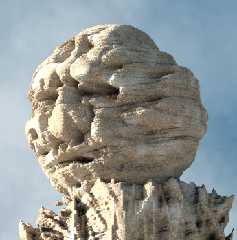
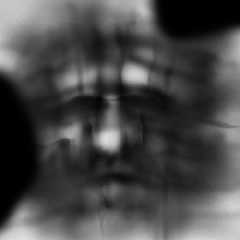
the Gimp to see if I could improve the contrast but neither was good
enough. Clearly the image needs contrast from the start or like you did.
Sam's original map was better and with better results (see attachments).
I had hoped to get away with mine but have to invent some clever tricks
apparently. I think I am going to put the image through a more thorough
laundering in Gimp ;-)

>
> By the way (and a bit off-topic): I'm currently running one of Clipka's
> 'development builds' (not the latest one, unfortunately), and I noticed that, in
> your code, I could substitute "MAPPING_TEST" for "mapping test" (i.e., all
> capital letters), even though your image's name wasn't written that way-- but
> your .png image still loaded successfully, without a fatal error(!) That came as
> a big surprise to me; up until now, I was sure that things like image_map names
> (in an SDL scene) had to be spelled *exactly* like the image itself, or the
> scene wouldn't run. I don't know if this is a new 'feature', or if it's just a
> temporary glitch in my particular development build.

Good to know. I thought names had to be consistent especially with
capitals.

>
> (I discovered this quirk by chance; your code had a small typo in the image_map
> entry, that didn't quite match your .png image's actual name. But it rendered
> successfully anyway!)

Oh? I don't see any difference between the two names on my side.


--
Thomas
Post a reply to this message
Attachments:
Download 'sb_rockhead1.png' (192 KB)
Download 'rockman.png' (107 KB)
Preview of image 'sb_rockhead1.png'
Preview of image 'rockman.png'
|
|
| |
| |
|
|
|
|
| |
| |
|
|
Le 16-05-16 06:26, Kenneth a écrit :
> Thomas de Groot <tho### [at] degrootorg> wrote:
>> I need a bit of help. I made a depth_map of a Poser head (see attached)
>> and thought that using it in the Rockhead code would be straightforward.
>> It is, except that the face remains flat with hardly a hint of features.
>
> Hi, Thomas.
>
> I've been testing out your code (which is very cool, by the way), and the only
> problem seems to be with the depth-map image itself ("mapping_test".) The facial
> features apparently do not have enough contrast, from dark to light. I took your
> image and toyed with it in Photoshop-- adding some simple, darker 'test
> features' to the face-- and they successfully showed up on your isosurface.  If
> it helps, I'll try to upload my test image here, so you can plug it into
> your code, to see the difference. (It's a jpeg image, with a gamma of 2.2.)
>
> By the way (and a bit off-topic): I'm currently running one of Clipka's
> 'development builds' (not the latest one, unfortunately), and I noticed that, in
> your code, I could substitute "MAPPING_TEST" for "mapping test" (i.e., all
> capital letters), even though your image's name wasn't written that way-- but
> your .png image still loaded successfully, without a fatal error(!) That came as
> a big surprise to me; up until now, I was sure that things like image_map names
> (in an SDL scene) had to be spelled *exactly* like the image itself, or the
> scene wouldn't run. I don't know if this is a new 'feature', or if it's just a
> temporary glitch in my particular development build.
>
> (I discovered this quirk by chance; your code had a small typo in the image_map
> entry, that didn't quite match your .png image's actual name. But it rendered
> successfully anyway!)
>

If you are under Windows, file paths, including files names, are always
case insencitive.


Alain
Post a reply to this message
|
|
| |
| |
|
|
|
|
| |
| |
|
|
Alain <kua### [at] videotronca> wrote:

>
> If you are under Windows, file paths, including files names, are always
> case insencitive.
>

Really?! That is something I didn't know. In all my years of using POV-Ray on
Windows, I've always been extremely careful to spell file names exactly as they
should be-- when I didn't have to be so precise, apparently! Strange that I've
never noticed that before.

Thanks!

Actually, I think that it's going to be hard for me to get used to this 'new'
idea (new to me!)-- trying to change about 15 years' worth of old habits. Ha!
Post a reply to this message
|
|
| |
| |
|
|
|
|
| |
| |
|
|
Thomas de Groot <tho### [at] degrootorg> wrote:
> On 16-5-2016 12:26, Kenneth wrote:

> >
> > (I discovered this quirk by chance; your code had a small typo in the image_map
> > entry, that didn't quite match your .png image's actual name. But it rendered
> > successfully anyway!)
>
> Oh? I don't see any difference between the two names on my side.
>

Hmm, that's strange. On my end (using Firefox as a browser), here's what I
see...

(your code snippet)
image_map {
                png"Mapping_test.png" gamma 1.0 interpolate 2
              }

Attachments:
download "mapping_test.png" (48 KB)

.... and the .png file is saved on my system as "mapping_test"

About the depth map: I assume that you created it in POV-Ray (using a
white-to-black color_map laid over the model in +z?) Perhaps you could run TWO
renders, one for just the face, and one for the areas behind the face (ears,
neck, etc.), using some kind of (precise!) trick with *different* color_maps,
plus appropriate inner/outer transparency for each render (to separate the
areas.) Then combine them in GIMP.

OR, you could separate your original depth-map image into two parts with a
precise mask, and boost the contrast of just the face.

I can't say for sure if either method would actually produce a 'correct'
isosurface face shape, but it might be worth a try.  It's kind of like trying to
make a face using a height_field and a depth-map; I've tried doing that, with
not-very-good results. The image_map artwork has to be made *just so*, and bears
little resemblance to an actual face!
Post a reply to this message
|
|
| |
| |
|
|
|
|
| |
| |
|
|
Le 16-05-16 16:39, Kenneth a écrit :
> Alain <kua### [at] videotronca> wrote:
>
>>
>> If you are under Windows, file paths, including files names, are always
>> case insencitive.
>>
>
> Really?! That is something I didn't know. In all my years of using POV-Ray on
> Windows, I've always been extremely careful to spell file names exactly as they
> should be-- when I didn't have to be so precise, apparently! Strange that I've
> never noticed that before.
>
> Thanks!
>
> Actually, I think that it's going to be hard for me to get used to this 'new'
> idea (new to me!)-- trying to change about 15 years' worth of old habits. Ha!
>
>

It's a leftover from DOS 1.0. DOS 0.1 alpha to DOS 7.xx, and Windows 1.0
to Windows 10, have always been case insencitive. But, who know, maybe
in some future time Windows could become case sencitive...
Also, the infamous backslash "\" comes from the bad decision of using
the forward slash for switches and command lines options that where not
to be set ON/Off (+ -) but activated by presence, like dir /w. They also
used the pipe "|" in some cases for no real reasons.

If you are on Unix/Linux, then the paths ARE case sencitives. Probably
on MacOS to. So, it's may be a good habit to have.


Alain
Post a reply to this message
|
|
| |
| |
|
|
|
|
| |
| |
|
|
On 16-5-2016 23:25, Alain wrote:
> Le 16-05-16 16:39, Kenneth a écrit :
>> Alain <kua### [at] videotronca> wrote:
>>
>>>
>>> If you are under Windows, file paths, including files names, are always
>>> case insencitive.
>>>
>>
>> Really?! That is something I didn't know. In all my years of using
>> POV-Ray on
>> Windows, I've always been extremely careful to spell file names
>> exactly as they
>> should be-- when I didn't have to be so precise, apparently! Strange
>> that I've
>> never noticed that before.
>>
>> Thanks!
>>
>> Actually, I think that it's going to be hard for me to get used to
>> this 'new'
>> idea (new to me!)-- trying to change about 15 years' worth of old
>> habits. Ha!
>>
>>
>
> It's a leftover from DOS 1.0. DOS 0.1 alpha to DOS 7.xx, and Windows 1.0
> to Windows 10, have always been case insencitive. But, who know, maybe
> in some future time Windows could become case sencitive...
> Also, the infamous backslash "\" comes from the bad decision of using
> the forward slash for switches and command lines options that where not
> to be set ON/Off (+ -) but activated by presence, like dir /w. They also
> used the pipe "|" in some cases for no real reasons.
>

Like Kenneth, I have never been aware of that either! It won't change my
habit though ;-)

The use of "|" in e.g. #if (x>10 | z<=20) is legitimate though? What
other, invalid, use are you talking of?


--
Thomas
Post a reply to this message
|
|
| |
| |
|
|
|
|
| |
| |
|
|
On 16-5-2016 23:03, Kenneth wrote:
> Thomas de Groot <tho### [at] degrootorg> wrote:
>> On 16-5-2016 12:26, Kenneth wrote:
>
>>>
>>> (I discovered this quirk by chance; your code had a small typo in the image_map
>>> entry, that didn't quite match your .png image's actual name. But it rendered
>>> successfully anyway!)
>>
>> Oh? I don't see any difference between the two names on my side.
>>
>
> Hmm, that's strange. On my end (using Firefox as a browser), here's what I
> see...
>
> (your code snippet)
> image_map {
>                  png"Mapping_test.png" gamma 1.0 interpolate 2
>                }
>
> Attachments:
> download "mapping_test.png" (48 KB)
>
> .... and the .png file is saved on my system as "mapping_test"

Strange. Using Firefox myself, I have no differences made with the
downloads. They are exactly conform the originals.

>
> About the depth map: I assume that you created it in POV-Ray (using a
> white-to-black color_map laid over the model in +z?) Perhaps you could run TWO
> renders, one for just the face, and one for the areas behind the face (ears,
> neck, etc.), using some kind of (precise!) trick with *different* color_maps,
> plus appropriate inner/outer transparency for each render (to separate the
> areas.) Then combine them in GIMP.

Yes, That may be an interesting experiment to do.

>
> OR, you could separate your original depth-map image into two parts with a
> precise mask, and boost the contrast of just the face.

I tried that with no particular success.

>
> I can't say for sure if either method would actually produce a 'correct'
> isosurface face shape, but it might be worth a try.  It's kind of like trying to
> make a face using a height_field and a depth-map; I've tried doing that, with
> not-very-good results. The image_map artwork has to be made *just so*, and bears
> little resemblance to an actual face!

I have to agree with you on that. I had hoped for a straightforward use
of a depth map but it is not as simple as that.

A third option I might try is to scale the head excessively in the z
direction before making the depth map. But even then subtle details like
the eyes may get lost.

--
Thomas
Post a reply to this message
|
|
| |
| |
|
|
|
|
| |
| |
|
|
On 5/17/2016 7:52 AM, Thomas de Groot wrote:
> I have to agree with you on that. I had hoped for a straightforward use
> of a depth map but it is not as simple as that.


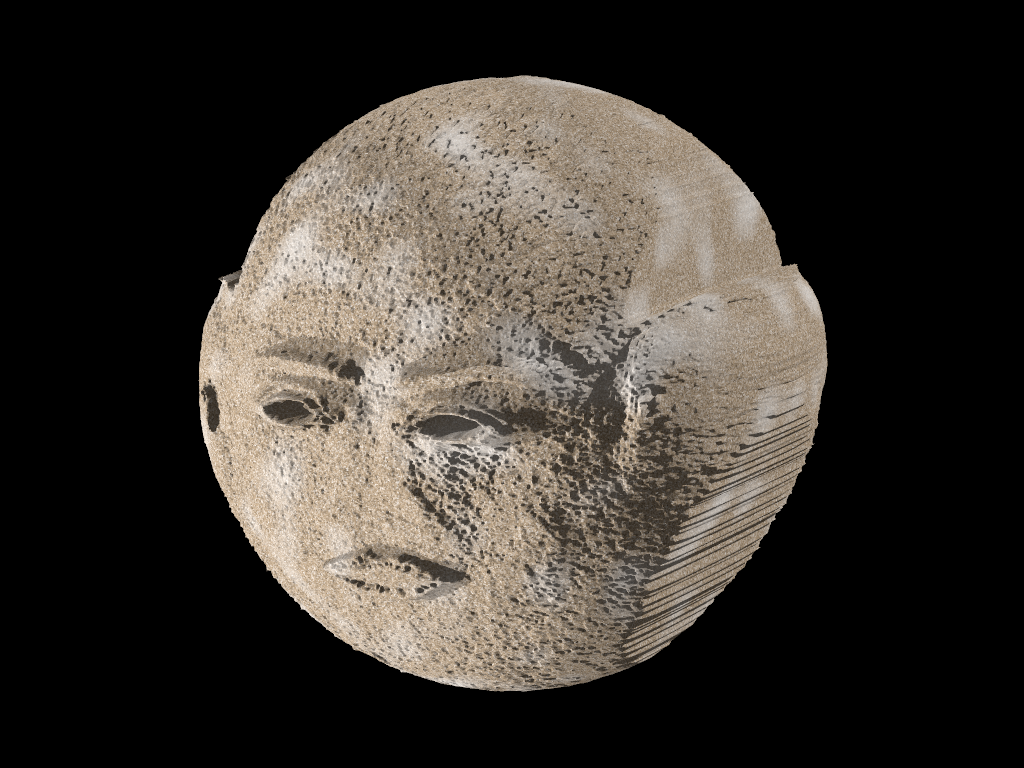
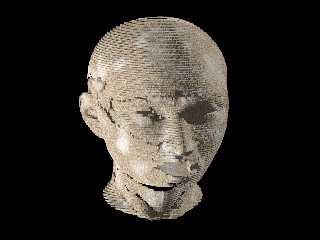
Is this the sort of effect you are looking for?

I used a bump map from Poser. I thought Kenneth was on the right track.
I tried reducing the colour depth. Which wasn't very useful.
The bump map was just copied from P4 woman bump.TIF and had no processing

--

Regards
     Stephen
Post a reply to this message
Attachments:
Download 'face map.png' (696 KB)
Preview of image 'face map.png'
|
|
| |
| |
|
|
|
|
| |
| |
|
|
On 17-5-2016 9:23, Stephen wrote:
> Is this the sort of effect you are looking for?
>
> I used a bump map from Poser. I thought Kenneth was on the right track.
> I tried reducing the colour depth. Which wasn't very useful.
> The bump map was just copied from P4 woman bump.TIF and had no processing
>

That is indeed something along the right track. However, bump maps are
essentially identical to depth maps. In your example the contrasts are
appropriately stronger and thus giving better results.

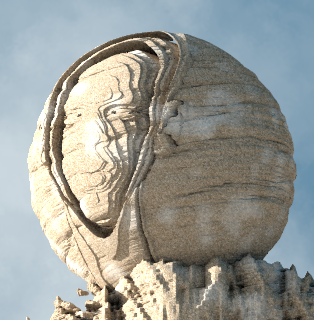
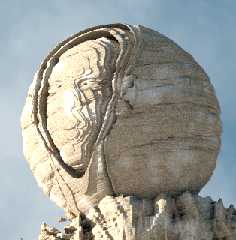
Doing some tricks on my depth map along these lines I got an alien
sculpture.

--
Thomas
Post a reply to this message
Attachments:
Download 'sb_rockhead1.png' (169 KB)
Preview of image 'sb_rockhead1.png'
|
|
| |
| |
|
|
|
|
| |
| |
|
|
On 17-5-2016 9:51, Thomas de Groot wrote:
> Doing some tricks on my depth map along these lines I got an alien
> sculpture.
>

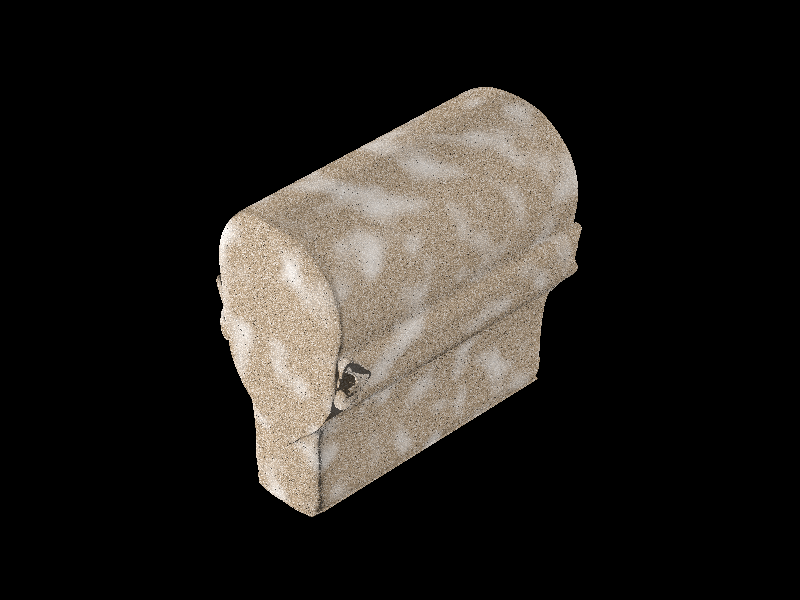
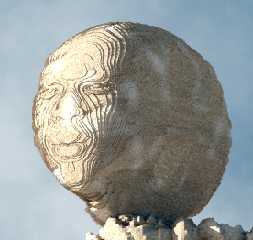
I think this is about the best I can do. I quit now.

--
Thomas
Post a reply to this message
Attachments:
Download 'sb_rockhead1.png' (115 KB)
Preview of image 'sb_rockhead1.png'
|
|
| |
| |
|
|
|
|
| |
| |
|
|
On 5/17/2016 8:51 AM, Thomas de Groot wrote:
> On 17-5-2016 9:23, Stephen wrote:
>> Is this the sort of effect you are looking for?
>>
>> I used a bump map from Poser. I thought Kenneth was on the right track.
>> I tried reducing the colour depth. Which wasn't very useful.
>> The bump map was just copied from P4 woman bump.TIF and had no processing
>>
>
> That is indeed something along the right track. However, bump maps are
> essentially identical to depth maps. In your example the contrasts are
> appropriately stronger and thus giving better results.
>
> Doing some tricks on my depth map along these lines I got an alien
> sculpture.
>

I recognise that face. :)
You've just about got the scale right.

The thing about poser bump maps is that they are designed as a depth map
for the human body. The nose doesn't work very well as it should be
mapped to a mesh.

--

Regards
     Stephen
Post a reply to this message
|
|
| |
| |
|
|
|
|
| |
| |
|
|
On 5/17/2016 9:02 AM, Thomas de Groot wrote:
> On 17-5-2016 9:51, Thomas de Groot wrote:
>> Doing some tricks on my depth map along these lines I got an alien
>> sculpture.
>>
>
> I think this is about the best I can do. I quit now.
>

That is acceptable. :)

I might try creating a df3 and see what that does.


--

Regards
     Stephen
Post a reply to this message
|
|
| |
| |
|
|
|
|
| |
| |
|
|
On 5/17/2016 9:11 AM, Stephen wrote:
> On 5/17/2016 9:02 AM, Thomas de Groot wrote:
>> On 17-5-2016 9:51, Thomas de Groot wrote:
>>> Doing some tricks on my depth map along these lines I got an alien
>>> sculpture.
>>>
>>
>> I think this is about the best I can do. I quit now.
>>
>
> That is acceptable. :)
>
> I might try creating a df3 and see what that does.
>
>


Using a rough and ready df3 made from a poser mesh and tga2df3.
I got this. I quite like it.

--

Regards
     Stephen
Post a reply to this message
Attachments:
Download 'face map02.png' (562 KB)
Preview of image 'face map02.png'
|
|
| |
| |
|
|
|
|
| |
| |
|
|
Am 16.05.2016 um 22:39 schrieb Kenneth:
> Alain <kua### [at] videotronca> wrote:
>
>>
>> If you are under Windows, file paths, including files names, are always
>> case insencitive.
>>
>
> Really?! That is something I didn't know. In all my years of using POV-Ray on
> Windows, I've always been extremely careful to spell file names exactly as they
> should be-- when I didn't have to be so precise, apparently! Strange that I've
> never noticed that before.
>
> Thanks!
>
> Actually, I think that it's going to be hard for me to get used to this 'new'
> idea (new to me!)-- trying to change about 15 years' worth of old habits. Ha!

Don't even try. Keep working as if size -- um, I mean, case -- matters.
It's the better habit anyway.
Post a reply to this message
|
|
| |
| |
|
|
|
|
| |
| |
|
|
Am 17.05.2016 um 08:44 schrieb Thomas de Groot:

>> It's a leftover from DOS 1.0. DOS 0.1 alpha to DOS 7.xx, and Windows 1.0
>> to Windows 10, have always been case insencitive. But, who know, maybe
>> in some future time Windows could become case sencitive...
>> Also, the infamous backslash "\" comes from the bad decision of using
>> the forward slash for switches and command lines options that where not
>> to be set ON/Off (+ -) but activated by presence, like dir /w. They also
>> used the pipe "|" in some cases for no real reasons.
>>
>
> Like Kenneth, I have never been aware of that either! It won't change my
> habit though ;-)
>
> The use of "|" in e.g. #if (x>10 | z<=20) is legitimate though? What
> other, invalid, use are you talking of?

If I'm understanding correctly, he's talking about the command-line
parameters of some (very) old DOS commands.

At the command prompt (and in batch files), the pipe symbol has special
meaning in both the DOS/Windows and Unix world, and thus designing
commands to use the pipe symbol for their own purposes has gone out of
favour.

It has nothing to do with scene files.
Post a reply to this message
|
|
| |
| |
|
|
|
|
| |
| |
|
|
Le 16-05-17 02:44, Thomas de Groot a écrit :

>
> Like Kenneth, I have never been aware of that either! It won't change my
> habit though ;-)
>
> The use of "|" in e.g. #if (x>10 | z<=20) is legitimate though? What
> other, invalid, use are you talking of?
>
>

dir |more

This induce a pose after each creen full with the display of [more] on
the last line. Press any key, the [more] goes away, and you get the next
screen full.

"dir /w |more" will display on 5 column and pose after a screen full.
I think that "dir |more /w" will causse an error or ignore the /w option.


Alain
Post a reply to this message
|
|
| |
| |
|
|
|
|
| |
| |
|
|
Le 17/05/2016 19:39, Alain a écrit :
> Le 16-05-17 02:44, Thomas de Groot a écrit :
>
>>
>> Like Kenneth, I have never been aware of that either! It won't change my
>> habit though ;-)
>>
>> The use of "|" in e.g. #if (x>10 | z<=20) is legitimate though? What
>> other, invalid, use are you talking of?
>>
>>
>
> dir |more
>
> This induce a pose after each creen full with the display of [more] on the last
line. Press any key, the [more] goes away, and you get the next screen full.
>
> "dir /w |more" will display on 5 column and pose after a screen full.
> I think that "dir |more /w" will causse an error or ignore the /w option.
>

Isn't that the traditional piping of output in the input of another command ?
Post a reply to this message
|
|
| |
| |
|
|
|
|
| |
| |
|
|
Am 17.05.2016 um 19:39 schrieb Alain:
> Le 16-05-17 02:44, Thomas de Groot a écrit :
>
>>
>> Like Kenneth, I have never been aware of that either! It won't change my
>> habit though ;-)
>>
>> The use of "|" in e.g. #if (x>10 | z<=20) is legitimate though? What
>> other, invalid, use are you talking of?
>>
>>
>
> dir |more
>
> This induce a pose after each creen full with the display of [more] on
> the last line. Press any key, the [more] goes away, and you get the next
> screen full.
>
> "dir /w |more" will display on 5 column and pose after a screen full.
> I think that "dir |more /w" will causse an error or ignore the /w option.

The "|more" is not actually an option to the "dir" command; instead, the
pipe symbol adds an /output filter/ to the command, which takes the
output of the primary command (in this case "dir") and does some magic
tricks with it (in this case, "more", waiting for a key press every X
lines). In that sense, it is pretty similar (and, as far as the syntax
is concerned, identical) to the Unix command shell's concept of a "pipe"
(feeding a program's textual output to another program as textual
input), though IIRC in DOS there were some serious limitations regarding
the choice of programs you could use as an output filter (in DOS, for
instance, I'd guess the filter program had to be a .com rather than an
.exe), and I'm also not sure whether DOS supported the chaining of
multiple such filters.
Post a reply to this message
|
|
| |
| |
|
|
|
|
| |
| |
|
|
On 17-5-2016 15:14, Stephen wrote:
> On 5/17/2016 9:11 AM, Stephen wrote:
>> On 5/17/2016 9:02 AM, Thomas de Groot wrote:
>>> On 17-5-2016 9:51, Thomas de Groot wrote:
>>>> Doing some tricks on my depth map along these lines I got an alien
>>>> sculpture.
>>>>
>>>
>>> I think this is about the best I can do. I quit now.
>>>
>>
>> That is acceptable. :)
>>
>> I might try creating a df3 and see what that does.
>>
>>
>
>
> Using a rough and ready df3 made from a poser mesh and tga2df3.
> I got this. I quite like it.
>

Indeed! The df3 way is a good one. If you remember, I used the technique
for making ghostly material figures a couple of years ago.

Well done.

--
Thomas
Post a reply to this message
|
|
| |
| |
|
|
|
|
| |
| |
|
|
On 5/18/2016 7:43 AM, Thomas de Groot wrote:
> On 17-5-2016 15:14, Stephen wrote:
>> On 5/17/2016 9:11 AM, Stephen wrote:
>>> On 5/17/2016 9:02 AM, Thomas de Groot wrote:
>>>> On 17-5-2016 9:51, Thomas de Groot wrote:
>>>>> Doing some tricks on my depth map along these lines I got an alien
>>>>> sculpture.
>>>>>
>>>>
>>>> I think this is about the best I can do. I quit now.
>>>>
>>>
>>> That is acceptable. :)
>>>
>>> I might try creating a df3 and see what that does.
>>>
>>>
>>
>>
>> Using a rough and ready df3 made from a poser mesh and tga2df3.
>> I got this. I quite like it.
>>
>
> Indeed! The df3 way is a good one. If you remember, I used the technique
> for making ghostly material figures a couple of years ago.
>

No, I cannot remember. Would you post a link?

I quite liked the effect but it is the wrong one for what you wanted.


--

Regards
     Stephen
Post a reply to this message
|
|
| |
| |
|
|
|
|
| |
| |
|
|
Thomas de Groot wrote on 17/05/2016 10.02:
> On 17-5-2016 9:51, Thomas de Groot wrote:
>> Doing some tricks on my depth map along these lines I got an alien
>> sculpture.
>>
>
> I think this is about the best I can do. I quit now.
>
Very good!
Paolo
Post a reply to this message
|
|
| |
| |
|
|
|
|
| |
| |
|
|
On 18-5-2016 11:38, Stephen wrote:
> On 5/18/2016 7:43 AM, Thomas de Groot wrote:
>> On 17-5-2016 15:14, Stephen wrote:
>>> On 5/17/2016 9:11 AM, Stephen wrote:
>>>> On 5/17/2016 9:02 AM, Thomas de Groot wrote:
>>>>> On 17-5-2016 9:51, Thomas de Groot wrote:
>>>>>> Doing some tricks on my depth map along these lines I got an alien
>>>>>> sculpture.
>>>>>>
>>>>>
>>>>> I think this is about the best I can do. I quit now.
>>>>>
>>>>
>>>> That is acceptable. :)
>>>>
>>>> I might try creating a df3 and see what that does.
>>>>
>>>>
>>>
>>>
>>> Using a rough and ready df3 made from a poser mesh and tga2df3.
>>> I got this. I quite like it.
>>>
>>
>> Indeed! The df3 way is a good one. If you remember, I used the technique
>> for making ghostly material figures a couple of years ago.
>>
>
> No, I cannot remember. Would you post a link?

http://news.povray.org/povray.binaries.images/thread/%3C5246ef8f%40news.povray.org%3E/?ttop=408176&toff=450&mtop=387104

>
> I quite liked the effect but it is the wrong one for what you wanted.
>

Not that wrong, but interesting nonetheless in the present context.

--
Thomas
Post a reply to this message
|
|
| |
| |
|
|
|
|
| |
| |
|
|
On 5/18/2016 12:26 PM, Thomas de Groot wrote:
> On 18-5-2016 11:38, Stephen wrote:

>>>
>>> Indeed! The df3 way is a good one. If you remember, I used the technique
>>> for making ghostly material figures a couple of years ago.
>>>
>>
>> No, I cannot remember. Would you post a link?
>
>
http://news.povray.org/povray.binaries.images/thread/%3C5246ef8f%40news.povray.org%3E/?ttop=408176&toff=450&mtop=387104
>
>

I missed that.
How did you make the df3 file? I take images in an animation of a box
slicing the object. Then stitching them into a df3 using tga3df3. It is
a bit time consuming and the layers are obvious.


>>
>> I quite liked the effect but it is the wrong one for what you wanted.
>>
>
> Not that wrong, but interesting nonetheless in the present context.
>

Yes, that's what I thought.
--

Regards
     Stephen
Post a reply to this message
|
|
| |
| |
|
|
|
|
| |
| |
|
|
On 18-5-2016 13:46, Stephen wrote:
> On 5/18/2016 12:26 PM, Thomas de Groot wrote:
>> On 18-5-2016 11:38, Stephen wrote:
>
>>>>
>>>> Indeed! The df3 way is a good one. If you remember, I used the
>>>> technique
>>>> for making ghostly material figures a couple of years ago.
>>>>
>>>
>>> No, I cannot remember. Would you post a link?
>>
>>
http://news.povray.org/povray.binaries.images/thread/%3C5246ef8f%40news.povray.org%3E/?ttop=408176&toff=450&mtop=387104
>>
>>
>>
>
> I missed that.
> How did you make the df3 file? I take images in an animation of a box
> slicing the object. Then stitching them into a df3 using tga3df3. It is
> a bit time consuming and the layers are obvious.

Hmmm... it has been quite a long time ago. If I remember, I used the
cloud making code by Gilles Tran. I shall look it up.

--
Thomas
Post a reply to this message
|
|
| |
| |
|
|
|
|
| |
| |
|
|
Le 16-05-18 07:46, Stephen a écrit :
> On 5/18/2016 12:26 PM, Thomas de Groot wrote:
>> On 18-5-2016 11:38, Stephen wrote:
>
>>>>
>>>> Indeed! The df3 way is a good one. If you remember, I used the
>>>> technique
>>>> for making ghostly material figures a couple of years ago.
>>>>
>>>
>>> No, I cannot remember. Would you post a link?
>>
>>
http://news.povray.org/povray.binaries.images/thread/%3C5246ef8f%40news.povray.org%3E/?ttop=408176&toff=450&mtop=387104
>>
>>
>>
>
> I missed that.
> How did you make the df3 file? I take images in an animation of a box
> slicing the object. Then stitching them into a df3 using tga3df3. It is
> a bit time consuming and the layers are obvious.
>
>

You can reduce the obviousness of the layers by using interpolation.
In many cases, linear interpolation is enough. If you use tricubic
interpolation, be sure that you have a non-zero background to prevent
the artefacts caused by negative intermediate values that tend to be
interpreted as large positive values.
Post a reply to this message
|
|
| |
| |
|
|
|
|
| |
| |
|
|
Thomas de Groot <tho### [at] degrootorg> wrote:
> To keep myself from the streets, I am leisurely strolling through
> different codes and utilities I have collected over the years, many of
> them never really used in a scene.
>
> I thought it would be interesting to combine two techniques from Sam
> Benge: his strands utility and his rockhead code.
>
> This is a very first result, needing some fine tuning of course, but you
> get the idea.
>

Hey Thomas, those utilities still work? Cool result :)

Sam
Post a reply to this message
|
|
| |
| |
|
|
|
|
| |
| |
|
|
William F Pokorny <ano### [at] anonymousorg> wrote:
> If anyone - Sam? - has a pointer to the original theory or perhaps
> source code for the strands technique I would appreciate it. I've done
> some searches with the word strands, but come up empty and I don't quite
> see what is being done.
>

Hi Bill.

The basic idea is to create a 2D array (representing a bitmap) initialized with
zero values. Seed it with some non-zero values, then start testing pixels at
random.

If a tested pixel is non-zero, then start moving from that position in some
(possibly meandering) direction and keep moving until either the particle's
lifespan is over, or until another non-zero pixel has been detected. Store every
position the particle traverses during this step into a temporary 1D array. Now
draw the particle's path to the 2D array (and to the screen), interpolating from
the gray scale value found at its starting point to the value found at its
endpoint (black if it never hit anything).

You can also keep track of angles, which is what I did in the program so the
lines wouldn't just shoot off in any random direction (unless you wanted them
to). There was also a gap-filling step you could initiate, since filling up the
entire 2D array by randomly testing points can take a long time.

Hope some of that made sense :)

As for the source code: if it's not in the archive I posted way back, then it's
in my older computer. Also, I chose the name "Strands" for lack of anything else
to call it; it's not a term used with whatever technique my program used.

Sam
Post a reply to this message
|
|
| |
| |
|
|
|
|
| |