|
|
|
|
|
|
| |
| |
|
|
|
|
| |
| |
|
|
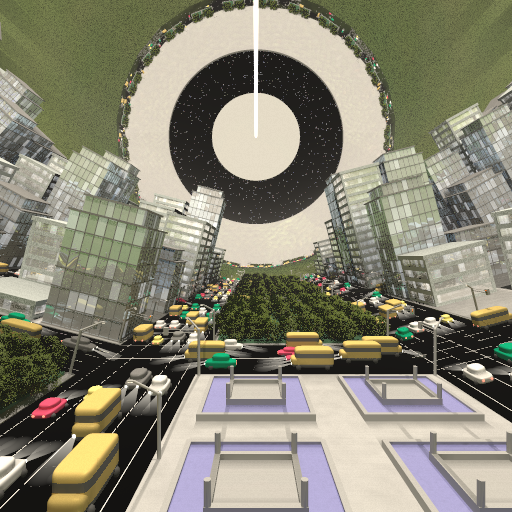
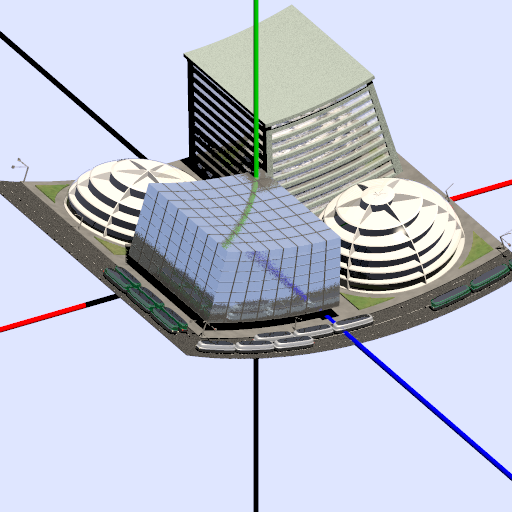
I moved the rendering to here:

http://isometricland.com/gearhead/ghpanotour_spinner_test.php

Right now (not in the above image yet) I'm experimenting with radiosity
and a bit of atmospheric haze. What would good values be for scattering
media? I'm assuming the density should be greater toward the edges of
the cylinder, but by how much? Should the density increase linearly or
exponentially?

Thanks!


--
http://isometricland.com
Post a reply to this message
|
|
| |
| |
|
|
|
|
| |
| |
|
|
Le 2010-06-04 17:04, SharkD a écrit :
> I moved the rendering to here:
>
> http://isometricland.com/gearhead/ghpanotour_spinner_test.php
>
> Right now (not in the above image yet) I'm experimenting with radiosity
> and a bit of atmospheric haze. What would good values be for scattering
> media? I'm assuming the density should be greater toward the edges of
> the cylinder, but by how much? Should the density increase linearly or
> exponentially?
>
> Thanks!
>
>

For the density. It would remain almost constent near the axis of
rotation, then increase somewhat faster as you get nearer to the outer
surface. I'd go for proportional to the square of the radius. At least,
it looks reasonable to me. Use a cylindrical pattern:
density{cylindrical poly_wave 0.5 density_map{[0 1][1,0.3]}}

Your cloudy "sky" looks out of place here. A large transparent area,
while good to get some natural light, is a great structural weakness,
not to mention that that area is lost from the ocupancy potential of the
station. If it's just a decoration for the inabitants, it's even worst.
Also, as the illumination seems to come from that bright axial beam, it
should be constant everywhere.

If you want your buildings to taper toward the top, I suggest using
prisms instead of simple boxes. But, unless a building is particularly
broad, there is no real reason that they should'nt have a constant width.


Alain
Post a reply to this message
|
|
| |
| |
|
|
|
|
| |
| |
|
|
On 6/4/2010 9:05 PM, Alain wrote:
> For the density. It would remain almost constent near the axis of
> rotation, then increase somewhat faster as you get nearer to the outer
> surface. I'd go for proportional to the square of the radius. At least,
> it looks reasonable to me. Use a cylindrical pattern:
> density{cylindrical poly_wave 0.5 density_map{[0 1][1,0.3]}}
>
> Your cloudy "sky" looks out of place here. A large transparent area,
> while good to get some natural light, is a great structural weakness,
> not to mention that that area is lost from the ocupancy potential of the
> station. If it's just a decoration for the inabitants, it's even worst.
> Also, as the illumination seems to come from that bright axial beam, it
> should be constant everywhere.
>
> If you want your buildings to taper toward the top, I suggest using
> prisms instead of simple boxes. But, unless a building is particularly
> broad, there is no real reason that they should'nt have a constant width.
>
>
>
> Alain

Thanks for the comments. Do I need to scale the density file to the
scale of my scene?

The "sky" is also meant to place the opposite side in shade in order to
produce "night". I've tried other methods like placing a sleeve around
the lamp, but due to radiosity the opposite side is then never fully in
the dark. I.e. the "bright" side casts reflected light onto the supposed
"dark" side.

As for loss of occupancy, you're assuming people want to live in zero G.
Only the areas near the surface have suitable "gravity".

The "sky" does look ugly though.

--
http://isometricland.com
Post a reply to this message
|
|
| |
| |
|
|
|
|
| |
| |
|
|
Le 2010-06-04 21:52, SharkD a écrit :
> On 6/4/2010 9:05 PM, Alain wrote:
>> For the density. It would remain almost constent near the axis of
>> rotation, then increase somewhat faster as you get nearer to the outer
>> surface. I'd go for proportional to the square of the radius. At least,
>> it looks reasonable to me. Use a cylindrical pattern:
>> density{cylindrical poly_wave 0.5 density_map{[0 1][1,0.3]}}
>>
>> Your cloudy "sky" looks out of place here. A large transparent area,
>> while good to get some natural light, is a great structural weakness,
>> not to mention that that area is lost from the ocupancy potential of the
>> station. If it's just a decoration for the inabitants, it's even worst.
>> Also, as the illumination seems to come from that bright axial beam, it
>> should be constant everywhere.
>>
>> If you want your buildings to taper toward the top, I suggest using
>> prisms instead of simple boxes. But, unless a building is particularly
>> broad, there is no real reason that they should'nt have a constant width.
>>
>>
>>
>> Alain
>
> Thanks for the comments. Do I need to scale the density file to the
> scale of my scene?
>
> The "sky" is also meant to place the opposite side in shade in order to
> produce "night". I've tried other methods like placing a sleeve around
> the lamp, but due to radiosity the opposite side is then never fully in
> the dark. I.e. the "bright" side casts reflected light onto the supposed
> "dark" side.
>
> As for loss of occupancy, you're assuming people want to live in zero G.
> Only the areas near the surface have suitable "gravity".
>
> The "sky" does look ugly though.
>

Yes, you need to scale the cylindrical pattern to the radius of the scene.

For the "night", in an environment such as that station, there is never
one, and it's quite realistic that there should be no dark side.
If they want a "night", they should do it by turning off the central
glowing beam, or dim it down. There is absolutely no reason to have
areas dark while other are brightly illuminated, it's the same hour and
time of the day everywhere. Have you seen Babylon 5? It's a very good
example of a spining cylindrical space station.

For the loss of ocupancy, I mean loss of living surface due to the "sky"
area, not going all the way up to the axis.


Alain
Post a reply to this message
|
|
| |
| |
|
|
|
|
| |
| |
|
|
On 6/7/2010 2:22 PM, Alain wrote:
> If they want a "night", they should do it by turning off the central
> glowing beam, or dim it down.

Good idea.

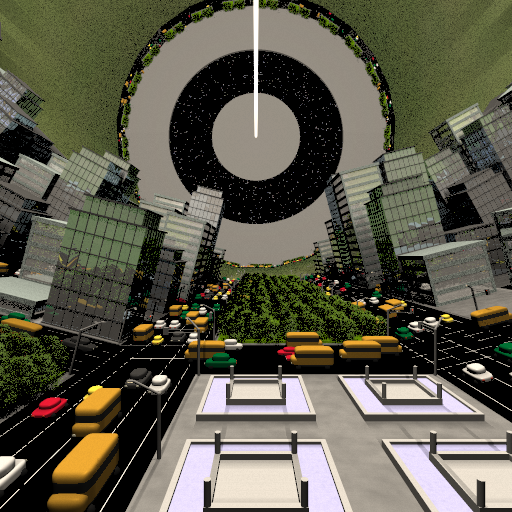
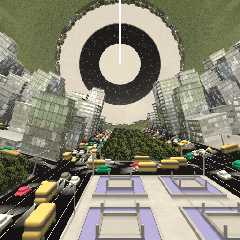
I uploaded a new render (same URL). I'm still having problems with the
scene looking "artificial", or like a miniature model. I can't quite put
my finger on it.


--
http://isometricland.com
Post a reply to this message
|
|
| |
| |
|
|
|
|
| |
| |
|
|
Still looks washed out... :(

--
http://isometricland.com
Post a reply to this message
Attachments:
Download 'gh_scene_spinner_cubemap_h.png' (444 KB)
Preview of image 'gh_scene_spinner_cubemap_h.png'
|
|
| |
| |
|
|
|
|
| |
| |
|
|
Le 2010-06-07 16:58, SharkD a écrit :
> On 6/7/2010 2:22 PM, Alain wrote:
>> If they want a "night", they should do it by turning off the central
>> glowing beam, or dim it down.
>
> Good idea.
>
> I uploaded a new render (same URL). I'm still having problems with the
> scene looking "artificial", or like a miniature model. I can't quite put
> my finger on it.
>
>
All those cars and the streets don't help. I'd expect a comunal
transport system, part on grount, part suspended, to accomodate the
cityzens transportation.
I still have a dificulty with your clouds and "blue sky". If there are
some clouds, they would tend to gather into a cylinder around the center
beam, but never touching it.
Any blueish area due to the athmospheric scattering would be in the
direction of the central beam relative to the observer. Now, it's about
120° from where it should be.


The location IS artificial by definition. You may add some light fog, it
may help to give a sense of scale.

You may try puting the camera on the roof of a building or at street level.


Alain
Post a reply to this message
|
|
| |
| |
|
|
|
|
| |
| |
|
|
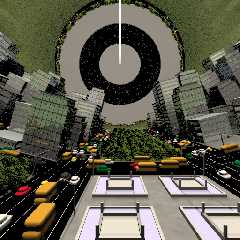
I adjusted all the pigments to compensate for assumed_gamma. The scene
is no longer as washed-out and bright.

Another problem I haven't fixed yet are the streets. For some reason
they show up as black when they instead should be gray. I don't know
why. I thought I fixed all coincident/overlapping surfaces.

--
http://isometricland.com
Post a reply to this message
Attachments:
Download 'gh_scene_spinner_cubemap_i.png' (406 KB)
Preview of image 'gh_scene_spinner_cubemap_i.png'
|
|
| |
| |
|
|
|
|
| |
| |
|
|
Better indeed.

From looking at the buildings, I feel that the cylinder should have a much
larger radius. People will get claustrophobic here, with the impression that
the buildings are falling on their heads. :-)

I think that the sense of scale would be improved with a better balance
between cylinder dimensions and building dimensions. I suggest a larger
cylinder and (much more) scaled-down buildings/living space. Add some
atmospheric media or a subtle fog for suggesting distance and you will get a
much more believable scene.

Thomas
Post a reply to this message
|
|
| |
| |
|
|
|
|
| |
| |
|
|
On 10/06/2010 8:28 AM, Thomas de Groot wrote:
> Better indeed.
>
>  From looking at the buildings, I feel that the cylinder should have a much
> larger radius. People will get claustrophobic here, with the impression that
> the buildings are falling on their heads. :-)
>
> I think that the sense of scale would be improved with a better balance
> between cylinder dimensions and building dimensions.

I agree.

I suggest a larger
> cylinder and (much more) scaled-down buildings/living space. Add some
> atmospheric media or a subtle fog for suggesting distance and you will get a
> much more believable scene.
>

If Mike does that then it may be realistic but it will be boring to look
at. IMO realistic space scenes show one feature while hiding most others
due to differences in scale. Do you remember the posts from a few years
back (2005) of Larry Niven’s (or it could have been Bill’s) Ringworld?
Having said that the ground could be s bit further away ;-)


--

Best Regards,
	Stephen
Post a reply to this message
|
|
| |
| |
|
|
|
|
| |
| |
|
|
Le 2010-06-09 19:56, SharkD a écrit :
> I adjusted all the pigments to compensate for assumed_gamma. The scene
> is no longer as washed-out and bright.
>
> Another problem I haven't fixed yet are the streets. For some reason
> they show up as black when they instead should be gray. I don't know
> why. I thought I fixed all coincident/overlapping surfaces.
>
This one is ok, if a little dark. The previous one was not washed out,
at least on my screen. In fact, it was much more contrasted.

I see a major problem: the ground should curves along the cylinder, now,
it's faceted.

Again, I maintain that planet's ground city like streets and the
presence of cars is just plain wrong in that kind of environment.

You use boxes for the buildings, it may be beter to use prisms; at least
for the taler ones, over 5 stories high, and have those buildings taper
as they go up. Low buildings, 1 to 4 stories, can probably do with
simple boxes.


Alain
Post a reply to this message
|
|
| |
| |
|
|
|
|
| |
| |
|
|
Am 10.06.2010 18:34, schrieb Alain:
> Le 2010-06-09 19:56, SharkD a écrit :
>> I adjusted all the pigments to compensate for assumed_gamma. The scene
>> is no longer as washed-out and bright.
...
>>
> This one is ok, if a little dark. The previous one was not washed out,
> at least on my screen. In fact, it was much more contrasted.

?
I disagree. (Well, then again I don't know your screen ;-))
Post a reply to this message
|
|
| |
| |
|
|
|
|
| |
| |
|
|
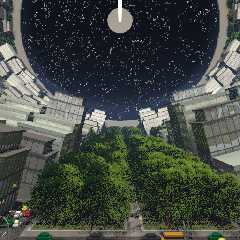
Made the buildings larger, the roads narrower.

--
http://isometricland.com
Post a reply to this message
Attachments:
Download 'gh_scene_spinner_cubemap_k.png' (439 KB)
Preview of image 'gh_scene_spinner_cubemap_k.png'
|
|
| |
| |
|
|
|
|
| |
| |
|
|
"Stephen" <mca### [at] aolDOT com> schreef in bericht
news:4c10a076@news.povray.org...
>
> If Mike does that then it may be realistic but it will be boring to look
> at. IMO realistic space scenes show one feature while hiding most others
> due to differences in scale. Do you remember the posts from a few years
> back (2005) of Larry Niven’s (or it could have been Bill’s) Ringworld?
> Having said that the ground could be s bit further away ;-)
>
Yes indeed. Bill, and myself, did some exploration that way back then; and
there was some scenes based on Arthur Clarke's Rama iirc, some years ago
too. It is not easy, fairly impossible, to show all, so a shrewd choice of
viewpoint and scene cutout to suggest - more than to show - the vast
dimensions of such artificial structures is needed.
Thomas com> schreef in bericht
news:4c10a076@news.povray.org...
>
> If Mike does that then it may be realistic but it will be boring to look
> at. IMO realistic space scenes show one feature while hiding most others
> due to differences in scale. Do you remember the posts from a few years
> back (2005) of Larry Niven’s (or it could have been Bill’s) Ringworld?
> Having said that the ground could be s bit further away ;-)
>
Yes indeed. Bill, and myself, did some exploration that way back then; and
there was some scenes based on Arthur Clarke's Rama iirc, some years ago
too. It is not easy, fairly impossible, to show all, so a shrewd choice of
viewpoint and scene cutout to suggest - more than to show - the vast
dimensions of such artificial structures is needed.
Thomas
Post a reply to this message
|
|
| |
| |
|
|
|
|
| |
| |
|
|
"SharkD" <pos### [at] gmailcom> schreef in bericht
news:4c118153@news.povray.org...
> Made the buildings larger, the roads narrower.
>

Hmmm.... yes and no. The sense of scale is starting to come nicely but the
ground should be curved around the cylinder and not faceted, with the
buildings abruptly at an angle above the pedwalks, and the park as a
completely flat area in front of us. I think cars would have difficulty in
maneuvering across the obvious angles in the roads while driving
cross-cylinder. :-)

It would do as a cartoonesk scene I guess but not as the more realistic one
here.

Thomas
Post a reply to this message
|
|
| |
| |
|
|
|
|
| |
| |
|
|
On 11/06/2010 8:32 AM, Thomas de Groot wrote:
> "Stephen"<mca### [at] aolDOTcom>  schreef in bericht
> news:4c10a076@news.povray.org...
>>
>> If Mike does that then it may be realistic but it will be boring to look
>> at. IMO realistic space scenes show one feature while hiding most others
>> due to differences in scale. Do you remember the posts from a few years
>> back (2005) of Larry Niven’s (or it could have been Bill’s) Ringworld?
>> Having said that the ground could be s bit further away ;-)
>>
>
> Yes indeed. Bill, and myself, did some exploration that way back then; and
> there was some scenes based on Arthur Clarke's Rama iirc, some years ago
> too. It is not easy, fairly impossible, to show all, so a shrewd choice of
> viewpoint and scene cutout to suggest - more than to show - the vast
> dimensions of such artificial structures is needed.
>

I think that, that is the reason I gave up realistic modelling of scenes
like that. (Claims bonus for using “that” three times in one sentence ;-) )
I now prefer to model what I see in my mind’s eye.


--

Best Regards,
	Stephen
Post a reply to this message
|
|
| |
| |
|
|
|
|
| |
| |
|
|
Stephen <mca### [at] aolDOTcom> wrote:
> On 11/06/2010 8:32 AM, Thomas de Groot wrote:
> > "Stephen"<mca### [at] aolDOTcom>  schreef in bericht
> >> If Mike does that then it may be realistic but it will be boring to look
> >> at. IMO realistic space scenes show one feature while hiding most others
> >> due to differences in scale. Do you remember the posts from a few years
> >> back (2005) of Larry Niven’s (or it could have been Bill’s) Ringworld?
> >> Having said that the ground could be s bit further away ;-)
> >
> > Yes indeed. Bill, and myself, did some exploration that way back then; and
> > there was some scenes based on Arthur Clarke's Rama iirc, some years ago
> > too. It is not easy, fairly impossible, to show all, so a shrewd choice of
> > viewpoint and scene cutout to suggest - more than to show - the vast
> > dimensions of such artificial structures is needed.
> >
> I think that, that is the reason I gave up realistic modelling of scenes
> like that. (Claims bonus for using “that” three times in one sentence ;-) )
> I now prefer to model what I see in my mind’s eye.

Ah, but I think Mike's approach with the interactive VR is exactly the way to do
a space habitat. I think the way the perspective distorts the edge of the frame
while panning gives the viewer an instinct for the fov that can be very tricky
for non-rectilinear geometries. I'm going to try this with my ringworld - and
I'll also dig out the O'Neill habitat that I started constructing some years
ago. (As an aside, this had a simple uniform fog inside it, and it worked very
well as a depth cue!)

Bill
Post a reply to this message
|
|
| |
| |
|
|
|
|
| |
| |
|
|
On 11/06/2010 1:41 PM, Bill Pragnell wrote:
> Stephen<mca### [at] aolDOTcom>  wrote:
>> On 11/06/2010 8:32 AM, Thomas de Groot wrote:
>>> "Stephen"<mca### [at] aolDOTcom>   schreef in bericht
>>>> If Mike does that then it may be realistic but it will be boring to look
>>>> at. IMO realistic space scenes show one feature while hiding most others
>>>> due to differences in scale. Do you remember the posts from a few years
>>>> back (2005) of Larry Niven’s (or it could have been Bill’s) Ringworld?
>>>> Having said that the ground could be s bit further away ;-)
>>>
>>> Yes indeed. Bill, and myself, did some exploration that way back then; and
>>> there was some scenes based on Arthur Clarke's Rama iirc, some years ago
>>> too. It is not easy, fairly impossible, to show all, so a shrewd choice of
>>> viewpoint and scene cutout to suggest - more than to show - the vast
>>> dimensions of such artificial structures is needed.
>>>
>> I think that, that is the reason I gave up realistic modelling of scenes
>> like that. (Claims bonus for using “that” three times in one sentence ;-) )
>> I now prefer to model what I see in my mind’s eye.
>
> Ah, but I think Mike's approach with the interactive VR is exactly the way to do
> a space habitat.

I agree with you. I think this is an interesting experiment. It makes me
wonder what a game engine would make of it.

> I think the way the perspective distorts the edge of the frame
> while panning gives the viewer an instinct for the fov that can be very tricky
> for non-rectilinear geometries.

I’m not too sure about the distortion when you look straight down. It
would make you seasick driving down those roads.

> I'm going to try this with my ringworld - and
> I'll also dig out the O'Neill habitat that I started constructing some years
> ago. (As an aside, this had a simple uniform fog inside it, and it worked very
> well as a depth cue!)
>

I look forward to seeing it.

--

Best Regards,
	Stephen
Post a reply to this message
|
|
| |
| |
|
|
|
|
| |
| |
|
|
Stephen <mca### [at] aolDOTcom> wrote:
> I agree with you. I think this is an interesting experiment. It makes me
> wonder what a game engine would make of it.

That reminds me - ever play any of the Halo games? There's a pretty good
rendition of a ringworld, and beautiful to look at. I kept getting shot up cos I
was too busy ogling the scenery :-)
Post a reply to this message
|
|
| |
| |
|
|
|
|
| |
| |
|
|
On 11/06/2010 2:38 PM, Bill Pragnell wrote:
> Stephen<mca### [at] aolDOTcom>  wrote:
>> I agree with you. I think this is an interesting experiment. It makes me
>> wonder what a game engine would make of it.
>
> That reminds me - ever play any of the Halo games? There's a pretty good
> rendition of a ringworld, and beautiful to look at. I kept getting shot up cos I
> was too busy ogling the scenery :-)
>
>

No, the last game I played was Doom II, Doom III was too dark for me to
see anything. I’m not very good at games.
I’ll see if I can pick up a copy and try God mode.


--

Best Regards,
	Stephen
Post a reply to this message
|
|
| |
| |
|
|
|
|
| |
| |
|
|
"Bill Pragnell" <bil### [at] hotmailcom> schreef in bericht
news:web.4c122ef6f3c715fa6dd25f0b0@news.povray.org...
> Ah, but I think Mike's approach with the interactive VR is exactly the way
> to do
> a space habitat. I think the way the perspective distorts the edge of the
> frame
> while panning gives the viewer an instinct for the fov that can be very
> tricky
> for non-rectilinear geometries. I'm going to try this with my ringworld -
> and
> I'll also dig out the O'Neill habitat that I started constructing some
> years
> ago. (As an aside, this had a simple uniform fog inside it, and it worked
> very
> well as a depth cue!)
>

Would be nice to do a Ringworld again. We have progressed over the last five
years, or so I hope :-)

I don't remember well now, was that epsilon issue fixed/corrected in version
3.7 or not? At the time we had a rapid patch of 3.6 I seem to remember...

Thomas
Post a reply to this message
|
|
| |
| |
|
|
|
|
| |
| |
|
|
"Thomas de Groot" <tDOTdegroot@interDOTnlANOTHERDOTnet> wrote:
> Would be nice to do a Ringworld again. We have progressed over the last five
> years, or so I hope :-)

Haven't touched mine for a while. Perhaps its time to haul it out again :)

> I don't remember well now, was that epsilon issue fixed/corrected in version
> 3.7 or not? At the time we had a rapid patch of 3.6 I seem to remember...

I think the smaller epsilon was to be included in 3.7. This was a few years ago
now so I guess it's in there... either have a peek at the source or try to
render something vast!
Post a reply to this message
|
|
| |
| |
|
|
|
|
| |
| |
|
|
Le 2010-06-11 10:32, Stephen a écrit :
> On 11/06/2010 2:38 PM, Bill Pragnell wrote:
>> Stephen<mca### [at] aolDOTcom> wrote:
>>> I agree with you. I think this is an interesting experiment. It makes me
>>> wonder what a game engine would make of it.
>>
>> That reminds me - ever play any of the Halo games? There's a pretty good
>> rendition of a ringworld, and beautiful to look at. I kept getting
>> shot up cos I
>> was too busy ogling the scenery :-)
>>
>>
>
> No, the last game I played was Doom II, Doom III was too dark for me to
> see anything. I’m not very good at games.
> I’ll see if I can pick up a copy and try God mode.
>
>
Doom III was way BAD. They totaly sacrified playability to athmosphere :(
Even in the living abitats and working areas, where a good lighting is
vital, you had great dificulty seeing things. Another bad thing: it
overrode your gamma/contrast/brightness settings and did not restore
those on exit.


Alain
Post a reply to this message
|
|
| |
| |
|
|
|
|
| |
| |
|
|
Le 2010-06-10 20:20, SharkD a écrit :
> Made the buildings larger, the roads narrower.
>
I realy like your new end cap. I also like that you now have more
vegetation space.

But:
Why is the ground faceted and not smoothly curving?
Still to many road vehicles. The ONLY vehicles should be utility and
public transportation, and positively NO personal ones.

On a space station, any space station, even an imensly huge one,
resources are inherently scarce. Living space, parks space, working
space, cargo space, air, water, raw and rafined materials, energy,
everything is counted and counts. Personal cars are a waste of
resources, and thus frowned uppon.

Juging by the dimentions of the buildings and other indices, I could
relatively easily walk from one end to the other to get to work and back
home. I could even walk back home for my lunch... After all, it looks
like the overall length is less than about 2Km, or about a 10 to 20
minutes walk. In such a case, taking a car would take about the same
amount of time... and using a bike would reduce the time needed to 5
minutes or less. (I need about 20 minutes to walk about 3Km. Most
peoples have a walking speed ranging from 5 to 7Km/h)


Alain
Post a reply to this message
|
|
| |
| |
|
|
|
|
| |
| |
|
|
On 11/06/2010 5:55 PM, Alain wrote:
> Doom III was way BAD. They totaly sacrified playability to athmosphere :(
> Even in the living abitats and working areas, where a good lighting is
> vital, you had great dificulty seeing things. Another bad thing: it
> overrode your gamma/contrast/brightness settings and did not restore
> those on exit.

You won’t get an argument from me on that view. ;-)

--

Best Regards,
	Stephen
Post a reply to this message
|
|
| |
| |
|
|
|
|
| |
| |
|
|
"Bill Pragnell" <bil### [at] hotmailcom> schreef in bericht
news:web.4c1252bff3c715fa6dd25f0b0@news.povray.org...
> I think the smaller epsilon was to be included in 3.7. This was a few
> years ago
> now so I guess it's in there... either have a peek at the source or try to
> render something vast!

Yes, that is what I thought too. I'll do something vast... :-)

Thomas
Post a reply to this message
|
|
| |
| |
|
|
|
|
| |
| |
|
|
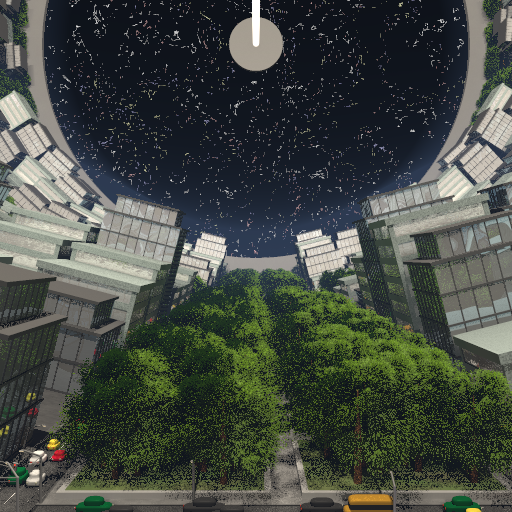
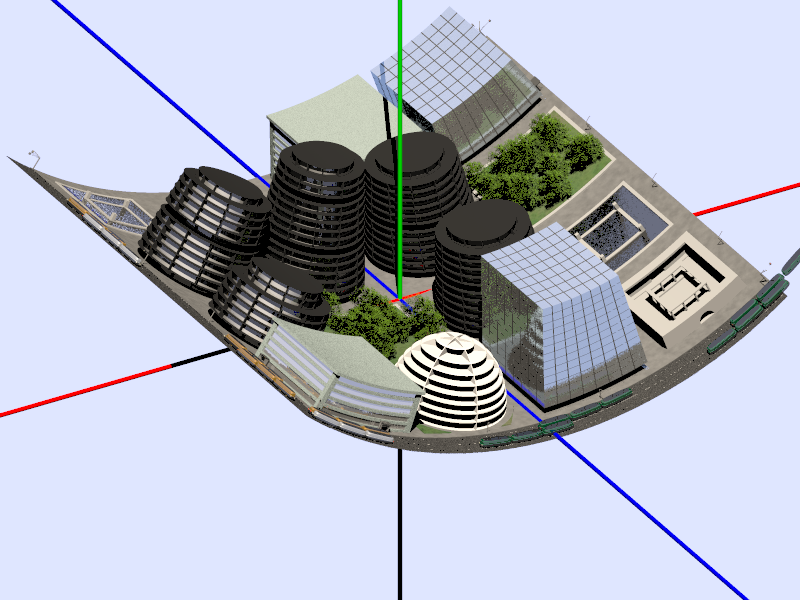
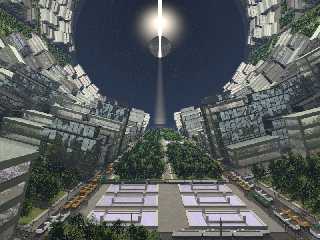
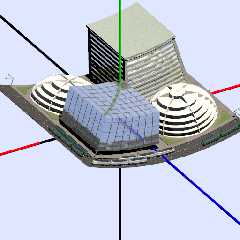
Two new renders. One from last night showing the atmosphere and rounded
portal to outside. And one from just a few minutes ago showing the
curved (as well as some new) buildings.

--
http://isometricland.com
Post a reply to this message
Attachments:
Download 'gh_scene_spinner_cubemap_l.png' (831 KB)
Download 'gh_scene_buildingstrip_curve_c.png' (186 KB)
Preview of image 'gh_scene_spinner_cubemap_l.png'
Preview of image 'gh_scene_buildingstrip_curve_c.png'
|
|
| |
| |
|
|
|
|
| |
| |
|
|
On 12/06/2010 8:14 AM, SharkD wrote:
> Two new renders. One from last night showing the atmosphere and rounded
> portal to outside. And one from just a few minutes ago showing the
> curved (as well as some new) buildings.
>

Looking better :-D

--

Best Regards,
	Stephen
Post a reply to this message
|
|
| |
| |
|
|
|
|
| |
| |
|
|
"Thomas de Groot" <tDOTdegroot@interDOTnlANOTHERDOTnet> schreef in bericht
news:4c1330dc$1@news.povray.org...
> Yes, that is what I thought too. I'll do something vast... :-)
>

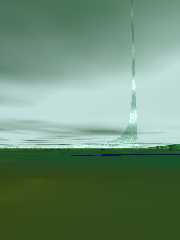
Just to test, a quick-and-dirty scene from the past, rapidly adapted to 3.7,
without any atmospheric effects at all, and viewed from close to the
Ringworld floor.

No epsilon artefacts indeed. Maybe time to produce something better now...
:-)  Time allowing, I intend to take up the project again.

Thomas
Post a reply to this message
Attachments:
Download 'ringworld_1_1_2010.jpg' (45 KB)
Preview of image 'ringworld_1_1_2010.jpg'
|
|
| |
| |
|
|
|
|
| |
| |
|
|
On 12/06/2010 9:48 AM, Thomas de Groot wrote:
> "Thomas de Groot"<tDOTdegroot@interDOTnlANOTHERDOTnet>  schreef in bericht
> news:4c1330dc$1@news.povray.org...
>> Yes, that is what I thought too. I'll do something vast... :-)
>>
>
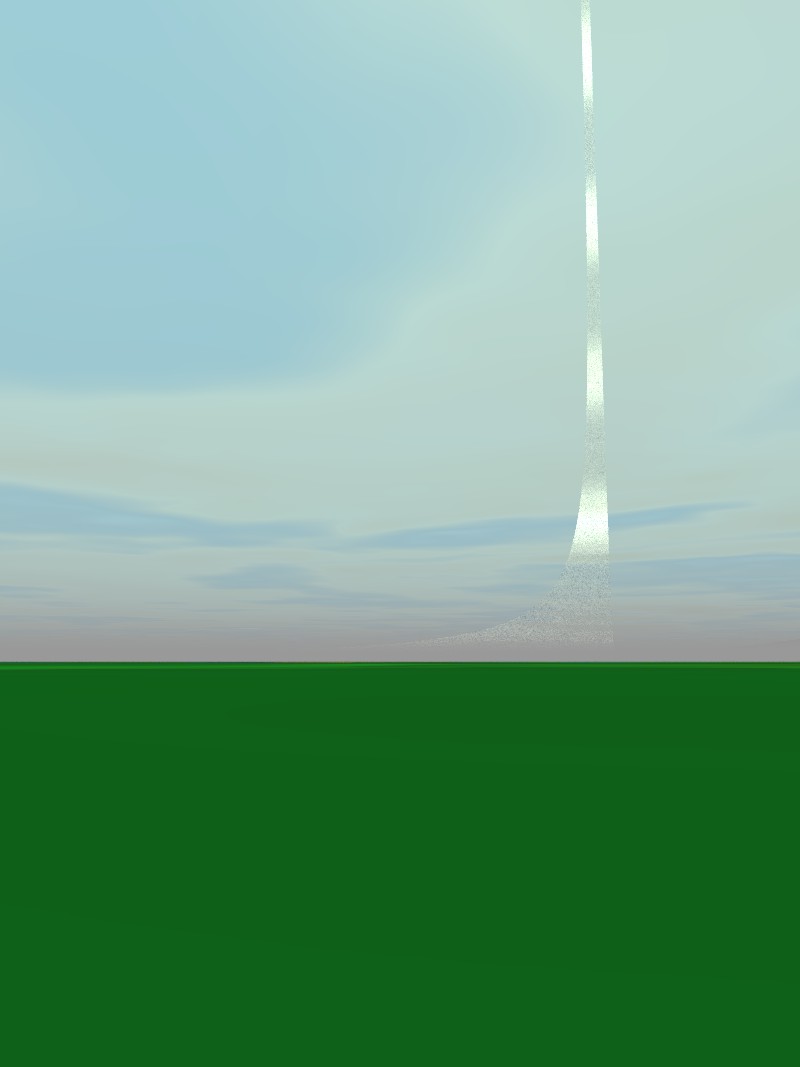
> Just to test, a quick-and-dirty scene from the past, rapidly adapted to 3.7,
> without any atmospheric effects at all, and viewed from close to the
> Ringworld floor.
>
> No epsilon artefacts indeed. Maybe time to produce something better now...
> :-)  Time allowing, I intend to take up the project again.
>

Ooo! Nicer :-)

--

Best Regards,
	Stephen
Post a reply to this message
|
|
| |
| |
|
|
|
|
| |
| |
|
|
"Stephen" <mca### [at] aolDOTcom> schreef in bericht
news:4c136863$1@news.povray.org...
>
> Ooo! Nicer :-)

<grin>
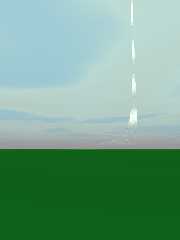
...or on a heavily polluted surface. This is about the lowest possible
camera position without epsilon artefacts in 3.7 (as I modelled from the
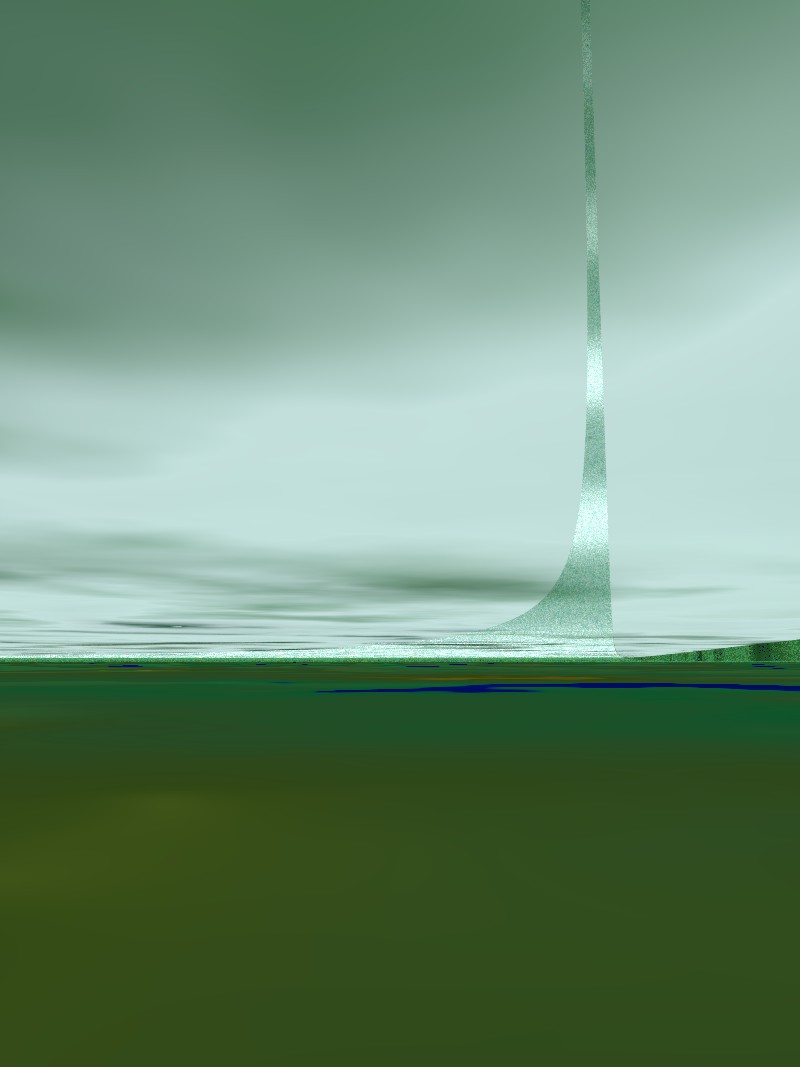
original dimensions, about 0.05 miles from the surface; how many feet are
that??).   ;-)

Just playing around for now. The more serious work will come later...

Thomas
Post a reply to this message
Attachments:
Download 'ringworld_1_1_2010_2.jpg' (27 KB)
Preview of image 'ringworld_1_1_2010_2.jpg'
|
|
| |
| |
|
|
|
|
| |
| |
|
|
Le 2010-06-12 10:55, Thomas de Groot a écrit :
> "Stephen"<mca### [at] aolDOTcom>  schreef in bericht
> news:4c136863$1@news.povray.org...
>>
>> Ooo! Nicer :-)
>
> <grin>
> ...or on a heavily polluted surface. This is about the lowest possible
> camera position without epsilon artefacts in 3.7 (as I modelled from the
> original dimensions, about 0.05 miles from the surface; how many feet are
> that??).   ;-)
>
> Just playing around for now. The more serious work will come later...
>
> Thomas
>
>
>

0.05 miles, that just around 110feet.

Alain
Post a reply to this message
|
|
| |
| |
|
|
|
|
| |
| |
|
|
"Alain" <aze### [at] qwertyorg> schreef in bericht
news:4c13d032@news.povray.org...
>
> 0.05 miles, that just around 110feet.
>

Ah! Not bad at all! Now, working on a superposed local landscape becomes
extremely easy. However, far away textures and skies need more attention
obviously.

Thomas
Post a reply to this message
|
|
| |
| |
|
|
|
|
| |
| |
|
|
On 12/06/2010 3:55 PM, Thomas de Groot wrote:
> "Stephen"<mca### [at] aolDOTcom>  schreef in bericht
> news:4c136863$1@news.povray.org...
>>
>> Ooo! Nicer :-)
>
> <grin>
> ....or on a heavily polluted surface. This is about the lowest possible
> camera position without epsilon artefacts in 3.7 (as I modelled from the
> original dimensions, about 0.05 miles from the surface; how many feet are
> that??).   ;-)
>
> Just playing around for now. The more serious work will come later...
>

I like the banding from the clouds :-)

--

Best Regards,
	Stephen
Post a reply to this message
|
|
| |
| |
|
|
|
|
| |
| |
|
|
On 6/12/2010 3:30 AM, Stephen wrote:
> On 12/06/2010 8:14 AM, SharkD wrote:
>> Two new renders. One from last night showing the atmosphere and rounded
>> portal to outside. And one from just a few minutes ago showing the
>> curved (as well as some new) buildings.
>>
>
> Looking better :-D
>

Render times just shot through the roof though! My test scene is a lot
simpler, but it's taking about an hour to render now instead of a few
seconds. I can't imagine how long the full scene is going to take to
render...

--
http://isometricland.com
Post a reply to this message
|
|
| |
| |
|
|
|
|
| |
| |
|
|
On 13/06/2010 10:48 AM, SharkD wrote:
> On 6/12/2010 3:30 AM, Stephen wrote:
>> On 12/06/2010 8:14 AM, SharkD wrote:
>>> Two new renders. One from last night showing the atmosphere and rounded
>>> portal to outside. And one from just a few minutes ago showing the
>>> curved (as well as some new) buildings.
>>>
>>
>> Looking better :-D
>>
>
> Render times just shot through the roof though! My test scene is a lot
> simpler, but it's taking about an hour to render now instead of a few
> seconds. I can't imagine how long the full scene is going to take to
> render...
>

It looks like it might be worth it. :-D

--

Best Regards,
	Stephen
Post a reply to this message
|
|
| |
| |
|
|
|
|
| |
| |
|
|
On 6/13/2010 5:58 AM, Stephen wrote:
> It looks like it might be worth it. :-D

Well, the last time I rendered the full scene it took all night. That
was before the recent changes. :(

--
http://isometricland.com
Post a reply to this message
|
|
| |
| |
|
|
|
|
| |
| |
|
|
"Stephen" <mca### [at] aolDOTcom> schreef in bericht
news:4c148c24$1@news.povray.org...
>
> I like the banding from the clouds :-)

The banding (on the Ringwold) is not from the clouds however, but from the
Shadow Squares... :-)

Thomas
Post a reply to this message
|
|
| |
| |
|
|
|
|
| |
| |
|
|
"SharkD" <pos### [at] gmailcom> schreef in bericht
news:4c14b105$1@news.povray.org...
> On 6/13/2010 5:58 AM, Stephen wrote:
>> It looks like it might be worth it. :-D
>
> Well, the last time I rendered the full scene it took all night. That was
> before the recent changes. :(
>

Most of my scenes, in the end, take more than 24 hours to render with 2
cores, more tipically about 72 hours...  :-)

Thomas
Post a reply to this message
|
|
| |
| |
|
|
|
|
| |
| |
|
|
On 13/06/2010 1:02 PM, Thomas de Groot wrote:
> "Stephen"<mca### [at] aolDOTcom>  schreef in bericht
> news:4c148c24$1@news.povray.org...
>>
>> I like the banding from the clouds :-)
>
> The banding (on the Ringwold) is not from the clouds however, but from the
> Shadow Squares... :-)
>

Even so looks good.

--

Best Regards,
	Stephen
Post a reply to this message
|
|
| |
| |
|
|
|
|
| |
| |
|
|
On 13/06/2010 11:20 AM, SharkD wrote:
> On 6/13/2010 5:58 AM, Stephen wrote:
>> It looks like it might be worth it. :-D
>
> Well, the last time I rendered the full scene it took all night. That
> was before the recent changes. :(
>

Quality is not cheap ;-)

--

Best Regards,
	Stephen
Post a reply to this message
|
|
| |
| |
|
|
|
|
| |
| |
|
|
On 6/13/2010 10:30 AM, Stephen wrote:
> On 13/06/2010 11:20 AM, SharkD wrote:
>> On 6/13/2010 5:58 AM, Stephen wrote:
>>> It looks like it might be worth it. :-D
>>
>> Well, the last time I rendered the full scene it took all night. That
>> was before the recent changes. :(
>>
>
> Quality is not cheap ;-)
>

How good is the radiosity pretrace as an estimator of how long a scene
will take to render? Right now it takes about 10 seconds to render a
pixel, even with a reduced texture quality.

--
http://isometricland.com
Post a reply to this message
|
|
| |
| |
|
|
|
|
| |
| |
|
|
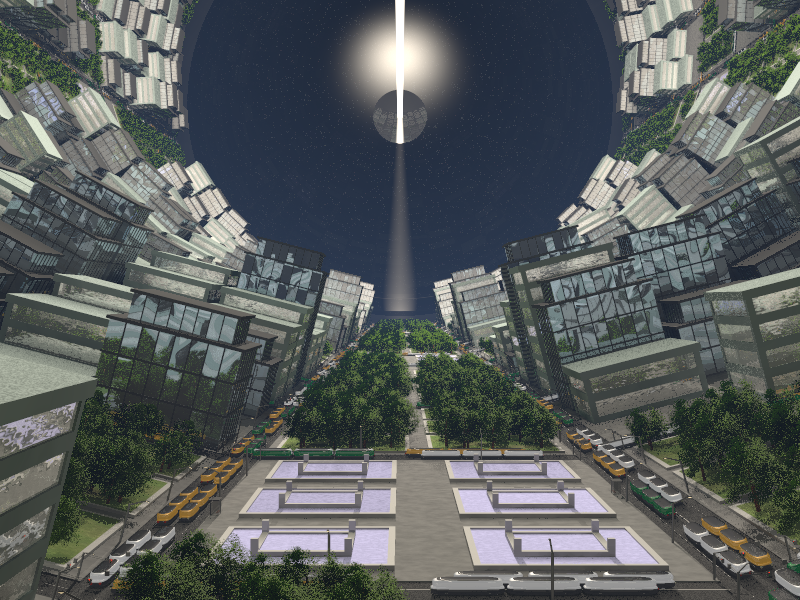
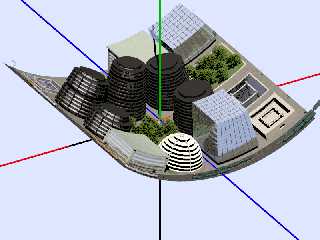
Another render showing another new building type and a variety of other
objects.

--
http://isometricland.com
Post a reply to this message
Attachments:
Download 'gh_scene_buildingstrip_curve_d.png' (322 KB)
Preview of image 'gh_scene_buildingstrip_curve_d.png'
|
|
| |
| |
|
|
|
|
| |
| |
|
|
"SharkD" <pos### [at] gmailcom> schreef in bericht
news:4c15c9b4@news.povray.org...
> Another render showing another new building type and a variety of other
> objects.
>

This is looking really good!

Thomas
Post a reply to this message
|
|
| |
| |
|
|
|
|
| |
| |
|
|
On 14/06/2010 7:11 AM, SharkD wrote:

>>
>> Quality is not cheap ;-)
>>
>
> How good is the radiosity pretrace as an estimator of how long a scene
> will take to render? Right now it takes about 10 seconds to render a
> pixel, even with a reduced texture quality.
>

Not for me to answer as I seldom use radiosity. 10 seconds a pixel, WOW!
--

Best Regards,
	Stephen
Post a reply to this message
|
|
| |
| |
|
|
|
|
| |
| |
|
|
Am 14.06.2010 08:11, schrieb SharkD:

> How good is the radiosity pretrace as an estimator of how long a scene
> will take to render? Right now it takes about 10 seconds to render a
> pixel, even with a reduced texture quality.

It's usually not a good estimator, because there are various factors
involved:

The Good News:

- Unless radiosity pretrace settings are poor, the pretrace will take a
significantly higher ratio of radiosity samples per pixel (with each
sample requiring tens, hundreds, or even up to 1600 more rays to be
shot, albeit with a few simplifications).

- Using low_error_factor significantly increases the "cost" of sample
lookup (i.e. looking up samples that have already been taken nearby)
during pretrace, while leaving the "cost" during main render unchanged.

The Bad News:

- As the pretrace progresses, the total number of samples keeps
increasing (of course), which also increases the overhead of checking
which samples are suitable for re-use; thus, sample re-use is
comparatively more "expensive" during the main render than during the
first pretrace steps.

- Some features are disabled during pretrace, most notably antialiasing
and focal blur, so these added "costs" don't show during pretrace.


So, all in all, pretrace may or may not be slower or faster than main
render - it depends.

A smaller-sized render is probably a much better indicator of the main
render performance.
Post a reply to this message
|
|
| |
| |
|
|
|
|
| |
| |
|
|
On 6/14/2010 3:20 AM, Thomas de Groot wrote:
> "SharkD"<pos### [at] gmailcom>  schreef in bericht
> news:4c15c9b4@news.povray.org...
>> Another render showing another new building type and a variety of other
>> objects.
>>
>
> This is looking really good!
>
> Thomas
>
>

Yeah, clipka's advice on compensating for gamma really helped a bunch!

--
http://isometricland.com
Post a reply to this message
|
|
| |
| |
|
|
|
|
| |
| |
|
|
What kinds of things might be the causes of all the slowdown? I've
turned off all media and reflection and it is still abysmally slow.

One major revision I've made to Chris Colefax's CityGen include file is
that each building is now called by a macro and generated individually
at runtime. Whereas originally a single copy (more or less) of a
building was stored in an array and replicated/duplicated when needed.

The other difference of course is that buildings now have greater
complexity. They make use of more CSG operations and feature a greater
number of storeys.

--
http://isometricland.com
Post a reply to this message
|
|
| |
| |
|
|
|
|
| |
| |
|
|
Le 2010-06-14 18:12, SharkD a écrit :
> What kinds of things might be the causes of all the slowdown? I've
> turned off all media and reflection and it is still abysmally slow.
>
> One major revision I've made to Chris Colefax's CityGen include file is
> that each building is now called by a macro and generated individually
> at runtime. Whereas originally a single copy (more or less) of a
> building was stored in an array and replicated/duplicated when needed.
>
> The other difference of course is that buildings now have greater
> complexity. They make use of more CSG operations and feature a greater
> number of storeys.
>

You have a "concave" geometry composed of many objects made out of
coaxyal cylinders slices. This can very easily lead to bounding problems
where most objects bounding boxes overlap each other, and are
excessively large.

Try manualy bounding the individual buildings. Try to see if you can use
some mesh.
Use simple boxes or prisms for narrow buildings and some of the farder
ones. Some/most broad buildings probably can do with only a texture that
curves instead of the actual floors.

Except for the closest buildings, don't model individual floors. A flat
topped conical building can be a simple truncated cone. The flat base
beed hiden under the ground. If needed, remove a small cylindrical part
from it's top.

Only model the interior of a building IF you look from it's inside or
take a closeup look into it. Use conditional statements, possibly based
on insideness test or bounding box test to toggle the insides as needed.


Alain
Post a reply to this message
|
|
| |
| |
|
|
|
|
| |
| |
|
|
On 6/14/2010 7:03 PM, Alain wrote:
> Le 2010-06-14 18:12, SharkD a écrit :
>> What kinds of things might be the causes of all the slowdown? I've
>> turned off all media and reflection and it is still abysmally slow.
>>
>> One major revision I've made to Chris Colefax's CityGen include file is
>> that each building is now called by a macro and generated individually
>> at runtime. Whereas originally a single copy (more or less) of a
>> building was stored in an array and replicated/duplicated when needed.
>>
>> The other difference of course is that buildings now have greater
>> complexity. They make use of more CSG operations and feature a greater
>> number of storeys.
>>
>
> You have a "concave" geometry composed of many objects made out of
> coaxyal cylinders slices. This can very easily lead to bounding problems
> where most objects bounding boxes overlap each other, and are
> excessively large.
>
> Try manualy bounding the individual buildings. Try to see if you can use
> some mesh.
> Use simple boxes or prisms for narrow buildings and some of the farder
> ones. Some/most broad buildings probably can do with only a texture that
> curves instead of the actual floors.
>
> Except for the closest buildings, don't model individual floors. A flat
> topped conical building can be a simple truncated cone. The flat base
> beed hiden under the ground. If needed, remove a small cylindrical part
> from it's top.
>
> Only model the interior of a building IF you look from it's inside or
> take a closeup look into it. Use conditional statements, possibly based
> on insideness test or bounding box test to toggle the insides as needed.
>
>
>
> Alain

Here's the macro I use to generate the concave cylinder sections:

#macro cyl_box(in_star, in_stop)
	#local in_star_height	= city_radius - in_star.y;
	#local in_stop_height	= city_radius - in_stop.y;
	#local in_star_z_angle	= in_star.x/city_circum * 360;
	#local in_stop_z_angle	= in_stop.x/city_circum * 360;
	difference
	{
		cylinder {<0,0,in_star.z-0>, <0,0,in_stop.z+0>, in_star_height}
		cylinder {<0,0,in_star.z-1>, <0,0,in_stop.z+1>, in_stop_height}
		plane {+x, 0 rotate z * in_star_z_angle}
		plane {-x, 0 rotate z * in_stop_z_angle}
		bounded_by {cylinder {<0,0,in_star.z-0>, <0,0,in_stop.z+0>,
in_star_height}}
	}
#end

Can I use an object produced by this macro as a bounding object? Would
it be better to use a mesh instead? Does bounding work on unions and
merges as well as differences and intersections?

--
http://isometricland.com
Post a reply to this message
|
|
| |
| |
|
|
|
|
| |