|
|
|
|
|
|
| |
| |
|
|
|
|
| |
| |
|
|
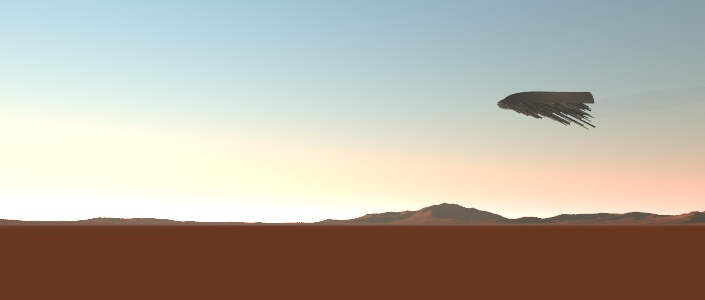
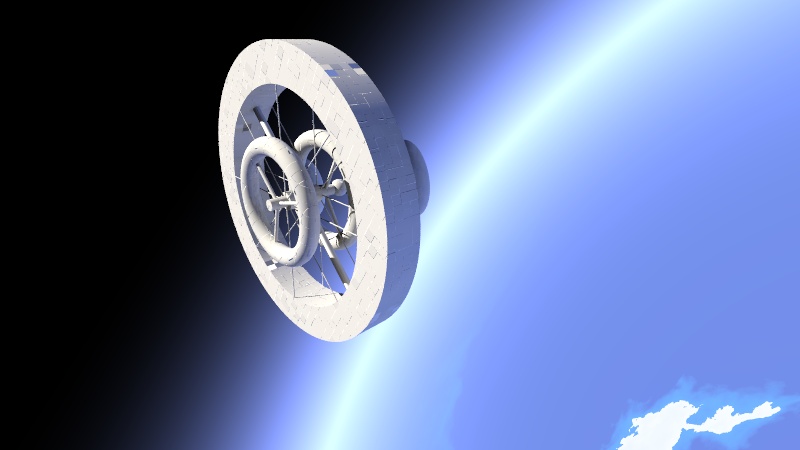
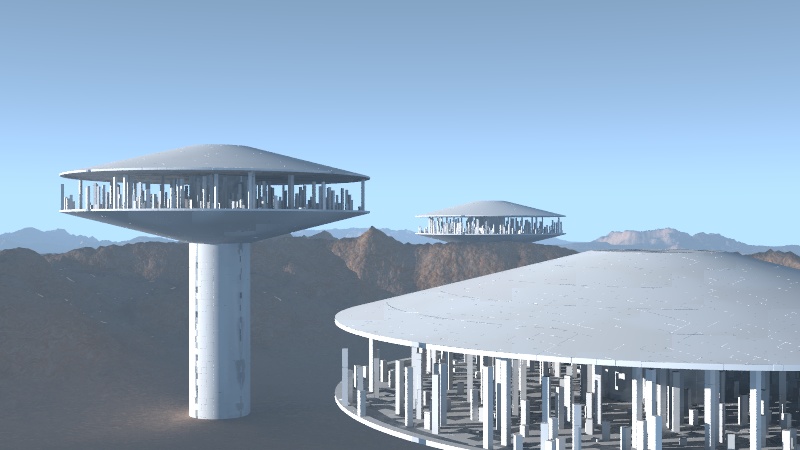
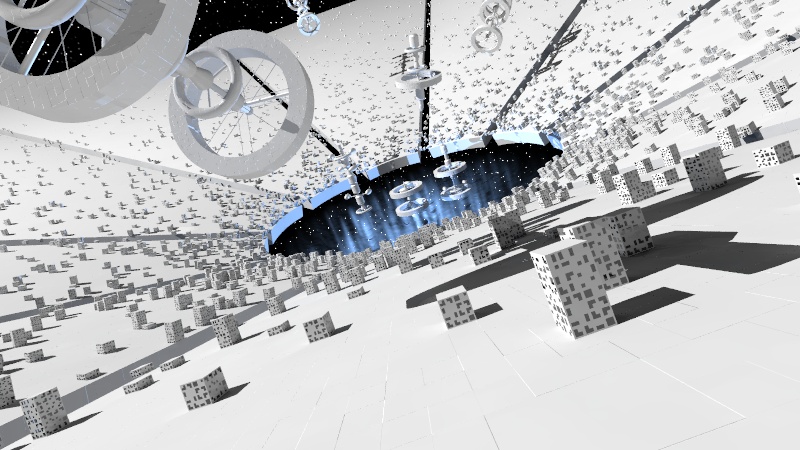
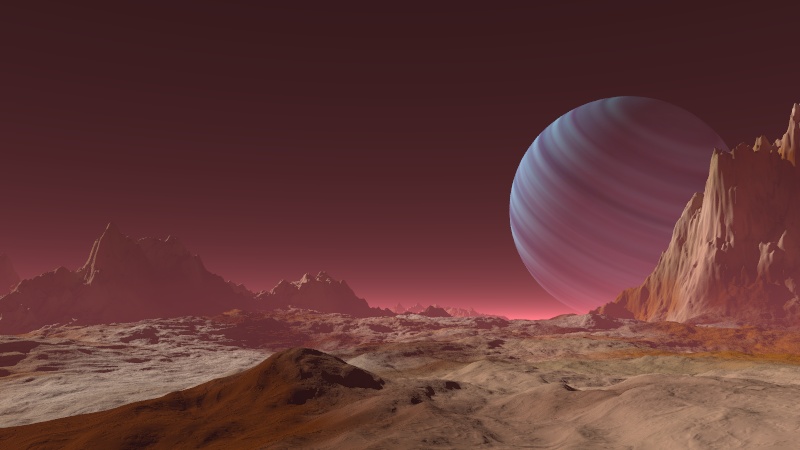
I just submitted my IRTC entry! It's similar to what I posted before, but
I'm not going to show that here (you'll have to look at the irtc page when
it's available). Instead I'm sharing the pictures that appear on the
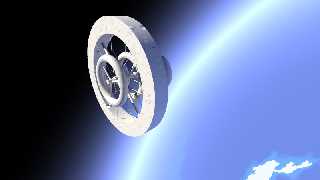
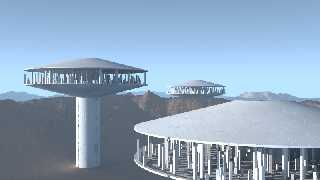
postcards in the final scene. A collection of images from across the galaxy!

I'm going for a bit of a B-movie sci-fi feel with these, let me know what
you think :)

Personally my favourite is warpgate, closely followed by skyship and
dustland.

--
Tek
http://evilsuperbrain.com
Post a reply to this message
Attachments:
Download 'skyship.jpg' (19 KB)
Download 'station.jpg' (52 KB)
Download 'tacoland.jpg' (84 KB)
Download 'warpgate.jpg' (159 KB)
Download 'dustland.jpg' (74 KB)
Preview of image 'skyship.jpg'
Preview of image 'station.jpg'
Preview of image 'tacoland.jpg'
Preview of image 'warpgate.jpg'
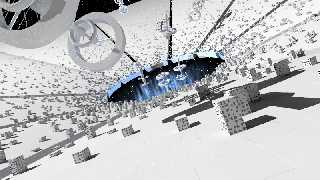
Preview of image 'dustland.jpg'
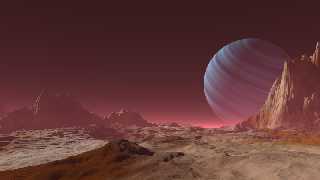
|
|
| |
| |
|
|
|
|
| |
| |
|
|
I like the last and the next to last image best. Especially the last image
with the gas-giant in the sky.
Post a reply to this message
|
|
| |
| |
|
|
|
|
| |
| |
|
|
"Tek" <tek### [at] evilsuperbrain com> wrote:
> I just submitted my IRTC entry! It's similar to what I posted before, but
> I'm not going to show that here (you'll have to look at the irtc page when
> it's available). Instead I'm sharing the pictures that appear on the
> postcards in the final scene. A collection of images from across the galaxy!
>
> I'm going for a bit of a B-movie sci-fi feel with these, let me know what
> you think :)
>
> Personally my favourite is warpgate, closely followed by skyship and
> dustland.
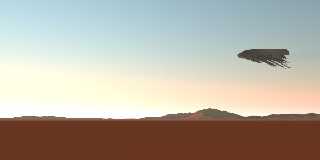
I love the skyship - I'm not sure why to be honest, but it totally works for me.
And the warpgate is great. Actually it reminds me of the first episode of
Nemesis the Warlock in 2000AD. Those panels of Termite cry out to be rendered!
Beautiful work!
Cheers,
Edouard. com> wrote:
> I just submitted my IRTC entry! It's similar to what I posted before, but
> I'm not going to show that here (you'll have to look at the irtc page when
> it's available). Instead I'm sharing the pictures that appear on the
> postcards in the final scene. A collection of images from across the galaxy!
>
> I'm going for a bit of a B-movie sci-fi feel with these, let me know what
> you think :)
>
> Personally my favourite is warpgate, closely followed by skyship and
> dustland.
I love the skyship - I'm not sure why to be honest, but it totally works for me.
And the warpgate is great. Actually it reminds me of the first episode of
Nemesis the Warlock in 2000AD. Those panels of Termite cry out to be rendered!
Beautiful work!
Cheers,
Edouard.
Post a reply to this message
|
|
| |
| |
|
|
|
|
| |
| |
|
|
> And the warpgate is great. Actually it reminds me of the first episode of
> Nemesis the Warlock in 2000AD. Those panels of Termite cry out to be rendered!

http://www.2000ad.org/?zone=thrill&page=thrillviewer&choice=terrortube

Woot - the internet just saved my from having to go to my basement and find that
prog!

Cheers,
Edouard.
Post a reply to this message
|
|
| |
| |
|
|
|
|
| |
| |
|
|
I'm digging the 'Warpgate' one...

--
Dan
GoofyGraffix.com
Post a reply to this message
|
|
| |
| |
|
|
|
|
| |
| |
|
|
Right publisher, wrong story! It was actually inspired by the Blackhole
Bypass drawn by SMS from ABC Warriors - The Black Hole! Though I can't find
the picture online. I wonder if it's just coincedence that we were both
thinking of 2000AD things...

BTW, I feel I should point out another coincedence: I actually work for
Rebellion (a games company), who own 2000AD! Seriously 2000AD publishing is
at the far end of our office. Though we never get free comics! Bloody
annoying if you ask me. Though this has nothing to do with my inspiration,
I've own that ABC Warriors graphic novel for years.

--
Tek
http://evilsuperbrain.com


"Edouard" <pov### [at] edouardinfo> wrote in message
news:web.4bdb8bc63d08c81221619a220@news.povray.org...
>> And the warpgate is great. Actually it reminds me of the first episode of
>> Nemesis the Warlock in 2000AD. Those panels of Termite cry out to be
>> rendered!
>
> http://www.2000ad.org/?zone=thrill&page=thrillviewer&choice=terrortube
>
> Woot - the internet just saved my from having to go to my basement and
> find that
> prog!
>
> Cheers,
> Edouard.
>
Post a reply to this message
|
|
| |
| |
|
|
|
|
| |
| |
|
|
"Tek" <tek### [at] evilsuperbraincom> wrote:

> I'm going for a bit of a B-movie sci-fi feel with these, let me know what
> you think :)

'Station' and 'Dustland.' Station because is has no stars--which is how such
space images taken from the ISS look. I really like the black nothingness.

'Dustland' because it seems to be the most complex/realistic of the images, and
I like the colors.

(I'm curious about the gas-giant planet's appearance; really HUGE objects that
are far off in the distance show a sort of visual 'compression'. There's really
nothing that we see on earth that would be similar, of course, so it's hard to
visualize. But the 'effect' would, I think, be the same as if you squashed-down
your textured planet in z. (Squashing it in-line with the camera.) OR, placed it
WAY off into space while increasing its size accordingly. The only similar
example I can think of is the planet Saturn, when it's viewed NOT edge-on
through a telescope. It's an experiment I've been meaning to try in POV-Ray, but
haven't gotten around to.)

Ken
Post a reply to this message
|
|
| |
| |
|
|
|
|
| |
| |
|
|
"Kenneth" <kdw### [at] earthlinknet> wrote in message
news:web.4bde94823d08c812ae92d9930@news.povray.org...
>
> (I'm curious about the gas-giant planet's appearance; really HUGE objects
> that
> are far off in the distance show a sort of visual 'compression'. There's
> really
> nothing that we see on earth that would be similar, of course, so it's
> hard to
> visualize. But the 'effect' would, I think, be the same as if you
> squashed-down
> your textured planet in z. (Squashing it in-line with the camera.) OR,
> placed it
> WAY off into space while increasing its size accordingly. The only similar
> example I can think of is the planet Saturn, when it's viewed NOT edge-on
> through a telescope. It's an experiment I've been meaning to try in
> POV-Ray, but
> haven't gotten around to.)

The only squashing effect I'm aware of is when viewing through a telescope,
which is the same flattening effect you get with a zoom lens, this image has
a non-zoomed field of view so you wouldn't see squashing.

The squashing is because the more you zoom in, the narrower your field of
view, the closer to parallel the edges of your view become, so the less
perspective you have in the image. With a wide field of view objects further
away get a lot more perspective, so get smaller quicker, a zoomed lens keeps
things much more similar sizes.

The planet in my image is placed by positioning it relative to the camera,
then moving it away and scaling it up as you suggest (in fact the camera is
at <0,0,0> so I just scale the planet). However this does not alter the
appearance of the planet, any ray traced toward it will still hit the same
part, and it won't appear any more flattened (because it is physically
bigger by the same amount that it's been pushed away).

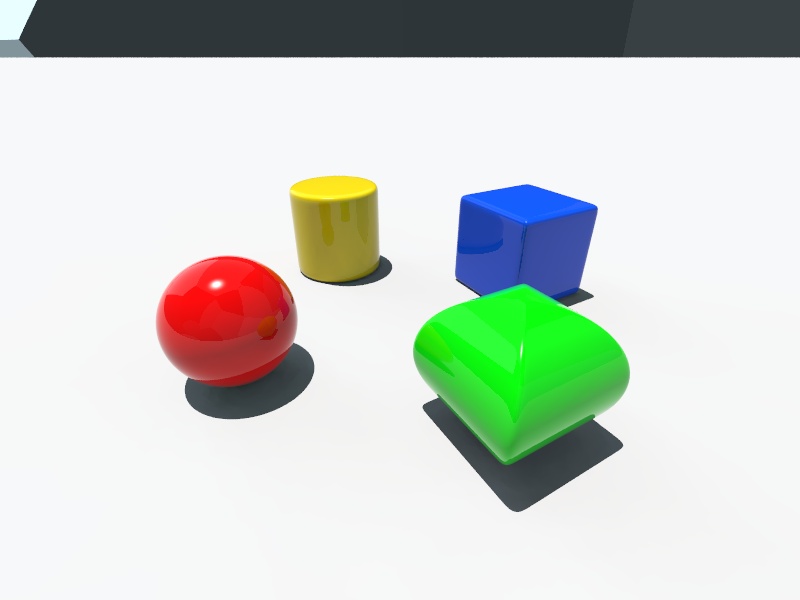
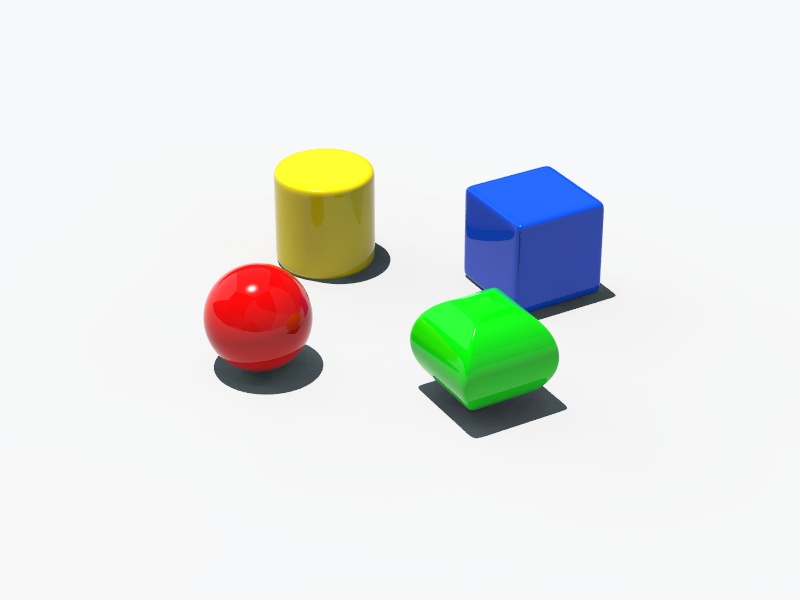
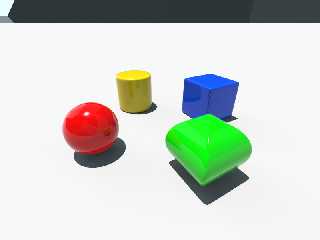
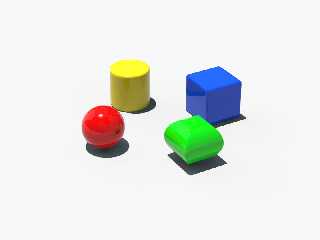
You know, it's probably easier to just show you. Here's a simple scene, the
second image shows the same scene viewed from 5x further away, with a camera
zoomed in appropriately.

--
Tek
http://evilsuperbrain.com
Post a reply to this message
Attachments:
Download 'zoom1.jpg' (38 KB)
Download 'zoom5.jpg' (29 KB)
Preview of image 'zoom1.jpg'
Preview of image 'zoom5.jpg'
|
|
| |
| |
|
|
|
|
| |
| |
|
|
I should also mention my image is quite unrealistic, because the size of
that planet would suggest we're much closer to it than a moon should be
(unless it's a very low-density planet). It should be further away (or
smaller, all things are relative), and then I would have to zoom the camera
in more if I wanted it this large in frame, which would give the flattening
effect (though it would also flatten the foreground). I wanted to get the
appearance of a deliberately exagerated classic sci-fi illustration.

--
Tek
http://evilsuperbrain.com

"Tek" <tek### [at] evilsuperbraincom> wrote in message
news:4bdead14@news.povray.org...
> "Kenneth" <kdw### [at] earthlinknet> wrote in message
> news:web.4bde94823d08c812ae92d9930@news.povray.org...
>>
>> (I'm curious about the gas-giant planet's appearance; really HUGE objects
>> that
>> are far off in the distance show a sort of visual 'compression'. There's
>> really
>> nothing that we see on earth that would be similar, of course, so it's
>> hard to
>> visualize. But the 'effect' would, I think, be the same as if you
>> squashed-down
>> your textured planet in z. (Squashing it in-line with the camera.) OR,
>> placed it
>> WAY off into space while increasing its size accordingly. The only
>> similar
>> example I can think of is the planet Saturn, when it's viewed NOT edge-on
>> through a telescope. It's an experiment I've been meaning to try in
>> POV-Ray, but
>> haven't gotten around to.)
>
> The only squashing effect I'm aware of is when viewing through a
> telescope, which is the same flattening effect you get with a zoom lens,
> this image has a non-zoomed field of view so you wouldn't see squashing.
>
> The squashing is because the more you zoom in, the narrower your field of
> view, the closer to parallel the edges of your view become, so the less
> perspective you have in the image. With a wide field of view objects
> further away get a lot more perspective, so get smaller quicker, a zoomed
> lens keeps things much more similar sizes.
>
> The planet in my image is placed by positioning it relative to the camera,
> then moving it away and scaling it up as you suggest (in fact the camera
> is at <0,0,0> so I just scale the planet). However this does not alter the
> appearance of the planet, any ray traced toward it will still hit the same
> part, and it won't appear any more flattened (because it is physically
> bigger by the same amount that it's been pushed away).
>
> You know, it's probably easier to just show you. Here's a simple scene,
> the second image shows the same scene viewed from 5x further away, with a
> camera zoomed in appropriately.
>
> --
> Tek
> http://evilsuperbrain.com
>
>
>
Post a reply to this message
|
|
| |
| |
|
|
|
|
| |
| |
|
|
"Tek" <tek### [at] evilsuperbraincom> schreef in bericht
news:4bdb6832@news.povray.org...
> Personally my favourite is warpgate, closely followed by skyship and
> dustland.
>

My favourite is skyship, because of the almost abstract landscape and
insect-like ship, but the others are also memorable and intriguing. Very
well done indeed.

Thomas
Post a reply to this message
|
|
| |
| |
|
|
|
|
| |
| |
|
|
"Tek" <tek### [at] evilsuperbraincom> wrote:

>
> The only squashing effect I'm aware of is when viewing through a telescope,
> which is the same flattening effect you get with a zoom lens, this image has
> a non-zoomed field of view so you wouldn't see squashing.
>
> The squashing is because the more you zoom in, the narrower your field of
> view, the closer to parallel the edges of your view become, so the less
> perspective you have in the image. With a wide field of view objects further
> away get a lot more perspective, so get smaller quicker, a zoomed lens keeps
> things much more similar sizes.

Hmm, that *would* seem to be the case, even in the situation I'm thinking of.
Maybe I'm wrong about the whole idea. But I'm imagining, say, the planet Mars:
If it were perhaps far larger in actual size (to take up an area in the sky two
or three times the visible diameter of the Moon, for example) while still being
so far away, it seems to me that the 'perspective' of the 'closer' and 'farther'
parts of the disc would be foreshortened. Based on the idea that, relative to me
as the observer at such a distance, the 'distance difference' between the closer
and farther parts would be quite small, relatively speaking.  I guess I just
need to do an experiment, to prove or disprove it to myself. (I have an image in
my mind of what I think it should look like--but maybe that's a false image!)

There's actually a 'down-to-earth' example that I've looked at, which *seems* to
show this effect:  It's a giant crane hoist (a *really* big one) at a Navy yard
near me. It has an elevated 'track' (that the crane runs on) which is probably a
good 300-feet long. When that track is rotated to be 'in line' with my line of
sight, it's near and far ends appear to be just about the same size
visually--almost no perspective distortion, in other words. (And I can only view
it from far away--not close enough to show the normal perspective distortion--so
an unfortunate side effect is that it 'looks' quite small.)

Time to experiment! :-)

Ken
Post a reply to this message
|
|
| |
| |
|
|
|
|
| |
| |
|
|
Le 2010-05-03 13:14, Kenneth a écrit :
> "Tek"<tek### [at] evilsuperbraincom>  wrote:
>
>>
>> The only squashing effect I'm aware of is when viewing through a telescope,
>> which is the same flattening effect you get with a zoom lens, this image has
>> a non-zoomed field of view so you wouldn't see squashing.
>>
>> The squashing is because the more you zoom in, the narrower your field of
>> view, the closer to parallel the edges of your view become, so the less
>> perspective you have in the image. With a wide field of view objects further
>> away get a lot more perspective, so get smaller quicker, a zoomed lens keeps
>> things much more similar sizes.
>
> Hmm, that *would* seem to be the case, even in the situation I'm thinking of.
> Maybe I'm wrong about the whole idea. But I'm imagining, say, the planet Mars:
> If it were perhaps far larger in actual size (to take up an area in the sky two
> or three times the visible diameter of the Moon, for example) while still being
> so far away, it seems to me that the 'perspective' of the 'closer' and 'farther'
> parts of the disc would be foreshortened. Based on the idea that, relative to me
> as the observer at such a distance, the 'distance difference' between the closer
> and farther parts would be quite small, relatively speaking.  I guess I just
> need to do an experiment, to prove or disprove it to myself. (I have an image in
> my mind of what I think it should look like--but maybe that's a false image!)
If Mars was that big, you'd be able to see it's curvature, and Earth
would orbit around Mars, not the Sun... In that case, mars would be 2 or
3 times bigger than the Sun, and MUCH, MUCH more massive. 8 to 27 times
the volume, and a larger density.
>
> There's actually a 'down-to-earth' example that I've looked at, which *seems* to
> show this effect:  It's a giant crane hoist (a *really* big one) at a Navy yard
> near me. It has an elevated 'track' (that the crane runs on) which is probably a
> good 300-feet long. When that track is rotated to be 'in line' with my line of
> sight, it's near and far ends appear to be just about the same size
> visually--almost no perspective distortion, in other words. (And I can only view
> it from far away--not close enough to show the normal perspective distortion--so
> an unfortunate side effect is that it 'looks' quite small.)
>
> Time to experiment! :-)
>
> Ken
>
>

Our perseption of perspective depends heavily on the distance that
separate us from what we observe, and the relative depth compared to
that distance.

In a perfectly transparent medium, any sphere whose apparent diameter is
the same will look the same. Be it a 1 cm marble at 1 m or a 1 000 000
km thing at 100 000 000 km.  In both cases, the diameter is 1% of the
distance, and both will have the same apparent curvature.

In the example of the crane, you may be at about 5000 feet (a little
under a mile) fom it.
The close part is at 5000 feet, and the far point is at 5300 feet. A
difference of about 6%.
If you are near it, say at around 100 feet and on some scafolding, the
close point is at 110 feet and the far end at 400 feet. A diference of
72.5%.


Alain
Post a reply to this message
|
|
| |
| |
|
|
|
|
| |
| |
|
|
Alain <aze### [at] qwertyorg> wrote:
> Le 2010-05-03 13:14, Kenneth a écrit :

> > But I'm imagining, say, the planet Mars:
> > If it were perhaps far larger in actual size (to take up an area in the sky
> > two or three times the visible diameter of the Moon, for example) while
> > still being so far away, it seems to me that the 'perspective' of the
> > 'closer' and 'farther' parts of the disc would be foreshortened. Based on
> > the idea that, relative to me as the observer at such a distance, the
> > 'distance difference' between the closer and farther parts would be quite
> > small, relatively speaking.

> If Mars was that big, you'd be able to see it's curvature...

Yeah, that's probably true; I came to the same conclusion.

So I finally did a test(!), using a 'typical' camera angle of 67-deg. in
POV-Ray. (No telephoto, in other words.)  And the result is...I don't see much
if *any* perspective difference between small 'nearer' objects and large
'farther' objects. (If it's there, it's very subtle.)  Hmm, not at all the
result that I was expecting. I guess it's time to put this idea to rest. :-(

Or else 'cheat' the scene, to get what I want!  ;-P

Ken
Post a reply to this message
|
|
| |
| |
|
|
|
|
| |
| |
|
|
"Kenneth" <kdw### [at] earthlinknet> wrote in message
news:web.4bdfacfc3d08c812ae92d9930@news.povray.org...
>
> So I finally did a test(!), using a 'typical' camera angle of 67-deg. in
> POV-Ray. (No telephoto, in other words.)  And the result is...I don't see
> much
> if *any* perspective difference between small 'nearer' objects and large
> 'farther' objects. (If it's there, it's very subtle.)  Hmm, not at all the
> result that I was expecting. I guess it's time to put this idea to rest.
> :-(

As Alain pointed out, there's no difference, and there can't be a
difference. The camera doesn't know how big it is, so all sizes are
relative, something 10m wide 100m away is identical to something 10km wide
100km away.

> Or else 'cheat' the scene, to get what I want!  ;-P

This is very common in illustrations and movies: they get a telephoto image
of the moon or a telescope image of a planet and stick it in the background
of a non-telephoto scene, creating artificial flattening.

Personally I like the fact that ray tracers can do stuff more realistically.
I did some test renders using real measurements of the size of planets
viewed from orbiting moons, it's surprising how small the planet appears
with normal camera angles. Even Jupiter viewed from some of its closer moons
is pretty small. But then if you zoom the camera in you get the nice
flattening effect and a very interesting image. I wanted something less
realistic for my IRTC scene but it's nice to know what looks real.
Unfortunately I don't have the test scene on this PC, so I can't show you,
doh!

--
Tek
http://evilsuperbrain.com
Post a reply to this message
|
|
| |
| |
|
|
|
|
| |
| |
|
|
High!

Tek wrote:

> Personally my favourite is warpgate, closely followed by skyship and
> dustland.

I like "Dustland" most... it's classical space art! Did you use an
ordinary heightfield or did you model a whole isosurface moon?

See you in Khyberspace!

Yadgar

Now playing: The Kick Inside Of Me (Simple Minds)
Post a reply to this message
|
|
| |
| |
|
|
|
|
| |
| |
|
|
"Jörg 'Yadgar' Bleimann" <yaz### [at] gmxde> wrote in message
news:4be00b8f$1@news.povray.org...
>
> I like "Dustland" most... it's classical space art! Did you use an
> ordinary heightfield or did you model a whole isosurface moon?

I started writing a macro to make a nice spherically-curved triangle mesh
with varying polygon density, then I remembered that I couldn't spend too
long on any of these scenes because I had to do so many for my irtc concept,
so I abandonned that and went with a boring standard height_field! :)

--
Tek
http://evilsuperbrain.com
Post a reply to this message
|
|
| |
| |
|
|
|
|
| |
| |
|
|
"Tek" <tek### [at] evilsuperbraincom> wrote:

> > Or else 'cheat' the scene, to get what I want!  ;-P
>
> This is very common in illustrations and movies: they get a telephoto image
> of the moon or a telescope image of a planet and stick it in the background
> of a non-telephoto scene, creating artificial flattening.

Yes! In fact, this is probably where my wacky idea came from--old sci-fi
illustrations--and thinking that that was how the real world worked!! It's been
embedded in my mind for a *long* time.

Hmm, it makes me wonder about my 'big crane' example; I need to go and look at
it again...armed with my 'new knowledge'.  ;-)

Ken
Post a reply to this message
|
|
| |
| |
|
|
|
|
| |
|
|