|
|
|
|
|
|
| |
| |
|
|
|
|
| |
| |
|
|
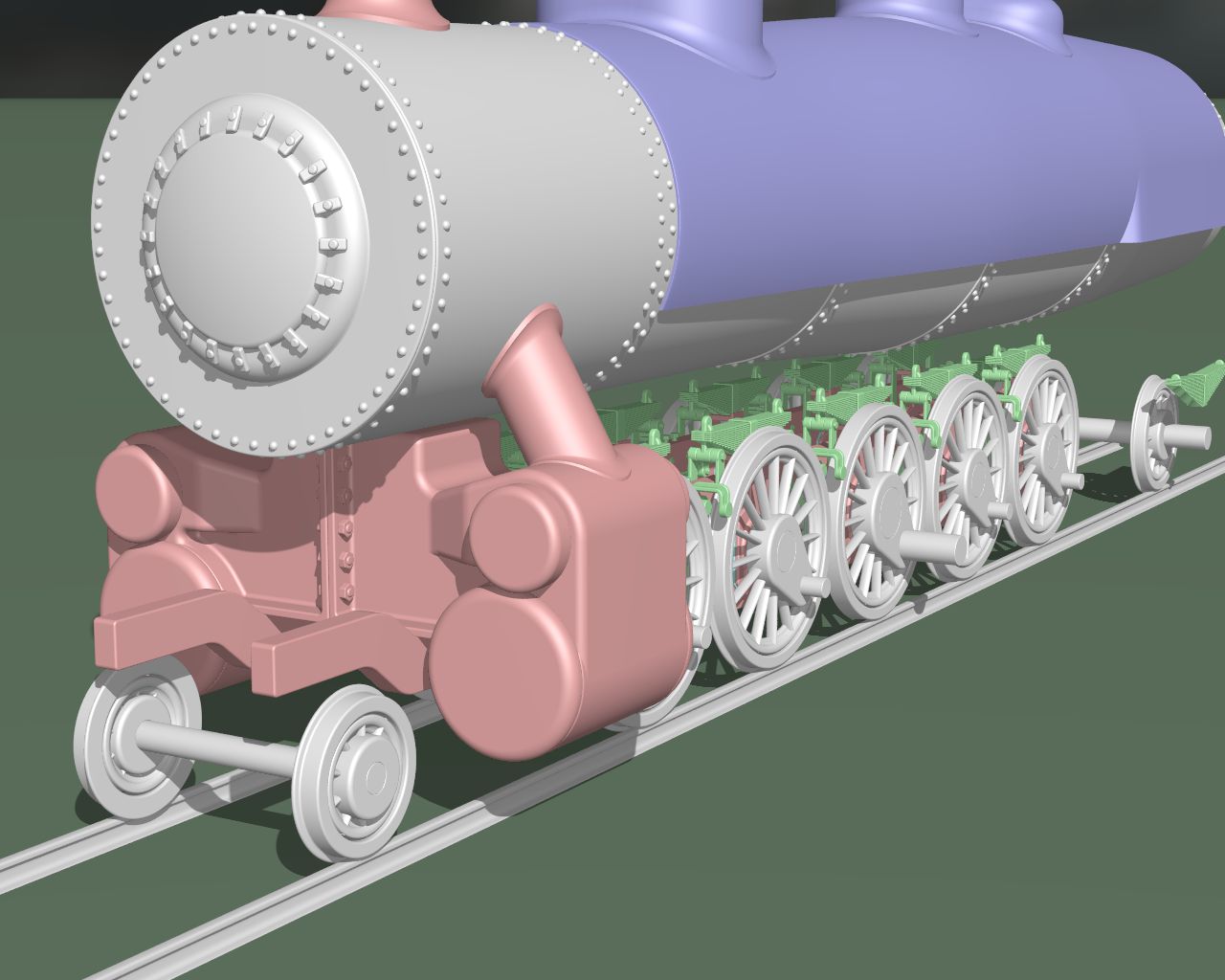
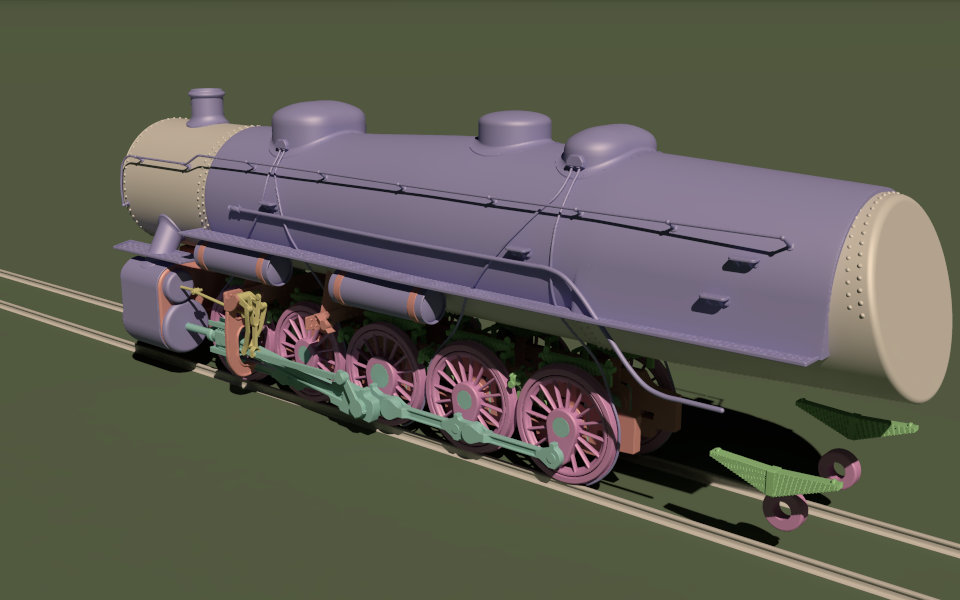
Another fight won. This train is going somewhere, but I tell you -
complex cast-iron parts like that cylinder block are no fun to model in
CSG when you want proper beveling...
Post a reply to this message
Attachments:
Download 'steam.jpg' (102 KB)
Preview of image 'steam.jpg'
|
|
| |
| |
|
|
|
|
| |
| |
|
|
clipka wrote:
> Another fight won. This train is going somewhere, but I tell you -
> complex cast-iron parts like that cylinder block are no fun to model in
> CSG when you want proper beveling...

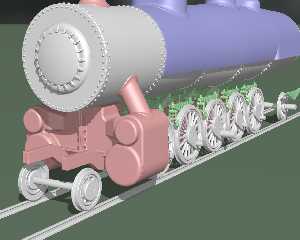
Wow, this model is turning out to be quite the technical achievement!
What are your plans for texturing and lighting?

Sam
Post a reply to this message
|
|
| |
| |
|
|
|
|
| |
| |
|
|
stbenge schrieb:

> Wow, this model is turning out to be quite the technical achievement!
> What are your plans for texturing and lighting?

Not sure yet. As for texturing, I'll probably try for a "dirty from
traveling, but easily cleaned" look.

As for the lighting, I'm not sure even whether it will be a day or night
shot; it will primarily be either moon- or sunlit, though a night scene
might employ a few artificial light sources in addition.

In either case, radiosity is a must of course...
Post a reply to this message
|
|
| |
| |
|
|
|
|
| |
| |
|
|
clipka <ano### [at] anonymous org> wrote:
> stbenge schrieb:
>
> > Wow, this model is turning out to be quite the technical achievement!
> > What are your plans for texturing and lighting?
>
> Not sure yet. As for texturing, I'll probably try for a "dirty from
> traveling, but easily cleaned" look.
>
> As for the lighting, I'm not sure even whether it will be a day or night
> shot; it will primarily be either moon- or sunlit, though a night scene
> might employ a few artificial light sources in addition.
>
> In either case, radiosity is a must of course...
This is looking really good, I can appreciate the time/effort going into this
and can't wait to see the finished/textured version. If you are like me you have
several scene ideas in mind both with nice and clean and dirty textures,
different colour trains etc... I just hope you manage to finish them off.
Not to be too picky but the spokes (especially on the front wheels) are showing
through slightly in the gap between the outer edge of the wheel and the inner
part. Is this correct from the blue print you have?
I am really impressed..
Sean org> wrote:
> stbenge schrieb:
>
> > Wow, this model is turning out to be quite the technical achievement!
> > What are your plans for texturing and lighting?
>
> Not sure yet. As for texturing, I'll probably try for a "dirty from
> traveling, but easily cleaned" look.
>
> As for the lighting, I'm not sure even whether it will be a day or night
> shot; it will primarily be either moon- or sunlit, though a night scene
> might employ a few artificial light sources in addition.
>
> In either case, radiosity is a must of course...
This is looking really good, I can appreciate the time/effort going into this
and can't wait to see the finished/textured version. If you are like me you have
several scene ideas in mind both with nice and clean and dirty textures,
different colour trains etc... I just hope you manage to finish them off.
Not to be too picky but the spokes (especially on the front wheels) are showing
through slightly in the gap between the outer edge of the wheel and the inner
part. Is this correct from the blue print you have?
I am really impressed..
Sean
Post a reply to this message
|
|
| |
| |
|
|
|
|
| |
| |
|
|
s.day schrieb:
> Not to be too picky but the spokes (especially on the front wheels) are showing
> through slightly in the gap between the outer edge of the wheel and the inner
> part. Is this correct from the blue print you have?

They're just not finished. The wheels where among the very first parts I
did (right after the rails); the dimensions were still mostly guessing
by then (the blueprints I have for /this/ particular engine do not show
much more information than the total diameter), and the approach I used
to get the geometry the way I wanted was still in an experimental stage.

I recently gave the hubs an overhaul when adding the crank pins, and
also re-did the tyres on that occasion, but the spokes and rims are
still pending update, so they just don't perfectly match up with the
tyres ATM.
Post a reply to this message
|
|
| |
| |
|
|
|
|
| |
| |
|
|
> I recently gave the hubs an overhaul when adding the crank pins, and
> also re-did the tyres on that occasion, but the spokes and rims are
> still pending update, so they just don't perfectly match up with the
> tyres ATM.

You also need to add counter-weights on the wheels, otherwise, the
weight of the crank pins will be unbalanced, and would result in serious
operational difficulties...
Post a reply to this message
|
|
| |
| |
|
|
|
|
| |
| |
|
|
"clipka" <ano### [at] anonymousorg> wrote in message
news:4abba0d0@news.povray.org...
> Another fight won. This train is going somewhere, but I tell you -
> complex cast-iron parts like that cylinder block are no fun to model in
> CSG when you want proper beveling...

WOW ... (top drawer) very nice!
I'm sure that my notion of beveling being a waste of time has been laid to
rest for good! It really completes the look.

Jim
Post a reply to this message
|
|
| |
| |
|
|
|
|
| |
| |
|
|
. schrieb:

> You also need to add counter-weights on the wheels, otherwise, the
> weight of the crank pins will be unbalanced, and would result in serious
> operational difficulties...

Don't worry, I won't forget about those. I'll even remember to make them
bigger on the main drivers. There's still a LOT that waits to be added
though; ATM I'm busy with the drive and valve gear.
Post a reply to this message
|
|
| |
| |
|
|
|
|
| |
| |
|
|
clipka wrote:
> Another fight won. This train is going somewhere, but I tell you -
> complex cast-iron parts like that cylinder block are no fun to model in
> CSG when you want proper beveling...

Impressive tech achievement, no doubt!  I'm curious about the beveled
chimneys... are they isosurfaces?  How many LOC so far?
Post a reply to this message
|
|
| |
| |
|
|
|
|
| |
| |
|
|
nemesis schrieb:

> Impressive tech achievement, no doubt!  I'm curious about the beveled
> chimneys... are they isosurfaces?  How many LOC so far?

Thanks! I guess with "beveled chimneys" you mean the sandbox and steam
dome "humps": They're actually blobs (like the smokestack), with no more
than a dozen components each.

Lines of code? Uh, let's see...:

Main file:                   1551 LOC
Beveled geometry framework:  1292 LOC
Drive/Valve gear geometry:    713 LOC
Materials:                    247 LOC
Config include file:           58 LOC
                             ------
Total                        3861 LOC

(That's total lines in the files; I didn't bother subtracting the number
of blank or comment lines.)

I guess the geometry framework saves me a HUGE number of code lines (but
most importantly, it saves me from wrecking my brain on a daily basis :-)).
Post a reply to this message
|
|
| |
| |
|
|
|
|
| |
| |
|
|
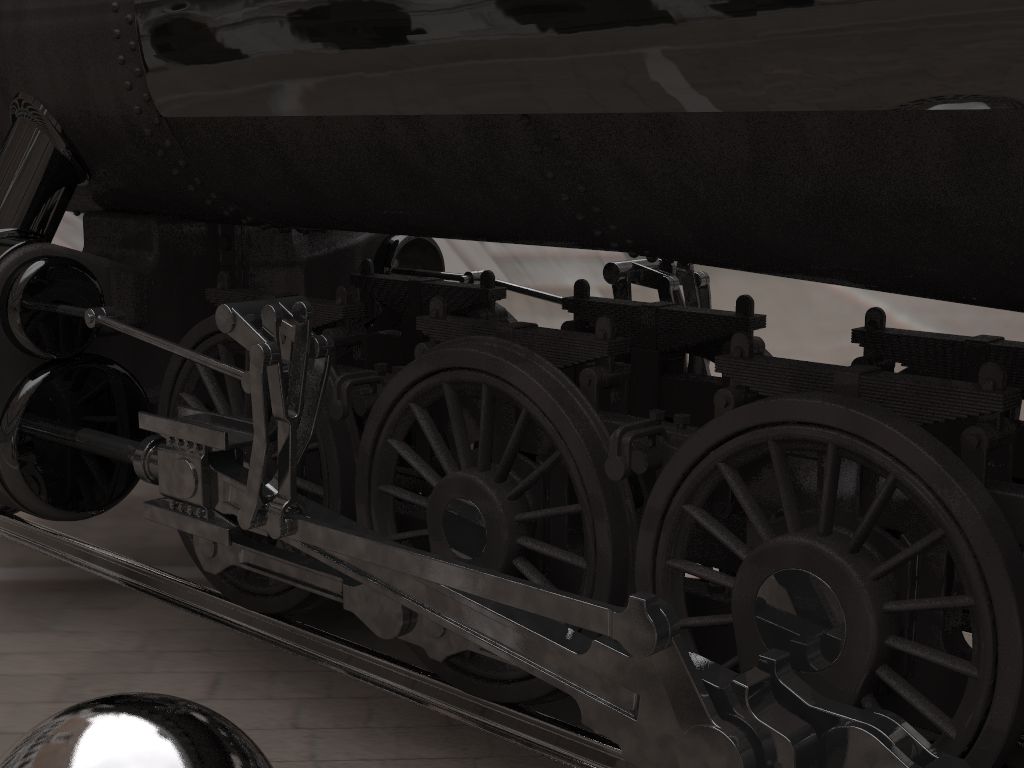
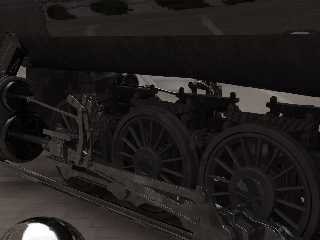
Moving parts of "Southern" valve gear in (not yet full) textured glory.
(33 minutes rendering time on an i7 920, 2.67 GHz)

Definitely not dirty enough. A good use case for some proximity pattern
I guess.

The joints all need some more details, too, but I'll leave that for later.
Post a reply to this message
Attachments:
Download 'steam 2009-09-26 1659.jpg' (70 KB)
Preview of image 'steam 2009-09-26 1659.jpg'
|
|
| |
| |
|
|
|
|
| |
| |
|
|
Wow, impressive work.

Might the "Beveled Geometry Framework" be something you'll make available at
some point?  :-)

clipka <ano### [at] anonymousorg> wrote:
>
> Main file:                   1551 LOC
> Beveled geometry framework:  1292 LOC
> Drive/Valve gear geometry:    713 LOC
> Materials:                    247 LOC
> Config include file:           58 LOC
>                              ------
> Total                        3861 LOC
>
> I guess the geometry framework saves me a HUGE number of code lines (but
> most importantly, it saves me from wrecking my brain on a daily basis :-)).
Post a reply to this message
|
|
| |
| |
|
|
|
|
| |
| |
|
|
William Pokorny schrieb:

> Might the "Beveled Geometry Framework" be something you'll make available at
> some point?  :-)

If you promise to not expect /too/ much magic from it... :-)

Basically, it's "only" good for making beveled prism-style objects. Any
shape that is "more 3-dimensional" than that still reqiures to put a bit
of thought into it. Many parts on that locomotive are actually composed
of multiple such beveled prisms. The cylinder block, for instance, is
comprised of about a dozen such things.

Still, that's obviously nothing compared to the roundabout 500 tori,
cylinders and planes CSG'ed together for this thing... and that's only
the cylinder block, even without the bolts :-)

With all the bells & whistles, this baby is currently comprised of some
32,000 finite objects - 13,000 alone just for bolt details (which I
virtually always leave set to low detail for my test renders :-)).
Judging from where I am right now, I expect the complete thing to end up
at somewhere around 100,000 primitives.
Post a reply to this message
|
|
| |
| |
|
|
|
|
| |
| |
|
|
clipka <ano### [at] anonymousorg> wrote:
> Moving parts of "Southern" valve gear in (not yet full) textured glory.
> (33 minutes rendering time on an i7 920, 2.67 GHz)
>
> Definitely not dirty enough. A good use case for some proximity pattern
> I guess.
>
> The joints all need some more details, too, but I'll leave that for later.

Looks fantastic, the level of detail is very impressive, it's a shame that
unless you render any final scene with this train in it at a very high
resolution much of this detail will be lost (of course we will all know it is
there though!). However, it does mean you can do some fantastic close-up's.

Sean
Post a reply to this message
|
|
| |
| |
|
|
|
|
| |
| |
|
|
s.day schrieb:

> Looks fantastic, the level of detail is very impressive, it's a shame that
> unless you render any final scene with this train in it at a very high
> resolution much of this detail will be lost (of course we will all know it is
> there though!). However, it does mean you can do some fantastic close-up's.

Reminds me of the fate of Tek's planet. Recall that incredible level of
detail and realism, with coastlines, mountain ranges, continents and
such - even simulating the weather to get the clouds right? It's a pity
we only see so much of it in his IRTC submission.

Well, I guess the locomotive will eventually share that fate. But that's
the idea behind it: To make something look really convincing, you have
to go into details up to the level where nobody will ever consciously
notice.

Just think of how much effort and care is put into every single prop in
movies like the "Lord of the Rings" trilogy, even if the item is just
seen for two or three seconds in the background.
Post a reply to this message
|
|
| |
| |
|
|
|
|
| |
| |
|
|
On Sun, 27 Sep 2009 00:52:08 +0200, clipka <ano### [at] anonymousorg> wrote:

>
>Well, I guess the locomotive will eventually share that fate. But that's
>the idea behind it: To make something look really convincing, you have
>to go into details up to the level where nobody will ever consciously
>notice.

Now that is what I call a hobbyist :)
It is the doing it correctly that is important. I once knew someone who made a
four foot model train by hand. Turning and milling the parts, threading each and
every nut and bolt etc. A labour of love.

Keep it up.
--

Regards
     Stephen
Post a reply to this message
|
|
| |
| |
|
|
|
|
| |
| |
|
|
Stephen schrieb:

>> Well, I guess the locomotive will eventually share that fate. But that's
>> the idea behind it: To make something look really convincing, you have
>> to go into details up to the level where nobody will ever consciously
>> notice.
>
> Now that is what I call a hobbyist :)
> It is the doing it correctly that is important. I once knew someone who made a
> four foot model train by hand. Turning and milling the parts, threading each and
> every nut and bolt etc. A labour of love.

I've come across quite a few websites of (or about) such people during
my researches - from the HO scale enthusiast "customizing" mass product
models  for the perfectly realistic look, to people working on "1:1
scale models", i.e. restoring actual steam locomotives.

Yeah, I guess that's what I'm doing - except that I'm keeping it virtual.

(The thing I'm dreaming of is to one day build a, say, 1:16 scale model
of the Apollo lunar lander. For real, not just as a CG model.)

> Keep it up.

I'll do my best :-)
Post a reply to this message
|
|
| |
| |
|
|
|
|
| |
| |
|
|
"clipka" <ano### [at] anonymousorg> schreef in bericht
news:4abe30c1@news.povray.org...
> Moving parts of "Southern" valve gear in (not yet full) textured glory.
> (33 minutes rendering time on an i7 920, 2.67 GHz)
>
> Definitely not dirty enough. A good use case for some proximity pattern
> I guess.
>
> The joints all need some more details, too, but I'll leave that for later.
>

By Odin's blind eye! This is superb!

Thomas
Post a reply to this message
|
|
| |
| |
|
|
|
|
| |
| |
|
|
Thomas de Groot schrieb:

> By Odin's blind eye! This is superb!

The trouble is: It's only half as superb as I would like it to be :-P

(Boy, being a perfectionist can be hard at times...)
Post a reply to this message
|
|
| |
| |
|
|
|
|
| |
| |
|
|
On Sun, 27 Sep 2009 10:12:05 +0200, clipka <ano### [at] anonymousorg> wrote:

>
>I've come across quite a few websites of (or about) such people during
>my researches - from the HO scale enthusiast "customizing" mass product
>models  for the perfectly realistic look, to people working on "1:1
>scale models", i.e. restoring actual steam locomotives.
>

There seems to be a lot of them about ;)

>Yeah, I guess that's what I'm doing - except that I'm keeping it virtual.
>

Yeah! None of this "dirty hands" thing :)

>(The thing I'm dreaming of is to one day build a, say, 1:16 scale model
>of the Apollo lunar lander. For real, not just as a CG model.)
>

Keep in touch :)

>> Keep it up.
>
>I'll do my best :-)

I am sure.
--

Regards
     Stephen
Post a reply to this message
|
|
| |
| |
|
|
|
|
| |
| |
|
|
clipka wrote:
> Another fight won. This train is going somewhere, but I tell you -
> complex cast-iron parts like that cylinder block are no fun to model in
> CSG when you want proper beveling...
>
>
> ------------------------------------------------------------------------
>


Either you're nuts, computers have advanced even more than I think since
I bought mine, or (most likely) both.

The "steam" is very solid. Looking forward to checking out the "punk."

Bit of a shame you'll take this nice model and spoil it with realism.
Realism is a limitation which prevents us from seeing how nice the model
is. I prefer the pink and green version.

JRG posted a transformer model some time ago; Might be some beveling
solutions there if you want to see another's take on it.

  -Shay
Post a reply to this message
|
|
| |
| |
|
|
|
|
| |
| |
|
|
Shay schrieb:

> Either you're nuts, computers have advanced even more than I think since
> I bought mine, or (most likely) both.

Yeah, I guess so :-)

I think 33 minutes isn't too bad for such a render; maybe it'll go up to
1 hour when the geometry is finished, and maybe with all bells &
whistles (by which in this case I mean texturing, special effects and
lighting - the actual physical devices will be part of the geometry ;-))
I'll face a day of rendering time. I've seen worse :-)


> The "steam" is very solid. Looking forward to checking out the "punk."

Well, I'm sorry to disappoint you, but this is actually not intended for
the IRTC, but the "Across the Plains" TINA-CHeP contest, so this is
unlikely to become the stage for a punk rock band or something :-)

(Though I might change my mind in case I fail to finish in time for
TINA-CHeP; I'm already thinking about ways to force the "time" and
"punk" into the concept, as it would hurt tremendously to waste the
opportunity.)


> Bit of a shame you'll take this nice model and spoil it with realism.
> Realism is a limitation which prevents us from seeing how nice the model
> is. I prefer the pink and green version.

Well, realism will spoil the opportunity to see all the /geometry/, but
I do intend to invest some more time into texturing, too, in hope of
making up for it.


> JRG posted a transformer model some time ago; Might be some beveling
> solutions there if you want to see another's take on it.

Way too late to go for anything other than my own framework. No time to
learn anything new on the remaining miles ahead. (And as you can see, my
own beveling tools take me quite some distance already :-))
Post a reply to this message
|
|
| |
| |
|
|
|
|
| |
| |
|
|
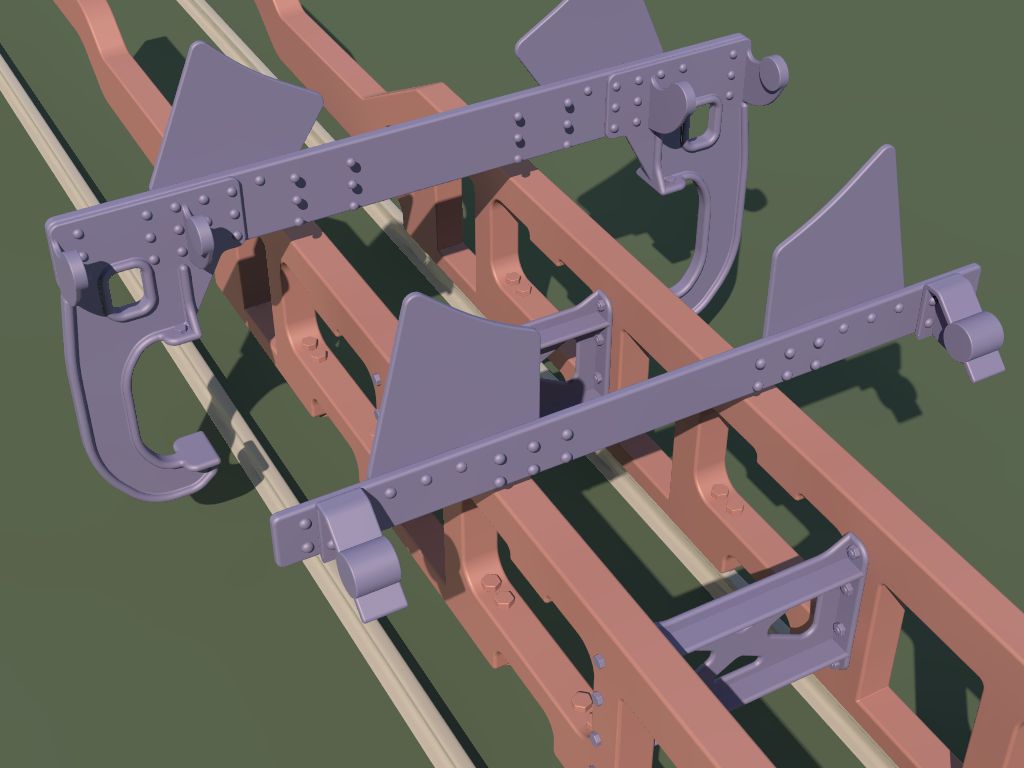
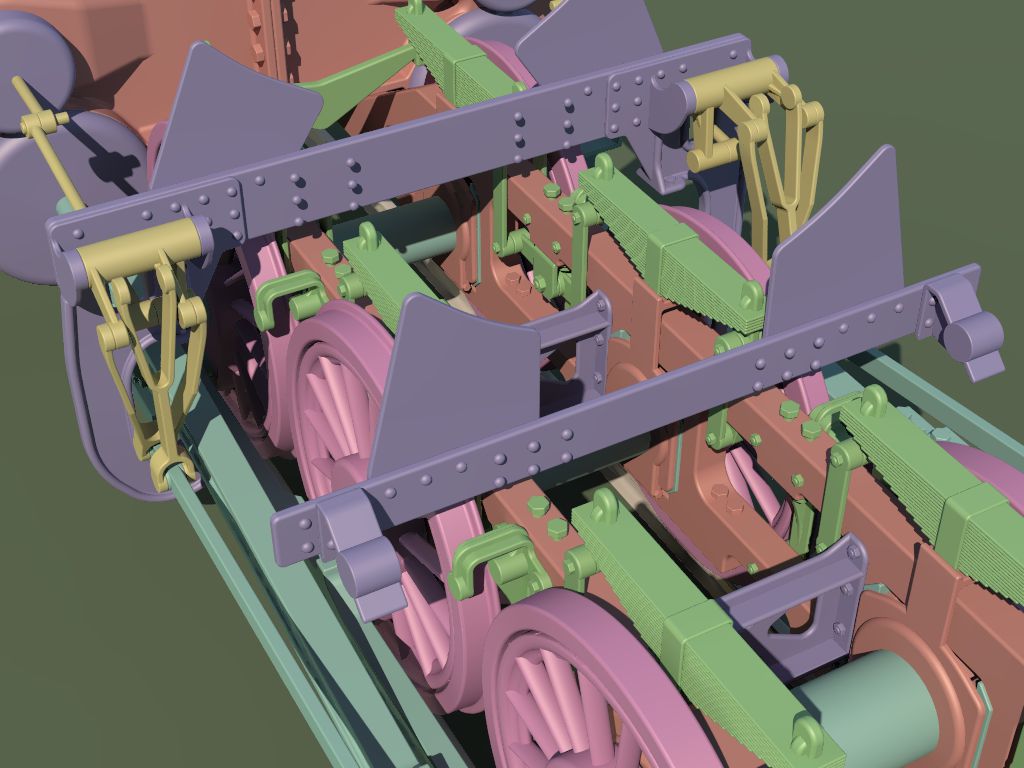
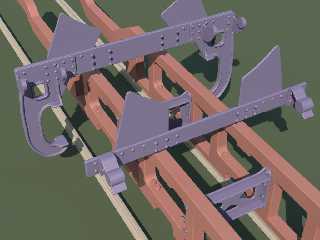
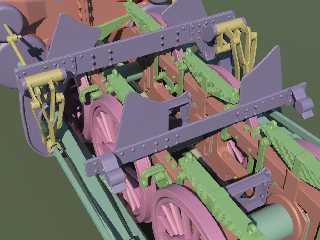
More structural members added.

(Some of the rivets may appear to be "floating"; this is because they
are: Still missing some pieces there.)
Post a reply to this message
Attachments:
Download 'steam 2009-09-30 0451.jpg' (67 KB)
Download 'steam 2009-09-30 0501.jpg' (98 KB)
Preview of image 'steam 2009-09-30 0451.jpg'
Preview of image 'steam 2009-09-30 0501.jpg'
|
|
| |
| |
|
|
|
|
| |
| |
|
|
clipka <ano### [at] anonymousorg> wrote:
> More structural members added.
>
> (Some of the rivets may appear to be "floating"; this is because they
> are: Still missing some pieces there.)

This is spectacular stuff, I've been following with great interest. I hope you
finish it! You should definitely put some sort of image-series together on a
page somewhere showing the evolution of the model. I'd be as interested in that
as I would the final image(s).

Bill
Post a reply to this message
|
|
| |
| |
|
|
|
|
| |
| |
|
|
"clipka" <ano### [at] anonymousorg> schreef in bericht
news:4ac2ca8d@news.povray.org...
> More structural members added.
>
> (Some of the rivets may appear to be "floating"; this is because they
> are: Still missing some pieces there.)
>
>

Flange on the foreground wheel missing.... :-)

I am nitpicking of course. Like Bill suggests, a series of progress images
would be wonderfully instructive, after everything is finished. THis is a
terrific project.

Thomas
Post a reply to this message
|
|
| |
| |
|
|
|
|
| |
| |
|
|
clipka <ano### [at] anonymousorg> wrote:
> More structural members added.
>
> (Some of the rivets may appear to be "floating"; this is because they
> are: Still missing some pieces there.)

O_O

a true craftsman...
Post a reply to this message
|
|
| |
| |
|
|
|
|
| |
| |
|
|
Thomas de Groot schrieb:

> Flange on the foreground wheel missing.... :-)

Duh... should I have been /that/ blind?

No, but the /wheel/ is :-P

This is what in railway terms was called a "blind driver" - not an
uncommon thing on the middle wheel set of steam locomotives with five
driving axles, as with a long wheelbase the flanges became a problem in
narrow curves. Even on locomotives with just 3 driving axles, it was not
uncommon to reduce the track of the outer wheel sets for the same reason.

The conical shape of the tyres still contributed to guiding the train
through curves, and the horizontally very rigid chassis made sure that
the blind wheels could not slip off the track.

Other designs empolyed a mechanism that would shift the wheelsets
horizontally against each other in curves, but it made the suspension
and the drive rods a deal more complex.

Locomotives with more than 5 driving axles almost invariably had half of
the driving wheels mounted on a bogey with separate cylinders (so-called
"articulated" locomotives).

> I am nitpicking of course.

As you see, ATM it may be difficult to out-nitpick me about my own model :-P
Post a reply to this message
|
|
| |
| |
|
|
|
|
| |
| |
|
|
clipka wrote:

> Well, I'm sorry to disappoint you, but this is actually not intended for
> the IRTC, but the "Across the Plains" TINA-CHeP contest, so this is
> unlikely to become the stage for a punk rock band or something :-)

Not disappointed at all. In fact, quite pleased to see the RTChallenge
still going on -- I've been out of touch for a while. I like the
RTChallenge concept selection and a quick visit shows some great images.

>> JRG posted a transformer model some time ago; Might be some beveling
>> solutions there if you want to see another's take on it.
>
> Way too late to go for anything other than my own framework. No time to
> learn anything new on the remaining miles ahead. (And as you can see, my
> own beveling tools take me quite some distance already :-))

I'm not suggesting otherwise, but know from my own experience with
rounding objects that one must usually select a set of compromises and
constraints which affect the structure of his model as much as did the
manufacturing constraints of a real-life steam engine's construction
affect its structure.

It is, for me, interesting and often educational to see a similar model
constructed within a different set of constraints. So interesting, in
fact, that if I were to attempt to model a locomotive, I would likely
select an extremely limiting set of constraints in order to see how the
model developed within them.

  -Shay
Post a reply to this message
|
|
| |
| |
|
|
|
|
| |
| |
|
|
Hey Christoph, you made my day!  :-)  I never knew about blind wheels and...
never noticed them of course. Thanks for the extensive info.

Thomas
Post a reply to this message
|
|
| |
| |
|
|
|
|
| |
| |
|
|
Thomas de Groot schrieb:
> Hey Christoph, you made my day!  :-)  I never knew about blind wheels and...
> never noticed them of course.

You bet I didn't either, before this! :-)

Had I not happened to come across this term by chance, I would have
considered it an oversight in the blueprints myself.


There's an /awful/ lot to learn about steam locomotives... you'd think
they're just boilers on wheels, with some steam cylinders? Well,
basically you're right... /very/ basically :-P

Did you know, for instance, how they get fresh water into the boiler
while "under steam"? I mean, they can't just open a lid and pour water
in, can they?

Even more astonishing is the fact that the device they use to accomplish
this has /zero/ moving parts. And to top it off, the device essentially
works by using the boiler's steam /pressure/ to have the fresh water
/sucked/ in.

Huh? Duh!

Perfectly black thermodynamics magic, as far as I'm concerned, but
Wikipedia claims it actually works:

http://en.wikipedia.org/wiki/Injector
Post a reply to this message
|
|
| |
| |
|
|
|
|
| |
| |
|
|
"clipka" <ano### [at] anonymousorg> schreef in bericht
news:4ac4de1a$1@news.povray.org...
> Did you know, for instance, how they get fresh water into the boiler while
> "under steam"? I mean, they can't just open a lid and pour water in, can
> they?
>
> Even more astonishing is the fact that the device they use to accomplish
> this has /zero/ moving parts. And to top it off, the device essentially
> works by using the boiler's steam /pressure/ to have the fresh water
> /sucked/ in.
>

Fascinating. Totally subjective of course, but I think steam engines are
more interesting than modern car engines. They have a raw and primitive
aura, and at the same time a simple efficiency.

Thomas
Post a reply to this message
|
|
| |
| |
|
|
|
|
| |
| |
|
|
clipka wrote:

> Perfectly black thermodynamics magic, as far as I'm concerned

I didn't know this but I think it's the same principle used
in some types of liquid atomizers, e.g. perfume bottles:
http://www.funsci.com/fun3_en/exper2/exper2_30.gif
Post a reply to this message
|
|
| |
| |
|
|
|
|
| |
| |
|
|
On Fri, 2 Oct 2009 10:15:57 +0200, "Thomas de Groot"
<tDOTdegroot@interDOTnlANOTHERDOTnet> wrote:

>Fascinating. Totally subjective of course, but I think steam engines are
>more interesting than modern car engines.

A block of concrete is more interesting than a modern car engine. At least
aesthetically :)
--

Regards
     Stephen
Post a reply to this message
|
|
| |
| |
|
|
|
|
| |
| |
|
|
Christian Froeschlin a écrit :
> clipka wrote:
>
>> Perfectly black thermodynamics magic, as far as I'm concerned
>
> I didn't know this but I think it's the same principle used
> in some types of liquid atomizers, e.g. perfume bottles:
> http://www.funsci.com/fun3_en/exper2/exper2_30.gif

Somewhat similar, but not exactly the same principle.


Alain
Post a reply to this message
|
|
| |
| |
|
|
|
|
| |
| |
|
|
"Stephen" <mcavoysAT@aolDOTcom> schreef in bericht
news:unqbc55gursjs3k7dfke6frjl9nk0mnhjo@4ax.com...
> A block of concrete is more interesting than a modern car engine. At least
> aesthetically :)

LOL

Thomas
Post a reply to this message
|
|
| |
| |
|
|
|
|
| |
| |
|
|
clipka <ano### [at] anonymousorg> wrote:
> More structural members added.
>

I love the detail you've been creating here and I know (in some small way) the
temptations for detail that a steam loco can lead one on to! Do you have any
updates for us to enjoy?
I'm not a steam buff but for a project I and some friends are working on I
"modelled" a couple of steam locos and some rolling stock over the last year.
One of the main difficulties I found was that drawings are scarce and I had to
work from photos a lot. What this meant was that I didn't have the data to model
much of the substructure and chassis elements - and to be honest, I wasn't that
tempted to try!! You seem to have better drawings?? What loco is it?
I say "modelled" in quotes as my coding style is a tad shambolic and I tend
towards a sort of "lego" approach to things but at the start of this thread you
mentioned difficulties with complex cast iron items and I sort of glossed over
those by approximating with round boxes and so on. The worst part being the
slidey thing behind the main piston.
I was also be interested in your approach to the chimney and steam valve covers
- you used blobs there? I'm afraid I went traitorous and used jpatch for a mesh
object I (sort of) manipulated to fit. I also used jpatch for the firebox main
object.
Anyway - for your amusement I attach one of the loco renders.
--
Crayons
Post a reply to this message
Attachments:
Download 'locoandtender.jpg' (241 KB)
Preview of image 'locoandtender.jpg'

|
|
| |
| |
|
|
|
|
| |
| |
|
|
Crayons wrote:
> clipka <ano### [at] anonymousorg> wrote:
>> More structural members added.
>>
>
> I love the detail you've been creating here and I know (in some small way) the
> temptations for detail that a steam loco can lead one on to! Do you have any
> updates for us to enjoy?

Christoph is on vacation ATM and may not reply for a while. I like your
train, nice.

Bye the way, do you know this blueprint site?

http://www.the-blueprints.com/blueprints/trains/


--

Best Regards,
	Stephen
Post a reply to this message
|
|
| |
| |
|
|
|
|
| |
| |
|
|
Crayons schrieb:

> I love the detail you've been creating here and I know (in some small way) the
> temptations for detail that a steam loco can lead one on to! Do you have any
> updates for us to enjoy?

I did some more work on it in October, but didn't find time to post any
updates, as I was busy making the deadline for the TC-RTC "Across the
Plains" round:

http://www.tc-rtc.co.uk/imagenewdisplay/stills/index256.html

These days I might post some interim shots created during that time.

> You seem to have better drawings?? What loco is it?

It's a USRA/Baldwin "Heavy Santa Fe" (a late-WW1 2-10-2 heavy drag
freight engine featuring the uncommon Southern valve gear), which I
chose mainly because of the particularly detailed blueprints I found on
the Wikimedia Commons
(http://commons.wikimedia.org/wiki/Category:Line_drawings_of_steam_locomotives).

Main "input" was that very blueprint
(http://upload.wikimedia.org/wikipedia/commons/5/5e/USRA_Heavy_Santa_Fe_diagram.jpg)
as well as the similarly good blueprints for its smaller kins, the
"Light Santa Fe", "Heavy Mikado" and "Light Mikado", which - despite the
different dimensions - occasionally provided somewhat better insight
into a few details (though unfortunately the Mikado types were of no
help regarding the valve gear, as they used the Walschaert type instead).

Other sources were numerous photographs from the web, both of USRA
locomotives and others; some site that sells parts for a 1.6" scale
"Heavy Mikado" model proved very helpful, too
(http://www.livesteam.com/heavymikado/AAheavymikadopricelist.html).

> I say "modelled" in quotes as my coding style is a tad shambolic and I tend
> towards a sort of "lego" approach to things but at the start of this thread you
> mentioned difficulties with complex cast iron items and I sort of glossed over
> those by approximating with round boxes and so on. The worst part being the
> slidey thing behind the main piston.

Looks like a pretty good model to me.

> I was also be interested in your approach to the chimney and steam valve covers
> - you used blobs there? I'm afraid I went traitorous and used jpatch for a mesh
> object I (sort of) manipulated to fit. I also used jpatch for the firebox main
> object.

I actually found blobs easier to use than trying to model a suitable
mesh (I would have used Wings3D for that).


Christoph
Post a reply to this message
|
|
| |
| |
|
|
|
|
| |
| |
|
|
clipka wrote:

> I did some more work on it in October, but didn't find time to post any
> updates, as I was busy making the deadline for the TC-RTC "Across the
> Plains" round:

> These days I might post some interim shots created during that time.

That would be good, I look forward to them. Good luck with the competition too!

> > You seem to have better drawings?? What loco is it?
>
> It's a USRA/Baldwin "Heavy Santa Fe" (a late-WW1 2-10-2 heavy drag
> freight engine featuring the uncommon Southern valve gear), which I
> chose mainly because of the particularly detailed blueprints I found on
> the Wikimedia Commons

Ah, interesting. Not being a train enthsiast as such I often wonder why trains
such as these contain so much complexity in comparison to others. While at the
same time not being sure if I would understand the answer if someone gave me a
lecture on it! The quantity of linkages involved seems rather overboard.
The train I modelled is a modified Hall Class from the Great Western Railway and
I only had one basic overall blueprint of the dimensions to work from
http://www.greatwestern.org.uk/loco_draw.htm
Consequently much of the detail is from photographs. One was a part on the
rear of the main steam pipe to the cylinder, I just called it "brassything" in
the code as I had no idea what it was. I actually ended up contacting the Train
Manager for one of the preserved trains who told me it was called a "Snifting
Valve" and sent me detailed pictures of the real thing. I wasn't far wrong.

> Other sources were numerous photographs from the web, both of USRA
> locomotives and others;

Indeed! I downloaded as many as I could find but sadly everyone seems to take
that same picture, from in front a few yards up the station platform! What was
really helpful was actually contacting a train forum and asking there for what I
called more "pornographic" pictures of details under the platform as it were! I
got some very good images sent to me that way. One particular area that I was
struggling with was underneath the footplate steps to the cabin area. I knew
there was a sandbox there but only blurry images of that whole area. I managed
to concoct the attached image from images from one very helpful chap in
particular.

> > I was also be interested in your approach to the chimney and steam valve covers
> > - you used blobs there? I'm afraid I went traitorous and used jpatch for a mesh
> > object I (sort of) manipulated to fit. I also used jpatch for the firebox main
> > object.
>
> I actually found blobs easier to use than trying to model a suitable
> mesh (I would have used Wings3D for that).

Curious. I'll have a look at Wings3D. The main problem area as you'd expect was
the smooth junction between the vertical and horizontal cylinders which I
haven't quite got right.
I guess I concur with the earlier posting asking whether the bevelled edges code
element is likely to become available???

cheers!
Olly
Post a reply to this message
Attachments:
Download 'brakesanall.jpg' (215 KB)
Preview of image 'brakesanall.jpg'

|
|
| |
| |
|
|
|
|
| |
| |
|
|
Crayons schrieb:

> Ah, interesting. Not being a train enthsiast as such I often wonder why trains
> such as these contain so much complexity in comparison to others. While at the
> same time not being sure if I would understand the answer if someone gave me a
> lecture on it! The quantity of linkages involved seems rather overboard.

There's probably one simple reason why your train doesn't exhibit that
many rods and things: The valve gear (the subset of the rods controlling
the steam valve timing) is probably hidden well behind the wheels.

Later trains also added more complexity to the valve gear for
improvements; the valve gear of all but the earliest locomotives allowed
for variation in the valve timing - primarily to switch between forward
and backward motion, but also to "throttle" the engine's power to save
fuel when the train was well in motion. In earlier designs, the
necessary mechanism took quite some space, and included motions that
resulted in a lot of wear and tear, and/or required much human power to
change the valve setting. Later designs took care of all these problems,
  but of course were somewhat more complex.

As for the other "greebles" on a train, those typically feature...:

- Valves to drain condensed water from the cylinders (typically two
below each cylinder)

- Pipes to feed fresh water into the boiler (later engines were legally
required to have two independent water feeding systems, as a lack of
enough water in the boiler would almost inevitably lead to a boiler
explosion, due to melting of the firebox; often, feedwater was inserted
at the front of the boiler, away from the firebox; fun fact: The
standard device used for this purpose used the pressure in the boiler to
feed water /into/ it... black magic to me, but it must have worked!)

- Sandboxes and associated pipes (most trains carried the sandboxes on
top of the boiler, with pipework leading to the wheels, plus some
pipework for steam, as many used steam pressure to assist in sanding)

- Pipework (and valves of course) to blow steam directly into the
smokestack, bypassing the cylinders, to draw air through the firebox
while standing still or moving slowly

- Mechanical brakes and associated gearwork (usually hidden between the
wheels)

- Systems for automatic lubrication of the cylinders (seen in later engines)

- Systems to generate dry pressurized air for the automatic brakes that
became mandatory in later times (typically a steam-driven compressor, a
few cylindrical pressurized air tanks usually situated beneath the
catwalk along the boiler, and /lots/ of pipework leading back and forth,
with the sole purpose of cooling the air)

- Systems to generate electricity for the electric lights on later trains

- Systems to automatically feed coal into the firebox (on very heavy
engines; the USRA Santa Fe features such a system)

- Systems to automatically pick up water from trenches between or beside
the track (on some engines) to reduce the number of required stops.

- Maybe one or two other systems I forgot to mention (or don't even know
about)


> The train I modelled is a modified Hall Class from the Great Western Railway and
> I only had one basic overall blueprint of the dimensions to work from
> http://www.greatwestern.org.uk/loco_draw.htm

That's not as much as I had, but at least it features dimensions. I've
seen far worse that still called themselves "blueprints".

> Indeed! I downloaded as many as I could find but sadly everyone seems to take
> that same picture, from in front a few yards up the station platform! What was
> really helpful was actually contacting a train forum and asking there for what I
> called more "pornographic" pictures of details under the platform as it were! I
> got some very good images sent to me that way. One particular area that I was
> struggling with was underneath the footplate steps to the cabin area. I knew
> there was a sandbox there but only blurry images of that whole area. I managed
> to concoct the attached image from images from one very helpful chap in
> particular.

Looks like you got hold of some real "hardcore porn" ;-)

So far I have limited myself to "softporn" readily available on the net.

> I guess I concur with the earlier posting asking whether the bevelled edges code
> element is likely to become available???

It is pretty likely to; give it some time though.
Post a reply to this message
|
|
| |
| |
|
|
|
|
| |
| |
|
|
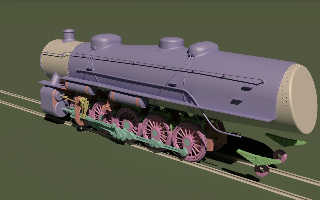
Am 30.09.2009 05:03, schrieb clipka:
> More structural members added.
>
> (Some of the rivets may appear to be "floating"; this is because they
> are: Still missing some pieces there.)

Gee, I haven't tightened a single screw on this beast for over 2 years
now; I guess I ran out of steam right after the TC-RTC deadline back then.

Time to shovel in a little coal again. (It's a bloody pity though that I
lost my Subversion database holding the version history of it all, as I
just found out.)
Post a reply to this message
Attachments:
Download 'usra heavy santa fe 2011-12-07 0612.jpg' (75 KB)
Preview of image 'usra heavy santa fe 2011-12-07 0612.jpg'
|
|
| |
| |
|
|
|
|
| |
| |
|
|
On 7-12-2011 6:48, clipka wrote:
> Am 30.09.2009 05:03, schrieb clipka:
>> More structural members added.
>>
>> (Some of the rivets may appear to be "floating"; this is because they
>> are: Still missing some pieces there.)
>
> Gee, I haven't tightened a single screw on this beast for over 2 years
> now; I guess I ran out of steam right after the TC-RTC deadline back then.
>
> Time to shovel in a little coal again. (It's a bloody pity though that I
> lost my Subversion database holding the version history of it all, as I
> just found out.)

Time flies. Was it not an all csg project?

Thomas
Post a reply to this message
|
|
| |
| |
|
|
|
|
| |
| |
|
|
Am 07.12.2011 09:34, schrieb Thomas de Groot:
> On 7-12-2011 6:48, clipka wrote:

>> Time to shovel in a little coal again. (It's a bloody pity though that I
>> lost my Subversion database holding the version history of it all, as I
>> just found out.)
>
> Time flies. Was it not an all csg project?

Indeed. And it still is.
Post a reply to this message
|
|
| |
| |
|
|
|
|
| |
| |
|
|
On 7-12-2011 10:45, clipka wrote:
> Am 07.12.2011 09:34, schrieb Thomas de Groot:
>> On 7-12-2011 6:48, clipka wrote:
>
>>> Time to shovel in a little coal again. (It's a bloody pity though that I
>>> lost my Subversion database holding the version history of it all, as I
>>> just found out.)
>>
>> Time flies. Was it not an all csg project?
>
> Indeed. And it still is.

Great. At least, some of the images of earlier states still exist here
in p.b.i.

Thomas
Post a reply to this message
|
|
| |
| |
|
|
|
|
| |
| |
|
|
Hi(gh)!

On 07.12.2011 06:48, clipka wrote:

> Time to shovel in a little coal again.

Pun intended?

> (It's a bloody pity though that I
> lost my Subversion database holding the version history of it all, as I
> just found out.)

Cool, you use a database to keep track of your PoV-Ray works... MySQL?

See you in Khyberspace!

Yadgar

Now playing: Sommerabend, live (Novalis)
Post a reply to this message
|
|
| |
| |
|
|
|
|
| |
| |
|
|
> Cool, you use a database to keep track of your PoV-Ray works... MySQL?

subversion is a version control system (svn)
Post a reply to this message
|
|
| |
| |
|
|
|
|
| |
| |
|
|
Am 13.12.2011 19:33, schrieb Jörg 'Yadgar' Bleimann:
> Hi(gh)!
>
> On 07.12.2011 06:48, clipka wrote:
>
>> Time to shovel in a little coal again.
>
> Pun intended?

Yup :-)

>> (It's a bloody pity though that I
>> lost my Subversion database holding the version history of it all, as I
>> just found out.)
>
> Cool, you use a database to keep track of your PoV-Ray works... MySQL?

"Subversion" (aka SVN) is a free off-the-shelf versioning tool; no MySQL
involved.
Post a reply to this message
|
|
| |
| |
|
|
|
|
| |