|
|
|
|
|
|
| |
| |
|
|
|
|
| |
| |
|
|
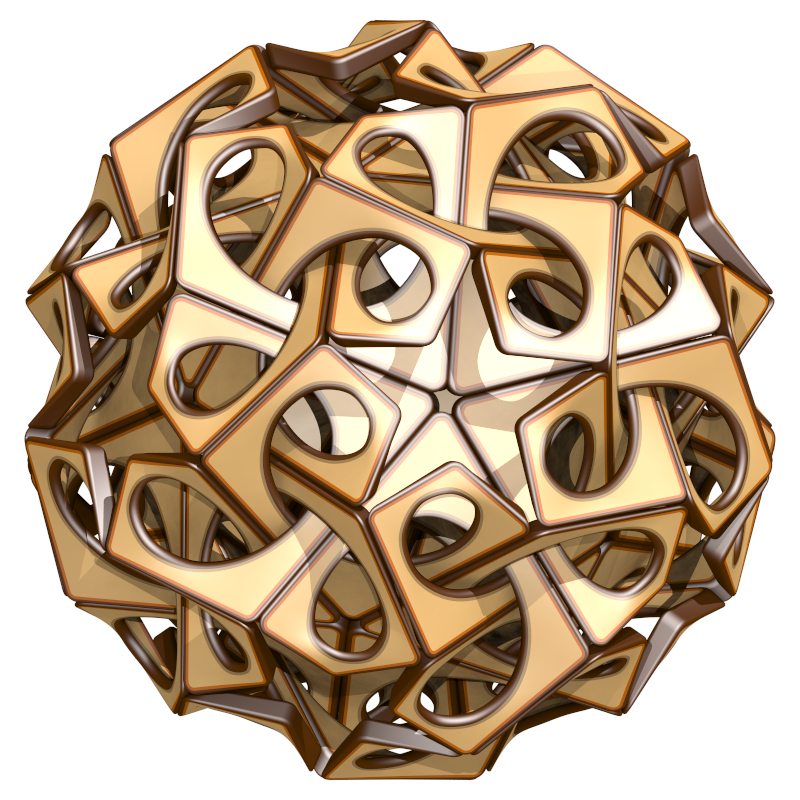
Hand-coded by a manual laborer.
Post a reply to this message
Attachments:
Download 'curvy.jpg' (618 KB)
Preview of image 'curvy.jpg'
|
|
| |
| |
|
|
|
|
| |
| |
|
|
"Shay" <not### [at] notmail com> wrote in message
news:45e1b3a0@news.povray.org...
> Hand-coded by a manual laborer.
That is bl00dy amazing! You should enter that over at CGSphere.com.
Nice one Shay.
~Steve~
> com> wrote in message
news:45e1b3a0@news.povray.org...
> Hand-coded by a manual laborer.
That is bl00dy amazing! You should enter that over at CGSphere.com.
Nice one Shay.
~Steve~
>
Post a reply to this message
|
|
| |
| |
|
|
|
|
| |
| |
|
|
Shay wrote:
> Hand-coded by a manual laborer.

Wow, very nice! The geometry is stunning and the textures are wonderful.
May one take a look at the code?


Regards,
Florian
Post a reply to this message
|
|
| |
| |
|
|
|
|
| |
| |
|
|
Well, maybe geeks come up with cooler things....   That's really amazing
btw.  ...worth a good stare.  :D

Shay <not### [at] notmailcom> wrote:
> Hand-coded by a manual laborer.

People will pay more for art items etc (under "etc" think of things like
ceramic dishes which are also functional) that are hand made.  Hand-coding
counts as "hand made" in my book.   The sad thing is it's hard to explain
the human side of cgi to most people who I think tend to credit the
computer (or the software that was used) more.

Charles
Post a reply to this message
|
|
| |
| |
|
|
|
|
| |
| |
|
|
Very geeky cool! I'm nerdy enough to ask my first question is: what's the
formula?

Steve Klebs
www.cloudinthesky.com
Post a reply to this message
|
|
| |
| |
|
|
|
|
| |
| |
|
|
St. wrote:
> That is bl00dy amazing!

Thank you.

> You should enter that over at CGSphere.com.

Took a look. Perspective camera >>shudder<<

 -Shay
Post a reply to this message
|
|
| |
| |
|
|
|
|
| |
| |
|
|
Florian Brucker wrote:

> May one take a look at the code?

I can't share the code, but I will share the texture, though you might
be disappointed.

finish { specular 7/12 roughness 1/12 }

 -Shay
Post a reply to this message
|
|
| |
| |
|
|
|
|
| |
| |
|
|
Charles C wrote:
> Well, maybe geeks come up with cooler things....

Such as?

> The sad thing is it's hard to explain
> the human side of cgi to most people who I think tend to
> credit the computer (or the software that was used) more.

If it looks good... ?

Hard to explain the challenges even to people here, as most have not
tried this kind of thing. As simple a question as "Which way is up?" can
require an extremely elaborate answer. A tougher question is "What is a
curved line?". I created an original spline equation to get the desired
arc for the curved lines in this image. I have two sheets of paper
covered front and back with scribbles and notes regarding just that
equation.

 -Shay
Post a reply to this message
|
|
| |
| |
|
|
|
|
| |
| |
|
|
Stephen Klebs wrote:
> Very geeky cool!

Though the point was that I'm not a geek. I am a manual laborer.

> I'm nerdy enough to ask my first question is:
> what's the formula?

Wrong question. There is no formula. This is not some mathematical
surface or quickie fractal. This is hours and hours spent constructing a
shape which happens to have polyhedral symmetry. This is hundreds of
thousands of triangles arranged as one would arrange bricks and wood
into a house (blindfolded).

 -Shay
Post a reply to this message
|
|
| |
| |
|
|
|
|
| |
| |
|
|
>> Very geeky cool!
>
> Though the point was that I'm not a geek. I am a manual laborer.

Manual laborers can be geeks too - these are not muturally exclusive. ;-)

>> I'm nerdy enough to ask my first question is:
>> what's the formula?
>
> Wrong question. There is no formula. This is not some mathematical
> surface or quickie fractal. This is hours and hours spent constructing a
> shape which happens to have polyhedral symmetry. This is hundreds of
> thousands of triangles arranged as one would arrange bricks and wood
> into a house (blindfolded).

Um... how the hell do you make curved surfaces out of flat angular things?
Post a reply to this message
|
|
| |
| |
|
|
|
|
| |
| |
|
|
"Shay" <not### [at] notmailcom> wrote in message
news:45e1e9c7$1@news.povray.org...
> St. wrote:
>> That is bl00dy amazing!
>
> Thank you.
>
>> You should enter that over at CGSphere.com.
>
> Took a look. Perspective camera >>shudder<<

    Nah, have some phun. Do a similar image, post it and mention that it was
done with one of the top guns - that'll keep'em talking for ages... ;)

     ~Steve~


>
> -Shay
Post a reply to this message
|
|
| |
| |
|
|
|
|
| |
| |
|
|
Orchid XP v3 <voi### [at] devnull> wrote:
> >> Very geeky cool!
> >
> > Though the point was that I'm not a geek. I am a manual laborer.
>
> Manual laborers can be geeks too - these are not muturally exclusive. ;-)
>
> >> I'm nerdy enough to ask my first question is:
> >> what's the formula?
> >
> > Wrong question. There is no formula. This is not some mathematical
> > surface or quickie fractal. This is hours and hours spent constructing a
> > shape which happens to have polyhedral symmetry. This is hundreds of
> > thousands of triangles arranged as one would arrange bricks and wood
> > into a house (blindfolded).
>
> Um... how the hell do you make curved surfaces out of flat angular things?

Splines & macros.  He did say hundreds of thousands afterall....

Shay, you DID use a few #while loops right? ;-)
Post a reply to this message
|
|
| |
| |
|
|
|
|
| |
| |
|
|
Shay wrote:
> I can't share the code, but I will share the texture, though you might
> be disappointed.
>
> finish { specular 7/12 roughness 1/12 }

Disappointed? Nah, delighted! Just shows how little I know about textures ;)


Regards,
Florian
Post a reply to this message
|
|
| |
| |
|
|
|
|
| |
| |
|
|
Shay wrote:
> There is no formula.

Ah, you got me thinking. If you won't tell us, you'll have to live with
me guessing how it works :) As you mentioned splines: It *looks* like
the straight segments would be the control polygon for a bezier spline
which would be the curved segments. Any good?


Regards,
Florian
Post a reply to this message
|
|
| |
| |
|
|
|
|
| |
| |
|
|
"Shay" <not### [at] notmailcom> wrote in message
news:45e1b3a0@news.povray.org..

:snip:

That's insane man. I'd say that equals a lot of the work in the POV hall of
fame. Welcome back, too
Post a reply to this message
|
|
| |
| |
|
|
|
|
| |
| |
|
|
Shay <not### [at] notmailcom> wrote:
> Stephen Klebs wrote:
> > Very geeky cool!
>
> Though the point was that I'm not a geek. I am a manual laborer.
>
> > I'm nerdy enough to ask my first question is:
> > what's the formula?
>
> Wrong question. There is no formula. This is not some mathematical
> surface or quickie fractal. This is hours and hours spent constructing a
> shape which happens to have polyhedral symmetry. This is hundreds of
> thousands of triangles arranged as one would arrange bricks and wood
> into a house (blindfolded).
>
>  -Shay

This wouldn’t have anything to do with a month long trip to SA, would it?

Nice to see you back.


Stephen
Post a reply to this message
|
|
| |
| |
|
|
|
|
| |
| |
|
|
"Shay" <not### [at] notmailcom> wrote in message
news:45e1b3a0@news.povray.org...
> Hand-coded by a manual laborer.

Amazing!
Bathsheba Grossman-esque.
See http://www.bathsheba.com/
She turns her concepts into physical 3D forms.
DLM
Post a reply to this message
|
|
| |
| |
|
|
|
|
| |
| |
|
|
"Orchid XP v3" <voi### [at] devnull> wrote in message
news:45e1fa77$1@news.povray.org...
> >> Very geeky cool!
> >
> > Though the point was that I'm not a geek. I am a manual laborer.
>
> Manual laborers can be geeks too - these are not muturally exclusive. ;-)
>

seriously, if you use "polyhedral symmetry" in a sentence, you just might be
a geek :)
Post a reply to this message
|
|
| |
| |
|
|
|
|
| |
| |
|
|
Florian Brucker wrote:
> As you mentioned splines: It *looks* like
> the straight segments would be the control polygon for
> a bezier spline which would be the curved segments.
> Any good?

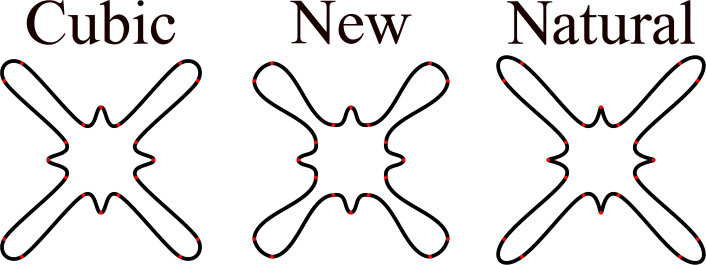
Very good, but that's not the entire answer. The control points for the
final spline were derived from the straight segment corners with Bezier
type math. The curve of the line connecting them was, however, traced by
a new spline formula I invented. The curve had to have a very specific
behavior in order to arch in what I felt was an attractive manner around
the other segments. Here's a comparison image to POV's cubic and natural
spline types.

 -Shay
Post a reply to this message
Attachments:
Download 'spline_comparison.jpg' (39 KB)
Preview of image 'spline_comparison.jpg'
|
|
| |
| |
|
|
|
|
| |
| |
|
|
Stephen wrote:
>
> This wouldn’t have anything to do with a month long trip to SA, would it?

The work, no. The concept, yes. I did not have access to a computer for
two months, but the elaborate nature of this image is due to the idea's
growing unchecked in mind over that time.

> Nice to see you back.

Thank you.

 -Shay
Post a reply to this message
|
|
| |
| |
|
|
|
|
| |
| |
|
|
Shay wrote:
> The curve of the line connecting them was, however, traced by
> a new spline formula I invented.

Sounds like a lot of work -- but it paid off :)


Regards,
Florian
Post a reply to this message
|
|
| |
| |
|
|
|
|
| |
| |
|
|
"Shay" <not### [at] notmailcom> wrote in message
news:45e1ee7b$1@news.povray.org...
> Stephen Klebs wrote:
>> Very geeky cool!
>
> Though the point was that I'm not a geek. I am a manual laborer.

   I'm about to be a manual labourer again. I'm about to set seige on this
house and spruce it up. I'm looking forward to seeing my toes...  ;)


 This is hundreds of
> thousands of triangles arranged as one would arrange bricks and wood
> into a house (blindfolded).


    Heh, that's why I said 'bl00dy' in my first post.  :)


         ~Steve~


> -Shay
Post a reply to this message
|
|
| |
| |
|
|
|
|
| |
| |
|
|
Ross wrote:

> seriously, if you use "polyhedral symmetry" in a sentence, you just might be
> a geek :)
>
>
If that makes me a geek then every guy with a hammer in his garage is a
carpenter.

This is a matter of degrees I suppose. I will say that 99% of the tech
conversations in P.O-T are beyond my level of knowledge. I didn't go to
college. I don't understand the notations used at mathworld.wolfram.com.

The time we spend at work is HUGE. How many men define themselves by the
church or bar in which they spend as little as an hour a week? I have
been a salesman or a laborer at least 40 hours a week my entire working
life.

Geeks as a group are much more intelligent than laborers, but there are
a few of we dirty f***ers out there who would surprise you.

 -Shay
Post a reply to this message
|
|
| |
| |
|
|
|
|
| |
| |
|
|
dlm wrote:

> See http://www.bathsheba.com/
> She turns her concepts into physical 3D forms.

I wonder if she's interested in purchasing models. My modeling methods
produce things which hers cannot (and vice-versa).

 -Shay
Post a reply to this message
|
|
| |
| |
|
|
|
|
| |
| |
|
|
"Shay" <not### [at] notmailcom> wrote in message
news:45e34d78$1@news.povray.org...
> dlm wrote:
>
>> See http://www.bathsheba.com/
>> She turns her concepts into physical 3D forms.
>
> I wonder if she's interested in purchasing models. My modeling methods
> produce things which hers cannot (and vice-versa).

       If she can do what I've seen, then she can do yours. She's a skilled
lady.

        ~Steve~


>
> -Shay
Post a reply to this message
|
|
| |
| |
|
|
|
|
| |
| |
|
|
"St." <dot### [at] dotcom> wrote in message news:45e3572c@news.povray.org...


>       If she can do what I've seen, then she can do yours. She's a skilled
> lady.

      She'll like the challenge. Go for it.

       ~Steve~
Post a reply to this message
|
|
| |
| |
|
|
|
|
| |
| |
|
|
>> seriously, if you use "polyhedral symmetry" in a sentence, you just might be
>> a geek :)
>>
>>
> If that makes me a geek then every guy with a hammer in his garage is a
> carpenter.

Does knowing Graham's law of gas diffusion make me a physicist?

> This is a matter of degrees I suppose. I will say that 99% of the tech
> conversations in P.O-T are beyond my level of knowledge. I didn't go to
> college. I don't understand the notations used at mathworld.wolfram.com.

*I* don't understand half of what Wolfram says either... x_x
Post a reply to this message
|
|
| |
| |
|
|
|
|
| |
| |
|
|
nice!!!!!
Post a reply to this message
|
|
| |
| |
|
|
|
|
| |
| |
|
|
Shay wrote:

>
> Geeks as a group are much more intelligent than laborers, but there are
> a few of we dirty f***ers out there who would surprise you.
>


Well you do seem to project that identity and enjoy that role.

That said, maybe you should try college.
Post a reply to this message
|
|
| |
| |
|
|
|
|
| |
| |
|
|
Jim Charter wrote:
>
> That said, maybe you should try college.

For my part, I abominate all honorable respectable toils, trials, and
tribulations of every kind whatsoever. ... I abandon the glory and
distinction of such offices to those who like them.

 -Melville
Post a reply to this message
|
|
| |
| |
|
|
|
|
| |
| |
|
|
Shay <not### [at] notmailcom> wrote:
> Stephen wrote:
> >
> > This wouldn’t have anything to do with a month long trip to SA, would it?
>
> The work, no. The concept, yes. I did not have access to a computer for
> two months, but the elaborate nature of this image is due to the idea's
> growing unchecked in mind over that time.
>

That’s a pain, I’d get withdrawal symptoms.

Stephen
Post a reply to this message
|
|
| |
| |
|
|
|
|
| |
| |
|
|
> Geeks as a group are much more intelligent than laborers, but there are
> a few of we dirty f***ers out there who would surprise you.
>
>  -Shay

Pierre de Fermat was a lawyer. He never even published anything. It was
just a hobby in his spare time. (!)
Post a reply to this message
|
|
| |
| |
|
|
|
|
| |
| |
|
|
Shay wrote:
> Hand-coded by a manual laborer.

Very nice Shay !

You've already mentioned that you are using home
grown splines to make this.

- Are you also using surface subdivision macros ?

Please explain a little more about your techniques.

--
Tor Olav
http://subcube.net
Post a reply to this message
|
|
| |
| |
|
|
|
|
| |
| |
|
|
Orchid XP v3 wrote:


> Shay:
> a few of we ...

> Orchid XP:
> Pierre de Fermat ... never even published anything.

I'd better not either with that grammar! :) I think I was editing from
"but we..." to "but a few of us..." and fell off the track somewhere.

 -Shay
Post a reply to this message
|
|
| |
| |
|
|
|
|
| |
| |
|
|
Tor Olav Kristensen wrote:

> - Are you also using surface subdivision macros ?

No.

> Please explain a little more about your techniques.

Not much to tell. There's no magic bullet. No universal
round_corners_macro or expand_path_macro or anything like that.

When others give too much away or post wires, I often wish they hadn't.
As much as I'd like to brag, I don't want to spoil my image by giving
away more than I already have. It really is just modeled the same way a
person would model a tea pot. Nothing ground-breaking, just a lot of work.

 -Shay
Post a reply to this message
|
|
| |
| |
|
|
|
|
| |
| |
|
|
"Shay" <not### [at] notmailcom> wrote in message
news:45e1e9c7$1@news.povray.org...
> St. wrote:
>> That is bl00dy amazing!
>
> Thank you.
>
>> You should enter that over at CGSphere.com.
>
> Took a look. Perspective camera >>shudder<<

   Have you seen my attempts on there?

    ~Steve~


>
> -Shay
Post a reply to this message
|
|
| |
| |
|
|
|
|
| |
| |
|
|
Shay wrote:
> Very good, but that's not the entire answer. The control points for the
> final spline were derived from the straight segment corners with Bezier
> type math. The curve of the line connecting them was, however, traced by
> a new spline formula I invented. The curve had to have a very specific
> behavior in order to arch in what I felt was an attractive manner around
> the other segments. Here's a comparison image to POV's cubic and natural
> spline types.

It looks like you created the normal for each point as the normal of a
plane including the two adjacent points.  Once you have a string of
points and normals, there are any number of methods for creating control
points (many of them even allow you to adjust the "curviness" of the
spline).


...Chambers
Post a reply to this message
|
|
| |
| |
|
|
|
|
| |
| |
|
|
"Shay" <not### [at] notmailcom> schreef in bericht
news:45e46f90$1@news.povray.org...
>
> When others give too much away or post wires, I often wish they hadn't.
> As much as I'd like to brag, I don't want to spoil my image by giving
> away more than I already have. It really is just modeled the same way a
> person would model a tea pot. Nothing ground-breaking, just a lot of work.
>

Ooh... There goes the magic teapot!  :-)

Excellent work, Shay!! I am really deeply impressed. Especially if you say
that nothing special is involved, I am all the more awed.

Thomas
Post a reply to this message
|
|
| |
| |
|
|
|
|
| |
| |
|
|
Shay <not### [at] notmailcom> wrote:
> Hand-coded by a manual laborer.

Fantastic (as everyone else has already said.)

Two questions about the shape:

1.  Is it one continuous piece (as it appears)?
2.  Is it closed (or are there "start" and "stop" edges, hidden somewhere)?

Thanks.

Again, excellent work!

Dave Matthews
Post a reply to this message
|
|
| |
| |
|
|
|
|
| |
| |
|
|
Been at work, but wanted to catch these questions.


St. wrote:
>    Have you seen my attempts on (cgsphere)?

Is there no search on that site? I found your stuff, but only by paging
through the gallery. I like "Meet "Slotty"". Cool concept and great
looking lights. A very non-obvious choice to give him bushy eyebrows!

I can't understand why the BASE-Jump[R]#2 submission is the top rated
right now. I think that with CG bromides like "Moon Lander" the
execution has to wow. The modeling of BASE-Jump[R]#2 isn't exactly
mind-blowing IMO.

"Meet "Slotty""
http://www.cgsphere.com/gallery/details/fullsize/?submission_id=2518
BASE-Jump[R]#2
http://www.cgsphere.com/gallery/details/fullsize/?submission_id=2737


Ben Chambers wrote:
> It looks like you created the normal for each point as the normal
> of a plane including the two adjacent points.  Once you have a
> string of points and normals, there are any number of methods for
> creating control points (many of them even allow you to adjust the
> "curviness" of the spline).

No, nothing like that. My method is not elegant enough to be found among
"any number of methods" anywhere, nor is it an average or combination or
any familiar methods. Like most of my methods, it is
convoluted, is suited exactly to a very specific purpose, and will
likely only be used for one image. If you have one, I would like to see
a link to information about this normal method, however.


Thomas de Groot wrote:
> Excellent work, Shay!! I am really deeply impressed. Especially if
> you say that nothing special is involved, I am all the more awed.

Thank you, and I wanted to say a word about the "special" methods I did
not employ. Sometimes the best way is indeed the easiest, but the
easiest way does not produce something exotic, which is my intention. I
might have made a better looking model using (almost exclusively)
subdivision, but it would have looked like a subdivision model.

I'm the same way with cooking. When I have people over, I take hours and
hours to do things the hard way. That way, when someone comes to eat at
my house, he has the pleasure of enjoying a taste he has never or rarely
experienced. Sure, sour cream mixed with powdered onion soup makes a
great dip, but I've tasted that a hundred times.


Dave Matthews wrote:
> Two questions about the shape:
>
> 1.  Is it one continuous piece (as it appears)?
> 2.  Is it closed (or are there "start" and "stop" edges, hidden
> somewhere)?

1. That is a matter of perspective. Everything is touching. If this were
modeled with subdivision, it would appear as one rope which splits and
then rejoins itself. If the shape were 3D printed, it would not rattle.
ON THE OTHER HAND, widening the splits (at the straight lines) would
leave several bars, each a continuous loop.

2. It is closed. Nothing is hidden.


Hope I didn't miss anyone.

 -Shay
Post a reply to this message
|
|
| |
| |
|
|
|
|
| |