|
|
|
|
|
|
| |
| |
|
|
|
|
| |
| |
|
|
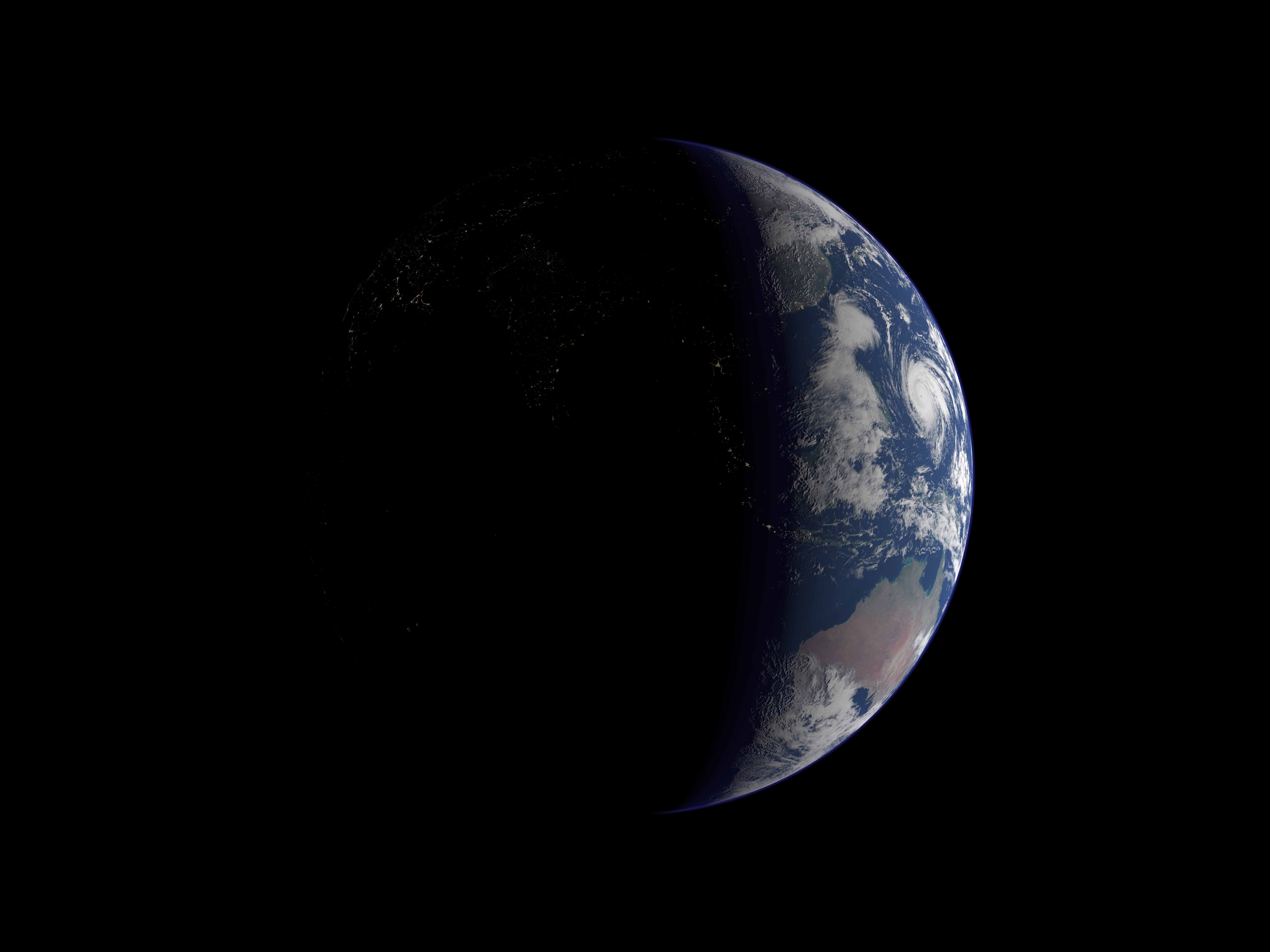
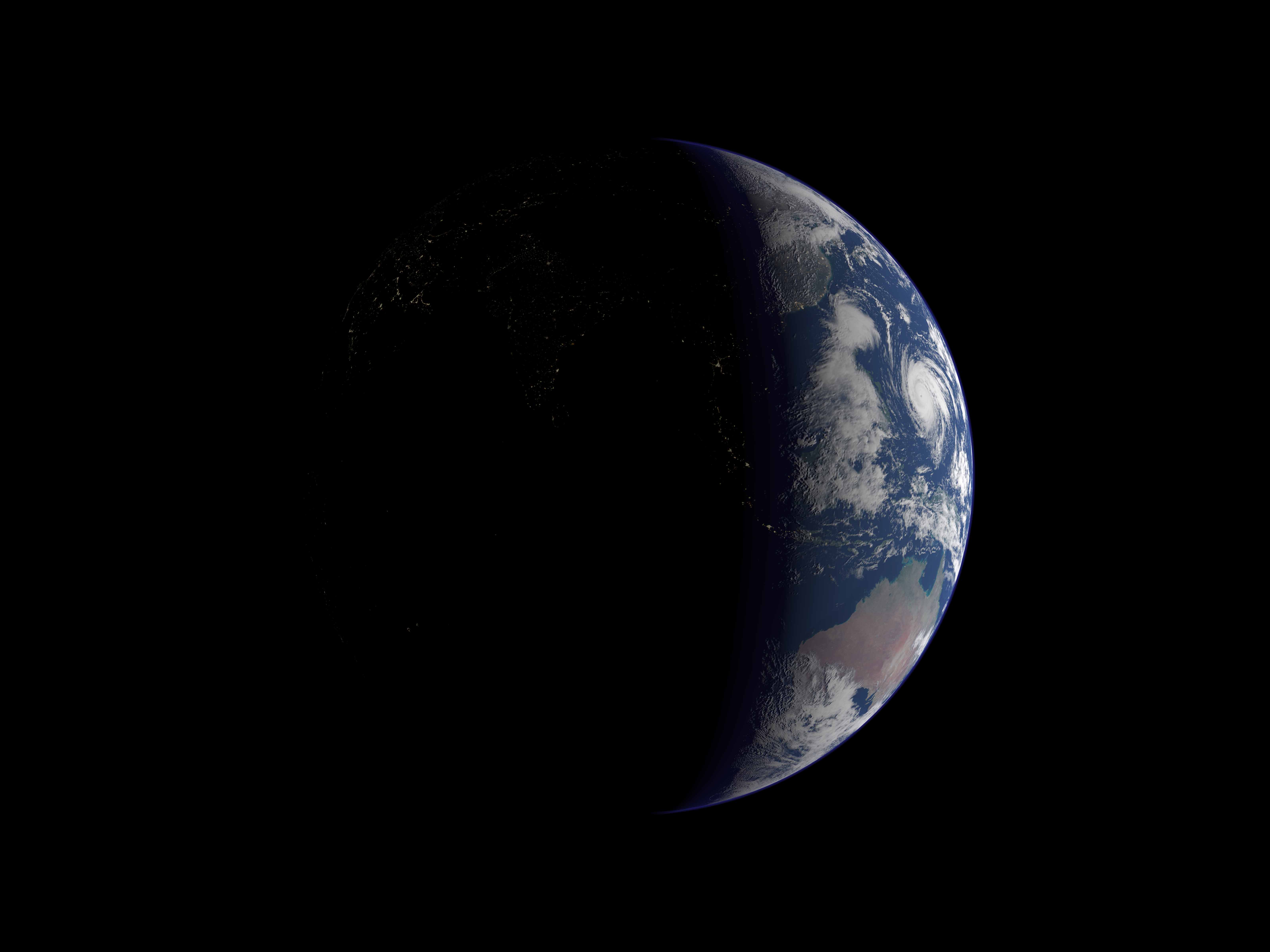
Planet Earth, latest version. Atmosphere, 3D clouds, 3D continents, lights.
Question: how to limit lights to only the nightside? Sven
Post a reply to this message
Attachments:
Download 'Planet 01 Small.jpg' (662 KB)
Preview of image 'Planet 01 Small.jpg'
|
|
| |
| |
|
|
|
|
| |
| |
|
|
Gotta love the irony of that filename:

Planet 01 Small-1.jpg, 661KB, 6400x4800 pixels.
Post a reply to this message
|
|
| |
| |
|
|
|
|
| |
| |
|
|
Well, but - indeed - this is only the small version. The original has a file
size of over 8 MB (which cannot be uploaded due the 1 MB file size limit
here).
Greetings,
Sven
"Orchid XP v2" <voi### [at] dev null> schrieb im Newsbeitrag
news:447b31f4$1@news.povray.org...
> Gotta love the irony of that filename:
>
> Planet 01 Small-1.jpg, 661KB, 6400x4800 pixels. null> schrieb im Newsbeitrag
news:447b31f4$1@news.povray.org...
> Gotta love the irony of that filename:
>
> Planet 01 Small-1.jpg, 661KB, 6400x4800 pixels.
Post a reply to this message
|
|
| |
| |
|
|
|
|
| |
| |
|
|
uhm, please post a smaller file in the future :-/

as for comments: you should use interpolate with your image_map

cu!
--
#macro G(b,e)b+(e-b)*C/50#end#macro _(b,e,k,l)#local C=0;#while(C<50)
sphere{G(b,e)+3*z.1pigment{rgb G(k,l)}finish{ambient 1}}#local C=C+1;
#end#end _(y-x,y,x,x+y)_(y,-x-y,x+y,y)_(-x-y,-y,y,y+z)_(-y,y,y+z,x+y)
_(0x+y.5+y/2x)_(0x-y.5+y/2x)            // ZK http://www.povplace.com
Post a reply to this message
|
|
| |
| |
|
|
|
|
| |
| |
|
|
Hi Zeger,

I was consulting the POV-Ray docuemntion to find out more about
interpolation, but the only thing I can read there is about the values 0, 1
and 2, and what kind of interpolation they are indicating. But, much more
basically, what is an interpol ation?

I am not English-speaking by birth, that's probably why I cannot discover
the meaning of that word. However, I know about you that your advices are
always very good, and just started a render in which i have added the
interpolate 1 to the normal of each texture, let's see what comes out!

The reason for that relatively large file size is simply that I wanted to
check the details exactly, especially the atmosphere. Smaller render sizes
would make it quite difficult to see the atmosphere at the horizon.

Thanks, and greetings,

Sven


"Zeger Knaepen" <zeg### [at] povplacecom> schrieb im Newsbeitrag
news:447b354d$1@news.povray.org...
uhm, please post a smaller file in the future :-/

as for comments: you should use interpolate with your image_map

cu!
--
#macro G(b,e)b+(e-b)*C/50#end#macro _(b,e,k,l)#local C=0;#while(C<50)
sphere{G(b,e)+3*z.1pigment{rgb G(k,l)}finish{ambient 1}}#local C=C+1;
#end#end _(y-x,y,x,x+y)_(y,-x-y,x+y,y)_(-x-y,-y,y,y+z)_(-y,y,y+z,x+y)
_(0x+y.5+y/2x)_(0x-y.5+y/2x)            // ZK http://www.povplace.com
Post a reply to this message
|
|
| |
| |
|
|
|
|
| |
| |
|
|
Hmm, ran into difficulties with density file 8which is required for
interpolate). Let me post here the source code for the scene, maybe you can
show me how it should be.

Thanks,

Sven

"Zeger Knaepen" <zeg### [at] povplacecom> schrieb im Newsbeitrag
news:447b354d$1@news.povray.org...
as for comments: you should use interpolate with your image_map

-------------------------------------------------

#include "colors.inc"
#include "textures.inc"
#include "shapes.inc"
#include "metals.inc"
#include "glass.inc"
#include "woods.inc"

#declare Earth = texture { pigment { image_map { jpeg "E:\Scripts\Eigene
Bilder\Povray Textures\Sphere_Earth_01.jpg" map_type 1 } rotate < 0.0, 0.0,
0.0 > } finish { ambient 0.0 } }
#declare EarthLights = texture { pigment { image_map { png
"E:\Scripts\Eigene Bilder\Povray Textures\Sphere_Earth_Lights_01.png"
map_type 1 } rotate < 0.0, 0.0, 0.0 > } finish { ambient 0.25 } }
#declare EarthClouds = texture { pigment { image_map { png
"E:\Scripts\Eigene Bilder\Povray Textures\Sphere_Earth_Clouds_03.png"
map_type 1 } rotate < 0.0, 0.0, 0.0 > } finish { ambient 0.0 } }

global_settings
{
 assumed_gamma 2.0
 radiosity {  }  //
}

camera
{
 location < 000.0, 0.0, -300.0 >
 look_at < 000.0, 0.0, 0.0 >
}
/**/
light_source
{
 < 1000.0, 0.0, 250.0 >
 color White *3
}

#macro StarSubPigment(StarSize, StarFrequency)
 crackle
 form < 1.0, 0.0, 0.0 >
 #local Cutoff=StarSize*StarFrequency;
 color_map
 {
  [ Cutoff rgb 1.0 ]
  [ Cutoff rgb 0.0 ]
 }
 scale 1/StarFrequency
#end

// minsize, maxsize = size range of stars (some stars will always be smaller
due to nature of crackle pattern)
// starfrequency = how many stars
// variationfrequency = how quickly their size changes
#macro StarPigment(MinSize, MaxSize, StarFrequency, VariationFrequency)
 #local NumSizeSteps=8;
 pigment
 {
  pigment_pattern
  {
   bozo
   color_map
   {
    [ 0.0 rgb 0.75 ]
    [ 1.0 rgb 1.00 ]
   }
   scale 1/VariationFrequency
  }
  pigment_map
  {
   #local StepNum=0;
   #while (StepNum<NumSizeSteps)
    #local SizeAmnt=(StepNum+.5)/NumSizeSteps;
    #local PreSize=MinSize+(StepNum/NumSizeSteps)*(MaxSize-MinSize);
    #local PostSize=MinSize+((StepNum+1)/NumSizeSteps)*(MaxSize-MinSize);
    [ SizeAmnt StarSubPigment(PreSize,StarFrequency) ]
    [ SizeAmnt StarSubPigment(PostSize,StarFrequency) ]
    #local StepNum=StepNum+1;
   #end
  }
 }
#end

sky_sphere
{
 StarPigment
 (
  0.000002,  // min star size
  0.000008,  // max star size
  10000,     // star density (higher = more)
  5          // variation frequency (higher = star size changes more over
nearby parts of the sky)
 )
}

#declare Earth_Surface=sphere
{
 0.0, 1.0
 texture { Earth }
 texture { EarthLights }
 normal
 {
//  density_file df3 "Sphere_Earth_Bumps_01.df3"
//  interpolate 1
  bump_map
  {
   jpeg "Sphere_Earth_Bumps_01.jpg"
   map_type 1
  }
 }
}

#declare Earth_Clouds=sphere
{
 0.0, 1.0005
 texture { EarthClouds }
 normal
 {
//  density_file df3 "Sphere_Earth_Bumps_01.df3"
//  interpolate 1
  bump_map
  {
   jpeg "Sphere_Earth_Clouds_Bumps_03.jpg"
   map_type 1
  }
 }
}

#declare Earth_Atmosphere=sphere
{
 < 0.0, 0.0, 0.0 > 1.0
 pigment
 {
  color rgbt < 0.3, 0.3, 1.0, 1.0 >
 }
 hollow
 interior
 {
  media
  {
   intervals 10
   scattering
   {
    2,
    rgb < 0.3, 0.3, 1.0 >
    extinction 1.0
   }   // 0.75
   density
   {
    spherical
    color_map
    {
     [ 0.000 rgb < 0.0, 0.0, 0.0 > ]
     [ 1.000 rgb < 0.1, 0.1, 0.5 > ]
    }
   }
   samples 1, 10
   confidence 0.9999
   variance 1/1000
   ratio 0.9
  }
 }
 finish { ambient 0.0 diffuse 0.9/**/ }
 scale 1.0075
}

#declare Earth=union
{
 object { Earth_Surface }      //
 object { Earth_Clouds }       //
 object { Earth_Atmosphere }   //
 scale 100.0
}

object { Earth }
Post a reply to this message
|
|
| |
| |
|
|
|
|
| |
| |
|
|
"Sven Littkowski" <sve### [at] jamaica-focuscom> a écrit dans le message de
news:447b3c02@news.povray.org...
> Hmm, ran into difficulties with density file 8which is required for
> interpolate). Let me post here the source code for the scene, maybe you
can
> show me how it should be.
Sven,
interpolation  works for 2D bitmaps as images as well as for density files.
Interpolation computes average values between pixels (for 2D images) and
voxels for density files.
You can forget density files for the moment, they are made for others uses.
For bitmaps, values 2 and 4 are valid (I suggest 4)


 image_map { jpeg "E:\Scripts\Eigene Bilder\Povray
Textures\Sphere_Earth_01.jpg" map_type 1 interpolate 4}

Marc
Post a reply to this message
|
|
| |
| |
|
|
|
|
| |
| |
|
|
Sven,
So the real question is: Who left the lights on in China?
The trouble is that Earth_Surface is just a sphere with merged textures for
lights and terrain.
You would need to limit EarthLights to a hemisphere coaxial with the earth -
sun (lightsource) axis, then generate the composite
I have no idea how.
D
Post a reply to this message
|
|
| |
| |
|
|
|
|
| |
| |
|
|
Hi DLM,

I might have a slightly different idea which I still need to test.

My idea is not to have yellowish ambient lights, but to replace the yellow
areas in that texture with their corresponding areas of the land texture.
The result is now a texture which features just tiny fractions of the land.
I still keep an ambient value.

This way I hope to achieve that on the dayside the lights are not
recognizable, but on the nightside you can see the areas which glow. Despite
of using the underground colors, it still should look like lights.

I am making now some test renders and will post them here, as well.

Later,

Sven


"dlm" <me### [at] addressinvalid> schrieb im Newsbeitrag
news:447b5cfc$1@news.povray.org...
> Sven,
> So the real question is: Who left the lights on in China?
> The trouble is that Earth_Surface is just a sphere with merged textures
> for lights and terrain.
> You would need to limit EarthLights to a hemisphere coaxial with the
> earth - sun (lightsource) axis, then generate the composite
> I have no idea how.
> D
>
Post a reply to this message
|
|
| |
| |
|
|
|
|
| |
| |
|
|
"Sven Littkowski" <sve### [at] jamaica-focuscom> wrote:
> Well, but - indeed - this is only the small version. The original has a file
> size of over 8 MB (which cannot be uploaded due the 1 MB file size limit
> here).

How did you get the 1 MB limit?!?  My limit is set to 700 KB.
Post a reply to this message
|
|
| |
| |
|
|
|
|
| |
| |
|
|
"Sven Littkowski" <sve### [at] jamaica-focuscom> wrote:
> Planet Earth, latest version. Atmosphere, 3D clouds, 3D continents, lights.
> Question: how to limit lights to only the nightside? Sven

Bah!  Posted a reply to your earlier post. Anyway, if you switch to using
Megapov, you can use the 'projection pattern' to put your ambient lights
only on the nightside of the planet.  Samples (and Megapov) can be found
here:

http://megapov.inetart.net/samples.html
Post a reply to this message
|
|
| |
| |
|
|
|
|
| |
| |
|
|
"Sven Littkowski" <sve### [at] jamaica-focuscom> wrote in message
news:447b250a@news.povray.org...
> Planet Earth, latest version. Atmosphere, 3D clouds, 3D continents,
> lights. Question: how to limit lights to only the nightside? Sven
>

Try playing with this and adapt it to your needs.  It basically uses the
object pattern with a plane oriented to the direction of the sun.  Inside
the plane (away from the sun) the Earth light image map is used, outside the
plane (toward the sun) the texture is transparent.

//start
global_settings {
  assumed_gamma 1
  max_trace_level 10 }

camera{
  up y
  right x*image_width/image_height
  angle 60
  location <30,30,30>
  look_at  0
}

#local SunLoc= <-500,0,100>; //Sun location

light_source { SunLoc rgb 1 } //Sun

sphere{0 9.9999 //planet below
  pigment {rgb <0,0,1>}
  finish {ambient 0 diffuse 1}
}

#local Lights=
texture{
  pigment {image_map {png "Earth_Lights.png" interpolate 4 map_type 1}}
  finish {ambient 4 diffuse 0}
}


#local NoLights=
texture{
  pigment {rgbt 1}
  finish {ambient 1 diffuse 0}
}


#local OBJ=plane {SunLoc 0}

sphere{0 10
  texture {
    object{
      OBJ
      texture{NoLights}
      texture{Lights}
    }
  }
}
//end

-tgq
Post a reply to this message
|
|
| |
| |
|
|
|
|
| |
| |
|
|
Hi.

Well, the 1 MB contains the entire posting. Without text you are close to 1
MB just for the image alone, and the size available for the image shrinks
down accordingly to the amount of text you use in your posting. Simpler:
text and image have to share 1 MB.

Greetings,

Sven


"EagleSun" <nomail@nomail> schrieb im Newsbeitrag
news:web.447b6ea51f1312434fa2c32c0@news.povray.org...
> How did you get the 1 MB limit?!?  My limit is set to 700 KB.
Post a reply to this message
|
|
| |
| |
|
|
|
|
| |
| |
|
|
Hi.

For everyone eager to do similar planet renders, you find hi-res Earth
images and bump maps here:
http://visibleearth.nasa.gov/view_set.php?categoryId=2355&p=1

Their entire section is called Blue Marble Next generation, and belongs to
NASA's Jet Propulsion Laboratory.

But besides that, who can give me links to similar hi-res images and bump
maps for the other planets, moons and rings?

Thanks,

Sven
Post a reply to this message
|
|
| |
| |
|
|
|
|
| |
| |
|
|
"Sven Littkowski" <sve### [at] jamaica-focuscom> wrote in message
news:447b250a@news.povray.org...
> Planet Earth, latest version. Atmosphere, 3D clouds, 3D continents,
> lights. Question: how to limit lights to only the nightside? Sven
>

Try playing with this and adapt it to your needs.  It basically uses the
object pattern with a plane oriented to the direction of the sun.  Inside
the plane (away from the sun) the Earth light image map is used, outside the
plane (toward the sun) the texture is transparent.

//start
global_settings {
  assumed_gamma 1
  max_trace_level 10 }

camera{
  up y
  right x*image_width/image_height
  angle 60
  location <30,30,30>
  look_at  0
}

#local SunLoc= <-500,0,100>; //Sun location

light_source { SunLoc rgb 1 } //Sun

sphere{0 9.9999 //planet below
  pigment {rgb <0,0,1>}
  finish {ambient 0 diffuse 1}
}

#local Lights=
texture{
  pigment {image_map {png "Earth_Lights.png" interpolate 4 map_type 1}}
  finish {ambient 4 diffuse 0}
}


#local NoLights=
texture{
  pigment {rgbt 1}
  finish {ambient 1 diffuse 0}
}


#local OBJ=plane {SunLoc 0}

sphere{0 10
  texture {
    object{
      OBJ
      texture{NoLights}
      texture{Lights}
    }
  }
}
//end

-tgq
Post a reply to this message
|
|
| |
| |
|
|
|
|
| |
| |
|
|
Hi Trevor,

many thanks for your code. I might just do it and try it out. But it seems,
I found a good solution on my own. Right now I am rendering a 6400x4800
pixels image of the Earth, with improved features.

I made some really good changes to the nightside lights - they are now much
more descent (it really needs such a big resolution to see them - just as in
nature), and they are now only visible at the nightside because of their
ambient value and because of their colors. Was a tricky thing, but it works
now.

As soon as the render has completed, I am going to post that image here.

Greetings,

Sven


"Trevor G Quayle" <Tin### [at] hotmailcom> schrieb im Newsbeitrag
news:447bd2ba$1@news.povray.org...
>
> "Sven Littkowski" <sve### [at] jamaica-focuscom> wrote in message
> news:447b250a@news.povray.org...
>> Planet Earth, latest version. Atmosphere, 3D clouds, 3D continents,
>> lights. Question: how to limit lights to only the nightside? Sven
>>
>
> Try playing with this and adapt it to your needs.  It basically uses the
> object pattern with a plane oriented to the direction of the sun.  Inside
> the plane (away from the sun) the Earth light image map is used, outside
> the
> plane (toward the sun) the texture is transparent.
>
> //start
> global_settings {
>  assumed_gamma 1
>  max_trace_level 10 }
>
> camera{
>  up y
>  right x*image_width/image_height
>  angle 60
>  location <30,30,30>
>  look_at  0
> }
>
> #local SunLoc= <-500,0,100>; //Sun location
>
> light_source { SunLoc rgb 1 } //Sun
>
> sphere{0 9.9999 //planet below
>  pigment {rgb <0,0,1>}
>  finish {ambient 0 diffuse 1}
> }
>
> #local Lights=
> texture{
>  pigment {image_map {png "Earth_Lights.png" interpolate 4 map_type 1}}
>  finish {ambient 4 diffuse 0}
> }
>
>
> #local NoLights=
> texture{
>  pigment {rgbt 1}
>  finish {ambient 1 diffuse 0}
> }
>
>
> #local OBJ=plane {SunLoc 0}
>
> sphere{0 10
>  texture {
>    object{
>      OBJ
>      texture{NoLights}
>      texture{Lights}
>    }
>  }
> }
> //end
>
> -tgq
>
>
>
Post a reply to this message
|
|
| |
| |
|
|
|
|
| |
| |
|
|
"Trevor G Quayle" <Tin### [at] hotmailcom> wrote:
Sorry, loks like this gotposted twice.  Odd it only showed up once on my
home machine...

-tgq
Post a reply to this message
|
|
| |
| |
|
|
|
|
| |
| |
|
|
Sven Littkowski wrote:
> The reason for that relatively large file size is simply that I wanted to
> check the details exactly, especially the atmosphere. Smaller render sizes
> would make it quite difficult to see the atmosphere at the horizon.

It's probably better to post images that everyone can view on one
screen, ie 1024x768 or less (others might suggest different resolutions).

If you need to show more detail, than a "detail" image would work well -
I mean, a regular sized image (again, 1024x768 or less) but zoomed in to
on the spot you want to focus on (you can accomplish this in POV-Ray by
modifying the "look_at" vector and "angle" value in the camera statement).

...Chambers
Post a reply to this message
|
|
| |
| |
|
|
|
|
| |
| |
|
|
Ehh, err, well... Yes, yes. Okay...


"Trevor G Quayle" <Tin### [at] hotmailcom> schrieb im Newsbeitrag
news:web.447c35c81f1312436c4803960@news.povray.org...
> Sorry, loks like this gotposted twice.  Odd it only showed up once on my
> home machine...
Post a reply to this message
|
|
| |
| |
|
|
|
|
| |
| |
|
|
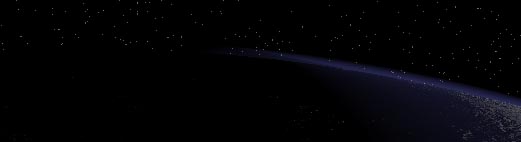
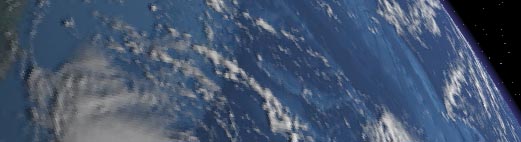
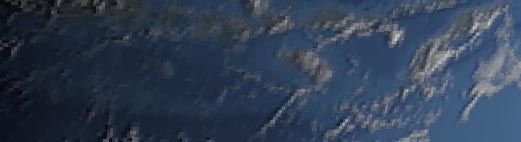
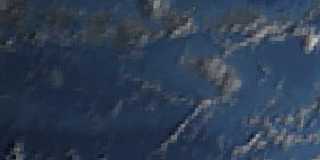
Earth v2.0

A number of improvements I did:
1
the thickness of the atmosphere was reduced by 33% in order to reflect the
real height in relation to the planet
2
the color of the atmosphere is lighter now
3
It is now August on Earth, the winter has gone
4
The clusters of the lights big cities are creating, is now more decent and
not anymore visible at the dayside
5
I am using now the wonderful universe sky map which was created by Nekar
Xenos

I am publishing here four different scenes. If you want me to post the
entire image (JPEG, reduced quality, ca. 650 KB, 6400x4800 pixels) let me
know.

Scenes (introduced by image file names):
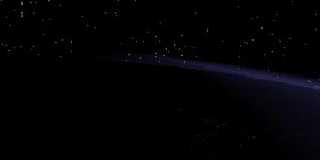
a
Northpole - see the atmosphere reflecting the end of a day and getting night
b
City Lights - descent, not individually visible but just increasing the
over-all color of that location
c
Atmosphere - visible at the horizon
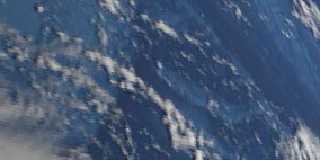
d
Clouds - wonderfully three-dimensional and casting their own shades

Greetings,

Sven
Post a reply to this message
Attachments:
Download 'Planet 01 Small a.jpg' (13 KB)
Download 'Planet 01 Small b.jpg' (15 KB)
Download 'Planet 01 Small c.jpg' (26 KB)
Download 'Planet 01 Small d.jpg' (20 KB)
Preview of image 'Planet 01 Small a.jpg'
Preview of image 'Planet 01 Small b.jpg'
Preview of image 'Planet 01 Small c.jpg'
Preview of image 'Planet 01 Small d.jpg'
|
|
| |
| |
|
|
|
|
| |
| |
|
|
"Kenneth" <kdw### [at] earthlinknet> schrieb im Newsbeitrag
news:web.435ea63a164da8b1546e79e70@news.povray.org...
> The year 2015, eh?  Lets' see... 10 years ago, CGI was JUST starting to
> make
> a splash in Hollywood, in a rather crude way (comparitively speaking). I
> know, because I was there, working as a mechanical special effects
> designer...and wondering what all the fuss was about!
>
> Now here we are in 2005, with kids' video games that would have been
> considered "science fiction" a  decade ago...running at speeds that SURELY
> can't get any faster.  (Or__can__they???)


Well,

in 2015, when finally POV-Ray v4.0 comes out, the Chinese will be one of the
economical and military super powers, the USA will still be a super power
but in the procedure of decrading due inner unrests, social problems, racism
and reduced human rights.

The Chinese will waste and intoxinate the environment simply because it is
the cheapest way to be an economical super power, and their strong
government still will act as regime which destroys all critical comments.
The Chinese territory will have expanded (some little nice invasions to
"help" other countries and forced
political decisions in neighboring countries), and both super powers will
actually use environmental pollution in order to cause financial damage to
the opponent powers, due the creating of storm floods, general drought
destroying harvests, hunger killing dozen millions of Africans and Asians,
and cold waves in Europe due the halted gulf stream.

2025, when POV-Ray v5.0 comes out (developed by glorious Chinese programmers
who claim correctly POV-Ray to always have been a native Chinese invention
just copied without Chinese permission by other nations which should be
punished with the dead of those foreigners), the
Earth will see an entirely changed society: living became costly as
maintaining the formerly high standards is now fairly expensive due the
widely destroyed and/or changed environments. Lesser and lesser countries
can maintain a society as we know today. Widespread unemployment, hunger,
social problems, all sorts
of crime (especially thiefery and kills), fanatism and poorness are now seen
nearly everywhere. Cultural life is in the vast decrease because of strong
risen costs of maintenance of museums and other locations. Education on a
today level is denser, as most labour families just cannot spend the risen
educational money anymore. Small elites are ruling with iron fists.

2035, when POV-Ray v5.5 comes out, the general development in most fields
will be much slower than today. The economical war between the weaker USA,
the weak European Union and the still relatively strong China (which had
re-claimed back "it's own" territories in Africa, Asia and South-East
Europe), has been finished after some stronger weapons came to use. The
Saudi-Arabian and Kuwaitian moon and Mars bases still exist and accomodate
the last rich Arabian families, fed by the richdoms once achieved in
earlier, better times when oils was still flooding. Earth, however, is
dirty, the planet is tired. Wide lands are now waste lands, empty of most
vegetation and partially heavily polluted.

2045, when POV-Ray v5.75 comes out, the variety of land-based fauna has
vanished, only about one thirtieth part (1/30) of today may still exist.
Many food chains are broken, which causes again many more life forms to face
extinction. To survive here, a human needs to be iron-minded, intollerant to
any
other human, very cautious and very egotistic, and armed. There are still
smaller
communities, but the large cities of the past have halted to function and
exist only as empty towns with only small amounts of persons, probably
organized in gangs, living inside. Ruins in the towns become more and more
usual. The small communities with their villages still maintain a hard but
possible life. The big countries still exist, but more on paper than in the
minds of the citizens which are now organized, also in their minds, in
gangs, clans and local communities.

2055, when POV-Ray v5.76 comes out, the live on Earth is a life without much
technologies. Most production facilities became a long time ago to expensive
to maintain, and the missing expertise for their maintenance is another huge
problem. Many persons now accept that the human race is doomed to die out
due their own stupidity. People are bitter about their ancestors who could
have done so much better if only they wanted and powerful leaders would not
have controlled the media so much for their own political or economical
reasons. Community life decreases, more and more of these generations live
now as single families somewhere out in the wilderness, or what remained of
that. Meanwhile, the human mis-use of their environment in earlier decades
has further reduced the planet's capacity to maintain life. Now the life in
the oceans decreases as they get enriched more and more with the chemical
poison carried from the continents into the waters.

2065, when POV-Ray v5.765 was supposed to come out, only a few millions of
humans are still alive on the entire planet. The forgotten bases on Moon and
Mars don't send anymore, trying to reach a few persons on Earth still able
at least to talk to them begging for healp against their increasing problems
on the bases.
The human population on Earth is now so dense that this alone is a reason
for further reduction of partners finding others. There were, years ago, the
last fights for the few remaining habitable locations on Earth, mostly in
higher-situated valleys between the mountains. Now the amount of persons is
so dense that no fights are anymore needed. Diseases, poisons and hunger
kill many of the last humans. Technology is now like magic of old, glorious
days and feared by many of the unknowing generations. The few who still know
about technology are widely seen as magicians, holy or unholy. But it is now
easier to hear about one of these rare persons than to see one of them in a
lifetime.

2075, when POV-Ray v5.765b was supposed to come out, only a few humans are
still alive. They don't think anymore about terms like "past" and "future"
and "could be", they just live in an harsh, inhabitable, extreme
environment. Their few plants and even fewer animals can exist only in
enbordered, covered and more or lesser hermetically protected wooden or
stony accomodations above but mostly beyond the ground. Those last humans
are farmers in a harsh, bad, nearly
lethal environment. Mobility has gone as moving awhile outside their little
weak housings is bearing modest health risks. Wide areas on Earth are dead.
Enormíous deserts and polluted, unfertile areas are covering now a dying
planet
which's surface is widely hidden by poisened gray heavy and dark clouds.
Many storms occur. Heavy ultra-violet emissions flood Earth's surface. The
difference between temperature zones is extreme.
There is still some life in the deep sea, and in some climatically protected
valleys high in the mountains. The great ruin fields of the previous old
towns bear terrible things from the past: viruses, chemical waste of
destroyed storage facilites, and other dangerous things.

2115, when POV-Ray v10 comes out, not humans wrote its code but intelligent
extraterrestrians who came too late to Earth to help the last humans and to
re-arrange life on Earth with their simple technologies or re-newable
energies, and who happily adapt the great code of the
greatest render program of all times for their own purposes. They added the
capacity to POV-Ray, to not only generate images but to create
three-dimensional real objects out of the ancient scenes the lost humanity
was
creating in their last glorious days, and place most of these 3D objects in
large museums which are built on Earth and on other locations of the human
solar system as last memorial about the great innovativity and ingeniousity
of the vanished human race and as warning
for other races maybe entering one day this little, absolutely unimportant
corner of a side arm of this little, boring galaxy in this corner of the
universe full of truly intelligent races.

In oppostion to most intelligent life in the universe, humans forgot one
little and nearly unimportant smalld etail: not only technical knowledge
matters, but the philosophy how to go through life, what to do if it can be
done, and what better not to do even if it can be done. The greatest race
of all times showed their greatness: their ability to life a greatly wrong
life...

Sven Littkowski

PS:
1
Years might, for sure, not be exact.
2
Comments or own additions are welcome.
Post a reply to this message
|
|
| |
| |
|
|
|
|
| |
| |
|
|
"Sven Littkowski" <sve### [at] jamaica-focuscom> wrote:
> Hi.
>
> For everyone eager to do similar planet renders, you find hi-res Earth
> images and bump maps here:
> http://visibleearth.nasa.gov/view_set.php?categoryId=2355&p=1
>
> Their entire section is called Blue Marble Next generation, and belongs to
> NASA's Jet Propulsion Laboratory.
>
> But besides that, who can give me links to similar hi-res images and bump
> maps for the other planets, moons and rings?
>
> Thanks,
>
> Sven


Sven,

Try here:  http://www.johnstonsarchive.net/spaceart/planetcylmaps.html

or here: http://www.mmedia.is/~bjj/planetary_maps.html

or (probably best) here: http://planetpixelemporium.com/planets.html

Mike
Post a reply to this message
|
|
| |
| |
|
|
|
|
| |
| |
|
|
Great links! Thanks, Mike!

Sven


"Mike Sobers" <sob### [at] mindspringcom> schrieb im Newsbeitrag
news:web.447d12891f131243c33467ae0@news.povray.org...
> Try here:  http://www.johnstonsarchive.net/spaceart/planetcylmaps.html
> or here: http://www.mmedia.is/~bjj/planetary_maps.html
> or (probably best) here: http://planetpixelemporium.com/planets.html
Post a reply to this message
|
|
| |
| |
|
|
|
|
| |
| |
|
|
I think I've seen that movie!  Was it Mad Max, AI, Planet of the Apes,
Waterworld, Soylent Green, or another one?

...Chambers
Post a reply to this message
|
|
| |
| |
|
|
|
|
| |
| |
|
|
No, this seems to be the movie we all live in, called the reality...

Sven


"Ben Chambers" <ben### [at] pacificwebguycom> schrieb im Newsbeitrag
news:447dee16@news.povray.org...
>I think I've seen that movie!  Was it Mad Max, AI, Planet of the Apes,
>Waterworld, Soylent Green, or another one?
Post a reply to this message
|
|
| |
| |
|
|
|
|
| |
| |
|
|
Here's the entire scene code. For the atmosphere, you can use my Windows
tool PCP ("POV-Ray Color Picker") which I made available in the
"povray.binaries. utilities" newsgroup.

Greetings,

Sven


#include "colors.inc"
#include "textures.inc"
#include "shapes.inc"
#include "metals.inc"
#include "glass.inc"
#include "woods.inc"

#declare Jupiter = texture { pigment { image_map { jpeg "E:\Scripts\Eigene
Bilder\Povray Textures\Sphere_Jupiter_01.jpg" map_type 1 } rotate < 0.0,
0.0, 0.0 > } finish { ambient 0.0 } }
#declare Jupiter_Callisto = texture { pigment { image_map { jpeg
"E:\Scripts\Eigene Bilder\Povray Textures\Sphere_Jupiter_Callisto_01.jpg"
map_type 1 } rotate < 0.0, 0.0, 0.0 > } finish { ambient 0.0 } }
#declare Jupiter_Europa = texture { pigment { image_map { jpeg
"E:\Scripts\Eigene Bilder\Povray Textures\Sphere_Jupiter_Europa_01.jpg"
map_type 1 } rotate < 0.0, 0.0, 0.0 > } finish { ambient 0.0 } }
#declare Jupiter_Ganymede = texture { pigment { image_map { jpeg
"E:\Scripts\Eigene Bilder\Povray Textures\Sphere_Jupiter_Ganymede_01.jpg"
map_type 1 } rotate < 0.0, 0.0, 0.0 > } finish { ambient 0.0 } }
#declare Jupiter_Io = texture { pigment { image_map { jpeg
"E:\Scripts\Eigene Bilder\Povray Textures\Sphere_Jupiter_Io_01.jpg" map_type
1 } rotate < 0.0, 0.0, 0.0 > } finish { ambient 0.0 } }

#declare Mars = texture { pigment { image_map { jpeg "E:\Scripts\Eigene
Bilder\Povray Textures\Sphere_Mars_02.jpg" map_type 1 } rotate < 0.0, 0.0,
0.0 > } finish { ambient 0.0 } }
#declare Mars_Deimos = texture { pigment { image_map { jpeg
"E:\Scripts\Eigene Bilder\Povray Textures\Sphere_Mars_Deimos_01.jpg"
map_type 1 } rotate < 0.0, 0.0, 0.0 > } finish { ambient 0.0 } }
#declare Mars_Phobos = texture { pigment { image_map { jpeg
"E:\Scripts\Eigene Bilder\Povray Textures\Sphere_Mars_Phobos_01.jpg"
map_type 1 } rotate < 0.0, 0.0, 0.0 > } finish { ambient 0.0 } }

#declare Mercury = texture { pigment { image_map { jpeg "E:\Scripts\Eigene
Bilder\Povray Textures\Sphere_Mercury_01.jpg" map_type 1 } rotate < 0.0,
0.0, 0.0 > } finish { ambient 0.0 } }

#declare Neptune = texture { pigment { image_map { jpeg "E:\Scripts\Eigene
Bilder\Povray Textures\Sphere_Neptune_01.jpg" map_type 1 } rotate < 0.0,
0.0, 0.0 > } finish { ambient 0.0 } }
#declare Neptune_Proteus = texture { pigment { image_map { jpeg
"E:\Scripts\Eigene Bilder\Povray Textures\Sphere_Neptune_Proteus_01.jpg"
map_type 1 } rotate < 0.0, 0.0, 0.0 > } finish { ambient 0.0 } }

#declare Pluto = texture { pigment { image_map { jpeg "E:\Scripts\Eigene
Bilder\Povray Textures\Sphere_Mercury_01.jpg" map_type 1 } rotate < 0.0,
0.0, 0.0 > } finish { ambient 0.0 } }

#declare Saturn = texture { pigment { image_map { jpeg "E:\Scripts\Eigene
Bilder\Povray Textures\Sphere_Saturn_01.jpg" map_type 1 } rotate < 0.0, 0.0,
0.0 > } finish { ambient 0.0 } }
#declare Saturn_Enceladus = texture { pigment { image_map { jpeg
"E:\Scripts\Eigene Bilder\Povray Textures\Sphere_Saturn_Enceladus_01.jpg"
map_type 1 } rotate < 0.0, 0.0, 0.0 > } finish { ambient 0.0 } }
#declare Saturn_Iapetus = texture { pigment { image_map { jpeg
"E:\Scripts\Eigene Bilder\Povray Textures\Sphere_Saturn_Iapetus_01.jpg"
map_type 1 } rotate < 0.0, 0.0, 0.0 > } finish { ambient 0.0 } }
#declare Saturn_Rhea = texture { pigment { image_map { jpeg
"E:\Scripts\Eigene Bilder\Povray Textures\Sphere_Saturn_Rhea_01.jpg"
map_type 1 } rotate < 0.0, 0.0, 0.0 > } finish { ambient 0.0 } }
#declare Saturn_Titan = texture { pigment { image_map { jpeg
"E:\Scripts\Eigene Bilder\Povray Textures\Sphere_Saturn_Titan_01.jpg"
map_type 1 } rotate < 0.0, 0.0, 0.0 > } finish { ambient 0.0 } }

#declare Sun = texture { pigment { image_map { jpeg "E:\Scripts\Eigene
Bilder\Povray Textures\Sphere_Sun_01.jpg" map_type 1 } rotate < 0.0, 0.0,
0.0 > } finish { ambient 2.0 } }

#declare Uranus = texture { pigment { image_map { jpeg "E:\Scripts\Eigene
Bilder\Povray Textures\Sphere_Uranus_01.jpg" map_type 1 } rotate < 0.0, 0.0,
0.0 > } finish { ambient 0.0 } }

#declare Venus = texture { pigment { image_map { jpeg "E:\Scripts\Eigene
Bilder\Povray Textures\Sphere_Venus_01.jpg" map_type 1 } rotate < 0.0, 0.0,
0.0 > } finish { ambient 0.0 } }

#declare EarthLights = texture { pigment { image_map { png
"E:\Scripts\Eigene Bilder\Povray Textures\Sphere_Earth_Lights_01b.png"
map_type 1 } rotate < 0.0, 0.0, 0.0 > } finish { ambient 0.25 } }
#declare EarthClouds = texture { pigment { image_map { png
"E:\Scripts\Eigene Bilder\Povray Textures\Sphere_Earth_Clouds_03.png"
map_type 1 } rotate < 0.0, 0.0, 0.0 > } finish { ambient 0.0 } }

global_settings
{
 assumed_gamma 2.0
 radiosity {  }  //
}

camera
{
 location < 000.0, 0.0, -300.0 >
 look_at < 000.0, 0.0, 0.0 >
}
/**/
light_source
{
 < 1000.0, 0.0, 250.0 >
 color White *3
}

#macro StarSubPigment(StarSize, StarFrequency)
 crackle
 form < 1.0, 0.0, 0.0 >
 #local Cutoff=StarSize*StarFrequency;
 color_map
 {
  [ Cutoff rgb 1.0 ]
  [ Cutoff rgb 0.0 ]
 }
 scale 1/StarFrequency
#end

// minsize, maxsize = size range of stars (some stars will always be smaller
due to nature of crackle pattern)
// starfrequency = how many stars
// variationfrequency = how quickly their size changes
#macro StarPigment(MinSize, MaxSize, StarFrequency, VariationFrequency)
 #local NumSizeSteps=8;
 pigment
 {
  pigment_pattern
  {
   bozo
   color_map
   {
    [ 0.0 rgb 0.25 ]
    [ 1.0 rgb 1.00 ]
   }
   scale 1/VariationFrequency
  }
  pigment_map
  {
   #local StepNum=0;
   #while (StepNum<NumSizeSteps)
    #local SizeAmnt=(StepNum+.5)/NumSizeSteps;
    #local PreSize=MinSize+(StepNum/NumSizeSteps)*(MaxSize-MinSize);
    #local PostSize=MinSize+((StepNum+1)/NumSizeSteps)*(MaxSize-MinSize);
    [ SizeAmnt StarSubPigment(PreSize,StarFrequency) ]
    [ SizeAmnt StarSubPigment(PostSize,StarFrequency) ]
    #local StepNum=StepNum+1;
   #end
  }
 }
#end

sky_sphere
{
 StarPigment
 (
  0.000001,  // min star size
  0.000007,  // max star size
  20000,     // star density (higher = more)
  5          // variation frequency (higher = star size changes more over
nearby parts of the sky)
 )
}

/*
Jupiter
Jupiter_Callisto
Jupiter_Europa
Jupiter_Ganymede
Jupiter_Io

Mars
Mars_Deimos
Mars_Phobos

Mercury

Neptune
Neptune_Proteus

Pluto

Saturn
Saturn_Enceladus
Saturn_Iapetus
Saturn_Rhea
Saturn_Titan

Sun

Uranus

Venus

EarthLights
EarthClouds
*/

#declare Surface=sphere
{
 0.0, 1.0
 texture { Venus }
// texture { EarthLights }
/*
 normal
 {
  bump_map
  {
   jpeg "Sphere_Earth_Bumps_01.jpg"
   map_type 1
  }
 }
*/
}

#declare Clouds=sphere
{
 0.0, 1.0002
 texture { EarthClouds }
 normal
 {
//  density_file df3 "Sphere_Earth_Bumps_01.df3"
//  interpolate 1
  bump_map
  {
   jpeg "Sphere_Earth_Clouds_Bumps_03.jpg"
   map_type 1
  }
 }
}

#declare Atmosphere=sphere
{
 < 0.0, 0.0, 0.0 > 1.0
 pigment
 {
  color rgbt < 0.5, 0.5, 0.8, 1.0 >
 }
 hollow
 interior
 {
  media
  {
   intervals 10
   scattering
   {
    2,
    rgb < 0.3, 0.3, 1.0 >   // Use here my Windows tool PCP (POV-Ray Color
Picker), found at the "povray-binaries.utils" newsgroup.
    extinction 1.0
   }   // 0.75
   density
   {
    spherical
    color_map
    {
     [ 0.000 rgb < 0.0, 0.0, 0.0 > ]   // Use here my Windows tool PCP
(POV-Ray Color Picker), found at the "povray-binaries.utils" newsgroup.
     [ 1.000 rgb < 0.5, 0.5, 0.8 > ]   // Use here my Windows tool PCP
(POV-Ray Color Picker), found at the "povray-binaries.utils" newsgroup.
    }
   }
   samples 1, 10
   confidence 0.9999
   variance 1/1000
   ratio 0.9
  }
 }
 finish { ambient 0.0 diffuse 0.9/**/ }
 scale 1.005
}

#declare Planet=union
{
 object { Surface }      //
// object { Clouds }       //
// object { Atmosphere }   //
 scale 100.0
}

object { Planet }

/*
One AU is the mean distance between the Earth and the Sun, or 149 598 000
kilometres.
Other units in common use include the gigametre (Gm, one million kilometres)
and the terametre (Tm, one billion/milliard kilometres).
Many planets have multiple times the Earth mass (EM).
Each planet has an own day length mesured by Earth days (ED) or Earth years
(EY).


Solar Bodies: Sol Distance - Mass/Diameter - Year - Day


Sol (0 AU) ( EM / KM)

Mercury (0.39) ( EM / 4879 km) (88 ED) (58.7/176 ED)
Venus (0.72) ( EM / KM) (584 ED) (116.75 ED)
Earth (1 AU) (1 EM / 12,600 KM) (365.2564 ED) (23 h 56 min 4.091 s)
Mars (1.5 AU) (1/10 EM / 6.300 KM) (687 ED) (24 h 39 min 35.244 s)

Asteroid Belt (2.3 AU - 3.3 AU) (1/100 EM) ( ED)

Jupiter (5.2 AU) (317.8 EM / 142,984 KM) (10 ED) (4333.2867 ED)
Saturn (5.2 AU) (95 EM /120,536 KM) (10,7561995 ED) (10 h 14 min 00 s / 10 h
39 min 24 s / 10 h 39 min 22.4 s / 10 h 45 m 45 sS : Poles:
Equator:RadioEarth:RadioCassini)
Uranus (19.6 AU) (14 EM / 51,118 KM) (30,7074896 ED) (17.24 ED)
Neptune (30 AU) (17 EM / 49,532 KM) (60,223.3528 ED) (16.11 h)

Kuiper Belt (30 AU - 50 AU) ( EM)

Pluto + Charon (29.7 AU perihelion - 49.5 AU aphelion) (0.0021 EM / 2306 KM)
(90,613.3055 ED) (6.39 ED)
Xena [2003 UB313] (38.2 AU perihelion - 97.6 AU aphelion) ( EM / 2400 KM)
(203,500 ED) ( ED)
Sedna (76 AU perihelion - 928 AU aphelion) 10,500-year orbit ( EM /
1180-1800 KM) (4401380 ED) (10 h)

Heliosphere (0 AU - 95 AU)
Termination Shock (95 AU)
Heliosheath (95 AU - 135/245 AU)
Heliopause (245 AU)
Bow Shock (245 AU)
Oort Cloud (50,000 AU - 100,000 AU)

Interstellar Medium (95 AU - ..)


http://en.wikipedia.org/wiki/Solar_system


Please complete this data
*/
Post a reply to this message
|
|
| |
| |
|
|
|
|
| |
| |
|
|
High!

Sven Littkowski wrote:
> Planet Earth, latest version. Atmosphere, 3D clouds, 3D continents, lights.

Pretty dark in Afghanistan ;-)... what resolution has your surface
heightfield, and what vertical exaggeration did you apply to it?

A nitpick: I think the sky is way too starry compared to what an
astronaut from a spaceship would see - the illuminated hemisphere of the
Earth would simply overshine most stars!

See you in Khyberspace!

Yadgar

Now playing: Don't lose your Head (Queen)
Post a reply to this message
|
|
| |
| |
|
|
|
|
| |
| |
|
|
"Jörg 'Yadgar' Bleimann" <yaz### [at] gmxde> schrieb im Newsbeitrag
news:447e379c$1@news.povray.org...
> Pretty dark in Afghanistan ;-)... what resolution has your surface
> heightfield, and what vertical exaggeration did you apply to it?
> A nitpick: I think the sky is way too starry compared to what an astronaut
> from a spaceship would see - the illuminated hemisphere of the Earth would
> simply overshine most stars!

Hi!

Exaggeration: default value, surface heightfield: 1000x500 (have another one
which was too big to parse for POV-Ray due memory of only 1.25 GB:
21600x10800).

Difficult to have the colors of an image having the same natural illuminance
like the original Earth. The amount of stars should still be vastly
increased, but I experimented already with a "black half-spherical fog"
behind/around the dayside of Earth with lets the stars gradually be seen
again. But this black fog (descent in its kind) I did, so far, only with a
graphic program, not yet with POV-Ray.

Greetings,

Sven
Post a reply to this message
|
|
| |
| |
|
|
|
|
| |
| |
|
|
High!

Sven Littkowski wrote:

> [ a truly frightening vision of mankind's and PoV-Ray's future ]

You're German, aren't you? If yes, than it's quite symptomatic!
Probably it had to be one of my countrymen to introduce such
apocalyptical horror into this newsgroup, indulging in notorious German
angst... sad to see!

See you in Khyberspace!

Yadgar

Now playing: Big Sleep (Simple Minds)
Post a reply to this message
|
|
| |
| |
|
|
|
|
| |
| |
|
|
"Jörg 'Yadgar' Bleimann" <yaz### [at] gmxde> schrieb im Newsbeitrag
news:4481931b$1@news.povray.org...
> You're German, aren't you? If yes, than it's quite symptomatic!
> Probably it had to be one of my countrymen to introduce such apocalyptical
> horror into this newsgroup, indulging in notorious German angst... sad to
> see!


German: actually, yes and no. Yes - I am a German. No - I am living and
working in Jamaica.

Apocalypsis: actually, yes and no. Yes - simply because my eyes are open.
No - because I would prefer my eyes were closed.

Angst: fascinating that this, too, is one of the German words the English
language took. Is here anyone who can add to a list of German words existing
in the English language? I would just be curious. The more as I am living
since some years in a purely English environment. Let me begin that list
here with those few words I already know of, everyone can add:

Kindergarten
Lederhosen
Angst
Blitzkrieg
Lebensraum
...?
Post a reply to this message
|
|
| |
| |
|
|
|
|
| |
| |
|
|
> Kindergarten
> Lederhosen
> Angst
> Blitzkrieg
> Lebensraum
Gestalt
Shadenfreude

But if you allow etymologically German words as well as relative
newcomers to English, the list would be practically endless. English is
a Teutonic language, after all, and we have words from pretty much all
the European languages as well as a load from further afield.

A random page from my dictionary of etymology gives
fop
forage
forbid
fordo
forget
forlorn
as being of German or Old High German origin, and about half of the
others have come via the German.

--
"It must be accepted as a principle that the rifle,  effective as it is,
cannot  replace  the effect  produced  by the  speed of  the horse,  the
magnetism of the charge, and the terror of cold steel."
  -- British Cavalry training manual, 1907 ::: http://surreal.istic.org/
Post a reply to this message
|
|
| |
| |
|
|
|
|
| |
| |
|
|
Sven Littkowski wrote:
> Let me begin that list
> here with those few words I already know of, everyone can add:
>
> Kindergarten
> Lederhosen
> Angst
> Blitzkrieg
> Lebensraum

OMG, if that's what you think of when thinking about German...

There are so nice words like
Donaudampfschiffahrtsgesellschaftskapitänsmützenschirm...

For more:

http://en.wikipedia.org/wiki/Category:German_loanwords

Christoph

--
POV-Ray tutorials, include files, Landscape of the week:
http://www.imagico.de/ (Last updated 27 May. 2006)
MegaPOV with mechanics simulation: http://megapov.inetart.net/
Post a reply to this message
|
|
| |
| |
|
|
|
|
| |
| |
|
|
Sven Littkowski wrote:
> since some years in a purely English environment. Let me begin that list
> here with those few words I already know of, everyone can add:
>
> Kindergarten
> Lederhosen
> Angst
> Blitzkrieg
> Lebensraum
> ...?
>
How about gesundheit...    ;-)
And dachshund.

      -=- Larry -=-
Post a reply to this message
|
|
| |
| |
|
|
|
|
| |
| |
|
|
High!

Sven Littkowski wrote:

> Kindergarten
> Lederhosen
> Angst
> Blitzkrieg
> Lebensraum

...weltschmerz, zeitgeist, sturm and dwang, ersatz, autobahn,
hinterland, schnapps, pretzel, wurstel, rucksack, weltanschauung,
leitmotiv, lied

See you in Khyberspace!

Yadgar

Now playing: The Romance of the Telescope (Orchestral Manoeuvres in the
Dark)
Post a reply to this message
|
|
| |
| |
|
|
|
|
| |
| |
|
|
High!

Christoph Hormann wrote:

> Donaudampfschiffahrtsgesellschaftskapitänsmützenschirm...

...or "Heimteilchenbeschleuniger mit eingebauter Zillertalbahn", meaning
"home particle accelerator with built-in Ziller Valley narrow gauge
model railroad"!

And now trying to reproduce the way a native English speaker would try
to get this over his tongue:

highmtighlkenbesclyooniger mit ighngebowter tsillertahlbahn

See you in Khyberspace!

Yadgar
Post a reply to this message
|
|
| |
| |
|
|
|
|
| |
| |
|
|
Jörg 'Yadgar' Bleimann wrote:
> High!
>
> Sven Littkowski wrote:
>
>> Kindergarten
>> Lederhosen
>> Angst
>> Blitzkrieg
>> Lebensraum
>
>
> ...weltschmerz, zeitgeist, sturm and dwang, ersatz, autobahn,
> hinterland, schnapps, pretzel, wurstel, rucksack, weltanschauung,
> leitmotiv, lied
>
> See you in Khyberspace!
>
> Yadgar
>
Y'know, most of the words that have been suggested in this thead aren't
really words that have been adopted/adapted into English, as Sven's
original suggestion/question.  They are German words that are commonly
recognized by English-speakers, but as German words.  Some have been
adopted, (kindergarden, angst, ersatz, pretzel...) but most of these
suggestions have not.

I know; picky, picky, picky...     ;-)     (I seem to be becoming more
and more of a curmudgeon the older I get -- I don't know why since I
only turned sixty-nine in April!)

      --=- Larry -=-               The Old Curmudgeon
Post a reply to this message
|
|
| |
| |
|
|
|
|
| |
| |
|
|
Zillertalbahnintegrierender Heimteilchenbeschleuniger...

"Jörg 'Yadgar' Bleimann" <yaz### [at] gmxde> schrieb im Newsbeitrag
news:448213cd$1@news.povray.org...
> Heimteilchenbeschleuniger mit eingebauter Zillertalbahn
Post a reply to this message
|
|
| |
| |
|
|
|
|
| |
| |
|
|
Greetings to the entire POV-Ray Community!

It is a truly great community - I like really a lot that it is possible here
to even discuss subjects such as words of other languages integrated in the
English language, which don't belong the the original POV-Ray subjects! The
more I like the free spirit here! A strong applause to all of you here! Keep
the spirit!

Sven


"Sven Littkowski" <sve### [at] jamaica-focuscom> schrieb im Newsbeitrag
news:4481b848$1@news.povray.org...
> Angst: fascinating that this, too, is one of the German words the English
> language took. Is here anyone who can add to a list of German words
> existing in the English language? I would just be curious. The more as I
> am living since some years in a purely English environment. Let me begin
> that list here with those few words I already know of, everyone can add:
>
> Kindergarten
> Lederhosen
> Angst
> Blitzkrieg
> Lebensraum
> ...?
>
Post a reply to this message
|
|
| |
| |
|
|
|
|
| |
| |
|
|
High!

Larry Hudson wrote:

 >      --=- Larry -=-               The Old Curmudgeon

Hmm, according to my Oxford Advanced Learner's Dictionary of Current
English, a curmudgeon seems to be something like a bear with a sore
head... or, to put in in German, a "Stinkstiefel" (literally, a stinking
boot)... we live and learn!

See you in Khyberspace!

Yadgar
Post a reply to this message
|
|
| |
| |
|
|
|
|
| |
| |
|
|
High!

Sven Littkowski wrote:
> Zillertalbahnintegrierender Heimteilchenbeschleuniger...

No, a Zillertalbahnintegrationsheimteilchenbeschleuniger! Mark Twain
once wrote about those infamous German monster composita: "...you can
see them marching majestically across the page, you can even see the
banners and hear the music!"

But, beware, composita in Sanskrit can be even much longer... some of
them stretch over several lines!

See you in Khyberspace!

Yadgar
Post a reply to this message
|
|
| |
| |
|
|
|
|
| |
| |
|
|
Jörg 'Yadgar' Bleimann wrote:
> High!
>
> Larry Hudson wrote:
>
>  >      --=- Larry -=-               The Old Curmudgeon
>
> Hmm, according to my Oxford Advanced Learner's Dictionary of Current
> English, a curmudgeon seems to be something like a bear with a sore
> head... or, to put in in German, a "Stinkstiefel" (literally, a stinking
> boot)... we live and learn!
>
> See you in Khyberspace!
>
> Yadgar

Well, at least to my native-English-speaking (or -hearing) ear, it
usually means about the same as a Grumpy Old Man.

(That was a funny movie, BTW...)     ;-)

      -=- Larry -=-
"The Old Curmudgeon" or "The Grumpy Old Man" -- take your pick.   :-)
Post a reply to this message
|
|
| |
| |
|
|
|
|
| |
|
|