|
|
|
|
|
|
| |
| |
|
|
|
|
| |
| |
|
|
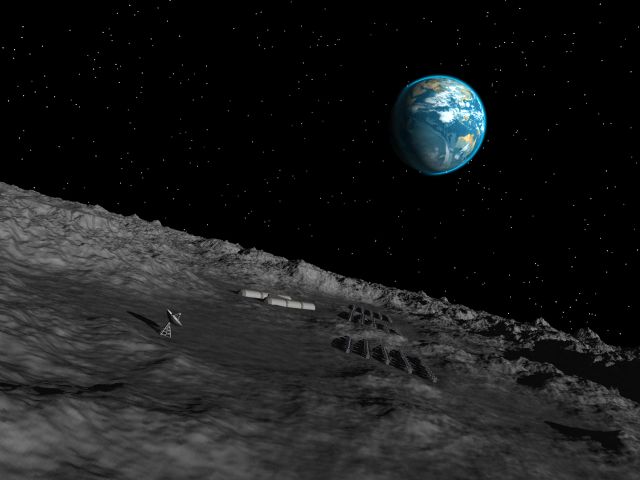
The idea came quite late and I haven't put in as much work as I would like.
I'm not sure if I'm going to enter this or not

The structure at the back's going to get some more detail and some decals
and I'm going to add some rocks in the foreground, as though we're looking
at the base from the top of a distant ridge.

Comments? Criticisms? <g>

Gail
--
#macro G(H,S)disc{0z.4pigment{onion color_map{[0rgb<sin(H/pi)cos(S/pi)*(H<6)
cos(S/pi)*(H>6)>*18][.4rgb 0]}}translate<H-5S-3,9>}#end G(3,5)G(2,5.5)G(1,5)
G(.6,4)G(.5,3)G(.6,2)G(1,1)G(2,.5)G(3,.7)G(3.2,1.6)G(3.1,2.5)G(2.2,2.5)G(9,5
)G(8,5.5)G(7,5)G(7,4)G(7.7,3.3)G(8.3,2.7)G(9,2)G(9,1)G(8,.5)G(7,1)///GS
Post a reply to this message
Attachments:
Download 'EarthRise.jpg' (34 KB)
Preview of image 'EarthRise.jpg'
|
|
| |
| |
|
|
|
|
| |
| |
|
|
Gail Shaw wrote:

> Comments? Criticisms? <g>

Hi,

A very nice image! The lunar landscape already looks great and the Earth is
ever as beautiful. A few comments: the atmosphere (of the Earth, of course
;) is perhaps a bit too thick. You could give the oceans some specular
highlights if possible (image_pattern, maybe?). Also, I think that
planetary bodies usually look better when using a brilliance value less
than one - the terminator is usually quite sharp.

-Johannes
Post a reply to this message
|
|
| |
| |
|
|
|
|
| |
| |
|
|
Nice idea.  I'm ambivalent about the human elements though.  They
detract from the sublime nature of the scene.
Post a reply to this message
|
|
| |
| |
|
|
|
|
| |
| |
|
|
I think it is a "toy-like" quality that is the problem.
Post a reply to this message
|
|
| |
| |
|
|
|
|
| |
| |
|
|
Very nice!
I agree with Johannes and Tim's advices.
The title though is technically wrong as Moon rotates and orbits around
Earth a the same rate, Earth seen from Moon surface seems still at the same
location and never rises nor sets :)
Very good start anyway
Marc
"Gail Shaw" <gai### [at] mweb coza> a écrit dans le message de news:
3db592da@news.povray.org...
> The idea came quite late and I haven't put in as much work as I would
like.
> I'm not sure if I'm going to enter this or not
>
> The structure at the back's going to get some more detail and some decals
> and I'm going to add some rocks in the foreground, as though we're looking
> at the base from the top of a distant ridge.
>
> Comments? Criticisms? <g>
>
> Gail
> --
> #macro G(H,S)disc{0z.4pigment{onion
color_map{[0rgb<sin(H/pi)cos(S/pi)*(H<6)
> cos(S/pi)*(H>6)>*18][.4rgb 0]}}translate<H-5S-3,9>}#end
G(3,5)G(2,5.5)G(1,5)
>
G(.6,4)G(.5,3)G(.6,2)G(1,1)G(2,.5)G(3,.7)G(3.2,1.6)G(3.1,2.5)G(2.2,2.5)G(9,5
> )G(8,5.5)G(7,5)G(7,4)G(7.7,3.3)G(8.3,2.7)G(9,2)G(9,1)G(8,.5)G(7,1)///GS
>
>
>
> coza> a écrit dans le message de news:
3db592da@news.povray.org...
> The idea came quite late and I haven't put in as much work as I would
like.
> I'm not sure if I'm going to enter this or not
>
> The structure at the back's going to get some more detail and some decals
> and I'm going to add some rocks in the foreground, as though we're looking
> at the base from the top of a distant ridge.
>
> Comments? Criticisms? <g>
>
> Gail
> --
> #macro G(H,S)disc{0z.4pigment{onion
color_map{[0rgb<sin(H/pi)cos(S/pi)*(H<6)
> cos(S/pi)*(H>6)>*18][.4rgb 0]}}translate<H-5S-3,9>}#end
G(3,5)G(2,5.5)G(1,5)
>
G(.6,4)G(.5,3)G(.6,2)G(1,1)G(2,.5)G(3,.7)G(3.2,1.6)G(3.1,2.5)G(2.2,2.5)G(9,5
> )G(8,5.5)G(7,5)G(7,4)G(7.7,3.3)G(8.3,2.7)G(9,2)G(9,1)G(8,.5)G(7,1)///GS
>
>
>
>
Post a reply to this message
|
|
| |
| |
|
|
|
|
| |
| |
|
|
Well, while this is mostly true, near the edges (as seen from Earth),
libration does allow some small rising and setting action.  This is because the
Moon is not locked firmly in place, but wobbles slowly back and forth a small
amount.  Here is an actual set of photos assembled into an animation of the
effect:    http://www.theman.themoon.co.uk/librations/
    The effect can be up to about 8 degrees of latitude or longitude.  This
movement is a leftover from when the Moon had an actual day and night.  It lost
this motion long ago due to tidal influence from the Earth, but it didn't come
to a dead stop.  So even today, many millions of years later, the Moon still
undergoes periodic rocking in both latitude and longitude.
    So a colony placed on the visual terminator line of the Moon could indeed
see the Earth rise and set as much as 16 degrees or more.

Cheers!

Chip Shults
My robotics, space and CGI web page - http://home.cfl.rr.com/aichip
Post a reply to this message
|
|
| |
| |
|
|
|
|
| |
| |
|
|
Very nice scene Gail!

I do have a few suggestions that might be of some use.  As stated already,
the atmosphere is a bit too thick if you are shooting for realism.  The blue
glow around the Earth is nice artistic touch though and it shouldn't be
omitted.  Perhaps you could decrease the radius while increasing the
brightness of the media.

As far as the lunar surface is concerned.  I think it should be much more
brighter, almost like snow on a sunny day.  The lunar albedo gives it white
to light gray appearance rather then a dark gray.  I think you should keep
the structures but try moving the dish tower towards the center of one of
the structure concentrations.  It looks a little funny sitting out there by
itself.

Skip
Post a reply to this message
|
|
| |
| |
|
|
|
|
| |
| |
|
|
Shouldn't the dark side of the earth be much darker?  As in, pitch black?
Also, I'd like to see something added to the human elements on the moon to
help provide a better sense of scale.  The dish just seems to feel really
tiny, but the buildings feel to be a right size.  maybe moving the dish
closer to the buildings would help that.  It still appears to be no bigger
than your average TV satellite dish, about 2-3 feet across.

Just my opinions.

-DJ

"Gail Shaw" <gai### [at] mwebcoza> wrote in message
news:3db592da@news.povray.org...
> The idea came quite late and I haven't put in as much work as I would
like.
> I'm not sure if I'm going to enter this or not
>
> The structure at the back's going to get some more detail and some decals
> and I'm going to add some rocks in the foreground, as though we're looking
> at the base from the top of a distant ridge.
>
> Comments? Criticisms? <g>
>
> Gail
> --
> #macro G(H,S)disc{0z.4pigment{onion
color_map{[0rgb<sin(H/pi)cos(S/pi)*(H<6)
> cos(S/pi)*(H>6)>*18][.4rgb 0]}}translate<H-5S-3,9>}#end
G(3,5)G(2,5.5)G(1,5)
>
G(.6,4)G(.5,3)G(.6,2)G(1,1)G(2,.5)G(3,.7)G(3.2,1.6)G(3.1,2.5)G(2.2,2.5)G(9,5
> )G(8,5.5)G(7,5)G(7,4)G(7.7,3.3)G(8.3,2.7)G(9,2)G(9,1)G(8,.5)G(7,1)///GS
>
>
>
>
Post a reply to this message
|
|
| |
| |
|
|
|
|
| |
| |
|
|
The Earth looks beautiful - it's really very pretty. Yes, perhaps the
atmosphere is a little thick, IDK... I still think it looks cool! I think
the moon is a tad dark...

Nice work!
Andrew.
Post a reply to this message
|
|
| |
| |
|
|
|
|
| |
| |
|
|
"Sir Charles W. Shults III" <aic### [at] cflrrcom> a écrit dans le message de
news: 3db5ebb1$1@news.povray.org...
>     Well, while this is mostly true, near the edges (as seen from Earth),
> libration does allow some small rising and setting action.  >

Of course you're right, I knew about libration though I couldn't tell how
large is its influence.
I read latitude libration is cause by moon's axe tilt and longitude
libration by slightly elliptic orbit which changes orbiting speed while
rotating stays constant.
But I drift O.T. don't I? :-)

Marc
Post a reply to this message
|
|
| |
| |
|
|
|
|
| |
| |
|
|
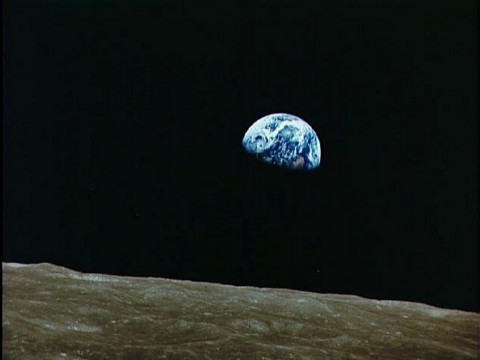
Very nice image.  I had to find the original moon picture for a comparison.
I agree with the comments about the atmosphere, but still a very nice
picture!


"Gail Shaw" <gai### [at] mwebcoza> wrote in message
news:3db592da@news.povray.org...
> The idea came quite late and I haven't put in as much work as I would
like.
> I'm not sure if I'm going to enter this or not
>
> The structure at the back's going to get some more detail and some decals
> and I'm going to add some rocks in the foreground, as though we're looking
> at the base from the top of a distant ridge.
>
> Comments? Criticisms? <g>
>
> Gail
> --
> #macro G(H,S)disc{0z.4pigment{onion
color_map{[0rgb<sin(H/pi)cos(S/pi)*(H<6)
> cos(S/pi)*(H>6)>*18][.4rgb 0]}}translate<H-5S-3,9>}#end
G(3,5)G(2,5.5)G(1,5)
>
G(.6,4)G(.5,3)G(.6,2)G(1,1)G(2,.5)G(3,.7)G(3.2,1.6)G(3.1,2.5)G(2.2,2.5)G(9,5
> )G(8,5.5)G(7,5)G(7,4)G(7.7,3.3)G(8.3,2.7)G(9,2)G(9,1)G(8,.5)G(7,1)///GS
>
>
>
>
Post a reply to this message
Attachments:
Download 'earthrise.jpg' (19 KB)
Preview of image 'earthrise.jpg'
|
|
| |
| |
|
|
|
|
| |
| |
|
|
"Johannes Dahlstrom" <sad### [at] tkukoulufi> wrote in message
news:3db5a84e@news.povray.org...

> Also, I think that
> planetary bodies usually look better when using a brilliance value less
> than one - the terminator is usually quite sharp.

Thanks, I'll bear that in mind

Gail
--
#macro G(H,S)disc{0z.4pigment{onion color_map{[0rgb<sin(H/pi)cos(S/pi)*(H<6)
cos(S/pi)*(H>6)>*18][.4rgb 0]}}translate<H-5S-3,9>}#end G(3,5)G(2,5.5)G(1,5)
G(.6,4)G(.5,3)G(.6,2)G(1,1)G(2,.5)G(3,.7)G(3.2,1.6)G(3.1,2.5)G(2.2,2.5)G(9,5
)G(8,5.5)G(7,5)G(7,4)G(7.7,3.3)G(8.3,2.7)G(9,2)G(9,1)G(8,.5)G(7,1)///GS
Post a reply to this message
|
|
| |
| |
|
|
|
|
| |
| |
|
|
"Marc Jacquier" <jac### [at] wanadoofr> wrote in message
news:3db5e58b$1@news.povray.org...
> Very nice!

Thanks

> The title though is technically wrong as Moon rotates and orbits around
> Earth a the same rate, Earth seen from  Moon surface seems still at the
same
> location and never rises nor sets :)

Yup, I know, but I like the title. Artistic allowances <g>

Gail
--
#macro G(H,S)disc{0z.4pigment{onion color_map{[0rgb<sin(H/pi)cos(S/pi)*(H<6)
cos(S/pi)*(H>6)>*18][.4rgb 0]}}translate<H-5S-3,9>}#end G(3,5)G(2,5.5)G(1,5)
G(.6,4)G(.5,3)G(.6,2)G(1,1)G(2,.5)G(3,.7)G(3.2,1.6)G(3.1,2.5)G(2.2,2.5)G(9,5
)G(8,5.5)G(7,5)G(7,4)G(7.7,3.3)G(8.3,2.7)G(9,2)G(9,1)G(8,.5)G(7,1)///GS
Post a reply to this message
|
|
| |
| |
|
|
|
|
| |
| |
|
|
"DJ Wiza" <Kil### [at] TRIMBRAKEShotmailcom> wrote in message
news:3db64b0e$1@news.povray.org...
> Shouldn't the dark side of the earth be much darker?  As in, pitch black?

Not totally. There would be a bit of atmospheric scattering and some light
from cities.

> Also, I'd like to see something added to the human elements on the moon to
> help provide a better sense of scale.  The dish just seems to feel really
> tiny, but the buildings feel to be a right size.  maybe moving the dish
> closer to the buildings would help that.  It still appears to be no bigger
> than your average TV satellite dish, about 2-3 feet across.

I'll try that.

Gail
--
#macro G(H,S)disc{0z.4pigment{onion color_map{[0rgb<sin(H/pi)cos(S/pi)*(H<6)
cos(S/pi)*(H>6)>*18][.4rgb 0]}}translate<H-5S-3,9>}#end G(3,5)G(2,5.5)G(1,5)
G(.6,4)G(.5,3)G(.6,2)G(1,1)G(2,.5)G(3,.7)G(3.2,1.6)G(3.1,2.5)G(2.2,2.5)G(9,5
)G(8,5.5)G(7,5)G(7,4)G(7.7,3.3)G(8.3,2.7)G(9,2)G(9,1)G(8,.5)G(7,1)///GS
Post a reply to this message
|
|
| |
| |
|
|
|
|
| |
| |
|
|
"Patrick Dugan" <pat### [at] usnetcomcorpcom> wrote in message
news:3db6ce06@news.povray.org...
> Very nice image.  I had to find the original moon picture for a
comparison.

Oooooooooooohh, thank you, thank you, thank you. I've been trying to find
that
pic for a while.

Gail
--
#macro G(H,S)disc{0z.4pigment{onion color_map{[0rgb<sin(H/pi)cos(S/pi)*(H<6)
cos(S/pi)*(H>6)>*18][.4rgb 0]}}translate<H-5S-3,9>}#end G(3,5)G(2,5.5)G(1,5)
G(.6,4)G(.5,3)G(.6,2)G(1,1)G(2,.5)G(3,.7)G(3.2,1.6)G(3.1,2.5)G(2.2,2.5)G(9,5
)G(8,5.5)G(7,5)G(7,4)G(7.7,3.3)G(8.3,2.7)G(9,2)G(9,1)G(8,.5)G(7,1)///GS
Post a reply to this message
|
|
| |
| |
|
|
|
|
| |
| |
|
|
"Andrew Coppin" <orp### [at] btinternetcom> wrote in message
news:3db65749@news.povray.org...
> The Earth looks beautiful - it's really very pretty. Yes, perhaps the
> atmosphere is a little thick, IDK... I still think it looks cool! I think
> the moon is a tad dark...
>

Thank you.

IDK = ? Don't think I've heard that acronym before.

Gail
--
#macro G(H,S)disc{0z.4pigment{onion color_map{[0rgb<sin(H/pi)cos(S/pi)*(H<6)
cos(S/pi)*(H>6)>*18][.4rgb 0]}}translate<H-5S-3,9>}#end G(3,5)G(2,5.5)G(1,5)
G(.6,4)G(.5,3)G(.6,2)G(1,1)G(2,.5)G(3,.7)G(3.2,1.6)G(3.1,2.5)G(2.2,2.5)G(9,5
)G(8,5.5)G(7,5)G(7,4)G(7.7,3.3)G(8.3,2.7)G(9,2)G(9,1)G(8,.5)G(7,1)///GS
Post a reply to this message
|
|
| |
| |
|
|
|
|
| |
| |
|
|
"Skip Talbot" <sta### [at] uiucedu> wrote in message
news:3db60b1c@news.povray.org...
> Very nice scene Gail!
>
> I do have a few suggestions that might be of some use.  As stated already,
> the atmosphere is a bit too thick if you are shooting for realism.  The
blue
> glow around the Earth is nice artistic touch though and it shouldn't be
> omitted.  Perhaps you could decrease the radius while increasing the
> brightness of the media.

Will do. I'd been adjusting the atmosphere just before rendering this and I
overdid it
a bit

> As far as the lunar surface is concerned.  I think it should be much more
> brighter, almost like snow on a sunny day.  The lunar albedo gives it
white
> to light gray appearance rather then a dark gray.

Ok

> I think you should keep
> the structures but try moving the dish tower towards the center of one of
> the structure concentrations.  It looks a little funny sitting out there
by
> itself.

Originally the station was also in the foreground, but it showed off the bad
modelling
too much, so it moved away. I'll move the dish to match.

Gail
--
#macro G(H,S)disc{0z.4pigment{onion color_map{[0rgb<sin(H/pi)cos(S/pi)*(H<6)
cos(S/pi)*(H>6)>*18][.4rgb 0]}}translate<H-5S-3,9>}#end G(3,5)G(2,5.5)G(1,5)
G(.6,4)G(.5,3)G(.6,2)G(1,1)G(2,.5)G(3,.7)G(3.2,1.6)G(3.1,2.5)G(2.2,2.5)G(9,5
)G(8,5.5)G(7,5)G(7,4)G(7.7,3.3)G(8.3,2.7)G(9,2)G(9,1)G(8,.5)G(7,1)///GS
Post a reply to this message
|
|
| |
| |
|
|
|
|
| |
| |
|
|
"Jim Charter" <jrc### [at] aolcom> wrote in message
news:3DB### [at] aolcom...
> Nice idea.  I'm ambivalent about the human elements though.  They
> detract from the sublime nature of the scene.
>
Thank you. My take on the pic is not so much that the moonscape
is beautiful, which it is, but it's the permanent lunar colony that's really
spectacular.

Gail
--
#macro G(H,S)disc{0z.4pigment{onion color_map{[0rgb<sin(H/pi)cos(S/pi)*(H<6)
cos(S/pi)*(H>6)>*18][.4rgb 0]}}translate<H-5S-3,9>}#end G(3,5)G(2,5.5)G(1,5)
G(.6,4)G(.5,3)G(.6,2)G(1,1)G(2,.5)G(3,.7)G(3.2,1.6)G(3.1,2.5)G(2.2,2.5)G(9,5
)G(8,5.5)G(7,5)G(7,4)G(7.7,3.3)G(8.3,2.7)G(9,2)G(9,1)G(8,.5)G(7,1)///GS
Post a reply to this message
|
|
| |
| |
|
|
|
|
| |
| |
|
|
"Gail Shaw" <gai### [at] mwebcoza> wrote in message
news:3db6f23d@news.povray.org...
>
> "Andrew Coppin" <orp### [at] btinternetcom> wrote in message
> news:3db65749@news.povray.org...
> > The Earth looks beautiful - it's really very pretty. Yes, perhaps the
> > atmosphere is a little thick, IDK... I still think it looks cool! I think
> > the moon is a tad dark...
> >
>
> Thank you.
>
> IDK = ? Don't think I've heard that acronym before.

 I Don't Know...?

Nice pic Gail.  :)

  ~Steve~


>
> Gail
> --
> #macro G(H,S)disc{0z.4pigment{onion color_map{[0rgb<sin(H/pi)cos(S/pi)*(H<6)
> cos(S/pi)*(H>6)>*18][.4rgb 0]}}translate<H-5S-3,9>}#end G(3,5)G(2,5.5)G(1,5)
> G(.6,4)G(.5,3)G(.6,2)G(1,1)G(2,.5)G(3,.7)G(3.2,1.6)G(3.1,2.5)G(2.2,2.5)G(9,5
> )G(8,5.5)G(7,5)G(7,4)G(7.7,3.3)G(8.3,2.7)G(9,2)G(9,1)G(8,.5)G(7,1)///GS
>
>
>
Post a reply to this message
|
|
| |
| |
|
|
|
|
| |
| |
|
|
"St." <dot### [at] dotcom> wrote in message news:3db6f667$1@news.povray.org...
>
>  I Don't Know...?

Ah, didn't think of that

> Nice pic Gail.  :)

Thanks

Gail
--
#macro G(H,S)disc{0z.4pigment{onion color_map{[0rgb<sin(H/pi)cos(S/pi)*(H<6)
cos(S/pi)*(H>6)>*18][.4rgb 0]}}translate<H-5S-3,9>}#end G(3,5)G(2,5.5)G(1,5)
G(.6,4)G(.5,3)G(.6,2)G(1,1)G(2,.5)G(3,.7)G(3.2,1.6)G(3.1,2.5)G(2.2,2.5)G(9,5
)G(8,5.5)G(7,5)G(7,4)G(7.7,3.3)G(8.3,2.7)G(9,2)G(9,1)G(8,.5)G(7,1)///GS
Post a reply to this message
|
|
| |
| |
|
|
|
|
| |
|
|