|
|
|
|
|
|
| |
| |
|
|
|
|
| |
| |
|
|
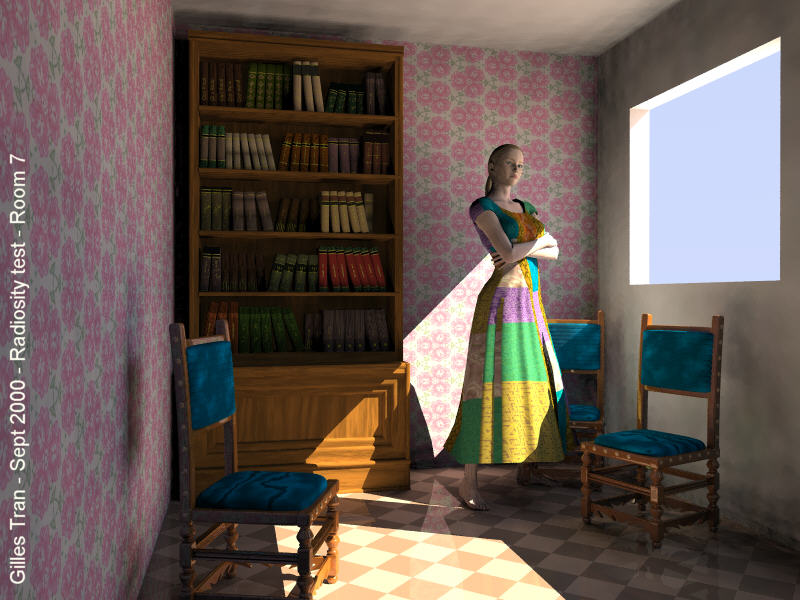
Disclaimer : this scene has no artistical merit whatsoever. It's ugly,
but it's just a test for a radiosity setup that could be acceptable for
a "real" interior scene.
It uses some of the recently gained radiosity knowledge posted in this
group (Arnold settings and outdoors lighting particularly). There's only
one light source, coming from the window. Everything else is indirect
lighting. Balancing the light was difficult. I ended up raising the
brightness to 2 and lowering the Kari Kivisalo light intensity.
Assumed_gamma is 1. It took 4 hours to render on a PIII 733 at 800*600
aa 0.3.

Some of the radiosity effects are really OK. Vicky's face is nicely lit,
and there's even a backlit effect on her right arm. The shadow of the
chair on the left seems good too. On the bad side, there are quite a
number of radiosity artifacts visible on the right wall and on Vicky's
face and right foot (note : raising the recursion level to 2 had
appalling effects on Vicky so I left it to 1). Also, I had to add
reflection to the chairs to make them look better, which lets me think
that one last thing to improve in Megapov radiosity is it's ability to
react like a regular light with some of  the texture properties
(highlights). I didn't try to "cheat" with light groups or area lights
to fix that, though I'll do it probably on a real pic.

Credits : Victoria is the hi-detail Poser girl from Zygote (dress by
Catherine Todd). The chairs and the library are available on my website
(when it works). The wallpaper is just terrible.
The whole scene (but big Vicky who weights around 15 Mb) is posted on
p.b.s-f.

G.
Post a reply to this message
Attachments:
Download 'testroom7.jpg' (90 KB)
Preview of image 'testroom7.jpg'
|
|
| |
| |
|
|
|
|
| |
| |
|
|
i'm not worthy

Gilles Tran wrote:
>
> Disclaimer : this scene has no artistical merit whatsoever. It's ugly,
> but it's just a test for a radiosity setup that could be acceptable for
> a "real" interior scene.
> It uses some of the recently gained radiosity knowledge posted in this
> group (Arnold settings and outdoors lighting particularly). There's only
> one light source, coming from the window. Everything else is indirect
> lighting. Balancing the light was difficult. I ended up raising the
> brightness to 2 and lowering the Kari Kivisalo light intensity.
> Assumed_gamma is 1. It took 4 hours to render on a PIII 733 at 800*600
> aa 0.3.
>
> Some of the radiosity effects are really OK. Vicky's face is nicely lit,
> and there's even a backlit effect on her right arm. The shadow of the
> chair on the left seems good too. On the bad side, there are quite a
> number of radiosity artifacts visible on the right wall and on Vicky's
> face and right foot (note : raising the recursion level to 2 had
> appalling effects on Vicky so I left it to 1). Also, I had to add
> reflection to the chairs to make them look better, which lets me think
> that one last thing to improve in Megapov radiosity is it's ability to
> react like a regular light with some of  the texture properties
> (highlights). I didn't try to "cheat" with light groups or area lights
> to fix that, though I'll do it probably on a real pic.
>
> Credits : Victoria is the hi-detail Poser girl from Zygote (dress by
> Catherine Todd). The chairs and the library are available on my website
> (when it works). The wallpaper is just terrible.
> The whole scene (but big Vicky who weights around 15 Mb) is posted on
> p.b.s-f.
>
> G.
>
>   ------------------------------------------------------------------------
>  [Image]
Post a reply to this message
|
|
| |
| |
|
|
|
|
| |
| |
|
|
ryan constantine wrote:

> i'm not worthy

Come on, it's just a box with a hole in it for the light to shine in, radiosity
settings found in this NG, plus some objects I had made before and a mesh I
bought. No big deal. The only thing I did made here is the checkered plane and
the fine tuning.

G.
Post a reply to this message
|
|
| |
| |
|
|
|
|
| |
| |
|
|
The lighting of the paper walls looks very pleasant, while the other walls seem
to have much artefacts. I wondered about brightness 2 - i always thought it
should stay near 1. Have you tried brightness 1 and recursion_limit 2 ?
The reflective floor with no visible light reflections on the walls is somewhat
irritating.
Most other things look extremely good, esp. the chairs (reflectivity works good
on them), but using these high end radiosity settings in a more complex scene
will probably be real pain :-)
Christoph
--
Christoph Hormann <chr### [at] gmx de>
Homepage: http://www.schunter.etc.tu-bs.de/~chris/
Post a reply to this message
|
|
| |
| |
|
|
|
|
| |
| |
|
|
Christoph Hormann wrote:

> The lighting of the paper walls looks very pleasant, while the other walls seem
> to have much artefacts.  I wondered about brightness 2 - i always thought it
> should stay near 1. Have you tried brightness 1 and recursion_limit 2 ?

Yes. In fact, the lighting setup requires a limit of 2 (at least in Kari Kivisalo
setup). The trouble is that using a limit of 2 I had a terrible answer from the
character mesh (very ugly artifacts), not to mention the exploding render time.

> The reflective floor with no visible light reflections on the walls is somewhat
> irritating.

Photons would certainly be appreciated. Not sure about the render time though. I
also tried a version with media... Cough, cough.

> Most other things look extremely good, esp. the chairs (reflectivity works good
> on them), but using these high end radiosity settings in a more complex scene
> will probably be real pain :-)

That's precisely what I want to know. Right now it's quite acceptable and much
better than any radiosity I've done with Povray, but there's still a lot to test.
Arnold-like things are very nice but if I can't replicate some of the effects in a
real scene with a render time compatible with my lifespan I'll be very
disappointed. Note that at the same time, a complex scene could be more tolerant to
radiosity artifacts so there's hope.

G.
Post a reply to this message
|
|
| |
| |
|
|
|
|
| |
| |
|
|
Thanks for showing me, (and others),  just 'what can' be achieved
Gilles. I like this very much.

    ~Steve~


"Gilles Tran" <tra### [at] inapginrafr> wrote in message
news:39BE8414.E6634119@inapg.inra.fr...

   [image]
Post a reply to this message
|
|
| |
| |
|
|
|
|
| |
| |
|
|
Wow. Gilles Tran admits to "no artistical merit" and still produces an amazing
image.
The pink bar in the sky is a little odd though, and the lights are a bit dark,
the floor, I think, should have more light on it in general, because there is
too much shadow.

Josh

Gilles Tran wrote:

> Disclaimer : this scene has no artistical merit whatsoever. It's ugly,
> but it's just a test for a radiosity setup that could be acceptable for
> a "real" interior scene.
> It uses some of the recently gained radiosity knowledge posted in this
> group (Arnold settings and outdoors lighting particularly). There's only
> one light source, coming from the window. Everything else is indirect
> lighting. Balancing the light was difficult. I ended up raising the
> brightness to 2 and lowering the Kari Kivisalo light intensity.
> Assumed_gamma is 1. It took 4 hours to render on a PIII 733 at 800*600
> aa 0.3.
>
> Some of the radiosity effects are really OK. Vicky's face is nicely lit,
> and there's even a backlit effect on her right arm. The shadow of the
> chair on the left seems good too. On the bad side, there are quite a
> number of radiosity artifacts visible on the right wall and on Vicky's
> face and right foot (note : raising the recursion level to 2 had
> appalling effects on Vicky so I left it to 1). Also, I had to add
> reflection to the chairs to make them look better, which lets me think
> that one last thing to improve in Megapov radiosity is it's ability to
> react like a regular light with some of  the texture properties
> (highlights). I didn't try to "cheat" with light groups or area lights
> to fix that, though I'll do it probably on a real pic.
>
> Credits : Victoria is the hi-detail Poser girl from Zygote (dress by
> Catherine Todd). The chairs and the library are available on my website
> (when it works). The wallpaper is just terrible.
> The whole scene (but big Vicky who weights around 15 Mb) is posted on
> p.b.s-f.
>
> G.
>
>   ------------------------------------------------------------------------
>  [Image]

--
Josh English -- Lexiphanic Lethomaniac
eng### [at] spiritonecom
The POV-Ray Cyclopedia http://www.spiritone.com/~english/cyclopedia/
Post a reply to this message
|
|
| |
| |
|
|
|
|
| |
| |
|
|
Gilles Tran wrote:
>
> Yes. In fact, the lighting setup requires a limit of 2 (at least in Kari Kivisalo
> setup). The trouble is that using a limit of 2 I had a terrible answer from the
> character mesh (very ugly artifacts), not to mention the exploding render time.
>

That's probably true.
I just started a try myself, but can't judge for the mesh of course.

> Photons would certainly be appreciated. Not sure about the render time though. I
> also tried a version with media... Cough, cough.

There are sometimes things that require waiting for a faster computer :-) Doing
this scene with media would definitely be interesting.  I did not use photons
very often but they would also be useful when adding a glass pane to the window.

>
> > Most other things look extremely good, esp. the chairs (reflectivity works good
> > on them), but using these high end radiosity settings in a more complex scene
> > will probably be real pain :-)
>
> That's precisely what I want to know. Right now it's quite acceptable and much
> better than any radiosity I've done with Povray, but there's still a lot to test.
> Arnold-like things are very nice but if I can't replicate some of the effects in a
> real scene with a render time compatible with my lifespan I'll be very
> disappointed. Note that at the same time, a complex scene could be more tolerant to
> radiosity artifacts so there's hope.
>

I made the experience that combining isosurfaces with radiosity can be very
slow.  I would probably use less slow radiosity settings and fake some things
with additional light sources etc. instead.

Christoph

--
Christoph Hormann <chr### [at] gmxde>
Homepage: http://www.schunter.etc.tu-bs.de/~chris/
Post a reply to this message
|
|
| |
| |
|
|
|
|
| |
| |
|
|
Gilles Tran wrote:
>
> Some of the radiosity effects are really OK. Vicky's face is nicely lit,
> and there's even a backlit effect on her right arm. The shadow of the
> chair on the left seems good too. On the bad side, there are quite a
> number of radiosity artifacts visible on the right wall and on Vicky's
> face and right foot (note : raising the recursion level to 2 had
> appalling effects on Vicky so I left it to 1). Also, I had to add
> reflection to the chairs to make them look better, which lets me think
> that one last thing to improve in Megapov radiosity is it's ability to
> react like a regular light with some of  the texture properties
> (highlights). I didn't try to "cheat" with light groups or area lights
> to fix that, though I'll do it probably on a real pic.

There doesn't seem to be anything we can do about the artifacts. I think
it's a flaw in the current algorithm, it's not optimised for really low
error_bound, and there's no way around it except rewriting the code.
Whoever wrote it (Nathan?) would know more about that than I would, though.

The only thing I can think of is to turn the count WAY up, use a tiny,
tiny pretrace_end (values lower than 0.01 seem to be valid on large
images, so you could give that a shot), and maybe increase some other
thing to 20 (I can't remember what it was off the top of my head,
probably was nearest_count.. but whatever it is, it maxes out at 20, so
you can check the dox for it). I doubt that'll get rid of the artifacts,
but it might smooth them a little more.

The artifacts aren't all that noticible to begin with, though. You could
probably ignore them altogether unless they really make your scene look bad.

It might be safe to add photons to the floor; I haven't done extensive
testing, but they didn't have a dramatic effect on my bonsai tree render
(the shiny part of the table thingy had photons). Come to think of it,
they didn't have a dramatic effect on the output either, but.. eh, whatever.

You might add some texture to the plain wall and the ceiling; not only
would it look a little more interesting, but it would probably break up
the artifacting on the right wall.

The wallpaper IS hideous.

The window could use some glass, or something.

The bookcase could probably benefit from a slight application of that
"fake highlight" reflectivity, and the floor might look better if it was
a little more reflective, and blurry.

Some media would be nice too.

Oh, and you could buy a second computer to use while the first one
renders this thing with media, photons, a ridiculously high radiosity
count, isosurfaces and/or normal_on (for the wall and ceiling textures),
and reflection blur... ^^;;

(2006, man. It's only six years away...)

-Xplo
Post a reply to this message
|
|
| |
| |
|
|
|
|
| |
| |
|
|
Gilles Tran wrote:

> ryan constantine wrote:
>
> > i'm not worthy
>
> Come on, it's just a box with a hole in it for the light to shine in, radiosity
> settings found in this NG, plus some objects I had made before and a mesh I
> bought. No big deal. The only thing I did made here is the checkered plane and
> the fine tuning.

Really! Get a grip.

--
David Fontaine   <dav### [at] faricynet>   ICQ 55354965
Please visit my website:  http://davidf.faricy.net/
Post a reply to this message
|
|
| |
| |
|
|
From: BigCeef
Subject: Re: Radiosity - interior scene test (90 kbu)
Date: 12 Sep 2000 18:08:37
Message: <39bea965@news.povray.org>
|
|
|
| |
| |
|
|
In my opinion, the 'artifacts' in this scene do not look at all unnatural,
giving the wall and ceiling a dirty worn look, which actually looks quite
good to me. Obviously only a problem if the wall should look pristine.

As for the wallpaper..I've seen worse.

Andy Cocker
Post a reply to this message
|
|
| |
| |
|
|
|
|
| |
| |
|
|
Gilles Tran wrote:

>It uses some of the recently gained radiosity knowledge posted in this
>group (Arnold settings and outdoors lighting particularly). There's only
>one light source, coming from the window. Everything else is indirect
>lighting. Balancing the light was difficult. I ended up raising the
>brightness to 2 and lowering the Kari Kivisalo light intensity.
>Assumed_gamma is 1. It took 4 hours to render on a PIII 733 at 800*600
>aa 0.3.
>

In Simons Garden I used a somewhat simmilar setup with the following
settings:
global_settings {
   ini_option "+qr"
   ini_option "+sp16"
   ini_option "+ep4"
   assumed_gamma 1.0
   radiosity {
      count 150
      nearest_count 15
      error_bound 1
      recursion_limit 5
      low_error_factor 0.5
      gray_threshold 0.0
      minimum_reuse 0.015
      brightness 1.0
      max_sample 1
      adc_bailout 0.01/1
   }
}
All artifacts on the window-wall are a result of the compression and not
in the original tga. I used scattering media in the window, it has a big
influence on the lightning result of the room.


Newsgroups: povray.binaries.images
Subject: Simons Garden (~75kB)
Message-ID: <8E9DCA589seed7@204.213.191.228>
Date: 15 Dec 1999 13:02:37 -0500

Ingo

--
Photography: http://members.home.nl/ingoogni/
Pov-Ray    : http://members.home.nl/seed7/
Post a reply to this message
|
|
| |
| |
|
|
|
|
| |
| |
|
|
Gilles Tran wrote:
> I ended up raising the
> brightness to 2 and lowering the Kari Kivisalo light intensity.

I have a theory on why these changes were necessary to produce more
pleasing image than the "scientific settings".

We are used to looking at photographs on paper which have contrast
ratios ranging from 4 to 100 depending on viewing conditions and the
quality of the paper and print process.

Contrast ratio is the ratio of luminance between the brightest white and
the darkest black of a particular device or a particular environment.

Human vision can operate in an environment with a several hundred times
larger contrast ratios. Considerable research has gone into capturing
this huge dynamic range on paper with limited range so that the image
still appears natural or acceptable to the viewer.

Some kind of compression is clearly needed to "zip" a dynamic range
of a scene on paper. The most logical place to start is to limit and
compress the high intensities. Look at this graph from Kodak:
http://hammer.prohosting.com/~kkivisal/trans1_rgb.gif

Density 0 is the maximum value and density 2 is 100 times dimmer than
the maximum value. The high intensities are considerably compressed
(notice the log exposure).

--------------------------------------------------------------------------
Computer monitors can display images with contrast ratios 5-170 which
is quite similar to photographs on paper. My theory is that to get natural
looking images we should emulate the compression scheme used in photographs
as a post processing step and use the "scientific settings" on a scene.
--------------------------------------------------------------------------

Gilles' tweak is essentially a compression scheme and this is why the
scene looks better.

Once I get 48bit pov output to Matlab I will test my theory. If someone
knows this isn't going to work please tell now :)


______________________________________________________________________
Kari Kivisalo                                  http://www.kivisalo.net
Post a reply to this message
|
|
| |
| |
|
|
|
|
| |
| |
|
|
Even your "ugly" scenes are amazing!

Jim


"Gilles Tran" <tra### [at] inapginrafr> wrote in message
news:39BE8414.E6634119@inapg.inra.fr...
> Disclaimer : this scene has no artistical merit whatsoever. It's ugly,
> but it's just a test for a radiosity setup that could be acceptable for
> a "real" interior scene.
> It uses some of the recently gained radiosity knowledge posted in this
> group (Arnold settings and outdoors lighting particularly). There's only
> one light source, coming from the window. Everything else is indirect
> lighting. Balancing the light was difficult. I ended up raising the
> brightness to 2 and lowering the Kari Kivisalo light intensity.
> Assumed_gamma is 1. It took 4 hours to render on a PIII 733 at 800*600
> aa 0.3.
>
> Some of the radiosity effects are really OK. Vicky's face is nicely lit,
> and there's even a backlit effect on her right arm. The shadow of the
> chair on the left seems good too. On the bad side, there are quite a
> number of radiosity artifacts visible on the right wall and on Vicky's
> face and right foot (note : raising the recursion level to 2 had
> appalling effects on Vicky so I left it to 1). Also, I had to add
> reflection to the chairs to make them look better, which lets me think
> that one last thing to improve in Megapov radiosity is it's ability to
> react like a regular light with some of  the texture properties
> (highlights). I didn't try to "cheat" with light groups or area lights
> to fix that, though I'll do it probably on a real pic.
>
> Credits : Victoria is the hi-detail Poser girl from Zygote (dress by
> Catherine Todd). The chairs and the library are available on my website
> (when it works). The wallpaper is just terrible.
> The whole scene (but big Vicky who weights around 15 Mb) is posted on
> p.b.s-f.
>
> G.
>
>
>


----------------------------------------------------------------------------
----
Post a reply to this message
|
|
| |
| |
|
|
From: Tony[B]
Subject: Re: Radiosity - interior scene test (90 kbu)
Date: 12 Sep 2000 20:08:35
Message: <39bec583@news.povray.org>
|
|
|
| |
| |
|
|
Good... dang good. Did you see my pathetic little render of Nick?
Post a reply to this message
|
|
| |
| |
|
|
|
|
| |
| |
|
|
I think Daren Wilson wrote a patch that handled that kind of exposure
curve. It was called unlimited light, and at the time I didn't really
see any purpose for it, but when the interest in radiosity started
peaking around here it really started to sound like a good idea.
Unfortunately his site doesn't appear to exist anymore.  Anyone still
have the original source?  It was part of the dispersion patch.

-Mike
Post a reply to this message
|
|
| |
| |
|
|
|
|
| |
| |
|
|
On Tue, 12 Sep 2000 19:36:07 -0500, MikeH <Ama### [at] aolcom> wrote:

>I think Daren Wilson wrote a patch that handled that kind of exposure
>curve. It was called unlimited light, and at the time I didn't really
>see any purpose for it, but when the interest in radiosity started
>peaking around here it really started to sound like a good idea.
>Unfortunately his site doesn't appear to exist anymore.  Anyone still
>have the original source?  It was part of the dispersion patch.
>
>-Mike

Actually his technique didn't emulate the response of film at all. It
*was* a type of compression, but not a very good replication of film
response. Of course, he never claimed that was his goal.

Personally, I've always wanted POV to behave more like real-world
cameras and film. It makes merging images created by the two systems
much easier, and most people would think the realism of POV was
greater, if it looked "just like film."

Later,
Glen

( Remove the "7" from 7no### [at] ezwvcom to email me. )
Post a reply to this message
|
|
| |
| |
|
|
From: Mark Wagner
Subject: Re: Radiosity - interior scene test (90 kbu)
Date: 13 Sep 2000 02:23:00
Message: <39bf1d44@news.povray.org>
|
|
|
| |
| |
|
|
MikeH wrote in message <39BECBF7.613A207D@aol.com>...
>I think Daren Wilson wrote a patch that handled that kind of exposure
>curve. It was called unlimited light, and at the time I didn't really
>see any purpose for it, but when the interest in radiosity started
>peaking around here it really started to sound like a good idea.
>Unfortunately his site doesn't appear to exist anymore.  Anyone still
>have the original source?  It was part of the dispersion patch.


I've made an "infinite light" modification to POV-Ray for my
wavelenght-dependant media patch.  Should I post the source code for the
"infinite light" stuff?

Mark
Post a reply to this message
|
|
| |
| |
|
|
From: GrimDude
Subject: Re: Radiosity - interior scene test (90 kbu)
Date: 13 Sep 2000 03:43:25
Message: <39bf301d@news.povray.org>
|
|
|
| |
| |
|
|
Hey, anytime you can do something like this with Pov you have done something
'those other guys' could never do. ;)

Nice setup here.

I had no idea there were such things as 'Vicki girls' out there.

Grim
Post a reply to this message
|
|
| |
| |
|
|
|
|
| |
| |
|
|
Kari Kivisalo wrote:
>
> I have a theory on why these changes were necessary to produce more
> pleasing image than the "scientific settings".
>
[...]

Sounds reasonable (although i *try* to judge realism from comparing to reality
and not to photos). What we should not forget is, that the "scientific settings"
are only a simplified mathematical model for reality, that maybe produces good
results in many cases but that is far from being perfect.

Christoph

--
Christoph Hormann <chr### [at] gmxde>
Homepage: http://www.schunter.etc.tu-bs.de/~chris/
Post a reply to this message
|
|
| |
| |
|
|
From: Jérôme Berger
Subject: Re: Radiosity - interior scene test (90 kbu)
Date: 13 Sep 2000 05:22:40
Message: <39BF4893.96F2927F@enst.fr>
|
|
|
| |
| |
|
|
This looks amazingly like a real picture of a real doll house. I love
it how "a simple test scene" of yours could be quite an acceptable image
for me (only thing I'd try is to get a more interresting sky through the
window, I think that putting a "real" window would detract from the doll
house effect somehow...)

		Jérôme
--
******************************* Jérôme M. BERGER
* Doctor Jekyll had something * mailto:ber### [at] inamecom
* to Hyde...                  * http://www.enst.fr/~jberger
*******************************
Post a reply to this message
|
|
| |
| |
|
|
|
|
| |
| |
|
|
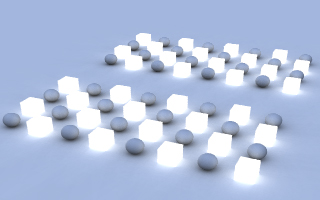
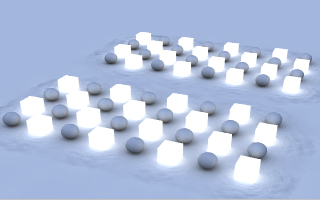
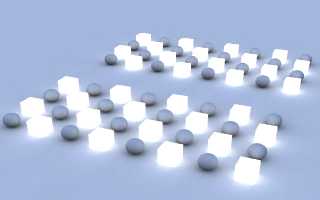
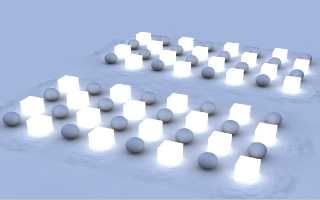
Great radiosity scene ..

Concerning the artifacts , have you tried to use a small value for
error_bound ? It works for me (on a very simple test)

image with error_bound = 0.1 and error_bound = 0.01

M
Post a reply to this message
Attachments:
Download 'im2.jpg' (41 KB)
Download 'im1.jpg' (43 KB)
Preview of image 'im2.jpg'
Preview of image 'im1.jpg'
|
|
| |
| |
|
|
|
|
| |
| |
|
|
"I've made an "infinite light" modification to POV-Ray for my
wavelenght-dependant media patch.  Should I post the source code for the
"infinite light" stuff?"

Yes!  I'd like to try it out.

-Mike
Post a reply to this message
|
|
| |
| |
|
|
|
|
| |
| |
|
|
Christoph Hormann wrote:
>
> Kari Kivisalo wrote:
> >
> > I have a theory on why these changes were necessary to produce more
> > pleasing image than the "scientific settings".
> > [photosim stuff]
>
> Sounds reasonable (although i *try* to judge realism from comparing to reality
> and not to photos).

What I was saying is that due to the limited dynamic range of computer
displays reality has to be compressed to fit a monitor. Photographers
have already done years of research how to compress contrast ratio of
100 000 in a real scene down to 100 which is the contrast ratio in a
good quality glossy photograph. This also happens to be the contrast
ratio of a good monitor. We can invent the wheel again but is it necessary?

Until we have displays that can match the real contrast ratios some kind
of compromise (compression, scaling, chopping, etc.) can't be avoided. Oh,
and those displays would be useless without at least 48bit input :)

> What we should not forget is, that the "scientific settings"
> are only a simplified mathematical model for reality,

All simulations suffer from this but to me the main goal is not to simulate
nature down to the tiniest atom. Simulations offer predictability and stability
so that all the users can be confident that when they use close to real life
parameters the output will be what one would expect. Just look at the first
encounters with the official radiosity feature. Every user had to experiment
with every scene to get decent results. The simulation will get you 80% there,
the rest is up to the artist (textures, lighting, etc.).

The photosim feature requires one additional camera parameter: exposure_time.
This will scale the maximum scene brightness along the transfer curve. There
could be an automatic feature to set the exposure time by measuring the
brigtness on certain spots on a scene just like in the real cameras :) The
scene would be rendered just once and stored as floats and the photosim
calculations would work on the float values.


______________________________________________________________________
Kari Kivisalo                                  http://www.kivisalo.net
Post a reply to this message
|
|
| |
| |
|
|
|
|
| |
| |
|
|
Kari Kivisalo wrote:

>The photosim feature requires one additional camera parameter:
>exposure_time. This will scale the maximum scene brightness along the
>transfer curve. There could be an automatic feature to set the exposure
>time by measuring the brigtness on certain spots on a scene just like
>in the real cameras :)

The exposure time does not only affect the brightness of the picture, but
also on the contrast. Contrast and brightness are not independent, they
are controlled by exposure time and development time (with a given
film/developer combination).
To take a picture of a high contrast subject, you have to overexpose, this
pushes the average density towards the shoulder of the density curve, to
compensate you have to develop for a shorter time.

>The scene would be rendered just once and stored
>as floats and the photosim calculations would work on the float values.

one photosim for the monitor
one photosim for the printer
one for the slide-printer
...

Ingo

--
Photography: http://members.home.nl/ingoogni/
Pov-Ray    : http://members.home.nl/seed7/
Post a reply to this message
|
|
| |
| |
|
|
|
|
| |
| |
|
|
> The exposure time does not only affect the brightness of the picture, but
> also on the contrast. Contrast and brightness are not independent, they
> are controlled by exposure time and development time (with a given
> film/developer combination).

don't aperture settings play in to this as well?

> To take a picture of a high contrast subject, you have to overexpose, this
> pushes the average density towards the shoulder of the density curve, to
> compensate you have to develop for a shorter time.
>
> >The scene would be rendered just once and stored
> >as floats and the photosim calculations would work on the float values.
>
> one photosim for the monitor
> one photosim for the printer
> one for the slide-printer

this all sounds very interesting.  are you guys suggesting you'll take
this stuff up and try to make it work?   i, for one, would like to see
this happen.
Post a reply to this message
|
|
| |
| |
|
|
|
|
| |
| |
|
|
ingo wrote:
>
> To take a picture of a high contrast subject, you have to overexpose, this
> pushes the average density towards the shoulder of the density curve,

I understand this. It reserves more dynamic range for the shadows
and medium brightness areas and cuts the bright areas. The user would
adjust the exposure to best fit the scene.

> to compensate you have to develop for a shorter time.

I was thinking the output would be automatically scaled so that the
brightest area in the image is set to 255 after the transfer curve.

My assumption was that the characteristic curve
http://www.kodak.co.uk/global/en/professional/support/techPubs/e55/f002_0494ac.gif
is the system transfer function [scene -> paper/transparency]. If the transfer
from film to paper/transparency is not linear this would have to be modelled
too.

> one photosim for the monitor
> one photosim for the printer
> one for the slide-printer
> ...

This is just a general color management problem and has nothing to do with povray.
POV-Ray produces best output on monitor. If you want to print it just tell your
CMS the specs of your monitor and all is fine :)


______________________________________________________________________
Kari Kivisalo                                  http://www.kivisalo.net
Post a reply to this message
|
|
| |
| |
|
|
|
|
| |
| |
|
|
The one thing that strikes me as being strange is the
quite clear reflection of the wallpaper on Vickies skirt
as shown in the attached image.
Post a reply to this message
Attachments:
Download 'tr7.jpg' (3 KB)
Preview of image 'tr7.jpg'

|
|
| |
| |
|
|
|
|
| |
| |
|
|
ryan constantine wrote:

>> The exposure time does not only affect the brightness of the picture,
>> but also on the contrast. Contrast and brightness are not
>> independent, they are controlled by exposure time and development
>> time (with a given film/developer combination).
>
>don't aperture settings play in to this as well?

Aperture setting is part of the exposure, size of the "hole" and the speed
of the shutter give the amount of light that the film sees.

Ingo

--
Photography: http://members.home.nl/ingoogni/
Pov-Ray    : http://members.home.nl/seed7/
Post a reply to this message
|
|
| |
| |
|
|
|
|
| |
| |
|
|
Kari Kivisalo wrote:

>My assumption was that the characteristic curve
>http://www.kodak.co.uk/global/en/professional/support/techPubs/e55/f002_
>0494ac.gif is the system transfer function [scene ->
>paper/transparency].

The film used here is a slide film, so it's a transfer function
[scene->transparencey]. The filmtype, exposure and development(process
K14) define the transfer function.

> If the transfer from film to paper/transparency is
>not linear this would have to be modelled too.

It's not linear, the dynamic range of film is bigger than that of paper.
So you don't develop your film to the max density but to a density and
contrast range that fits to the range of your paper (in fact to the range
of your printing proces as the type of enlarging apparatus also matters).

Some curves of the tri-x b&w negative film, near bottom of page:
http://www.kodak.co.uk/cluster/global/en/professional/support/techPubs/f9/
f9.shtml#10

Ingo

--
Photography: http://members.home.nl/ingoogni/
Pov-Ray    : http://members.home.nl/seed7/
Post a reply to this message
|
|
| |
| |
|
|
From: GrimDude
Subject: Re: Radiosity - interior scene test (90 kbu)
Date: 14 Sep 2000 03:00:36
Message: <39c07794@news.povray.org>
|
|
|
| |
| |
|
|
"Steve" <ste### [at] zeroppsuklinuxnet> wrote in message
news:slr### [at] zero-ppslocaldomain...
> The one thing that strikes me as being strange is the
> quite clear reflection of the wallpaper on Vickies skirt
> as shown in the attached image.

Looks like a completely different pattern to me. Vicki's dress has a few
different patterns making up the skirt.

Grim
Post a reply to this message
|
|
| |
| |
|
|
|
|
| |
| |
|
|
ingo wrote:
>
> The film used here is a slide film, so it's a transfer function
> [scene->transparencey].
>
> > If the transfer from film to paper/transparency is
> >not linear this would have to be modelled too.
>
> It's not linear, the dynamic range of film is bigger than that of paper.

The maximum contrast ratio of 24bit crt display viewed in low ambient light
is about 170 and a 35mm slide has contrast ratio of over 500. Typical office
lighting reduces crt's contrast ratio down to 5 so it would be better to
model the paper process.

> Some curves of the tri-x b&w negative film

It's good to have someone around who knows about photography :)
This should be of interest to photographers:
http://www.naturalvisionsystems.com

I will now disappear down to my secret laboratory to ponder this new
information. There must have been previous research on this area
so now would be a good time to search for it also.


______________________________________________________________________
Kari Kivisalo                                  http://www.kivisalo.net
Post a reply to this message
|
|
| |
| |
|
|
|
|
| |
| |
|
|
In article <39BFD14F.10320EA2@kivisalo.net>, Kari Kivisalo
<kar### [at] kivisalonet> wrote:

> The photosim feature requires one additional camera parameter:
> exposure_time.
> This will scale the maximum scene brightness along the transfer
> curve. There could be an automatic feature to set the exposure time
> by measuring the brigtness on certain spots on a scene just like in
> the real cameras :) The scene would be rendered just once and stored
> as floats and the photosim calculations would work on the float
> values.

This would be better done as a post_process filter(since that is exactly
what it is). You could probably implement it with the existing add,
multiply, subtract, divide, and exponent filters.

--
Christopher James Huff
Personal: chr### [at] maccom, http://homepage.mac.com/chrishuff/
TAG: chr### [at] tagpovrayorg, http://tag.povray.org/

<><
Post a reply to this message
|
|
| |
| |
|
|
|
|
| |
| |
|
|
Steve wrote:

> The one thing that strikes me as being strange is the
> quite clear reflection of the wallpaper on Vickies skirt
> as shown in the attached image.
>
>  [Image]

It puzzled me too (I thought that the shadowy part had become transparent
!) but like GrimDude says it's just a side effect of the dress pattern.
G.
Post a reply to this message
|
|
| |
| |
|
|
|
|
| |
| |
|
|
"Tony[B]" wrote:

> Good... dang good. Did you see my pathetic little render of Nick?

I can't see why you say it's pathetic. "White Arnie" tests are fine and
very impressive, but I'd like to see more tests like yours using
radiosity in "real" scenes, where it's certainly more challenging and
requires more (empirical ?) parameter tweaking.
G.
Post a reply to this message
|
|
| |
| |
|
|
|
|
| |
| |
|
|
GrimDude wrote:

> I had no idea there were such things as 'Vicki girls' out there.

Victoria, aka Vicky aka Millenium Woman aka Millie, is a poseable
high-resolution female model sold by Zygote to be used in Poser 4. She's big
(the image map for the lashes alone is several Mb), costs 50$, has some birth
defects (look at the strange fold on her right elbow), and square shoulders.
There have been heated discussions in the Poser groups about whether she was
worth the price but the general consensus seems to be that she is. Her mate,
Michael (no alias yet) was born just last week, BTW.

G.
Post a reply to this message
|
|
| |
| |
|
|
|
|
| |
| |
|
|
Mael wrote:

> Concerning the artifacts , have you tried to use a small value for
> error_bound ? It works for me (on a very simple test)
> image with error_bound = 0.1 and error_bound = 0.01

I ran a test on a small part of the right wall where artifacts are very
visible, and was very disappointed : not the render time was multiplied
by 8 but there were still artifacts (different ones). However lowering
the error_bound does work in other situations, and there could be a
combination of rad params suitable for this scene.

G.
Post a reply to this message
|
|
| |
| |
|
|
|
|
| |
| |
|
|
Kari Kivisalo wrote:

> --------------------------------------------------------------------------
> Computer monitors can display images with contrast ratios 5-170 which
> is quite similar to photographs on paper. My theory is that to get natural
> looking images we should emulate the compression scheme used in photographs
> as a post processing step and use the "scientific settings" on a scene.
> --------------------------------------------------------------------------

Since I've little knowledge in lighting and photography theory, it's hard to
comment on this, but what strikes me is that in MP radiosity, a good balance of
light intensity vs brigthness can give amazingly "good" (meaning visually
satisfying) results. I'm running other interior radiosity tests using a
photograph as comparison and I've been able to reproduce the basic effects very
quickly. The render time is another matter of course...
G.
Post a reply to this message
|
|
| |
| |
|
|
From: GrimDude
Subject: Re: Radiosity - interior scene test (90 kbu)
Date: 14 Sep 2000 14:56:55
Message: <39c11f77@news.povray.org>
|
|
|
| |
| |
|
|
No, she's not worth $50. :) Moray, or one of David K. Mason's utilities?
Hell, yes. Vicki? No.
AND, of course, we can't forget the IRTC CD-Rom's. Much more valuable IMHO.

Grim
Post a reply to this message
|
|
| |
| |
|
|
From: Rodolphe
Subject: Re: Radiosity - interior scene test (90 kbu)
Date: 14 Sep 2000 15:11:56
Message: <39c122fc@news.povray.org>
|
|
|
| |
| |
|
|
t'ain la vache

--
Rodolphe
galerie: http://www.gelaude.net
          annuaire "Povray Sites"
     http://www.povsite.fr.cf
  le forum en français de pov
news://news.newz.net/nzn.fr.3d.pov
Post a reply to this message
|
|
| |
| |
|
|
|
|
| |
| |
|
|
Chris Huff wrote:
>
> In article <39BFD14F.10320EA2@kivisalo.net>, Kari Kivisalo
> <kar### [at] kivisalonet> wrote:
>
> > The photosim feature requires one additional camera parameter:
> > exposure_time.
> > This will scale the maximum scene brightness along the transfer
> > curve. There could be an automatic feature to set the exposure time
> > by measuring the brigtness on certain spots on a scene just like in
> > the real cameras :) The scene would be rendered just once and stored
> > as floats and the photosim calculations would work on the float
> > values.
>
> This would be better done as a post_process filter(since that is exactly
> what it is). You could probably implement it with the existing add,
> multiply, subtract, divide, and exponent filters.

Uh.. no, it wouldn't. If you "photo" post-process an image with only 8
bits of luminance, you're going to end up with hideous round-off errors,
especially at the ends of the scale (if I've been reading this stuff right).

Besides, part of the problem is that POV-Ray is incapable of handling
scenes with high levels of contrast which are meaningful to the human
eye. If it can't generate this much contrast - even algorithmically,
before it ever puts pixel to screen - then how can it possibly extract
an accurate simulation from the crippled data?

You could fake it, maybe, if you did enough tweaking.. but if I'm going
to spend thirty hours trying to make something look more realistic, I'd
rather spend that time on textures or modeling than playing with PP settings.

-Xplo
Post a reply to this message
|
|
| |
| |
|
|
|
|
| |
| |
|
|
Josh English wrote:
>
> Wow. Gilles Tran admits to "no artistical merit" and still produces an amazing
> image.

Artistic merit has just been redefined.

--
Ken Tyler - 1400+ POV-Ray, Graphics, 3D Rendering, and Raytracing Links:
http://home.pacbell.net/tylereng/index.html http://www.povray.org/links/
Post a reply to this message
|
|
| |
| |
|
|
|
|
| |
| |
|
|
Gilles Tran wrote:
>
> in MP radiosity, a good balance of
> light intensity vs brigthness can give amazingly "good" (meaning visually
> satisfying) results.

There is a way to balance radiosity and light sources after the render
in a photo editor. Since radiosity takes much of the total render time
lets just render it once and tweak it afterwards interactively :) This
is purely for artists to get desired results and ignores the scientific
stuff except gamma :) Yes, can't get rid of that since we are after all
dealing with CRT displays.

We need:

1. Image editor that has additive layer mode and a method of editing
   gamma 1.0 images so that the gamma correction is applied only to
   the displayed image.

2. One render of the scene without assumed_gamma statement with all
   the lights and radiosity on.

3. A render like 2) but without radiosity.

4. Subtract image 3) from image 2). This leaves just the radiosity.


The interactive part:

5. Load image 3) to layer NORAD

6. Load image 2) into a separate layer RAD with additive layer mode.

7. Set the image editor to perform Display_Gamma correction on the fly.

8. Now you can adjust the RAD & NORAD layer transparency, histogram,
   transfer curve, brightness, contrast etc. Try to get what you want
   first with the transparency and histogram operations and then try
   the others.

9. Flatten the image, apply Display_Gamma correction to the image
   data and save.


I tried this with Photoshop to tweak media & lights  but it has a
couple of limitations.

- No additive mode. Screen used instead (it works because there are only
  few overlapping bright areas in the image).
- Gamma correction done with curves adjustment layer so it's fixed.
- Not possible to edit 48bit images.

Have a look: http://hammer.prohosting.com/~kkivisal/splash_layer.zip

Hollywood Gimp is supposed to be able to do this properly when it's ready.


______________________________________________________________________
Kari Kivisalo                                  http://www.kivisalo.net
Post a reply to this message
|
|
| |
| |
|
|
|
|
| |
| |
|
|
Xplo Eristotle wrote:
>
> Besides, part of the problem is that POV-Ray is incapable of handling
> scenes with high levels of contrast which are meaningful to the human
> eye.

The data is clipped to fit the image format. 48bit output with contrast
ratio of about 50 000 is already available and sufficient for the
photosim calculations.


______________________________________________________________________
Kari Kivisalo                                  http://www.kivisalo.net
Post a reply to this message
|
|
| |
| |
|
|
|
|
| |
| |
|
|
> Besides, part of the problem is that POV-Ray is incapable of handling
> scenes with high levels of contrast which are meaningful to the human
> eye. If it can't generate this much contrast - even algorithmically,
> before it ever puts pixel to screen - then how can it possibly extract
> an accurate simulation from the crippled data?

I think it can, but it needs to take place before the pixel is written to the
file.  POV seems to store the RGB colors as floating point numbers, which should
provide more than enough dynamic range.  Only problem I see is that numbers
greater than one get clipped, which means that you would still need to make an
effort not to have colors in the scene that exceed this.  This isn't all that
hard though...

Looking at the source, I notice that COLOUR is defined as an array of floats, so
that should be 32-bits per color (I think).    So if you knew the point just
before the program changes the color to whatever the bit depth the image is, you
could run it through the exposure or compression filter.  Better yet, store the
image in floating point format for later post-processing filters, but I imagine
that would require quite a chunk of memory or disk space.

-Mike
Post a reply to this message
|
|
| |
| |
|
|
|
|
| |
| |
|
|
Kari Kivisalo wrote:
>
> Xplo Eristotle wrote:
> >
> > Besides, part of the problem is that POV-Ray is incapable of handling
> > scenes with high levels of contrast which are meaningful to the human
> > eye.
>
> The data is clipped to fit the image format. 48bit output with contrast
> ratio of about 50 000 is already available and sufficient for the
> photosim calculations.

Um, since when? I know POV-Ray can generate 16-bit heightfields, but I
didn't know it could handle full 48-bit color.

-Xplo
Post a reply to this message
|
|
| |
| |
|
|
|
|
| |
| |
|
|
MikeH wrote:
>
> > Besides, part of the problem is that POV-Ray is incapable of handling
> > scenes with high levels of contrast which are meaningful to the human
> > eye. If it can't generate this much contrast - even algorithmically,
> > before it ever puts pixel to screen - then how can it possibly extract
> > an accurate simulation from the crippled data?
>
> I think it can, but it needs to take place before the pixel is written to the
> file.  POV seems to store the RGB colors as floating point numbers, which should
> provide more than enough dynamic range.  Only problem I see is that numbers
> greater than one get clipped, which means that you would still need to make an
> effort not to have colors in the scene that exceed this.  This isn't all that
> hard though...

It isn't? Boy, I sure must suck then.. I've had reasonable success
lighting a room with "artificial" lighting, but as soon as I try to open
a door or window and shine sunlight in, my lighting model goes straight
to hell.

I suppose I could adjust the lighting so that the sunlight doesn't
create numbers greater than one, but then my other lights get dimmed
into nonexistence and so does my radiosity. A patch that bends the
luminance in 48 bits *might* fix this, but it seems like a ghastly way
to develop a scene, and I think some kind of adaptive scaling would be
much, much better than clipping.

-Xplo
Post a reply to this message
|
|
| |
| |
|
|
|
|
| |
| |
|
|
Xplo Eristotle wrote:
> but I
> didn't know it could handle full 48-bit color.

At least in MP0.5 there is 48bit PNG option. Must be in the
official release too since one of the pov developers is in the
PNG group :)


______________________________________________________________________
Kari Kivisalo                                  http://www.kivisalo.net
Post a reply to this message
|
|
| |
| |
|
|
|
|
| |
| |
|
|
Xplo Eristotle wrote:
>
> I've had reasonable success
> lighting a room with "artificial" lighting, but as soon as I try to open
> a door or window and shine sunlight in, my lighting model goes straight
> to hell.

Don't panic. We'll propably make it work eventually somebody will then
make a tutorial which shows how to set up interior and outdoors scene
using radiosity and dynamic range compression :)


______________________________________________________________________
Kari Kivisalo                                  http://www.kivisalo.net
Post a reply to this message
|
|
| |
| |
|
|
|
|
| |
| |
|
|
In article <39C157EB.210EB232@unforgettable.com>,
inq### [at] unforgettablecom wrote:

> Uh.. no, it wouldn't. If you "photo" post-process an image with only 8
> bits of luminance, you're going to end up with hideous round-off errors,
> especially at the ends of the scale (if I've been reading this stuff
> right).

I was talking about the "post_process" feature of MegaPOV, *NOT* editing
in an external program. You can probably do all of what you want using a
series of the existing filters, or write your own.


> Besides, part of the problem is that POV-Ray is incapable of handling
> scenes with high levels of contrast which are meaningful to the human
> eye. If it can't generate this much contrast - even algorithmically,
> before it ever puts pixel to screen - then how can it possibly extract
> an accurate simulation from the crippled data?

It stores colors as single-precision floating point values...isn't that
enough? It is certainly far more than 8-bit...

--
Christopher James Huff
Personal: chr### [at] maccom, http://homepage.mac.com/chrishuff/
TAG: chr### [at] tagpovrayorg, http://tag.povray.org/

<><
Post a reply to this message
|
|
| |
| |
|
|
|
|
| |