|
|
|
|
|
|
| |
| |
|
|
|
|
| |
| |
|
|
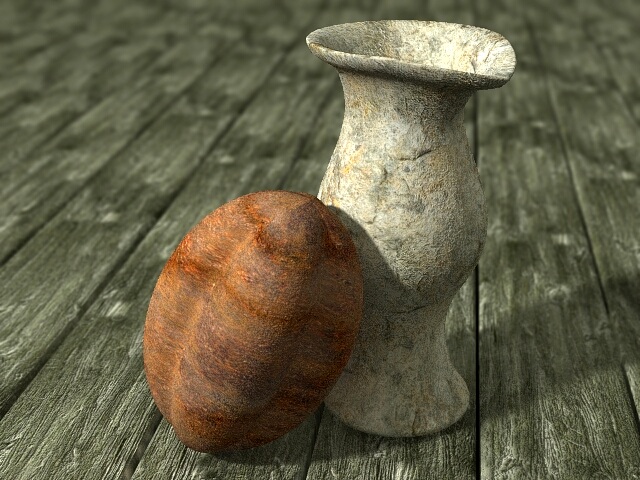
A new small scene. Be sure that I will not boring you
each week with this kind of picture.
Sorry also for Chris Huff which seems to don't like
my work ;).

Fabian.
Post a reply to this message
Attachments:
Download 'the_form.jpg' (126 KB)
Preview of image 'the_form.jpg'
|
|
| |
| |
|
|
|
|
| |
| |
|
|
What I said about the above image doesn't count here. This one is REALLY
good!!

Fabian BRAU wrote:

> A new small scene. Be sure that I will not boring you
> each week with this kind of picture.
> Sorry also for Chris Huff which seems to don't like
> my work ;).
>
> Fabian.
>
>   ------------------------------------------------------------------------
>  [Image]

--
Come visit my web site:-) : http://www.geocities.com/~thomaslake/
Post a reply to this message
|
|
| |
| |
|
|
|
|
| |
| |
|
|
Now all the textures look great.

H²

----------------------------------------------------------------------------
----
Post a reply to this message
|
|
| |
| |
|
|
|
|
| |
| |
|
|
Images like this will not bore me. Who cares what Chris Huff thinks - you
need to do what _you_ like.
"Fabian BRAU" <Fab### [at] umh acbe> wrote in message
news:399B9555.83940003@umh.ac.be...
> A new small scene. Be sure that I will not boring you
> each week with this kind of picture.
> Sorry also for Chris Huff which seems to don't like
> my work ;).
>
> Fabian.
----------------------------------------------------------------------------
----
Post a reply to this message
|
|
| |
| |
|
|
|
|
| |
| |
|
|
In article <399B9555.83940003@umh.ac.be>, Fabian BRAU
<Fab### [at] umhacbe> wrote:

> A new small scene. Be sure that I will not boring you
> each week with this kind of picture.
> Sorry also for Chris Huff which seems to don't like
> my work ;).

You are mistaken, I do like your work. I just don't like the "composed"
look that sometimes comes with image_maps.
It looks like you managed to get rid of it in this image, though. Oh,
and your images are *not* boring. :-)
And BTW, what is that rusty-brown colored egg thing? The texture appears
"pinched" on top, is this intentional, or an artifact of spherical
mapping?

--
Christopher James Huff
Personal: chr### [at] maccom, http://homepage.mac.com/chrishuff/
TAG: chr### [at] tagpovrayorg, http://tag.povray.org/

<><
Post a reply to this message
|
|
| |
| |
|
|
|
|
| |
| |
|
|
great wood this time!

Fabian BRAU wrote:
>
> A new small scene. Be sure that I will not boring you
> each week with this kind of picture.
> Sorry also for Chris Huff which seems to don't like
> my work ;).
>
> Fabian.
>
>   ------------------------------------------------------------------------
>  [Image]
Post a reply to this message
|
|
| |
| |
|
|
|
|
| |
| |
|
|
It doesn't look one bit flat this time.  Nice work.

--
Cheers
Steve              email mailto:ste### [at] zeroppsuklinuxnet

%HAV-A-NICEDAY Error not enough coffee  0 pps.

web http://www.zeropps.uklinux.net/

or  http://start.at/zero-pps

  1:42am  up  1:18,  2 users,  load average: 1.73, 1.22, 1.07
Post a reply to this message
|
|
| |
| |
|
|
|
|
| |
| |
|
|
Thanks a lot :). I have learn many thing by doing this image.
Now I know a bit more concerning the intensive use of image_map :).

Fabian.

Thomas Lake a écrit :
>
> What I said about the above image doesn't count here. This one is REALLY
> good!!
>
> Fabian BRAU wrote:
>
> > A new small scene. Be sure that I will not boring you
> > each week with this kind of picture.
> > Sorry also for Chris Huff which seems to don't like
> > my work ;).
> >
> > Fabian.
> >
> >   ------------------------------------------------------------------------
> >  [Image]
>
> --
> Come visit my web site:-) : http://www.geocities.com/~thomaslake/
Post a reply to this message
|
|
| |
| |
|
|
|
|
| |
| |
|
|
Thanks! There were some problems of scaling and others :).

Fabian.

Halbert a écrit :
>
> Now all the textures look great.
>
> H²
>
> ----------------------------------------------------------------------------
> ----
Post a reply to this message
|
|
| |
| |
|
|
|
|
| |
| |
|
|
> You are mistaken, I do like your work. I just don't like the "composed"
> look that sometimes comes with image_maps.

I understand. Working with image map is more difficult that one could
think and more difficult than _I_ thought :).

> It looks like you managed to get rid of it in this image, though. Oh,
> and your images are *not* boring. :-)

Thanks.

> And BTW, what is that rusty-brown colored egg thing?

This is the form :). This is just a non trivial form to test mapping
on it.
> The texture appears
> "pinched" on top, is this intentional, or an artifact of spherical
> mapping?

Not intensional, this is an (small for me, but visible) artifact due
to cylindrical mapping. Perhaps spherical one could be better.

Fabian.

>
> --
> Christopher James Huff
> Personal: chr### [at] maccom, http://homepage.mac.com/chrishuff/
> TAG: chr### [at] tagpovrayorg, http://tag.povray.org/
>
> <><
Post a reply to this message
|
|
| |
| |
|
|
|
|
| |
| |
|
|
Thanks! Good scaling this time :).

Fabian.

ryan constantine a écrit :
>
> great wood this time!
>
> Fabian BRAU wrote:
> >
> > A new small scene. Be sure that I will not boring you
> > each week with this kind of picture.
> > Sorry also for Chris Huff which seems to don't like
> > my work ;).
> >
> > Fabian.
> >
> >   ------------------------------------------------------------------------
> >  [Image]
Post a reply to this message
|
|
| |
| |
|
|
|
|
| |
| |
|
|
Thanks! As I said above, I learnt much things by doing this image :).

Fabian.

Steve a écrit :
>
> It doesn't look one bit flat this time.  Nice work.
>
> --
> Cheers
> Steve              email mailto:ste### [at] zeroppsuklinuxnet
>
> %HAV-A-NICEDAY Error not enough coffee  0 pps.
>
> web http://www.zeropps.uklinux.net/
>
> or  http://start.at/zero-pps
>
>   1:42am  up  1:18,  2 users,  load average: 1.73, 1.22, 1.07
Post a reply to this message
|
|
| |
| |
|
|
|
|
| |
| |
|
|
In article <399CEC20.10E1CDA7@umh.ac.be>, Fabian BRAU
<Fab### [at] umhacbe> wrote:

> This is the form :). This is just a non trivial form to test mapping
> on it.

But what is it? It looks like a fairly simple isosurface...


> Not intensional, this is an (small for me, but visible) artifact due
> to cylindrical mapping. Perhaps spherical one could be better.

Actually, it looks sort of like the attachment point of a stem on a
gourd(or the opposite end, where the flower was attached). This is why I
asked if it was intentional...

--
Christopher James Huff
Personal: chr### [at] maccom, http://homepage.mac.com/chrishuff/
TAG: chr### [at] tagpovrayorg, http://tag.povray.org/

<><
Post a reply to this message
|
|
| |
| |
|
|
|
|
| |
| |
|
|
Man if i didn't know any better  I would say that was a Photo!

Fabian BRAU wrote:

> A new small scene. Be sure that I will not boring you
> each week with this kind of picture.
> Sorry also for Chris Huff which seems to don't like
> my work ;).
>
> Fabian.
>
>   ------------------------------------------------------------------------
>  [Image]
Post a reply to this message
|
|
| |
| |
|
|
|
|
| |
| |
|
|
Now, if only you could do this with procedural textures!

Grim
Post a reply to this message
|
|
| |
| |
|
|
|
|
| |
| |
|
|
Chris Huff a écrit :
>
> In article <399CEC20.10E1CDA7@umh.ac.be>, Fabian BRAU
> <Fab### [at] umhacbe> wrote:
>
> > This is the form :). This is just a non trivial form to test mapping
> > on it.
>
> But what is it? It looks like a fairly simple isosurface...

Sorry, I didn't understand your question :). This is a mesh.
I have Amapi 4.1 (http://www.tgs.com). This version was given for
free in a french magazine so...
This could certainly be done with isosurface but in this case you
cannot use uv_mapping.

>
> > Not intensional, this is an (small for me, but visible) artifact due
> > to cylindrical mapping. Perhaps spherical one could be better.
>
> Actually, it looks sort of like the attachment point of a stem on a
> gourd(or the opposite end, where the flower was attached). This is why I
> asked if it was intentional...
>
> --
> Christopher James Huff
> Personal: chr### [at] maccom, http://homepage.mac.com/chrishuff/
> TAG: chr### [at] tagpovrayorg, http://tag.povray.org/
>
> <><
Post a reply to this message
|
|
| |
| |
|
|
|
|
| |
| |
|
|
> Now, if only you could do this with procedural textures!
>

Why? :)

Fabian.
Post a reply to this message
|
|
| |
| |
|
|
|
|
| |
| |
|
|
Thanks a lot!

Fabian.

Psychomek a écrit :
>
> Man if i didn't know any better  I would say that was a Photo!
>
> Fabian BRAU wrote:
>
> > A new small scene. Be sure that I will not boring you
> > each week with this kind of picture.
> > Sorry also for Chris Huff which seems to don't like
> > my work ;).
> >
> > Fabian.
> >
> >   ------------------------------------------------------------------------
> >  [Image]
Post a reply to this message
|
|
| |
| |
|
|
|
|
| |
| |
|
|
Fabian BRAU wrote:
>
> > Now, if only you could do this with procedural textures!
> >
>
> Why? :)
>

Because it's more flexible.  You can change scale, turbulence, ...  Of course
it's not very easy to get nice structures, but imagine a more complex shape cut
out of wood, it would be quite complicated to do that with image maps and
uv-mapping.

Christoph

--
Christoph Hormann <chr### [at] gmxde>
Homepage: http://www.schunter.etc.tu-bs.de/~chris/
Post a reply to this message
|
|
| |
| |
|
|
|
|
| |
| |
|
|
> Because it's more flexible.  You can change scale, turbulence, ...  Of
course
> it's not very easy to get nice structures, but imagine a more complex
shape cut
> out of wood, it would be quite complicated to do that with image maps and
> uv-mapping.
>

Precisely, I mean as the Pov help file defines image_maps:

"When all else fails and none of the above pigment pattern types meets your
needs you can use an image_map..."

At one time I took this to heart and avoided them all together. Then I
realized that using an image map to apply things like stenciled lettering,
logos, or even dial type readouts and computer screens is not 'cheating,'
but necessary. Personally, I avoid using them as the primary texture on any
object. Still, when 'ya gotta 'ya gotta.

You have achieved excellent results, which makes me jealous and, therefore,
quick to point this out. :)

Grim
Post a reply to this message
|
|
| |
| |
|
|
|
|
| |
| |
|
|
In article <39a37c10@news.povray.org>, "GrimDude"
<vos### [at] yahoocom> wrote:

> At one time I took this to heart and avoided them all together. Then
> I realized that using an image map to apply things like stenciled
> lettering, logos, or even dial type readouts and computer screens is
> not 'cheating,' but necessary. Personally, I avoid using them as the
> primary texture on any object. Still, when 'ya gotta 'ya gotta.

You can now do text as a texture by using the object pattern in MegaPOV
with a text/CSG object...that and the other uses of the object pattern
get rid of some of these problems. I personally prefer to be able to
modify everything from within the scene files, depending on an external
editor as little as possible.

--
Christopher James Huff
Personal: chr### [at] maccom, http://homepage.mac.com/chrishuff/
TAG: chr### [at] tagpovrayorg, http://tag.povray.org/

<><
Post a reply to this message
|
|
| |
| |
|
|
|
|
| |
| |
|
|
> You can now do text as a texture by using the object pattern in MegaPOV
> with a text/CSG object...that and the other uses of the object pattern
> get rid of some of these problems. I personally prefer to be able to
> modify everything from within the scene files, depending on an external
> editor as little as possible.
>
> --
> Christopher James Huff

Okay. You may have the time to work out a pattern to emulate Saturns
appearance, but I'd use a NASA image. ;) j/k, but really...

In the case of working something like Saturn out, I probably would not have
Saturn as the primary object (and using an image map). If, I did, I would
*have* to use procedural techniques, else sacrifice control of the scene.
Relying on a NASA atmospheric/time lapse image series, for instance, would
not work on a close up, or nap-of-the-surface flyby.

On my P-51D, I used image maps for the insignia, but they were created
within Pov (separate sources). There are over 1000 stencils, warnings,
labels, indicators and plaques (including the cockpit, especially). Most of
the cockpit gauges I created with csg text objects. Nearly everything else
uses image maps created with separate source. I *did* post process a lot of
them, in order to limit color counts (I prefer 2-16 color images), specify
transparency, etc. There is probably a way to use Pov to do even that! :)

Grim
Post a reply to this message
|
|
| |
| |
|
|
|
|
| |
| |
|
|
In article <39a4ce9b@news.povray.org>, "GrimDude"
<vos### [at] yahoocom> wrote:

> Okay. You may have the time to work out a pattern to emulate Saturns
> appearance, but I'd use a NASA image. ;) j/k, but really...
>
> In the case of working something like Saturn out, I probably would
> not have Saturn as the primary object (and using an image map). If, I
> did, I would *have* to use procedural techniques, else sacrifice
> control of the scene.
> Relying on a NASA atmospheric/time lapse image series, for instance,
> would not work on a close up, or nap-of-the-surface flyby.

Saturn itself does not look difficult to texture procedurally...the
rings would be more of a challenge, but still a simple problem if done
with procedural textures. It might be more difficult to get an image_map
right. :-)
Now, a planet like Earth, with oceans, continents, ice caps, and many
different weather formations, would be very difficult to do
procedurally. I still would avoid directly using image_maps though...I
would try the pigment pattern using a grayscale image to map different
procedural textures to different areas.


> On my P-51D, I used image maps for the insignia, but they were
> created within Pov (separate sources).

That sounds like a good way to do things...


> I *did* post process a lot of them, in order to limit color counts (I
> prefer 2-16 color images), specify transparency, etc. There is
> probably a way to use Pov to do even that! :)

Why do you prefer such low color depths?

--
Christopher James Huff
Personal: chr### [at] maccom, http://homepage.mac.com/chrishuff/
TAG: chr### [at] tagpovrayorg, http://tag.povray.org/

<><
Post a reply to this message
|
|
| |
| |
|
|
|
|
| |
| |
|
|
>
> Why do you prefer such low color depths?
>
> --
> Christopher James Huff

Conservation of disk space, and ease of defining transparency. Simply put,
they are more efficient.

Perhaps, I was thinking of Jupiter? One of the outer plants has had a huge
hurricane-like storm brewing for hundreds of years and appearing as an 'eye'
on the surface.

I suspect that Saturn, or Jupiter are just as complex as Earth, close up.
Perhaps more so. Mars would be tamer. :)

Grim
Post a reply to this message
|
|
| |
| |
|
|
|
|
| |
| |
|
|
In article <39a64d17@news.povray.org>, "GrimDude"
<vos### [at] yahoocom> wrote:

> Conservation of disk space, and ease of defining transparency. Simply
> put, they are more efficient.

Well, I have plenty of disk space, so the first one isn't an issue for
me...but how does it help in defining transparency? (note that I have
never used a transparent image_map, and never bothered to figure out how
they are done)


> Perhaps, I was thinking of Jupiter? One of the outer plants has had a
> huge hurricane-like storm brewing for hundreds of years and appearing
> as an 'eye' on the surface.

Yes, that would be Jupiter. :-)
Not impossible to do procedurally, but definitely harder than Saturn.


> I suspect that Saturn, or Jupiter are just as complex as Earth, close up.

Actually, the images I saw were from one of the space probe
fly-by's...it looked like a light grayish-yellow ball with slight
banding. Very simple texture, with little variation in color.
BTW, the images I looked at were from http://www.britannica.com/.
They are here:
http://www.britannica.com/bcom/eb/article/multiple_images/0/0,5716,185791
000+ip,00.html
There are probably better ones out there, maybe at the NASA web site.


> Perhaps more so. Mars would be tamer. :)

Actually, I think Mars would be fourth, after Earth, Jupiter and Venus.
Saturn would be one of the easiest...

--
Christopher James Huff
Personal: chr### [at] maccom, http://homepage.mac.com/chrishuff/
TAG: chr### [at] tagpovrayorg, http://tag.povray.org/

<><
Post a reply to this message
|
|
| |
| |
|
|
|
|
| |
| |
|
|
> me...but how does it help in defining transparency? (note that I have
> never used a transparent image_map, and never bothered to figure out how
> they are done)
>

In a 16color image, say, your background color is listed as palette entry
eight. In your texture statement for that image you specify transmit 8,1 and
you're done. You can't do that with 16Mill colors, that I know of, but even
if you could it would be a relative pain in the rear. With 256 color images
sorting out the colors I want to specify as transparent can be time
consuming and a real carpal nightmare.

I have to make an admission here. Because I lower the color count, I can get
away with much larger image_maps (better application quality) and I do. So,
the disk space I save gets taken in the end.

> Yes, that would be Jupiter. :-)
> Not impossible to do procedurally, but definitely harder than Saturn.
>
>
> > I suspect that Saturn, or Jupiter are just as complex as Earth, close
up.
>
> Actually, the images I saw were from one of the space probe
> fly-by's...it looked like a light grayish-yellow ball with slight
> banding. Very simple texture, with little variation in color.

Examine the approach distance for this probe. :)  At such a distance I would
think Earth was not very complex, either. Yet, both of these planets are
huge. Jupiter, it has been postulated, is composed of ammonium gases and
such. Perhaps, under those dense cloud layers and perpetual storms, there is
a sea of petroleum. Contemplate; what form would life take there? Now,
render that! :)

What I am trying to get at, is that a working texture should be functional
even upon (near) full immersion. You can't 'get involved' with an image_map.
It's two dimensional. :)

I have a book NASA published on images they've obtained over the years.
Fascinating stuff, it includes all the planets (most of their moons), and
speculation on Pluto (binary, or singular snowball?). Come to think of it, I
haven't seen that book in a while! :(

Grim
Post a reply to this message
|
|
| |
| |
|
|
|
|
| |
| |
|
|
In article <39a77a45@news.povray.org>, "GrimDude"
<vos### [at] yahoocom> wrote:

> Examine the approach distance for this probe. :)  At such a distance
> I would think Earth was not very complex, either.

I found some other images on the www.nasa.gov web site which showed a
lot more variation. Actually, they looked a lot like Jupiter, I had to
double-check to make sure I was looking at Saturn. :-)
They may have been false-color and enhanced, though...


> Yet, both of these planets are huge. Jupiter, it has been postulated,
> is composed of ammonium gases and such. Perhaps, under those dense
> cloud layers and perpetual storms, there is a sea of petroleum.

Actually, I don't think either Jupiter or Saturn has liquid hydrocarbons
at the core...I remember it as semi-liquid hydrogen surrounding a layer
of metallic hydrogen.(yes, hydrogen can be metallic under some
conditions...)


> Contemplate; what form would life take there? Now, render that! :)

Probably would have to use the blob object or some isosurface... :-)


> What I am trying to get at, is that a working texture should be
> functional even upon (near) full immersion. You can't 'get involved'
> with an image_map. It's two dimensional. :)

I have an idea for a good image: a gas giant probe which floats in the
atmosphere, above the storms.


> I have a book NASA published on images they've obtained over the years.
> Fascinating stuff, it includes all the planets (most of their moons),
> and speculation on Pluto (binary, or singular snowball?). Come to
> think of it, I haven't seen that book in a while! :(

Sounds pretty old...Pluto is known to have a nitrogen-methane atmosphere
and a moon half it's size(Charon).

--
Christopher James Huff
Personal: chr### [at] maccom, http://homepage.mac.com/chrishuff/
TAG: chr### [at] tagpovrayorg, http://tag.povray.org/

<><
Post a reply to this message
|
|
| |
| |
|
|
|
|
| |
| |
|
|
"Chris Huff" <chr### [at] maccom> wrote in message
news:chrishuff-D0931E.19194025082000@news.povray.org...
|
| Actually, I think Mars would be fourth, after Earth, Jupiter and Venus.
| Saturn would be one of the easiest...

Don't forget that Uranus is perhaps the easiest of all, having virtually no
features.  A plain ordinary pigment { rgb <.7,.9,.85> }  would probably
suffice (I didn't check real color data, of course).

The thing that gets in the way of using image maps alone is the changing
features, cloud covered planets and moons can't be animated in compressed
time if using only a image map.  Makes procedural texturing a necessity
then.  Even Jupiter's Moon Io is changing constantly and that's all surface
there.
But you just can't beat image maps for simplicity and guaranteed good looks,
IMHO.

Bob
Post a reply to this message
|
|
| |
| |
|
|
|
|
| |
| |
|
|
> Sounds pretty old...Pluto is known to have a nitrogen-methane atmosphere
> and a moon half it's size(Charon).
>

That would be my memory (old). Nitrogen-methane sounds intriguing.

Grim
Post a reply to this message
|
|
| |
| |
|
|
|
|
| |