|
|
|
|
|
|
| |
| |
|
|
|
|
| |
| |
|
|
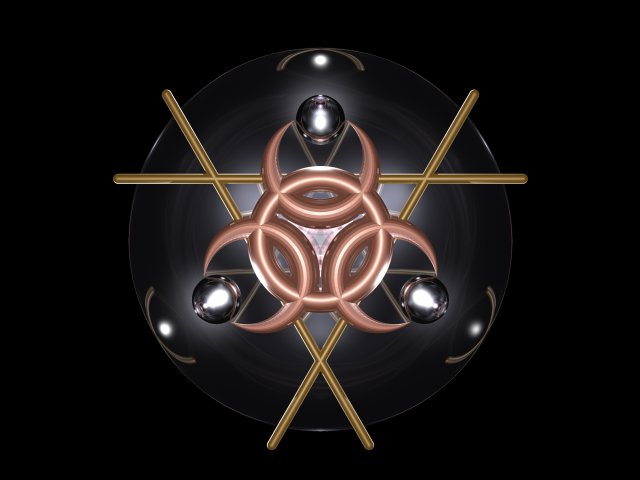
And it's not even AWSOME, but fine enough for me, what do you think :
Comments, Hurrahs, Criticisms are warmly welcome (I'd like to improve)!

Philippe
Post a reply to this message
Attachments:
Download 'This is not a Rollex.jpg' (30 KB)
Preview of image 'This is not a Rollex.jpg'
|
|
| |
| |
|
|
|
|
| |
| |
|
|
Nice, surreal, and something I'm hoping to accomplish someday :)
I'd like to see the source.
-Ian
P.S. Keep up the good work ;)
Ph Gibone <Ph.### [at] wanadoo fr> wrote in message
news:37225fbc.0@news.povray.org...
> And it's not even AWSOME, but fine enough for me, what do you think :
> Comments, Hurrahs, Criticisms are warmly welcome (I'd like to improve)!
>
> Philippe
>
>
>
Post a reply to this message
|
|
| |
| |
|
|
|
|
| |
| |
|
|
Thanks for your opinion.
I post the source in moray.binaries, if you want it in POV format, just tell
me.

Philippe
Ian Burgmyer a écrit dans le message <372261c7.0@news.povray.org>...
>Nice, surreal, and something I'm hoping to accomplish someday :)
>
>I'd like to see the source.
>
>-Ian
>
>P.S.  Keep up the good work ;)
>
>Ph Gibone <Ph.### [at] wanadoofr> wrote in message
>news:37225fbc.0@news.povray.org...
>> And it's not even AWSOME, but fine enough for me, what do you think :
>> Comments, Hurrahs, Criticisms are warmly welcome (I'd like to improve)!
>>
>> Philippe
>>
>>
>>
>
>
Post a reply to this message
|
|
| |
| |
|
|
|
|
| |
| |
|
|
Ph Gibone wrote:
>
> And it's not even AWSOME, but fine enough for me, what do you think :
> Comments, Hurrahs, Criticisms are warmly welcome (I'd like to improve)!
>
> Philippe

  Ok so it definitely is not a Rollex (tm) brand watch. Awesom is
something that will create a feeling of awe in someone. I'm not
sure I am feeling awe right now but I do like the symetry of the
object.
 I am left with one question though. If it is not a Rollex (tm)
watch, and for that matter it doesn't even look like any kind of
watch from what I can tell, just what exactly, is it ?

--
Ken Tyler

mailto://tylereng@pacbell.net
Post a reply to this message
|
|
| |
| |
|
|
|
|
| |
| |
|
|
>  I am left with one question though. If it is not a Rollex (tm)
> watch, and for that matter it doesn't even look like any kind of
> watch from what I can tell, just what exactly, is it ?

well, i quite like it, and it looks like the biohazard symbol to me.

i'm a bit twisted though.

damn the torpedos, full steam ahead!
Post a reply to this message
|
|
| |
| |
|
|
|
|
| |
| |
|
|
> I am left with one question though. If it is not a Rollex (tm)
>watch, and for that matter it doesn't even look like any kind of
>watch from what I can tell, just what exactly, is it ?


It's some kind of a universal clock giving the exact time (4 hours 0 minutes
and 40 seconds) in some place, you just have to find out at which place it
is this exact (I insist the accuracy is better than 0.0000000001 s) time
when you look at it.

Philippe
Post a reply to this message
|
|
| |
| |
|
|
|
|
| |
| |
|
|
> It's some kind of a universal clock giving the exact time (4 hours 0
minutes
> and 40 seconds) in some place, you just have to find out at which place it
> is this exact (I insist the accuracy is better than 0.0000000001 s) time
> when you look at it

If you say so.

btw, one small comment, the raw mesh you have used does not look right next
to a perfectly smooth torus, try re modellling the "horn" sape in sPatch, it
should produce a much smoother finish.

Rick
Post a reply to this message
|
|
| |
| |
|
|
|
|
| |
| |
|
|
>
>btw, one small comment, the raw mesh you have used does not look right next
>to a perfectly smooth torus, try re modellling the "horn" sape in sPatch,
it
>should produce a much smoother finish.
>
>Rick
>

You're right, and thanks for the idea, in fact this horn is a raw file
output by a program of mine (from equation to raw), and then imported into
Moray, and, as I have noticed the same defect I had the intention to make it
again after transforming the raw file into UDO (Thanks to 3DWin), Maybe i
will repost the result if it is worth it.

Anyway sPatch is not fitted for such mathematical shapes

Philippe
Post a reply to this message
|
|
| |
| |
|
|
|
|
| |
| |
|
|
>
>You're right, and thanks for the idea, in fact this horn is a raw file
>output by a program of mine (from equation to raw), and then imported into
>Moray, and, as I have noticed the same defect I had the intention to make
it
>again after transforming the raw file into UDO (Thanks to 3DWin), Maybe i
>will repost the result if it is worth it.


What a relief! I've been TRYING to figure out how to do that horn shape with
CSG - glad to see I'm not (overly) dense after all :)
Post a reply to this message
|
|
| |
| |
|
|
|
|
| |
| |
|
|
First time I relieve somebody : very good feeling !

Philippe
Charles Krause a écrit dans le message <372345c2.0@news.povray.org>...
>>
>What a relief! I've been TRYING to figure out how to do that horn shape
with
>CSG - glad to see I'm not (overly) dense after all :)
>
>
>
Post a reply to this message
|
|
| |
| |
|
|
|
|
| |
| |
|
|
Very nice even though I don't know how to call it ( I doubt you do
either). I find the metallic texture very impressive.

Fabien Hénon

Ph Gibone wrote:

> And it's not even AWSOME, but fine enough for me, what do you think :
> Comments, Hurrahs, Criticisms are warmly welcome (I'd like to improve)!
>
> Philippe
>
>  [Image]
Post a reply to this message
|
|
| |
| |
|
|
|
|
| |
| |
|
|
Fabien Hénon a écrit dans le message <37238D92.69BA6802@club-internet.fr>...
>Very nice even though I don't know how to call it ( I doubt you do
>either).
I know many things that it is not, may be it is some kind of galactic clock,
speaking with the heart of the galaxy to figure out the right time (which is
NOW).

>I find the metallic texture very impressive.
If you are speaking of the reddish one here is the source (very simple
texture in fact)


#declare CuivrePur =
   material  // CuivrePur


      texture


         pigment
         {
            color rgb <0.864567, 0.468733, 0.364567>
         }
         finish
         {
            ambient 0.280567
            diffuse 0.7
            brilliance 6.0
            phong 0.75
            phong_size 43.743333
            specular 0.41
            reflection 0.2733
         }
      }
   }

I use it very often (in "I killed my plumber" for instance)

Philippe
Post a reply to this message
|
|
| |
| |
|
|
|
|
| |
| |
|
|
Kewl.  Put some mist in the teardrop/bolb thingies.

Cheers
Steve

Ph Gibone wrote:
>
> And it's not even AWSOME, but fine enough for me, what do you think :
> Comments, Hurrahs, Criticisms are warmly welcome (I'd like to improve)!
>
> Philippe
>
>  [Image]
Post a reply to this message
|
|
| |
| |
|
|
|
|
| |
| |
|
|
Hi Steve,
Thanks for giving your advice, but I have some problems with your answer :

1) +ACo-Kewl+ACo- is not in my dictionnary, do you have any synonym ?

2) There is no teardrop shape, no blob but many thingies in this scene so
which one do you mean the big sphere in the background ? I will try +ACE-

Philippe


Steve a +AOk-crit dans le message +ADw-37243143.DEB5AE1B+AEA-ndirect.co.uk+AD4-...
+AD4-Kewl.  Put some mist in the teardrop/bolb thingies.
+AD4-
Post a reply to this message
|
|
| |
| |
|
|
|
|
| |
| |
|
|
Hmm.. I have been trying to make a horn for some while, without any success at
all. i'll make some scans of the object I'm trying to create, and I'd like to
know a bit more of the procedure you used when you made yours.(yep, I know it's
a program, but I still want to know more:-)

As for the image, It looks good, although I have noo idea about what it is...
Ok, a clock of sorts, with precision.. ok, how did you say I was to use it?
(what time is it in the image?)


Ph Gibone wrote:
>
> And it's not even AWSOME, but fine enough for me, what do you think :
> Comments, Hurrahs, Criticisms are warmly welcome (I'd like to improve)!
>
> Philippe
>
>  [Image]

--
//Spider
        [ spi### [at] bahnhofse ]-[ http://www.bahnhof.se/~spider/ ]
What I can do and what I could do, I just don't know anymore
                "Marian"
        By: "Sisters Of Mercy"
Post a reply to this message
|
|
| |
| |
|
|
|
|
| |
| |
|
|
Spider wrote:
>
> Hmm.. I have been trying to make a horn for some while, without any success at
> all. i'll make some scans of the object I'm trying to create, and I'd like to
> know a bit more of the procedure you used when you made yours.(yep, I know it's
> a program, but I still want to know more:-)

 The macro that Gilles offers for extruding along a path can easily
produce horn shaped objects.

http://www.mediaport.net/Artichaud/Tran/sources/gtsrcee.htm

--
Ken Tyler

mailto://tylereng@pacbell.net
Post a reply to this message
|
|
| |
| |
|
|
|
|
| |
| |
|
|
thanx.

i'm looking at it now.


Ken wrote:
>
> Spider wrote:
> >
> > Hmm.. I have been trying to make a horn for some while, without any success at
> > all. i'll make some scans of the object I'm trying to create, and I'd like to
> > know a bit more of the procedure you used when you made yours.(yep, I know it's
> > a program, but I still want to know more:-)
>
>  The macro that Gilles offers for extruding along a path can easily
> produce horn shaped objects.
>
> http://www.mediaport.net/Artichaud/Tran/sources/gtsrcee.htm
>
> --
> Ken Tyler
>
> mailto://tylereng@pacbell.net

--
//Spider
        [ spi### [at] bahnhofse ]-[ http://www.bahnhof.se/~spider/ ]
What I can do and what I could do, I just don't know anymore
                "Marian"
        By: "Sisters Of Mercy"
Post a reply to this message
|
|
| |
| |
|
|
|
|
| |
| |
|
|
>Hmm.. I have been trying to make a horn for some while, without any success
at
>all. i'll make some scans of the object I'm trying to create, and I'd like
to
>know a bit more of the procedure you used when you made yours.(yep, I know
it's
>a program, but I still want to know more:-)

I saw the answer by Ken, and he's right (sorry for this pleonasm), but
personaly, I prefer Math (don't call me perverted !). My opinion (very
personal and not a dogma) is : if you can do it with pure math do it so, if
you're stuck, try something else (of course it is depending on the math
skills of the current speaker).

Of course you can melt the two ways and use your math to create the two
pathes used in the Gilles Macro)

So back to math : the Horn is made of a shrinking circle circling around a
fixed point and
here is the equation :

x = a*cos(u)+b*cos(c*u)*cos(u)*cos(v)
y = a*sin(u)+b*cos(c*u)*sin(u)*cos(v)
z = b*cos(c*u)*sin(v)

(of course you can switch x, y and z, here, the big circle is in the xy
plane)

Where a = 10 (Radius of the big circle), b = 3 (radius of the little
rotating circle), c = .6 (this one is a little more complicated to
understand, it measures how fast the little circle vanishes, see below)

(u and v in degrees here)
u in [0, 150] (this ending value gives you the angle at which the small
circle vanishes, it it strongly correlated with the c parameter because c =
90 / ending angle)
v in [0, 360]

What it particularly interesting with these maths is that you know what are
the parameters for, and it's very easy to modify them, if you want a very
thin horn just decrease b, if you want the horn to vanish after a half
circle put ending angle = 180 (Half circle) and c = 90/180 = 0.5


>As for the image, It looks good, although I have noo idea about what it
is...
>Ok, a clock of sorts, with precision.. ok, how did you say I was to use it?
>(what time is it in the image?)


4 h 0 m 40 s, or may be 8 h 0 m 20 s

Philippe
Post a reply to this message
|
|
| |
| |
|
|
|
|
| |
| |
|
|
Thank You!!!!!!!    ;-]

KB-

Ph Gibone wrote:

> >Hmm.. I have been trying to make a horn for some while, without any success
> at
> >all. i'll make some scans of the object I'm trying to create, and I'd like
> to
> >know a bit more of the procedure you used when you made yours.(yep, I know
> it's
> >a program, but I still want to know more:-)
>
> I saw the answer by Ken, and he's right (sorry for this pleonasm), but
> personaly, I prefer Math (don't call me perverted !). My opinion (very
> personal and not a dogma) is : if you can do it with pure math do it so, if
> you're stuck, try something else (of course it is depending on the math
> skills of the current speaker).
>
> Of course you can melt the two ways and use your math to create the two
> pathes used in the Gilles Macro)
>
> So back to math : the Horn is made of a shrinking circle circling around a
> fixed point and
> here is the equation :
>
> x = a*cos(u)+b*cos(c*u)*cos(u)*cos(v)
> y = a*sin(u)+b*cos(c*u)*sin(u)*cos(v)
> z = b*cos(c*u)*sin(v)
>
> (of course you can switch x, y and z, here, the big circle is in the xy
> plane)
>
> Where a = 10 (Radius of the big circle), b = 3 (radius of the little
> rotating circle), c = .6 (this one is a little more complicated to
> understand, it measures how fast the little circle vanishes, see below)
>
> (u and v in degrees here)
> u in [0, 150] (this ending value gives you the angle at which the small
> circle vanishes, it it strongly correlated with the c parameter because c =
> 90 / ending angle)
> v in [0, 360]
>
> What it particularly interesting with these maths is that you know what are
> the parameters for, and it's very easy to modify them, if you want a very
> thin horn just decrease b, if you want the horn to vanish after a half
> circle put ending angle = 180 (Half circle) and c = 90/180 = 0.5
>
> >As for the image, It looks good, although I have noo idea about what it
> is...
> >Ok, a clock of sorts, with precision.. ok, how did you say I was to use it?
> >(what time is it in the image?)
>
> 4 h 0 m 40 s, or may be 8 h 0 m 20 s
>
> Philippe
Post a reply to this message
|
|
| |
| |
|
|
|
|
| |
| |
|
|
Thanks for the reference Ken, but my spline macro may be overkill for that. Also, the
macro doesn't modify the size of the extruded shape (no pointy end), and splines with
that kind of perfect mathematical shape are hard to figure out. Perhaps a little
"connect-the-dot" macro would do (not putting this in scenes-files because it's
really too small).  It's not perfect but you get the idea.
Gilles
#include "colors.inc"
camera{location  <1.0, 5, -30.0> direction 1.5*z right 4/3*x  look_at   <0.0, 5,
0.0>}
light_source{<-30, 30, -30> color Cyan} light_source{<30, 30, -30> color White*2}
#macro mHorn(hradius,hsize,hangle,n)
union{
#local lseg=pi*hsize/n;
#local i=1;
#local r1=hradius;
#local P1=<0,0,0>;
#local P2=<lseg,0,0>;
#while (i<=n)
        #local r2=hradius*(n-i)/n;
        cone{P1,r1,P2,r2} sphere{P1,r1}
        cone{P1,r1,P2,r2 scale <-1,1,1>} sphere{P1,r1 scale <-1,1,1>}
        #local P1=P2;
        #local P2=P1+lseg*(vnormalize(vrotate(P1,z*hangle*i/n)));
        #local r1=r2;
#local i=i+1;
#end
}
#end

object{mHorn(2,5,80,200) texture{pigment{rgb<1,0.7,0.3>} finish{metallic brilliance 5
ambient 0.01 phong 1}}}
background{White}


Ken wrote:

> Spider wrote:
> >
> > Hmm.. I have been trying to make a horn for some while, without any success at
> > all. i'll make some scans of the object I'm trying to create, and I'd like to
> > know a bit more of the procedure you used when you made yours.(yep, I know it's
> > a program, but I still want to know more:-)
>
>  The macro that Gilles offers for extruding along a path can easily
> produce horn shaped objects.
>
> http://www.mediaport.net/Artichaud/Tran/sources/gtsrcee.htm
>
> --
> Ken Tyler
>
> mailto://tylereng@pacbell.net
Post a reply to this message
|
|
| |
| |
|
|
|
|
| |
| |
|
|
Gilles Tran wrote:
>
> Thanks for the reference Ken, but my spline macro may be overkill for that. Also,
the
> macro doesn't modify the size of the extruded shape (no pointy end), and splines
with
> that kind of perfect mathematical shape are hard to figure out. Perhaps a little
> "connect-the-dot" macro would do (not putting this in scenes-files because it's
> really too small).  It's not perfect but you get the idea.
> Gilles

 I somehow had the impression that your macro could change shape as it
progressed along it's path. From what you say I now get the impression
that this is not so. Sorry for my lack of understanding and I will give
your macro more study so as to acertain it's true functionality before
again refering it to others for a given task.

 Regarding as to whether the code should have been placed in this group
or the scene files group that is where I am forced to disagree. To you
it may seem like a trivial piece of Pov script but to others it may seem
like magic. Many learn by example but where that example is hidden or
obscured there is no knowlege to be gained. What is gained from writing
a book but refusing to publish it ? What good is a book of beginnings
with no one to admire it ?

 Who will be able to find it here in three months time ?
 Who will be able to find it in the scene-files group in three months time ?

 I think that answer to both questions is obvious.
 No one and everyone respectively with no disrespect intended.


--
Ken Tyler

mailto://tylereng@pacbell.net
Post a reply to this message
|
|
| |
| |
|
|
|
|
| |
| |
|
|
Ken wrote:

>  I somehow had the impression that your macro could change shape as it
> progressed along it's path. From what you say I now get the impression
> that this is not so. Sorry for my lack of understanding and I will give
> your macro more study so as to acertain it's true functionality before
> again refering it to others for a given task.

You had this impression because the very first version I posted did change the shape
along
the path with some fancy function (not a real bug but the ghost of a "specialized"
version). So that was not neither a figment of your imagination not a lack of
understanding
from your part. Daniele Vazarro's "striscia" macro looks like it can do the trick
(http://members.xoom.com/dvarrazzo/ipov.htm).

>  Regarding as to whether the code should have been placed in this group
> or the scene files group that is where I am forced to disagree. To you
> it may seem like a trivial piece of Pov script but to others it may seem
> like magic.

Hehe. It's just that I saw it more as a help for Spider than as the Incredibly Useful
Macro
That's Here to Stay. Ok, I'll post this little widget of a horn making macro in...
what's
best ? text.scene-files or binaries.utilities ?

G.
Post a reply to this message
|
|
| |
| |
|
|
|
|
| |
| |
|
|
Gilles Tran wrote:
>
> Ken wrote:
>
> >  I somehow had the impression that your macro could change shape as it
> > progressed along it's path. From what you say I now get the impression
> > that this is not so. Sorry for my lack of understanding and I will give
> > your macro more study so as to acertain it's true functionality before
> > again refering it to others for a given task.
>
> You had this impression because the very first version I posted did change the shape
along
> the path with some fancy function (not a real bug but the ghost of a "specialized"
> version). So that was not neither a figment of your imagination not a lack of
understanding
> from your part. Daniele Vazarro's "striscia" macro looks like it can do the trick
> (http://members.xoom.com/dvarrazzo/ipov.htm).

I love it when I am right and wrong at the same time :)

> Hehe. It's just that I saw it more as a help for Spider than as the
> Incredibly Useful Macro That's Here to Stay. Ok, I'll post this little
> widget of a horn making macro in... what's best ? text.scene-files or
binaries.utilities ?
>
> G.

 I know it's not that big a deal but hey when you are a new user or an
advanced user with missing or damaged brain cells these little things
help.

 povray.text.scene-files would be appropriate. If it is a large file or
zipped for space then the binaries would be more appropriate.

 Thank you for your concern.

--
Ken Tyler

mailto://tylereng@pacbell.net
Post a reply to this message
|
|
| |
| |
|
|
|
|
| |
| |
|
|
I need to step in and back-up Ken here. What brought me to this group to begin with
was
this very thing - exrusions and splines - several months later I get the answer I'm
looking
for ( not the default "get a modeler like moray or spatch" ) , however it is tossed
rather
casually into a message buried in a thread that know one in 2 weeks time will remeber
that
it is even here. This I stumbled upon quite by accident  - but I wonder how many
thousands
that may look and lurk here between now and forever will not benefit from other's hard
work
and discoveries if that data is not stored in the places that claim to have that data
stored there - imagine your O/S putting files wherever it felt like and suddenly you
need
to find a file somewhere under some drive in some folder or sub-folder or sub-sub
folder on
your 8+ gig hard drive.    ;-]

KB-

Ken wrote:

> Gilles Tran wrote:
> >
> > Thanks for the reference Ken, but my spline macro may be overkill for that. Also,
the
> > macro doesn't modify the size of the extruded shape (no pointy end), and splines
with
> > that kind of perfect mathematical shape are hard to figure out. Perhaps a little
> > "connect-the-dot" macro would do (not putting this in scenes-files because it's
> > really too small).  It's not perfect but you get the idea.
> > Gilles
>
>  I somehow had the impression that your macro could change shape as it
> progressed along it's path. From what you say I now get the impression
> that this is not so. Sorry for my lack of understanding and I will give
> your macro more study so as to acertain it's true functionality before
> again refering it to others for a given task.
>
>  Regarding as to whether the code should have been placed in this group
> or the scene files group that is where I am forced to disagree. To you
> it may seem like a trivial piece of Pov script but to others it may seem
> like magic. Many learn by example but where that example is hidden or
> obscured there is no knowlege to be gained. What is gained from writing
> a book but refusing to publish it ? What good is a book of beginnings
> with no one to admire it ?
>
>  Who will be able to find it here in three months time ?
>  Who will be able to find it in the scene-files group in three months time ?
>
>  I think that answer to both questions is obvious.
>  No one and everyone respectively with no disrespect intended.
>
> --
> Ken Tyler
>
> mailto://tylereng@pacbell.net
Post a reply to this message
|
|
| |
| |
|
|
|
|
| |
| |
|
|
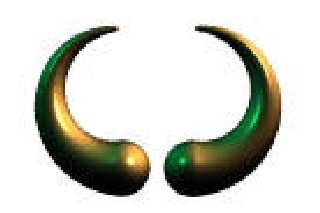
I surrendered. The Horn macro is in povray.text.scene-files file now.
Works better than the previous version of 2 hours ago.
G.


bankspad wrote:

> I need to step in and back-up Ken here. What brought me to this group to begin with
was
> this very thing - exrusions and splines - several months later I get the answer I'm
looking
> for ( not the default "get a modeler like moray or spatch" ) , however it is tossed
rather
> casually into a message buried in a thread that know one in 2 weeks time will
remeber that
> it is even here. This I stumbled upon quite by accident  - but I wonder how many
thousands
> that may look and lurk here between now and forever will not benefit from other's
hard work
> and discoveries if that data is not stored in the places that claim to have that
data
> stored there - imagine your O/S putting files wherever it felt like and suddenly you
need
> to find a file somewhere under some drive in some folder or sub-folder or sub-sub
folder on
> your 8+ gig hard drive.    ;-]
>
> KB-
>
Post a reply to this message
Attachments:
Download 'horn.jpg' (4 KB)
Preview of image 'horn.jpg'
|
|
| |
| |
|
|
|
|
| |
| |
|
|
You just proved that I really am interested in math. at least in it's
"practical" form. I'm not too sure that I am grateful. (I have loathed the way
we learn it here, and I still do.)

Well, I see your point(some fiddling in pascal made the "trick" :-) thankyou.


Ph Gibone wrote:
>
> >Hmm.. I have been trying to make a horn for some while, without any success
> at
> >all. i'll make some scans of the object I'm trying to create, and I'd like
> to
> >know a bit more of the procedure you used when you made yours.(yep, I know
> it's
> >a program, but I still want to know more:-)
>
> I saw the answer by Ken, and he's right (sorry for this pleonasm), but
> personaly, I prefer Math (don't call me perverted !). My opinion (very
> personal and not a dogma) is : if you can do it with pure math do it so, if
> you're stuck, try something else (of course it is depending on the math
> skills of the current speaker).
>
> Of course you can melt the two ways and use your math to create the two
> pathes used in the Gilles Macro)
>
> So back to math : the Horn is made of a shrinking circle circling around a
> fixed point and
> here is the equation :
>
> x = a*cos(u)+b*cos(c*u)*cos(u)*cos(v)
> y = a*sin(u)+b*cos(c*u)*sin(u)*cos(v)
> z = b*cos(c*u)*sin(v)
>
> (of course you can switch x, y and z, here, the big circle is in the xy
> plane)
>
> Where a = 10 (Radius of the big circle), b = 3 (radius of the little
> rotating circle), c = .6 (this one is a little more complicated to
> understand, it measures how fast the little circle vanishes, see below)
>
> (u and v in degrees here)
> u in [0, 150] (this ending value gives you the angle at which the small
> circle vanishes, it it strongly correlated with the c parameter because c =
> 90 / ending angle)
> v in [0, 360]
>
> What it particularly interesting with these maths is that you know what are
> the parameters for, and it's very easy to modify them, if you want a very
> thin horn just decrease b, if you want the horn to vanish after a half
> circle put ending angle = 180 (Half circle) and c = 90/180 = 0.5
>
> >As for the image, It looks good, although I have noo idea about what it
> is...
> >Ok, a clock of sorts, with precision.. ok, how did you say I was to use it?
> >(what time is it in the image?)
>
> 4 h 0 m 40 s, or may be 8 h 0 m 20 s
>
> Philippe

--
//Spider
        [ spi### [at] bahnhofse ]-[ http://www.bahnhof.se/~spider/ ]
What I can do and what I could do, I just don't know anymore
                "Marian"
        By: "Sisters Of Mercy"
Post a reply to this message
|
|
| |
| |
|
|
|
|
| |
| |
|
|
Thank you.    ;-]

KB-

Gilles Tran wrote:

> I surrendered. The Horn macro is in povray.text.scene-files file now.
> Works better than the previous version of 2 hours ago.
> G.
>
> bankspad wrote:
>
> > I need to step in and back-up Ken here. What brought me to this group to begin
with was
> > this very thing - exrusions and splines - several months later I get the answer
I'm looking
> > for ( not the default "get a modeler like moray or spatch" ) , however it is
tossed rather
> > casually into a message buried in a thread that know one in 2 weeks time will
remeber that
> > it is even here. This I stumbled upon quite by accident  - but I wonder how many
thousands
> > that may look and lurk here between now and forever will not benefit from other's
hard work
> > and discoveries if that data is not stored in the places that claim to have that
data
> > stored there - imagine your O/S putting files wherever it felt like and suddenly
you need
> > to find a file somewhere under some drive in some folder or sub-folder or sub-sub
folder on
> > your 8+ gig hard drive.    ;-]
> >
> > KB-
> >
>
>   ------------------------------------------------------------------------
>  [Image]
Post a reply to this message
|
|
| |
| |
|
|
|
|
| |
| |
|
|
Hey, are you speaking about windows... no, that dumps all the files with very
obscure filenames in one big DIRECTORY, so that can't be it... hmm, Linux? Well,
I must say that all the filenames are very describing, but where are they when
the newbie needs them? (hehe) Well........ I can say, i've learned how to use
the search functions now :-)


bankspad wrote:
>
> I need to step in and back-up Ken here. What brought me to this group to begin with
was
> this very thing - exrusions and splines - several months later I get the answer I'm
looking
> for ( not the default "get a modeler like moray or spatch" ) , however it is tossed
rather
> casually into a message buried in a thread that know one in 2 weeks time will
remeber that
> it is even here. This I stumbled upon quite by accident  - but I wonder how many
thousands
> that may look and lurk here between now and forever will not benefit from other's
hard work
> and discoveries if that data is not stored in the places that claim to have that
data
> stored there - imagine your O/S putting files wherever it felt like and suddenly you
need
> to find a file somewhere under some drive in some folder or sub-folder or sub-sub
folder on
> your 8+ gig hard drive.    ;-]
>
> KB-
>
> Ken wrote:
>
> > Gilles Tran wrote:
> > >
> > > Thanks for the reference Ken, but my spline macro may be overkill for that.
Also, the
> > > macro doesn't modify the size of the extruded shape (no pointy end), and splines
with
> > > that kind of perfect mathematical shape are hard to figure out. Perhaps a little
> > > "connect-the-dot" macro would do (not putting this in scenes-files because it's
> > > really too small).  It's not perfect but you get the idea.
> > > Gilles
> >
> >  I somehow had the impression that your macro could change shape as it
> > progressed along it's path. From what you say I now get the impression
> > that this is not so. Sorry for my lack of understanding and I will give
> > your macro more study so as to acertain it's true functionality before
> > again refering it to others for a given task.
> >
> >  Regarding as to whether the code should have been placed in this group
> > or the scene files group that is where I am forced to disagree. To you
> > it may seem like a trivial piece of Pov script but to others it may seem
> > like magic. Many learn by example but where that example is hidden or
> > obscured there is no knowlege to be gained. What is gained from writing
> > a book but refusing to publish it ? What good is a book of beginnings
> > with no one to admire it ?
> >
> >  Who will be able to find it here in three months time ?
> >  Who will be able to find it in the scene-files group in three months time ?
> >
> >  I think that answer to both questions is obvious.
> >  No one and everyone respectively with no disrespect intended.
> >
> > --
> > Ken Tyler
> >
> > mailto://tylereng@pacbell.net

--
//Spider
        [ spi### [at] bahnhofse ]-[ http://www.bahnhof.se/~spider/ ]
What I can do and what I could do, I just don't know anymore
                "Marian"
        By: "Sisters Of Mercy"
Post a reply to this message
|
|
| |
| |
|
|
|
|
| |
|
|