 |
|
|
|
|
|
| |
| |
|
|
|
|
| |
| |
|
|
On 5/15/2017 5:20 PM, Bald Eagle wrote:
> http://planetpixelemporium.com/planets.html
>
> Wowza. :)
> Just the sort of thing I was looking for!
>
:)
That's a good site.
I've just noticed a slight discrepancy between image maps from different
sites. A slight discrepancy between the Height : Width ratio. I was
getting ghosting when using layered textures.
--
Regards
Stephen
Post a reply to this message
|
|
| |
| |
|
|
|
|
| |
| |
|
|
On 5/15/2017 6:07 PM, Bald Eagle wrote:
> Stephen <mca### [at] aol com> wrote:
>
>> That would be good. But I am sure others would like to see it as well.
>
> I'll email you, 'cause I know you're over there chomping at the bit, biting your
> nails on the edge of your seat ;)
>
I am, I am. :)
I keep coming back to this subject year after year. The only thing I've
learned. Is that, the mind's eye is better than any camera. :)
> I'll re-render at a smaller size or maybe a slightly sparser frame number and
> post here.
>
> It was a busy weekend :)
>
That'll give you some time to put your feet up. ;)
--
Regards
Stephen com> wrote:
>
>> That would be good. But I am sure others would like to see it as well.
>
> I'll email you, 'cause I know you're over there chomping at the bit, biting your
> nails on the edge of your seat ;)
>
I am, I am. :)
I keep coming back to this subject year after year. The only thing I've
learned. Is that, the mind's eye is better than any camera. :)
> I'll re-render at a smaller size or maybe a slightly sparser frame number and
> post here.
>
> It was a busy weekend :)
>
That'll give you some time to put your feet up. ;)
--
Regards
Stephen
Post a reply to this message
|
|
| |
| |
|
|
|
|
| |
| |
|
|
"Kenneth" <kdw### [at] gmailcom> wrote:
> "Bald Eagle" <cre### [at] netscapenet> wrote:
>
> >
> > I also have some formulas for scaling something so that it's always at least a
> > pixel wide. I may add that so the apparent size never drops below a pixel.
> >
>
> That sounds interesting; I've never tried anything like that. If it's not too
> complicated to explain, *I'm* all ears. ;-)
So, define a Location and a LookAt variable for use in your camera definition
(and an optional Angle), and then plug those into this:
// Check if user-defined camera angle is used, otherwise set to default
#ifndef (Angle)
#local Angle = 67.38;
#end
#local M = (0.5*Aspect)/tan(radians(Angle/2));
#local Dist1 = vlength (ObjectLocation-Location);
#local ZA1 = Dist1/M;
#local Rad1 = ((ZA1/image_width)*Aspect);
A cylinder with Rad1 ought to give you a visible object at any distance.
Post a reply to this message
|
|
| |
| |
|
|
|
|
| |
| |
|
|
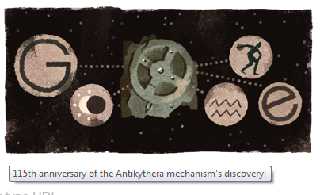
Ha! And today on G**gle:
Post a reply to this message
Attachments:
Download 'antikythera.png' (53 KB)
Preview of image 'antikythera.png'
|
|
| |
| |
|
|
|
|
| |
| |
|
|
On 5/12/2017 1:10 PM, Bald Eagle wrote:
>
> Here's the animation of the solar system over one Earth year.
>
> I just worked out a fast and efficient approximation for apsidal (orbital)
> precession last night. (not that it will make any noticeable effect)
>
> Still need to look up a bunch of things and do some further editing on the code
> before it gets fleshed out.
>
> Not sure how I ought to place the planets - so I just started at full syzygy.
> I may trace out the orbits in a future version.
>
I just noticed this in p.u.utilities.
Drat! I cannot find p.u.utilities on the web view.
So I'll copy the text here. Posted by Clipka on 2nd Jan 2017
Hi folks,
looks like POV-Ray 3.7 has grown a 2nd-level patch by now:
https://github.com/kwan3217/KwanPov
KwanPOV is a derivative of UberPOV. I don't understand /exactly/ what
this guy is doing, but I have a hunch that anyone dabbling with
rendering stellar bodies of the solar system might be interested in
having a closer look at it.
--
Regards
Stephen
Post a reply to this message
|
|
| |
| |
|
|
|
|
| |
| |
|
|
On 5/22/2017 2:10 PM, Stephen wrote:
> Drat! I cannot find p.u.utilities on the web view.
Oh! yes I can. ;)
http://news.povray.org/povray.unofficial.patches/thread/%3C5869c086%241%40news.povray.org%3E/
--
Regards
Stephen
Post a reply to this message
|
|
| |
| |
|
|
|
|
| |
| |
|
|
I watched:
https://www.youtube.com/watch?v=jSQNEPbQOiI
over the weekend, and they highlighted this assembly:
http://www2.ups.edu/faculty/jcevans/Carman%20Thorndike%20Evans.pdf
with a claim to the effect that it was a gear mechanism unknown to modern
watchmakers. Given that there are such things as:
http://507movements.com/
I find that alone fascinating.
They then go on to say that according to their best guess - it was probably
Aristotle himself who invented the Antikythera device. :O
Post a reply to this message
|
|
| |
| |
|
|
|
|
| |
| |
|
|
On 5/22/2017 3:21 PM, Bald Eagle wrote:
> I watched:
>
> https://www.youtube.com/watch?v=jSQNEPbQOiI
>
> over the weekend, and they highlighted this assembly:
>
> http://www2.ups.edu/faculty/jcevans/Carman%20Thorndike%20Evans.pdf
>
> with a claim to the effect that it was a gear mechanism unknown to modern
> watchmakers. Given that there are such things as:
>
> http://507movements.com/
>
> I find that alone fascinating.
>
Thanks, I think that I will find some use for that site. In the future. :)
> They then go on to say that according to their best guess - it was probably
> Aristotle himself who invented the Antikythera device. :O
>
Ah! history. :)
--
Regards
Stephen
Post a reply to this message
|
|
| |
| |
|
|
|
|
| |
| |
|
|
On 5/12/2017 8:10 AM, Bald Eagle wrote:
>
> Here's the animation of the solar system over one Earth year.
>
> I just worked out a fast and efficient approximation for apsidal (orbital)
> precession last night. (not that it will make any noticeable effect)
>
> Still need to look up a bunch of things and do some further editing on the code
> before it gets fleshed out.
>
> Not sure how I ought to place the planets - so I just started at full syzygy.
> I may trace out the orbits in a future version.
>
Is POVray powerful enough to render details at large scale? I thought
there was a memory issue.
Mike
Post a reply to this message
|
|
| |
| |
|
|
|
|
| |
| |
|
|
Am 23.05.2017 um 00:50 schrieb Mike Horvath:
> On 5/12/2017 8:10 AM, Bald Eagle wrote:
>>
>> Here's the animation of the solar system over one Earth year.
>>
>> I just worked out a fast and efficient approximation for apsidal
>> (orbital)
>> precession last night. (not that it will make any noticeable effect)
>>
>> Still need to look up a bunch of things and do some further editing on
>> the code
>> before it gets fleshed out.
>>
>> Not sure how I ought to place the planets - so I just started at full
>> syzygy.
>> I may trace out the orbits in a future version.
>>
>
> Is POVray powerful enough to render details at large scale? I thought
> there was a memory issue.
The issue with renders of the solar system is usually not memory, but
precision; for example, if you set up a solar system with the sun at
<0,0,0>, trying to render one of Mars' moons will give you issues with
the precision used in the bounding mechanism.
That issue can be solved by translating the whole solar system so that
the camera ends up near <0,0,0>.
Post a reply to this message
|
|
| |
| |
|
|
|
|
| |






